597 Electronics Summary and Resources
597.1 Common Pitfalls
The mistake: Handling electronic components or connecting sensors without ESD (electrostatic discharge) protection, silently damaging MOSFET gates, microcontroller GPIO pins, or sensitive sensor inputs that may work initially but fail unpredictably later.
Symptoms: - GPIO pin works intermittently or has high leakage current - MOSFET requires higher-than-specified gate voltage to switch - Sensor readings show sudden offset or increased noise after handling - Components pass initial testing but fail within days or weeks - “Latent failures” appear after deployment–working prototypes become unreliable products
Why it happens: Human body accumulates 1,000-25,000V static charge from walking, sitting, or handling materials. MOSFET gate oxide breaks down at 20-100V. Even partial damage weakens the oxide, causing latent failures where the device works initially but degrades over time. A single discharge event can damage multiple components through a connected circuit.
The fix: Use a grounded ESD wrist strap when handling components. Work on an ESD mat connected to ground. Store components in anti-static bags. For designs, add TVS diodes (like TPD2E001) on all exposed inputs–GPIO pins, sensor connections, USB lines. Include series resistors (100-1kOhm) on MOSFET gates to limit discharge current.
Prevention: Design-in ESD protection from the start. Add TVS diodes on all connectors and exposed traces. Use components with built-in ESD protection where available (many modern sensors include internal protection). Establish ESD-safe handling procedures for your workspace–the $5 wrist strap prevents hundreds of dollars in component damage.
The mistake: Designing circuits without considering temperature effects on semiconductors, resulting in accurate measurements at room temperature that drift significantly as ambient temperature changes in real deployments.
Symptoms: - Sensor readings accurate in the lab but drift outdoors or in enclosures - ADC offset and gain change by 10-50 LSBs as temperature varies - MOSFET Rds(on) doubles at high temperature, causing unexpected voltage drops - Battery-powered device works in winter but fails in summer (thermal runaway) - Voltage reference drifts, causing all measurements to shift together
Why it happens: Semiconductor parameters have strong temperature dependence. MOSFET Rds(on) increases ~0.5%/°C (doubles from 25°C to 125°C). Voltage references drift 10-100ppm/°C. Op-amp input offset voltage changes 1-10µV/°C. Even resistors drift (standard resistors: 100ppm/°C). A circuit calibrated at 25°C in air-conditioned lab may see 50°C in an outdoor enclosure with sun exposure.
The fix: Use low-temperature-coefficient components for critical circuits–precision voltage references (2-5ppm/°C), thin-film resistors (25ppm/°C vs. 100ppm/°C for carbon film). Implement temperature compensation–measure temperature and adjust readings in software. For power circuits, derate MOSFETs by 50% from maximum current rating. Ensure adequate heatsinking and airflow for enclosed deployments.
Prevention: Include a temperature sensor in your design (even a simple thermistor) to enable compensation. Test your prototype in a temperature chamber or oven across the full operating range before deployment. Calculate power dissipation and resulting junction temperature for all switching components. Add thermal vias and copper pours for heat spreading on PCBs.
597.2 Summary
This chapter covered the electronics fundamentals that enable IoT device control and intelligence:
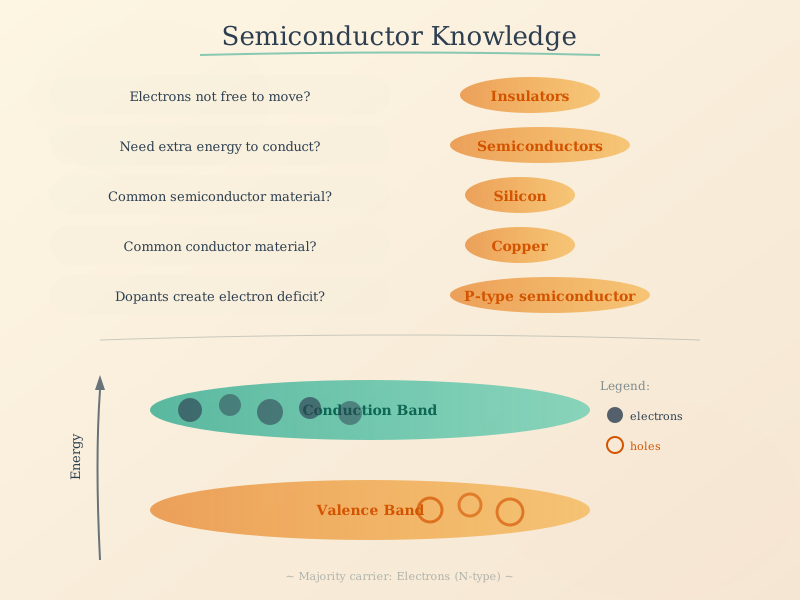
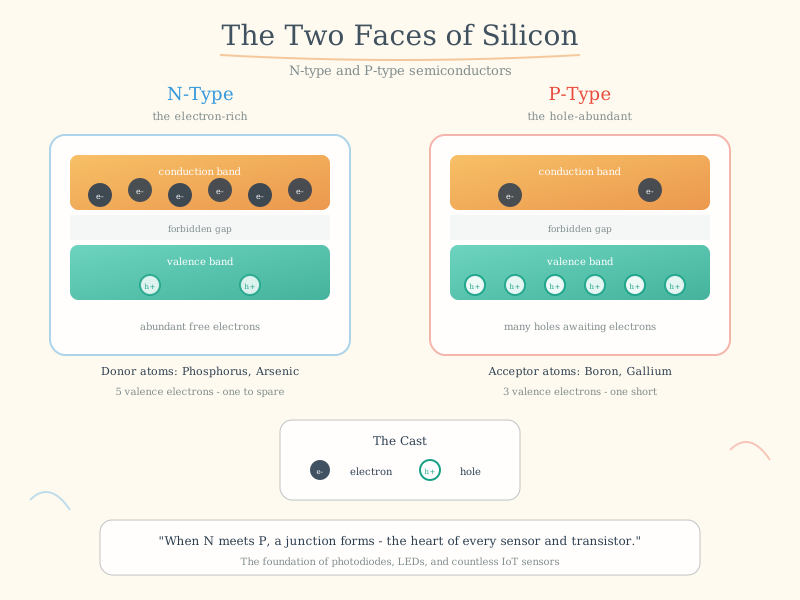
- Semiconductors: Materials with controllable conductivity between conductors and insulators, formed by doping pure silicon with impurities to create N-type (excess electrons) or P-type (excess holes) semiconductors
- Diodes: PN junction devices allowing current flow in one direction only, used for rectification (AC to DC conversion), voltage regulation (Zener diodes), and reverse polarity protection in IoT power supplies
- Transistor Fundamentals: Three-layer semiconductor devices (NPN/PNP BJT or N-channel/P-channel FET) that act as voltage or current-controlled switches and amplifiers, forming the building blocks of all digital logic
- BJT vs FET: Bipolar Junction Transistors (BJT) are current-controlled with base current controlling collector current (β gain), while Field Effect Transistors (FET/MOSFET) are voltage-controlled with nearly zero gate current, making them ideal for low-power IoT applications
- Switching Applications: Transistors enable microcontrollers to control high-power loads (motors, relays, LEDs) by acting as electronic switches, with MOSFETs preferred for efficiency due to low on-resistance (Rds(on)) and minimal gate current
- Thermal Management: Power dissipation (P = I² × Rds(on) for MOSFETs) requires proper heat sinking and component selection to prevent thermal runaway, especially critical in continuous-duty IoT applications
- Design Considerations: Proper gate drive voltage, dead-time in H-bridges to prevent shoot-through, component selection for operating temperature ranges, and ultra-low leakage devices for battery-powered sensors are essential for reliable IoT hardware
Electronics Foundation: - Electricity - Electrical fundamentals - Analog-Digital Electronics - ADC/DAC conversion
Sensing: - Sensor Circuits - Sensor interfaces - Sensor Fundamentals - Sensor types - Actuators - Output devices
Prototyping: - Prototyping Hardware - Hardware platforms - Specialized Kits - Development kits
Design: - Hardware Optimization - Component selection
Labs: - Sensor Labs - Hands-on practice
597.3 Visual Reference Gallery
Explore alternative visual representations of electronic components. These AI-generated figures provide different perspectives on semiconductors, transistors, and circuit building blocks.
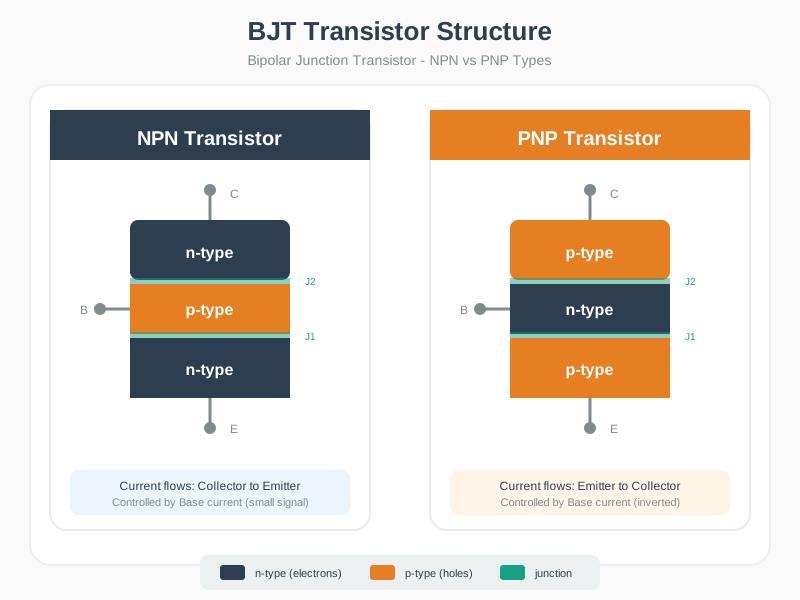
AI-generated modern visualization explaining BJT operation as a current-controlled current source.
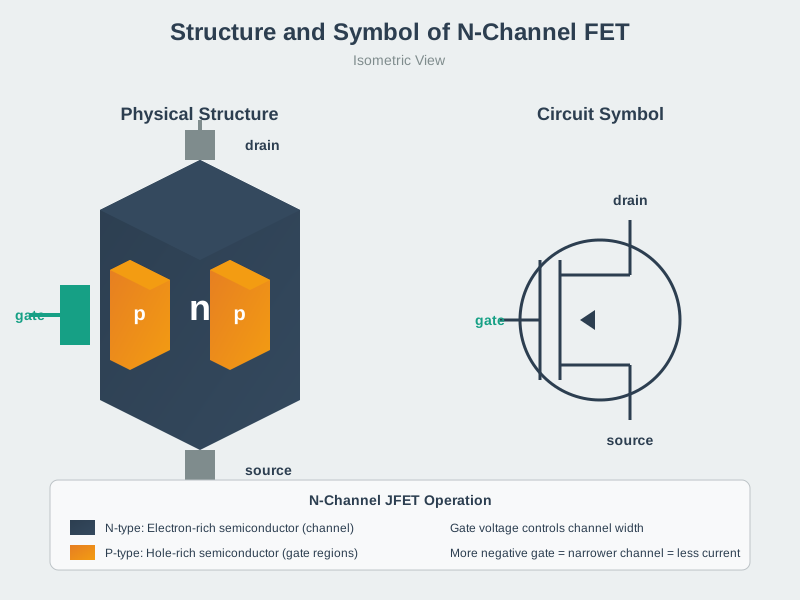
AI-generated geometric visualization of MOSFET operation as a voltage-controlled switch ideal for IoT power switching.
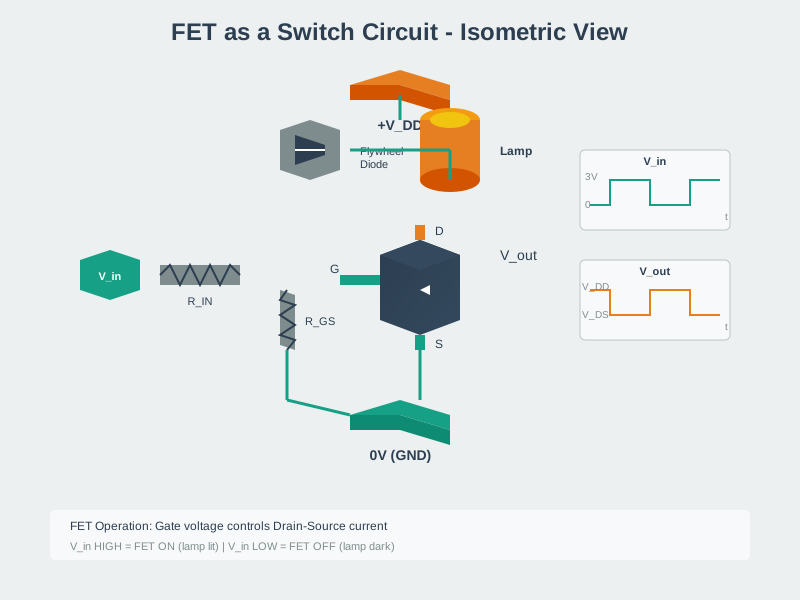
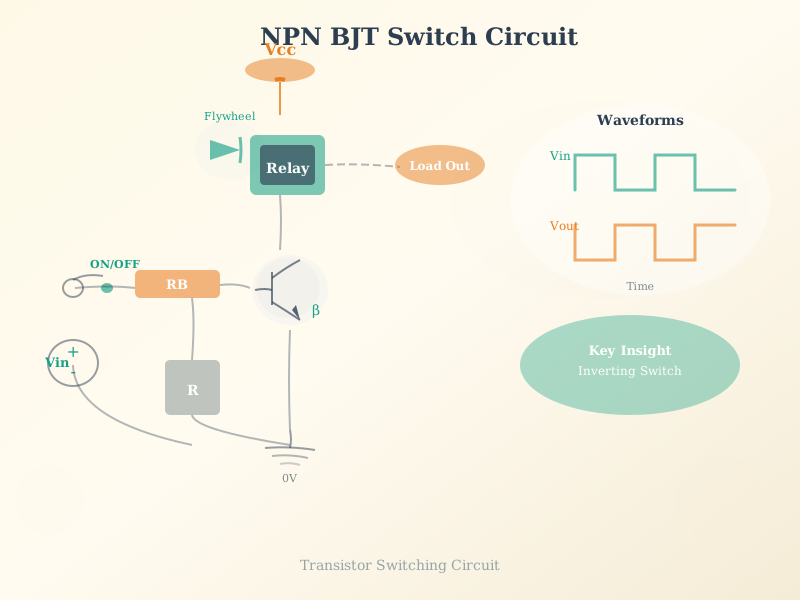
DrawIO template showing practical transistor switching circuits for controlling high-power loads from microcontroller GPIO.
597.4 Visual Reference Library
This section contains AI-generated phantom figures designed to illustrate key concepts covered in this chapter. These figures provide visual reference material for understanding sensing and actuation systems.
Note: These are AI-generated educational illustrations meant to complement the technical content.
597.4.1 Semiconductors


597.4.2 Display Technologies
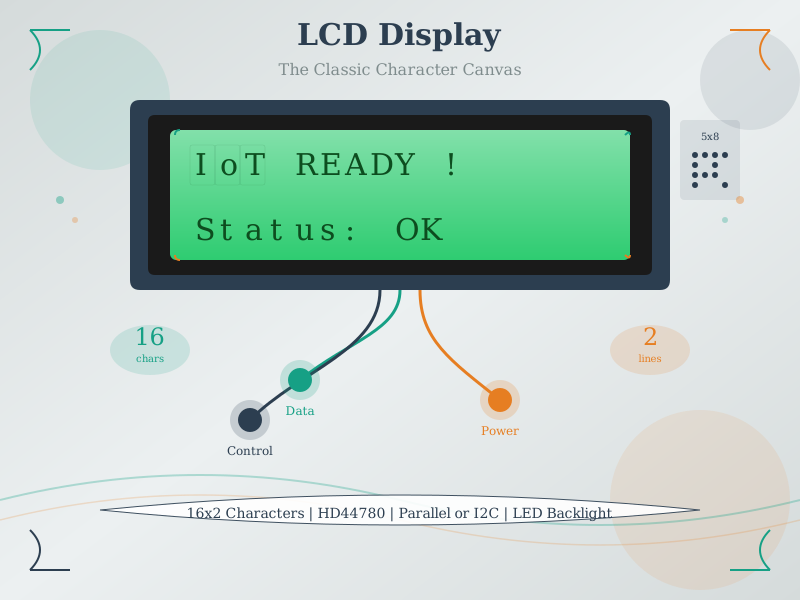
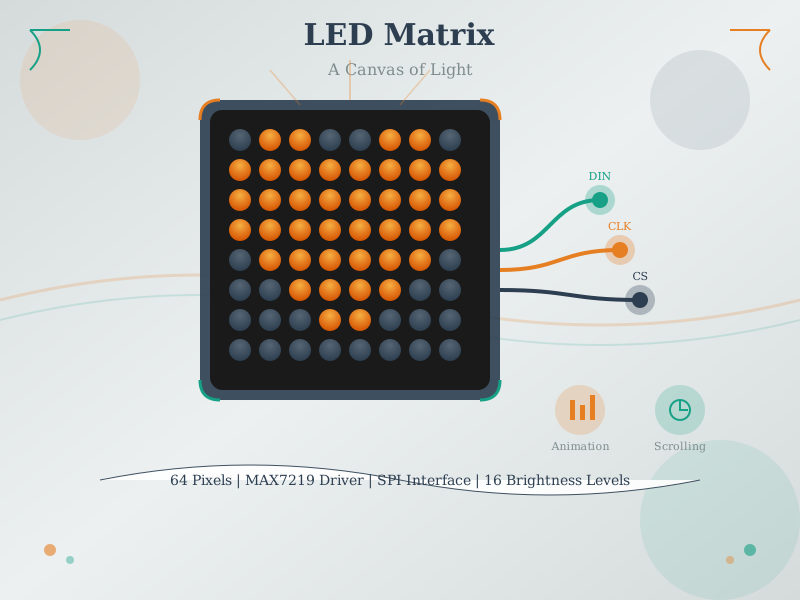
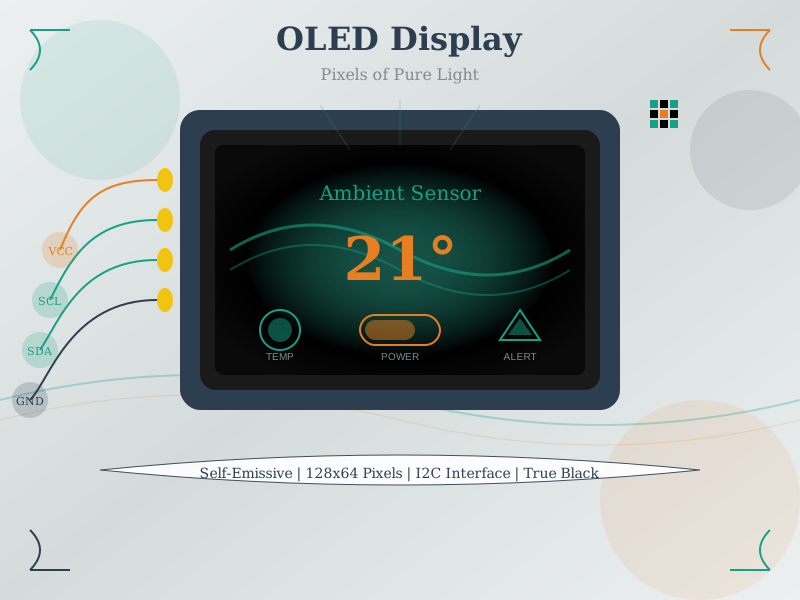
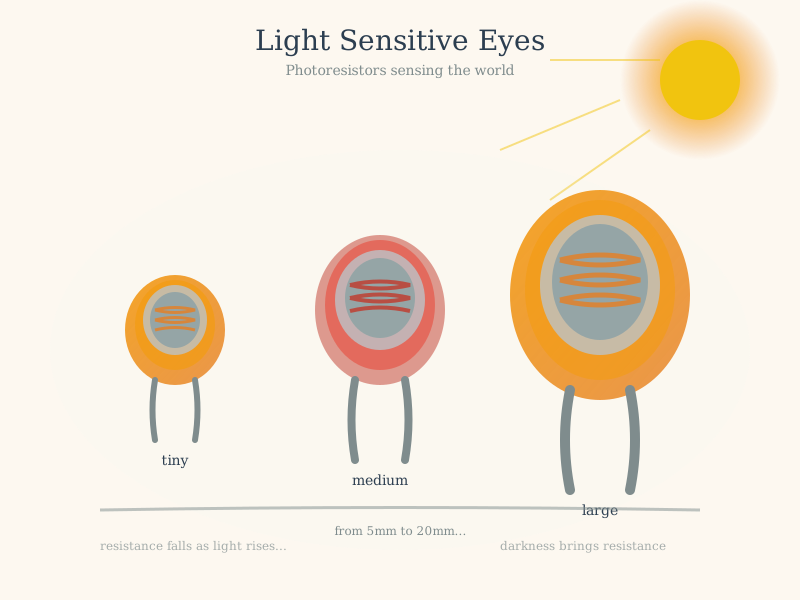
597.4.3 Light-Sensitive Components

597.5 What’s Next?
Now that you understand electronics fundamentals (semiconductors, diodes, transistors), you’re ready to explore the analog-digital interface—how continuous analog sensor signals are converted to discrete digital values that microcontrollers can process.
Continue to Analog and Digital Electronics →
Interactive Simulations: - TinkerCAD: Transistor as Switch - Build and test transistor circuits - Falstad Circuit Simulator - Real-time circuit simulation
Video Learning: - Ben Eater: How Transistors Work - ElectroBOOM: Transistors Explained
Reference: - All About Circuits: Semiconductors - Learn About Electronics: Transistors
597.6 What’s Next?
Continue to Sensor Circuits and Signals to apply electronics principles to real sensor interfacing.