%%{init: {'theme': 'base', 'themeVariables': {'primaryColor': '#2C3E50', 'primaryTextColor': '#fff', 'primaryBorderColor': '#16A085', 'lineColor': '#16A085', 'secondaryColor': '#E67E22', 'tertiaryColor': '#7F8C8D', 'background': '#ffffff', 'mainBkg': '#2C3E50', 'secondBkg': '#16A085', 'tertiaryBkg': '#E67E22'}}}%%
graph TB
    subgraph devices[" End Devices "]
        ED1[Sensor Node<br/>Class A<br/>Battery]
        ED2[Actuator<br/>Class C<br/>Mains]
        ED3[Beacon Device<br/>Class B<br/>Battery]
    end

    subgraph gw[" Gateways "]
        GW1[Gateway 1<br/>8-channel<br/>Ethernet]
        GW2[Gateway 2<br/>16-channel<br/>4G Backhaul]
        GW3[Gateway 3<br/>8-channel<br/>Wi-Fi]
    end

    subgraph backend[" Network Backend "]
        NS[Network Server<br/>Deduplication<br/>ADR Control<br/>MAC Management]
        JS[Join Server<br/>Device Authentication<br/>Key Distribution]
        AS[Application Server<br/>Payload Processing<br/>Business Logic]
    end

    ED1 -.->|LoRa RF<br/>868/915 MHz| GW1
    ED1 -.->|Redundant Path| GW2
    ED2 -.->|LoRa RF| GW2
    ED2 -.->|Redundant Path| GW3
    ED3 -.->|LoRa RF| GW1
    ED3 -.->|Redundant Path| GW3

    GW1 -->|Packet Forwarder<br/>UDP/IP| NS
    GW2 -->|Packet Forwarder<br/>UDP/IP| NS
    GW3 -->|Packet Forwarder<br/>UDP/IP| NS

    NS <-->|Join Procedure<br/>OTAA| JS
    NS -->|Application Payload<br/>Deduplicated| AS
    AS -.->|Downlink Commands| NS
    NS -.->|Best Gateway| GW2

    style devices fill:#f0f0f0,stroke:#2C3E50,stroke-width:2px
    style gw fill:#f0f0f0,stroke:#16A085,stroke-width:2px
    style backend fill:#f0f0f0,stroke:#E67E22,stroke-width:2px
    style ED1 fill:#2C3E50,stroke:#16A085,color:#fff
    style ED2 fill:#2C3E50,stroke:#16A085,color:#fff
    style ED3 fill:#2C3E50,stroke:#16A085,color:#fff
    style GW1 fill:#16A085,stroke:#2C3E50,color:#fff
    style GW2 fill:#16A085,stroke:#2C3E50,color:#fff
    style GW3 fill:#16A085,stroke:#2C3E50,color:#fff
    style NS fill:#E67E22,stroke:#2C3E50,color:#fff
    style JS fill:#E67E22,stroke:#2C3E50,color:#fff
    style AS fill:#E67E22,stroke:#2C3E50,color:#fff
1078 LoRaWAN Network Topology and Components
1078.1 Learning Objectives
By the end of this chapter, you will be able to:
- Understand LoRaWAN Topology: Explain the star-of-stars architecture and how it differs from mesh networks
- Identify Network Components: Describe the role of end devices, gateways, network servers, and application servers
- Explain Gateway Behavior: Understand why gateways are transparent bridges that forward all messages
- Describe Network Server Functions: List the key responsibilities including deduplication, ADR, and routing
ImportantThe Challenge: Long Range + Long Battery Life
The Problem: Physics works against us when designing LPWAN systems:
- Long range needs high power (inverse square law: power drops with distance squared)
- High power drains batteries quickly (a fundamental constraint)
- Cellular: Achieves 10km+ range but batteries last days, not years
- Wi-Fi: Years of battery life possible but only 100m range
Why It’s Hard:
- Shannon’s limit: \(C = B \times \log_2(1 + SNR)\) — capacity is fundamentally bounded by bandwidth and signal-to-noise ratio
- Lower bandwidth = longer symbols = more energy per bit — you can’t escape the math
- Regulatory limits: Duty cycle restrictions (1% in EU868), power limits (14-27 dBm)
- Bidirectional requirement: Sensors need to receive configuration updates and acknowledgments, not just send
What We Need:
| Requirement | Target | Why? |
|---|---|---|
| Range | 10-15 km rural, 2-5 km urban | Cover large areas with few gateways |
| Battery Life | 10+ years on AA batteries | Avoid costly maintenance visits |
| Device Cost | <$5 per radio module | Enable massive-scale deployments |
| Security | End-to-end encryption | Protect sensitive IoT data |
| Communication | Bidirectional | Remote configuration, firmware updates |
The Solution: LoRaWAN achieves this through chirp spread spectrum modulation with adaptive data rates:
- Spread spectrum: Spreads signal below noise floor, trading bandwidth for sensitivity (-137 dBm at SF12)
- Adaptive Data Rate (ADR): Dynamically optimizes spreading factor per device — devices near gateways use fast SF7, distant devices use robust SF12
- Star-of-stars topology: Simple end devices (no routing overhead), intelligent network server handles complexity
- Dual-layer encryption: NwkSKey for network, AppSKey for application — even network operators can’t read your data
This chapter explains the network topology and components that enable LoRaWAN to achieve this balance.
1078.2 Prerequisites
Before diving into this chapter, you should be familiar with:
- LoRaWAN Overview: Understanding LoRa modulation and basic protocol concepts
- LPWAN Introduction: Context of low-power wide-area networks in IoT
TipFor Beginners: Understanding LoRaWAN Architecture
Imagine you’re deploying 1000 soil moisture sensors across farmland. Each sensor needs to report data to a central server, but they’re spread over several square kilometers. How do you design this network?
LoRaWAN uses a clever star-of-stars architecture that’s different from mesh networks (where devices relay for each other) or cellular (expensive, power-hungry). Here’s how it works:
The Players: 1. End devices (your sensors)—send data but don’t route for others 2. Gateways (like cell towers)—multiple gateways receive signals from sensors 3. Network server (in the cloud)—routes data and handles security 4. Application server (your farm management software)—processes sensor data
The Key Insight: A sensor’s transmission can be received by multiple gateways simultaneously. Imagine shouting in a valley—multiple villages might hear you. The network server receives the same message from multiple gateways, picks the best one, removes duplicates, and forwards it to your application. This provides redundancy without complex routing at the sensor (saving power).
| Term | Simple Explanation |
|---|---|
| Star-of-Stars | Devices connect to gateways, gateways connect to network server |
| End Device | Sensor/actuator that transmits data (doesn’t route for others) |
| Gateway | Antenna that receives LoRa transmissions and forwards to network server |
| Network Server | Central brain handling routing, security, deduplication |
| Uplink | Data from device to server |
| Downlink | Commands/config from server to device |
1078.3 LoRaWAN Network Architecture
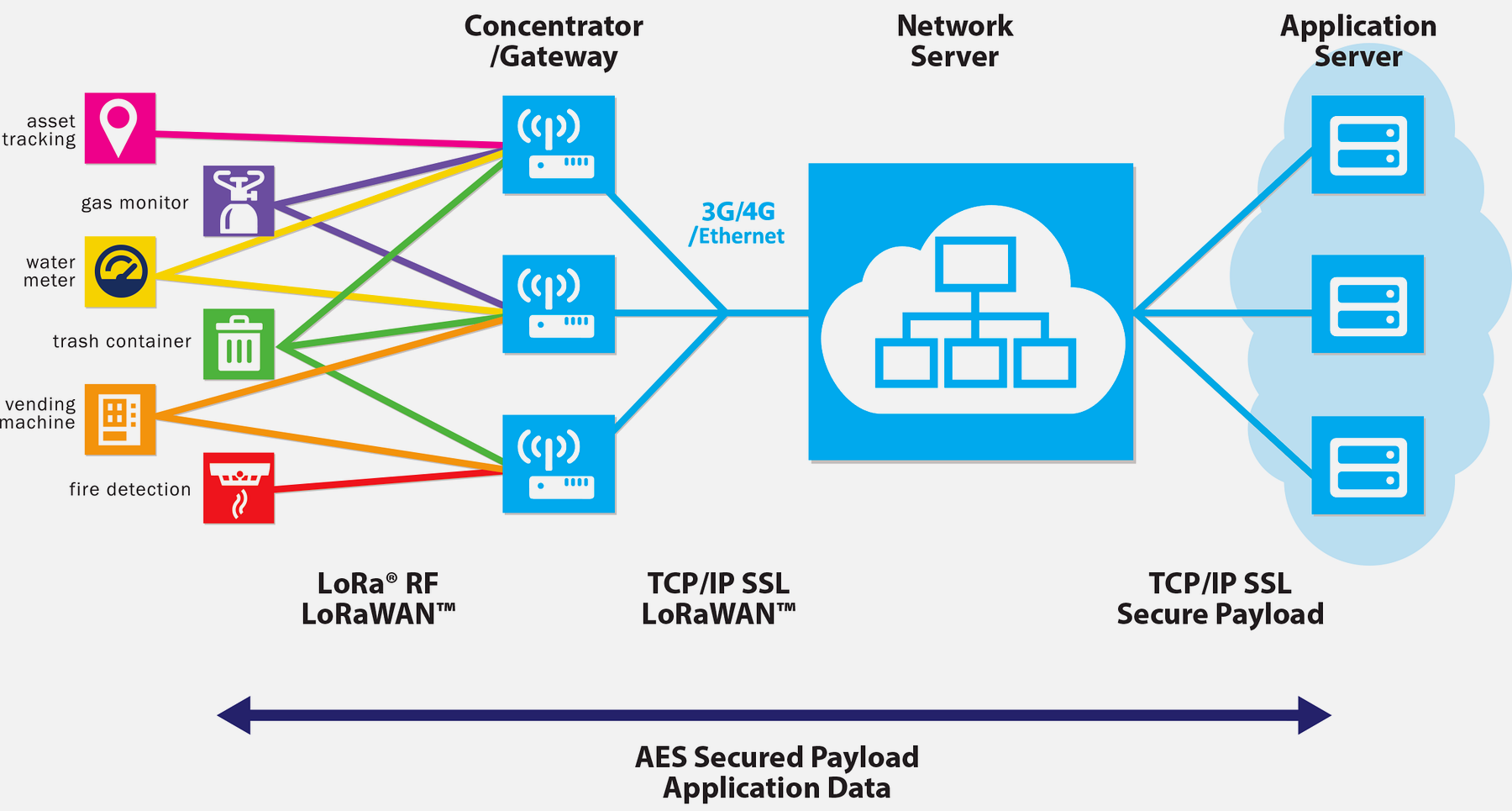
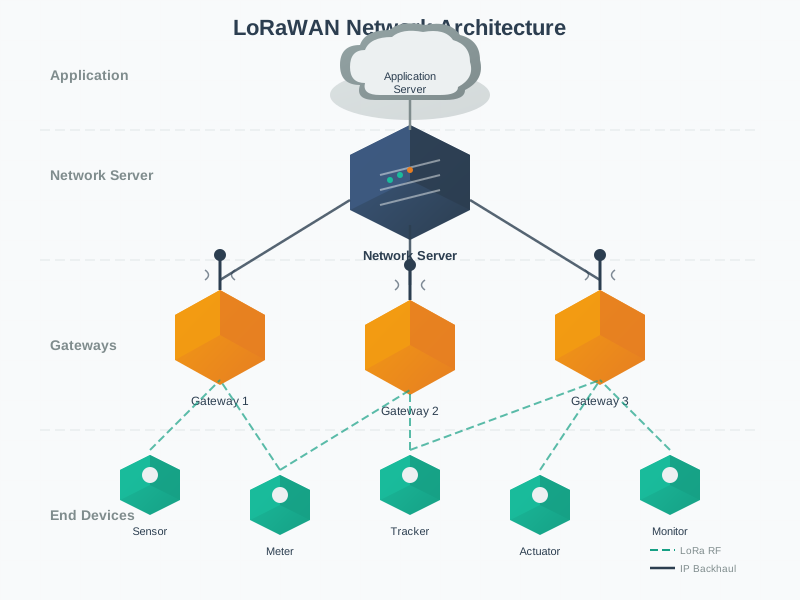
LoRaWAN uses a star-of-stars topology where gateways relay messages between end devices and a central network server.
1078.3.1 Network Components
The LoRaWAN architecture consists of four main components:
- End Devices (Nodes): Sensors and actuators that communicate wirelessly using LoRa modulation
- Gateways: Multi-channel receivers that forward messages between end devices and the network server
- Network Server: Central component that manages the network, handles security, and routes messages
- Application Server: Processes application-specific data from end devices
NoteAlternative View: Interactive Mermaid Diagram
1078.3.2 Star-of-Stars Topology
Unlike mesh networks, LoRaWAN uses a star-of-stars topology:
- First star: End devices connect to multiple gateways
- Second star: All gateways connect to the network server
Key Benefits:
| Benefit | Description |
|---|---|
| Simplicity | End devices don’t need to route messages |
| Low Power | Devices can sleep between transmissions |
| Redundancy | Multiple gateways can receive the same message |
| Scalability | Easy to add more gateways for coverage |
1078.3.3 Gateway Role
Gateways in LoRaWAN are transparent bridges:
- Receive all LoRa transmissions within range
- Forward all messages to the network server (no filtering)
- Multiple gateways may receive the same message (by design)
- Network server handles deduplication
WarningCommon Misconception: Gateways Don’t Filter Messages
Misconception: “Multiple gateways receiving the same message wastes bandwidth, so gateways should coordinate to avoid duplicates.”
Reality: LoRaWAN gateways intentionally forward ALL messages—redundancy is a feature, not a bug.
Real-World Impact: In a 2019 city-wide deployment in Antwerp, Belgium (1,000+ parking sensors, 12 gateways), engineers initially worried about network congestion from duplicate packets. Monitoring showed:
- 72% of uplinks received by 2+ gateways (average 2.3 gateways per message)
- Gateway backhaul bandwidth: Each gateway forwarded ~500 packets/hour
- Actual bandwidth used: 500 packets × 50 bytes = 25 KB/hour = 0.056 kbps (negligible—a 4G connection handles 10,000× this)
- Benefit: When one gateway failed (power outage), 0 data loss—neighboring gateways provided seamless coverage
Why It Works: The network server deduplicates in <10ms using DevAddr + frame counter. The metadata (RSSI, SNR, timestamp) from multiple gateways enables geolocation and adaptive data rate optimization. Redundancy improves reliability (99.7% → 99.95% uptime) at essentially zero cost—backhaul bandwidth is ~1000× cheaper than deploying fewer gateways with coverage gaps.
Takeaway: Don’t fight the architecture—embrace redundancy. LoRaWAN’s star-of-stars topology turns “duplicate messages” into a reliability advantage.
1078.3.4 Network Server Functions
The network server is responsible for:
- Message Deduplication: Removes duplicate messages received by multiple gateways
- Security: Manages encryption keys and validates message integrity
- Adaptive Data Rate (ADR): Optimizes transmission parameters
- MAC Commands: Manages device settings and network parameters
- Routing: Directs messages to the appropriate application server
1078.4 Knowledge Check
Test your understanding of LoRaWAN network topology.
1078.5 Practice Exercise
1078.6 Visual Reference Gallery
NoteAdditional Reference Figures
1078.6.1 LoRaWAN Protocol Stack
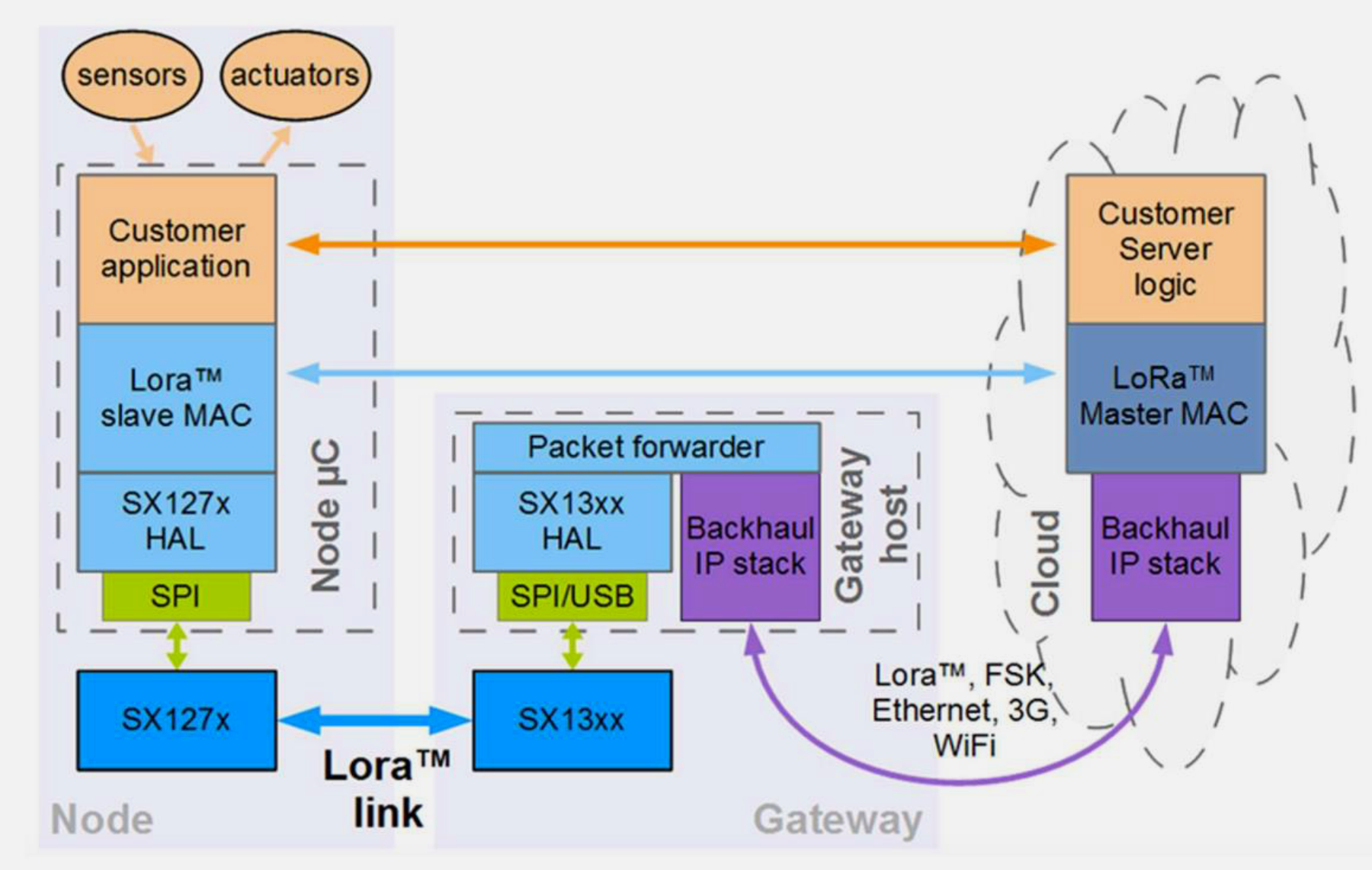
Source: CP IoT System Design Guide, Chapter 4 - LPWAN Protocols
1078.6.2 LoRaWAN Technology Summary
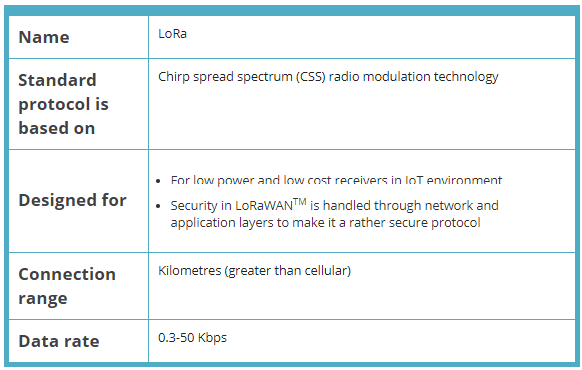
Source: CP IoT System Design Guide, Chapter 4 - LPWAN Protocols
1078.7 Summary
LoRaWAN’s star-of-stars topology provides:
- Simplicity: End devices don’t route messages, reducing complexity and power consumption
- Redundancy: Multiple gateways receiving the same message improves reliability
- Scalability: Adding gateways extends coverage without reconfiguring devices
- Centralized intelligence: Network server handles deduplication, security, and optimization
TipWhat’s Next?
Continue to LoRaWAN Device Classes to learn about Class A, B, and C devices and how to select the right class for your application.