%%{init: {'theme': 'base', 'themeVariables': {'primaryColor': '#2C3E50', 'primaryTextColor': '#fff', 'primaryBorderColor': '#16A085', 'lineColor': '#E67E22', 'secondaryColor': '#16A085', 'tertiaryColor': '#7F8C8D'}}}%%
graph TB
    subgraph "AMQP Implementation Patterns"
        R[Message Routing<br/>Direct, Fanout, Topic]
        D[Delivery Guarantees<br/>At-most, At-least, Exactly-once]
        P[Performance Analysis<br/>Throughput, Latency]
    end

    subgraph "Routing Patterns"
        R1[Direct Exchange<br/>Exact match]
        R2[Fanout Exchange<br/>Broadcast]
        R3[Topic Exchange<br/>Pattern match]
    end

    subgraph "Reliability Patterns"
        D1[Publisher Confirms<br/>Broker ACK]
        D2[Consumer ACKs<br/>Processing confirm]
        D3[Idempotency Keys<br/>Deduplication]
    end

    R --> R1 & R2 & R3
    D --> D1 & D2 & D3

    style R fill:#2C3E50,stroke:#16A085,color:#fff
    style D fill:#16A085,stroke:#2C3E50,color:#fff
    style P fill:#E67E22,stroke:#2C3E50,color:#fff
    style R1 fill:#2C3E50,stroke:#16A085,color:#fff
    style R2 fill:#2C3E50,stroke:#16A085,color:#fff
    style R3 fill:#2C3E50,stroke:#16A085,color:#fff
    style D1 fill:#16A085,stroke:#2C3E50,color:#fff
    style D2 fill:#16A085,stroke:#2C3E50,color:#fff
    style D3 fill:#16A085,stroke:#2C3E50,color:#fff
1249 AMQP Production Implementation
1249.1 Learning Objectives
By the end of this chapter, you will be able to:
- Configure Production-Ready AMQP Systems: Set up exchanges, queues, and bindings with appropriate durability and reliability settings
- Implement Client Libraries: Develop AMQP producers and consumers using Python (Pika), Java, and Node.js
- Apply Reliability Patterns: Configure publisher confirms, consumer acknowledgments, and dead letter queues
- Monitor AMQP Systems: Track queue depth, message throughput, and consumer lag for capacity planning
- Design Exchange Topologies: Choose between direct, fanout, topic, and headers exchanges based on routing requirements
- Integrate with IoT Architectures: Connect AMQP messaging to edge computing, cloud platforms, and data analytics systems
1249.2 Prerequisites
Before diving into this chapter, you should be familiar with:
- AMQP Fundamentals: Understanding of AMQP protocol architecture, exchanges, queues, and bindings
- AMQP Implementation Misconceptions: Common pitfalls to avoid in production deployments
- AMQP Routing Patterns: Hands-on experience with routing design and calculations
TipFor Beginners: Production vs Development
Production AMQP systems differ from development setups in several key ways:
- Durability: All queues and exchanges must survive broker restarts
- Monitoring: Queue depth, message rates, and consumer health must be tracked
- Error Handling: Dead letter queues capture undeliverable messages for investigation
- Scaling: Multiple consumers and high availability configurations
This chapter provides production-ready configurations you can adapt to your specific requirements.
1249.3 AMQP Implementation Patterns
Key implementation patterns for production AMQP systems:
1249.4 Production Configuration Checklist
Implementation checklist for production AMQP systems:
| Component | Configuration | Purpose |
|---|---|---|
| Exchange | durable=True |
Survives broker restart |
| Queue | durable=True, auto_delete=False |
Persists messages when consumer offline |
| Messages | delivery_mode=2 |
Written to disk before ACK |
| Publisher | confirm_select() |
Receive broker acknowledgments |
| Consumer | auto_ack=False, prefetch_count=N |
Manual ACK with batching |
| Dead Letter | x-dead-letter-exchange |
Handle undeliverable messages |
1249.5 Python Implementation with Pika
1249.5.1 Publisher with Confirms
import pika
import json
from typing import Dict, Any

class AMQPPublisher:
    """Production-ready AMQP publisher with reliability features."""

    def __init__(self, host: str, exchange: str):
        self.connection = pika.BlockingConnection(
            pika.ConnectionParameters(
                host=host,
                heartbeat=600,  # Detect dead connections
                blocked_connection_timeout=300
            )
        )
        self.channel = self.connection.channel()
        self.exchange = exchange

        # Enable publisher confirms
        self.channel.confirm_delivery()

        # Declare durable exchange
        self.channel.exchange_declare(
            exchange=exchange,
            exchange_type='topic',
            durable=True
        )

    def publish(self, routing_key: str, message: Dict[str, Any],
                message_id: str = None) -> bool:
        """
        Publish message with persistence and confirmation.

        Args:
            routing_key: Topic routing key (e.g., 'sensor.temperature.line1')
            message: Dictionary to serialize as JSON
            message_id: Unique ID for idempotency (optional)

        Returns:
            True if broker acknowledged, False otherwise
        """
        properties = pika.BasicProperties(
            delivery_mode=2,  # Persistent
            content_type='application/json',
            message_id=message_id
        )

        try:
            self.channel.basic_publish(
                exchange=self.exchange,
                routing_key=routing_key,
                body=json.dumps(message),
                properties=properties,
                mandatory=True  # Return if unroutable
            )
            return True
        except pika.exceptions.UnroutableError:
            print(f"Message unroutable: {routing_key}")
            return False

    def close(self):
        """Clean shutdown."""
        self.connection.close()


# Usage example
publisher = AMQPPublisher('localhost', 'sensor-data')
publisher.publish(
    routing_key='sensor.temperature.line1.machine3',
    message={'temp': 75.3, 'timestamp': 1698765432},
    message_id='msg-001'
)
1249.5.2 Consumer with Manual Acknowledgment
import pika
import json
from typing import Callable

class AMQPConsumer:
    """Production-ready AMQP consumer with reliability features."""

    def __init__(self, host: str, queue: str, exchange: str,
                 binding_patterns: list, prefetch_count: int = 10):
        self.connection = pika.BlockingConnection(
            pika.ConnectionParameters(host=host)
        )
        self.channel = self.connection.channel()
        self.queue = queue

        # Declare durable queue with dead letter exchange
        self.channel.queue_declare(
            queue=queue,
            durable=True,
            arguments={
                'x-dead-letter-exchange': 'dlx',
                'x-dead-letter-routing-key': f'{queue}.failed'
            }
        )

        # Bind to exchange with patterns
        for pattern in binding_patterns:
            self.channel.queue_bind(
                exchange=exchange,
                queue=queue,
                routing_key=pattern
            )

        # Set prefetch for batching
        self.channel.basic_qos(prefetch_count=prefetch_count)

    def consume(self, callback: Callable):
        """
        Start consuming messages with manual acknowledgment.

        Args:
            callback: Function(body: dict) -> bool
                     Returns True if processed successfully
        """
        def on_message(channel, method, properties, body):
            try:
                message = json.loads(body)
                success = callback(message)

                if success:
                    channel.basic_ack(delivery_tag=method.delivery_tag)
                else:
                    # Requeue for retry
                    channel.basic_nack(
                        delivery_tag=method.delivery_tag,
                        requeue=True
                    )
            except Exception as e:
                print(f"Processing error: {e}")
                # Send to dead letter queue
                channel.basic_nack(
                    delivery_tag=method.delivery_tag,
                    requeue=False
                )

        self.channel.basic_consume(
            queue=self.queue,
            on_message_callback=on_message,
            auto_ack=False  # Manual acknowledgment
        )

        print(f"Consuming from {self.queue}...")
        self.channel.start_consuming()


# Usage example
def process_sensor_reading(message: dict) -> bool:
    """Process a sensor reading. Returns True if successful."""
    print(f"Received: {message}")
    # Your processing logic here
    return True

consumer = AMQPConsumer(
    host='localhost',
    queue='analytics',
    exchange='sensor-data',
    binding_patterns=['sensor.#'],
    prefetch_count=100  # Batch processing
)
consumer.consume(process_sensor_reading)
1249.6 Java Implementation
1249.6.1 Publisher with RabbitMQ Java Client
import com.rabbitmq.client.*;
import com.fasterxml.jackson.databind.ObjectMapper;
import java.io.IOException;
import java.util.concurrent.TimeoutException;

public class AMQPPublisher implements AutoCloseable {
    private final Connection connection;
    private final Channel channel;
    private final String exchange;
    private final ObjectMapper mapper = new ObjectMapper();

    public AMQPPublisher(String host, String exchange)
            throws IOException, TimeoutException {
        ConnectionFactory factory = new ConnectionFactory();
        factory.setHost(host);
        factory.setRequestedHeartbeat(60);

        this.connection = factory.newConnection();
        this.channel = connection.createChannel();
        this.exchange = exchange;

        // Enable publisher confirms
        channel.confirmSelect();

        // Declare durable topic exchange
        channel.exchangeDeclare(exchange, "topic", true);
    }

    public boolean publish(String routingKey, Object message,
            String messageId) throws Exception {
        AMQP.BasicProperties properties = new AMQP.BasicProperties.Builder()
            .deliveryMode(2)  // Persistent
            .contentType("application/json")
            .messageId(messageId)
            .build();

        byte[] body = mapper.writeValueAsBytes(message);

        channel.basicPublish(exchange, routingKey, true, properties, body);

        // Wait for confirm (blocking)
        return channel.waitForConfirms(5000);
    }

    @Override
    public void close() throws Exception {
        channel.close();
        connection.close();
    }
}
1249.6.2 Consumer with Manual Acknowledgment
import com.rabbitmq.client.*;
import com.fasterxml.jackson.databind.ObjectMapper;
import java.io.IOException;
import java.util.Map;
import java.util.function.Function;

public class AMQPConsumer {
    private final Channel channel;
    private final String queue;
    private final ObjectMapper mapper = new ObjectMapper();

    public AMQPConsumer(String host, String queue, String exchange,
            String[] bindingPatterns, int prefetchCount) throws Exception {
        ConnectionFactory factory = new ConnectionFactory();
        factory.setHost(host);

        Connection connection = factory.newConnection();
        this.channel = connection.createChannel();
        this.queue = queue;

        // Declare queue with DLX
        Map<String, Object> args = Map.of(
            "x-dead-letter-exchange", "dlx",
            "x-dead-letter-routing-key", queue + ".failed"
        );
        channel.queueDeclare(queue, true, false, false, args);

        // Bind patterns
        for (String pattern : bindingPatterns) {
            channel.queueBind(queue, exchange, pattern);
        }

        // Set prefetch
        channel.basicQos(prefetchCount);
    }

    public void consume(Function<Map<String, Object>, Boolean> callback)
            throws IOException {
        DeliverCallback deliverCallback = (tag, delivery) -> {
            try {
                Map<String, Object> message = mapper.readValue(
                    delivery.getBody(), Map.class);

                boolean success = callback.apply(message);

                if (success) {
                    channel.basicAck(delivery.getEnvelope()
                        .getDeliveryTag(), false);
                } else {
                    channel.basicNack(delivery.getEnvelope()
                        .getDeliveryTag(), false, true);
                }
            } catch (Exception e) {
                channel.basicNack(delivery.getEnvelope()
                    .getDeliveryTag(), false, false);
            }
        };

        channel.basicConsume(queue, false, deliverCallback, tag -> {});
    }
}
1249.7 Node.js Implementation
1249.7.1 Publisher with amqplib
const amqp = require('amqplib');

class AMQPPublisher {
    constructor() {
        this.connection = null;
        this.channel = null;
    }

    async connect(host, exchange) {
        this.connection = await amqp.connect(`amqp://${host}`);
        this.channel = await this.connection.createConfirmChannel();
        this.exchange = exchange;

        // Declare durable topic exchange
        await this.channel.assertExchange(exchange, 'topic', {
            durable: true
        });
    }

    async publish(routingKey, message, messageId = null) {
        const options = {
            persistent: true,  // delivery_mode = 2
            contentType: 'application/json',
            messageId: messageId
        };

        return new Promise((resolve, reject) => {
            this.channel.publish(
                this.exchange,
                routingKey,
                Buffer.from(JSON.stringify(message)),
                options,
                (err) => {
                    if (err) reject(err);
                    else resolve(true);
                }
            );
        });
    }

    async close() {
        await this.channel.close();
        await this.connection.close();
    }
}

// Usage
(async () => {
    const publisher = new AMQPPublisher();
    await publisher.connect('localhost', 'sensor-data');

    await publisher.publish(
        'sensor.temperature.line1.machine3',
        { temp: 75.3, timestamp: Date.now() },
        'msg-001'
    );

    await publisher.close();
})();
1249.7.2 Consumer with Manual Acknowledgment
const amqp = require('amqplib');

class AMQPConsumer {
    async connect(host, queue, exchange, bindingPatterns, prefetchCount = 10) {
        this.connection = await amqp.connect(`amqp://${host}`);
        this.channel = await this.connection.createChannel();
        this.queue = queue;

        // Declare queue with DLX
        await this.channel.assertQueue(queue, {
            durable: true,
            arguments: {
                'x-dead-letter-exchange': 'dlx',
                'x-dead-letter-routing-key': `${queue}.failed`
            }
        });

        // Bind patterns
        for (const pattern of bindingPatterns) {
            await this.channel.bindQueue(queue, exchange, pattern);
        }

        // Set prefetch
        await this.channel.prefetch(prefetchCount);
    }

    async consume(callback) {
        console.log(`Consuming from ${this.queue}...`);

        this.channel.consume(this.queue, async (msg) => {
            if (msg === null) return;

            try {
                const message = JSON.parse(msg.content.toString());
                const success = await callback(message);

                if (success) {
                    this.channel.ack(msg);
                } else {
                    this.channel.nack(msg, false, true);  // Requeue
                }
            } catch (error) {
                console.error('Processing error:', error);
                this.channel.nack(msg, false, false);  // Dead letter
            }
        }, { noAck: false });
    }
}

// Usage
(async () => {
    const consumer = new AMQPConsumer();
    await consumer.connect(
        'localhost',
        'analytics',
        'sensor-data',
        ['sensor.#'],
        100
    );

    await consumer.consume((message) => {
        console.log('Received:', message);
        return true;  // Processing successful
    });
})();
1249.8 Dead Letter Queue Configuration
Dead letter queues capture messages that cannot be processed for later investigation:
# Declare dead letter exchange and queue
channel.exchange_declare(exchange='dlx', exchange_type='direct', durable=True)
channel.queue_declare(queue='dead-letters', durable=True)
channel.queue_bind(exchange='dlx', queue='dead-letters', routing_key='#')

# Main queue with DLX configuration
channel.queue_declare(
    queue='orders',
    durable=True,
    arguments={
        'x-dead-letter-exchange': 'dlx',
        'x-dead-letter-routing-key': 'orders.failed',
        'x-message-ttl': 86400000,  # 24 hour TTL
        'x-max-length': 100000       # Max 100K messages
    }
)
Messages are dead-lettered when: 1. Consumer rejects with requeue=False 2. Message TTL expires 3. Queue max-length exceeded
1249.9 Monitoring and Alerting
Key metrics to monitor:
| Metric | Warning Threshold | Critical Threshold | Action |
|---|---|---|---|
| Queue depth | > 50% capacity | > 80% capacity | Scale consumers |
| Consumer count | < 2 | 0 | Alert on-call |
| Message rate | > 80% of capacity | > 95% of capacity | Throttle publishers |
| Unacked messages | > 1000 | > 5000 | Check consumer health |
| Dead letter rate | > 1% | > 5% | Investigate failures |
RabbitMQ Management API Example:
import requests

def check_queue_health(host: str, queue: str) -> dict:
    """Check queue health via RabbitMQ Management API."""
    url = f"http://{host}:15672/api/queues/%2F/{queue}"
    response = requests.get(url, auth=('guest', 'guest'))

    data = response.json()
    return {
        'messages': data['messages'],
        'consumers': data['consumers'],
        'message_rate': data.get('message_stats', {}).get('publish_details', {}).get('rate', 0),
        'ack_rate': data.get('message_stats', {}).get('ack_details', {}).get('rate', 0)
    }
1249.10 Visual Reference Gallery
NoteVisual: AMQP Frame Structure
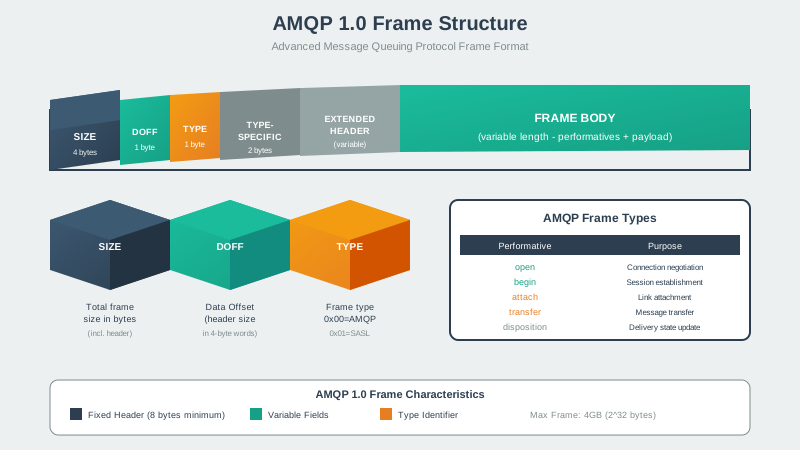
Understanding AMQP’s binary frame structure helps explain the protocol’s overhead characteristics compared to MQTT and informs decisions about when to use AMQP versus lighter-weight alternatives.
NoteVisual: AMQP Routing Topology
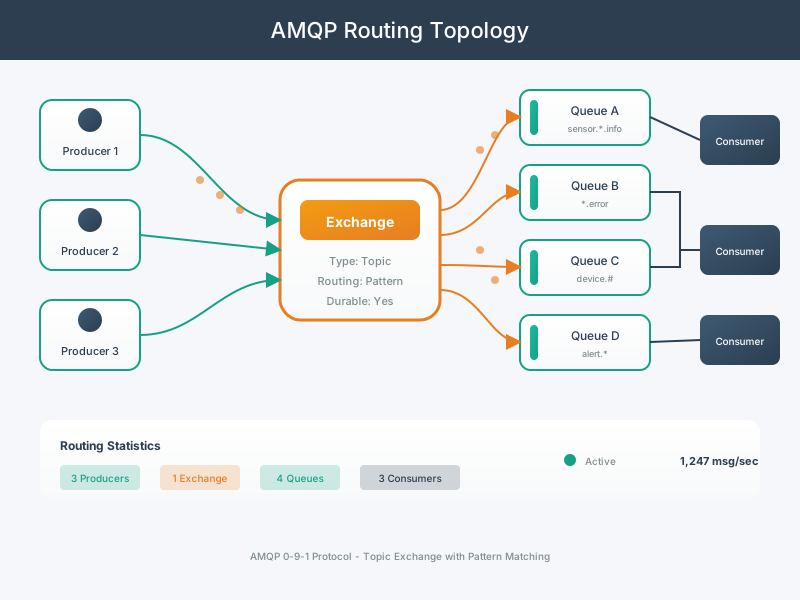
This diagram shows how AMQP’s exchange-binding-queue model enables sophisticated message routing scenarios that are impossible with simpler pub/sub protocols like MQTT.
NoteVisual: AMQP Protocol Overview
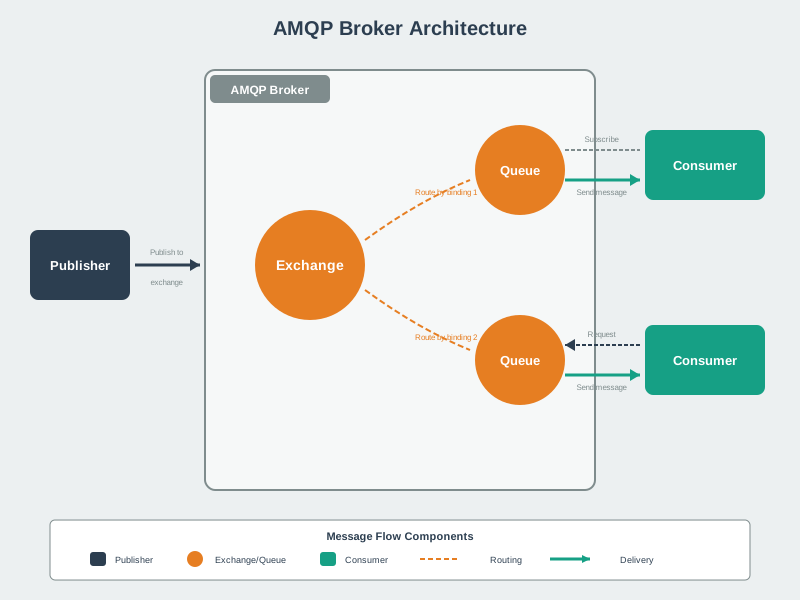
AMQP’s broker-mediated architecture provides the reliable, transactional messaging capabilities required for enterprise IoT backend integration scenarios.
1249.11 Practical Implementation Resources
NoteOfficial Libraries and Documentation
Official Libraries: - Python: pika library (https://pika.readthedocs.io) - Java: RabbitMQ Java Client (https://www.rabbitmq.com/java-client.html) - Node.js: amqplib (https://amqp-node.github.io/amqplib)
Practical Examples: - RabbitMQ Tutorials: https://www.rabbitmq.com/getstarted.html - AMQP 0-9-1 Reference: https://www.rabbitmq.com/amqp-0-9-1-reference.html
1249.12 Knowledge Check
Question: An event-driven system uses AMQP for order processing. Rank these AMQP operations by increasing complexity (simplest to most complex):
A. Publishing a message to an exchange with routing key B. Declaring a queue and binding it to an exchange C. Setting up a transaction with multiple publish/consume operations and rollback capability D. Consuming messages with manual acknowledgment
Which ranking correctly orders these operations from simplest to most complex?
💡 Explanation: Ranking AMQP operations by complexity:
A. Publishing a message (Simplest) - Single operation: basic_publish(exchange, routing_key, body). Minimal state management.
B. Queue declaration and binding (Simple-Medium) - Two operations: queue_declare() and queue_bind(). Requires understanding routing semantics.
D. Consuming with manual acknowledgment (Medium) - Multiple steps: subscribe, receive callback, process, ack/nack. Requires error handling.
C. Transactions (Most Complex) - Multi-step protocol: tx.select(), operations, tx.commit() or tx.rollback(). ACID properties, significant performance overhead.
Correct ranking: A → B → D → C
1249.13 Summary
This chapter covered production AMQP implementation patterns:
- Production Configuration: Durable exchanges, persistent messages, manual acknowledgment, and dead letter queues
- Client Libraries: Complete Python (Pika), Java (RabbitMQ Client), and Node.js (amqplib) implementations with reliability features
- Publisher Confirms: Ensuring the broker acknowledges message receipt before considering it sent
- Consumer Reliability: Manual acknowledgment with proper error handling and requeue/dead-letter strategies
- Monitoring: Key metrics (queue depth, consumer count, message rates) and alerting thresholds
- Dead Letter Queues: Capturing failed messages for investigation and recovery
1249.14 What’s Next
- MQTT Fundamentals: Continue to MQTT Fundamentals to learn the most popular IoT messaging protocol
- Protocol Review: Return to AMQP Comprehensive Review for theoretical foundations
- CoAP Protocol: Advance to CoAP Fundamentals for RESTful constrained application protocol
- Overview: Return to AMQP Implementations Overview for the complete implementation guide