131 IoT Use Cases: Healthcare - Real-World Impact
131.1 Healthcare IoT: Real-World Impact
Core Concept: Healthcare IoT applications split into three latency tiers - life-critical alerts require less than 1 second end-to-end, clinical monitoring needs less than 1 minute for trend detection, and wellness tracking tolerates 1-hour batch uploads. Why It Matters: Mixing latency tiers causes either wasted infrastructure costs (real-time processing for non-urgent data) or dangerous delays (batch processing for critical alerts). Fall detection systems achieving less than 30-second alert times reduce serious injury rates by 26% compared to systems with 5+ minute delays (CDC study). Continuous glucose monitors transmitting every 5 minutes enable closed-loop insulin delivery; 15-minute intervals do not. Key Takeaway: Design healthcare IoT systems with explicit latency budgets: allocate 500ms for edge processing, 200ms for network transmission, and 300ms for cloud alerting to meet the 1-second critical alert threshold. Use separate data paths for different latency tiers rather than one-size-fits-all architecture.
131.2 Learning Objectives
By the end of this section, you will be able to:
- Understand the healthcare IoT ecosystem including devices, connectivity, and analytics
- Analyze the business case for healthcare IoT investments
- Design healthcare IoT architectures with appropriate latency tiers
- Identify cross-cutting design patterns in healthcare applications
Healthcare IoT is like having a team of tiny guardian angels that watch over people’s health day and night!
131.2.1 The Sensor Squad Adventure: Grandma’s Health Heroes
Grandma Rose just came home from the hospital after a small surgery. Her family was worried - how could they make sure she was okay when they couldn’t be there all the time? That’s when the Sensor Squad moved in to help!
Sammy the Temperature Sensor lived in a small patch stuck gently on Grandma’s arm. “I check her body temperature every few minutes,” Sammy explained. “If she starts getting a fever - which could mean an infection - I’ll send an alert right away!” One night at 2 AM, Sammy noticed Grandma’s temperature rising. The alert went to Mom’s phone, and they called the doctor first thing in the morning - catching the infection before it got serious!
Motio the Motion Detector was placed in the hallway and bathroom. “I watch for two important things,” said Motio. “First, I make sure Grandma is moving around during the day - that’s healthy! But I also watch for falls. If someone falls and doesn’t get up, I send an emergency alert in less than 30 seconds!” Motio even learned Grandma’s normal walking pattern, so if she started walking differently (which might mean she was feeling dizzy), Motio would let the family know.
Pressi the Pressure Sensor lived in a special mat under Grandma’s mattress. “I can feel when Grandma gets in and out of bed, and I count how many times she wakes up at night,” Pressi said proudly. “Good sleep helps people heal faster! I also check her breathing and heartbeat just by feeling the tiny movements her body makes.”
The star of the team was the Smart Pill Bottle - a special container that knew when Grandma opened it to take her medicine. “Grandma needs to take her pills at 8 AM and 8 PM,” it reminded everyone. If she forgot, it would glow, beep, and even send a message to her grandson’s phone: “Hey, can you remind Grandma about her medicine?”
After three weeks, the doctor looked at all the data the Sensor Squad had collected. “Amazing! I can see that Grandma’s sleep is improving, she’s walking more each day, and she hasn’t missed a single dose of medicine. She’s healing perfectly!”
“We’re like a health team that never sleeps,” said Signal Sam the Communication Expert. “We watch over people we care about, catch problems early, and help doctors make better decisions - all without Grandma having to do anything special!”
131.2.2 Key Words for Kids
| Word | What It Means |
|---|---|
| Health Monitor | A device that watches important body signals like temperature, heart rate, and movement to make sure someone is healthy |
| Fall Detection | A sensor that can tell if someone has fallen down and sends an alert so help can come quickly |
| Medication Reminder | A smart device that helps people remember to take their medicine at the right time |
| Vital Signs | The important body measurements that show if you’re healthy - like temperature, heartbeat, and breathing |
| Remote Monitoring | When doctors or family can check on someone’s health from far away using sensor data |
131.2.3 Try This at Home!
Be a Health Detective for a Day!
You can track your own “vital signs” just like the Sensor Squad does:
- Morning Check: Right when you wake up, count how many breaths you take in one minute (just breathe normally!)
- Activity Tracker: Make tally marks every time you walk up stairs, run, or do something active
- Evening Check: Count your breaths again before bed
Keep a simple health log:
| Time | Breaths/Minute | Activity Level (1-5) | How I Feel |
|---|---|---|---|
| Morning | ___ | ___ | ___________ |
| Afternoon | ___ | ___ | ___________ |
| Evening | ___ | ___ | ___________ |
What you’ll discover: - Your breathing rate is probably higher after running than after sitting still - On days you’re more active, you might sleep better - Tracking data helps you notice patterns in your own body!
Real healthcare sensors do this automatically, 24/7 - they collect data so doctors can spot problems even before you feel sick. That’s the superpower of healthcare IoT!
131.3 The Healthcare IoT Opportunity: By the Numbers
Healthcare represents one of IoT’s most impactful application domains, where sensor-driven interventions directly save lives, reduce costs, and improve quality of care.
Healthcare IoT addresses three massive societal challenges with quantifiable impact:
| Challenge | Annual US Cost | IoT Solution | Measured Impact |
|---|---|---|---|
| Elderly Falls | $50 billion | Fall detection wearables + ambient sensors | Early detection: seconds vs. hours |
| Medication Non-Adherence | $100-300 billion | Smart pill bottles + ingestible sensors | 40% improvement in adherence |
| UTI in Infants/Elderly | $7 billion+ hospital visits | Self-powered smart diapers | Early detection before symptoms |
| Chronic Disease Monitoring | 84% of total healthcare spending | Continuous wearable monitoring | 24/7 data vs. monthly checkups |
The Common Pattern: All four use cases demonstrate IoT’s core value proposition - continuous passive monitoring replacing periodic human observation, enabling early intervention before conditions become acute and expensive.
Key Data Points Across Healthcare IoT Applications:
| Metric | Value | Clinical Impact |
|---|---|---|
| Elderly Falls (65+ years) | 1 in 4 fall annually | $50B/year medical costs |
| Fall Detection Accuracy | 95%+ with ML | <30 sec response time |
| UTI Hospital Visits | 7M/year (USA) | $500-1,000 saved per avoided ER visit |
| Early UTI Detection | 24-48 hours before symptoms | Prevents hospitalizations |
| Medication Non-Adherence | 50% of patients | $100-300B/year preventable costs |
| Adherence Improvement | 30-40% with IoT reminders | Reduces hospital readmissions |
| Autonomous Vehicles Sensors | 1GB/sec data generation | <10ms decision latency required |
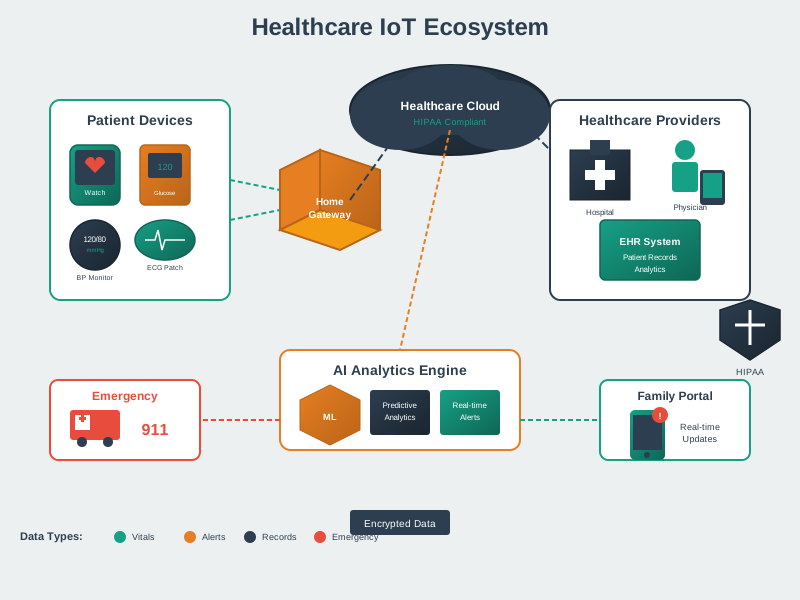
131.4 Healthcare IoT Ecosystem Architecture
The diagram below illustrates how patient sensors, edge processing, cloud analytics, and response systems work together to deliver real-time healthcare monitoring and intervention:

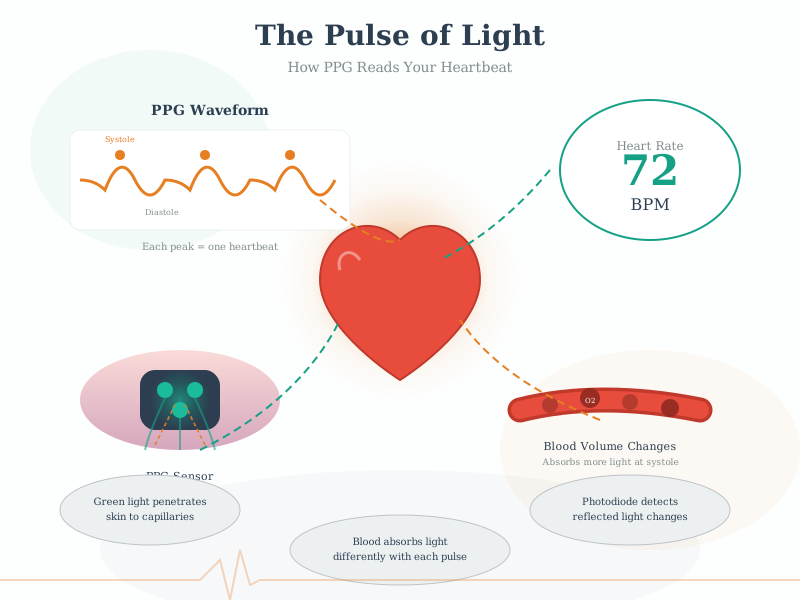
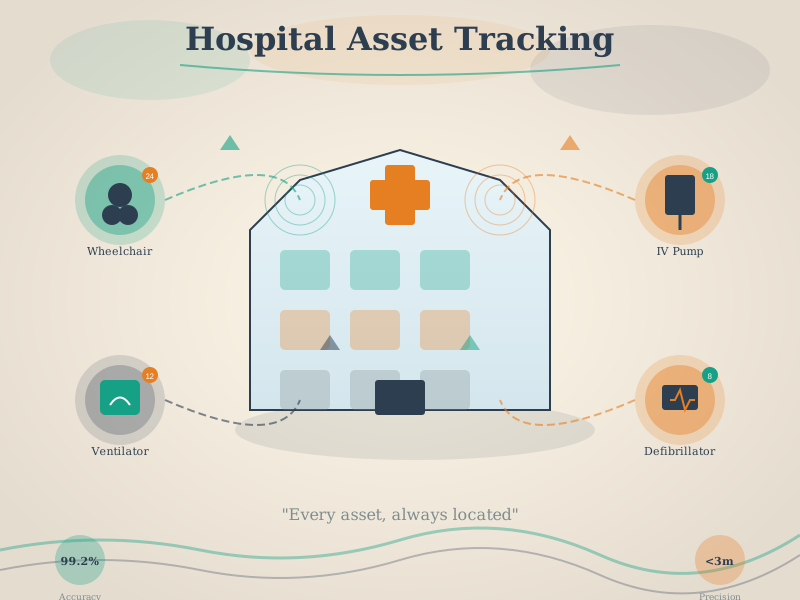
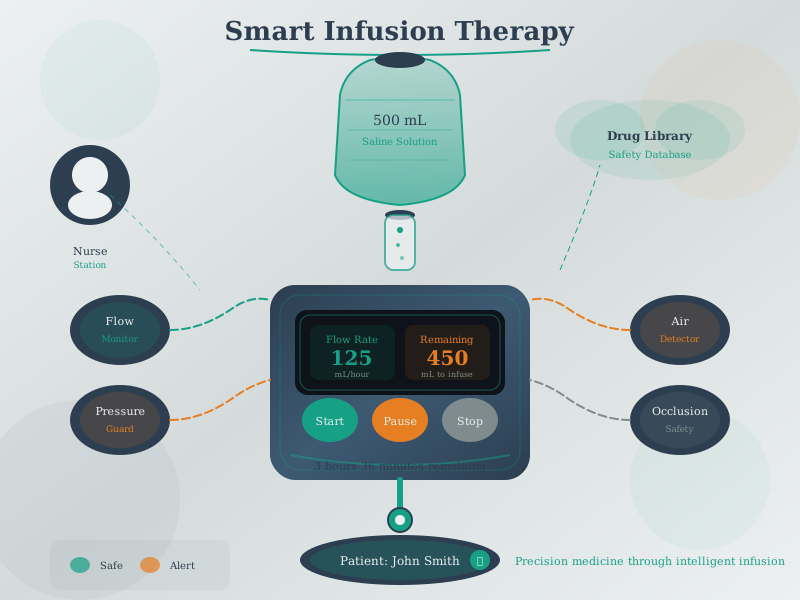
131.5 Healthcare IoT System Architecture Gallery
The following figures illustrate the breadth of healthcare IoT implementations, from wearable monitors to hospital-wide asset tracking systems.
131.6 Healthcare IoT Deployment Tradeoffs
Option A: Process health data at the edge (on-device or gateway) - Enables sub-second response times for critical alerts, works without internet connectivity, and minimizes HIPAA exposure by keeping sensitive data local. Option B: Send all data to cloud for analysis - Enables sophisticated ML models, cross-patient population insights, and easier algorithm updates without device recalls. Decision factors: Response time requirements (fall detection needs <2 seconds), regulatory constraints (HIPAA requires encryption in transit), connectivity reliability (rural elderly monitoring may lose internet), and the sophistication of analytics needed (simple threshold alerts vs. complex pattern recognition).
Option A: FDA-cleared medical devices - Clinically validated accuracy (e.g., +/-0.1 degrees C temperature), EHR integration, liability protection, and insurance reimbursement eligibility. Typical cost: $500-2,000 per device. Option B: Consumer wearables (Fitbit, Apple Watch) - Lower cost ($50-400), higher user adoption, continuous wear compliance, and faster innovation cycles. Accuracy varies but improving rapidly. Decision factors: Clinical use case (screening vs. diagnosis vs. treatment monitoring), liability exposure (who is responsible for missed detections?), reimbursement requirements (Medicare RPM codes require FDA-cleared devices), and patient population (tech-savvy vs. elderly with limited digital literacy).
Option A: Proprietary ecosystem (e.g., Apple Health, Fitbit Premium) - Seamless user experience within ecosystem, consistent data quality and validation, single vendor accountability, and integrated privacy controls. Option B: Open standards approach (FHIR, HL7, Bluetooth Health Device Profile) - Patient data portability, broad device compatibility, clinician access through standard EHR integrations, and reduced vendor dependency. Decision factors: Patient population (tech-savvy users prefer seamless ecosystems; multi-provider care requires interoperability), clinical use case (wellness tracking tolerates fragmentation; chronic disease management needs EHR integration), and regulatory requirements (21st Century Cures Act mandates patient data access).
131.7 Cross-Cutting Healthcare IoT Design Patterns
Pattern 1: Sensor Fusion for Reliability All healthcare use cases combine multiple sensors to reduce false positives: - Fall detection: Accelerometer + gyroscope + pressure mat - Baby monitoring: Position + breathing + SpO2 + temperature - Medication adherence: Weight + RFID + timestamp correlation
Pattern 2: Edge-Gateway-Cloud Architecture Healthcare IoT consistently uses three-tier deployments: 1. Edge (wearable/sensor): Ultra-low-power sensing, BLE/LoRa transmission 2. Gateway (home hub): Local alerting, immediate response, Wi-Fi/cellular backhaul 3. Cloud (analytics): Long-term storage, ML pattern detection, provider dashboards
Pattern 3: Privacy-by-Design Sensitive health data requires: - Local processing first: Edge analytics reduce cloud transmission - Encryption in transit: TLS 1.3 for all communications - Anonymization: Remove PII before analytics where possible - User control: Opt-in sharing with family/providers
Pattern 4: Alert Escalation Cascades Critical health events use graduated response: 1. Local alert (device beeps, phone notification) 2. Family caregiver notification (30-60 min delay) 3. Healthcare provider intervention (pattern-based) 4. Emergency services (life-threatening events only)
This prevents alarm fatigue while ensuring no critical event is missed.
131.8 Summary
Healthcare IoT represents one of the most impactful applications of IoT technology:
- $350 billion opportunity addressing falls, medication adherence, chronic disease, and early detection
- Three-tier architecture (edge, gateway, cloud) matches processing to latency requirements
- Design patterns including sensor fusion, privacy-by-design, and alert escalation apply across all healthcare applications
- Tradeoffs between medical-grade and consumer devices depend on clinical use case and regulatory requirements
131.9 What’s Next
Continue exploring specific healthcare applications:
- Elderly Fall Detection Systems - Comprehensive elderly monitoring and fall detection
- Baby Monitoring and Infant Care - Smart nursery and pediatric health
- Medication Adherence Solutions - Smart pill bottles and chronic disease management