242 Ad-Hoc Networks: Core Concepts and Characteristics
242.1 Learning Objectives
By the end of this chapter, you will be able to:
- Define Ad-Hoc Networks: Explain the concept of infrastructure-less, self-organizing wireless networks
- Identify Key Characteristics: Describe the five defining features of ad-hoc networks
- Compare Network Types: Distinguish between ad-hoc and infrastructure-based networks
- Evaluate Trade-offs: Analyze when ad-hoc networking is the appropriate solution
- Recognize IoT Applications: Identify scenarios where ad-hoc networks are essential
242.2 Prerequisites
Before diving into this chapter, you should be familiar with:
- Networking Basics for IoT: Understanding IP addressing, packet forwarding, and basic routing concepts
- Wireless Communication Concepts: Familiarity with wireless transmission, signal propagation, and link-layer protocols
Traditional Networks: In Wi-Fi or cellular, every device connects to a central access point or tower. The infrastructure is fixed and pre-deployed.
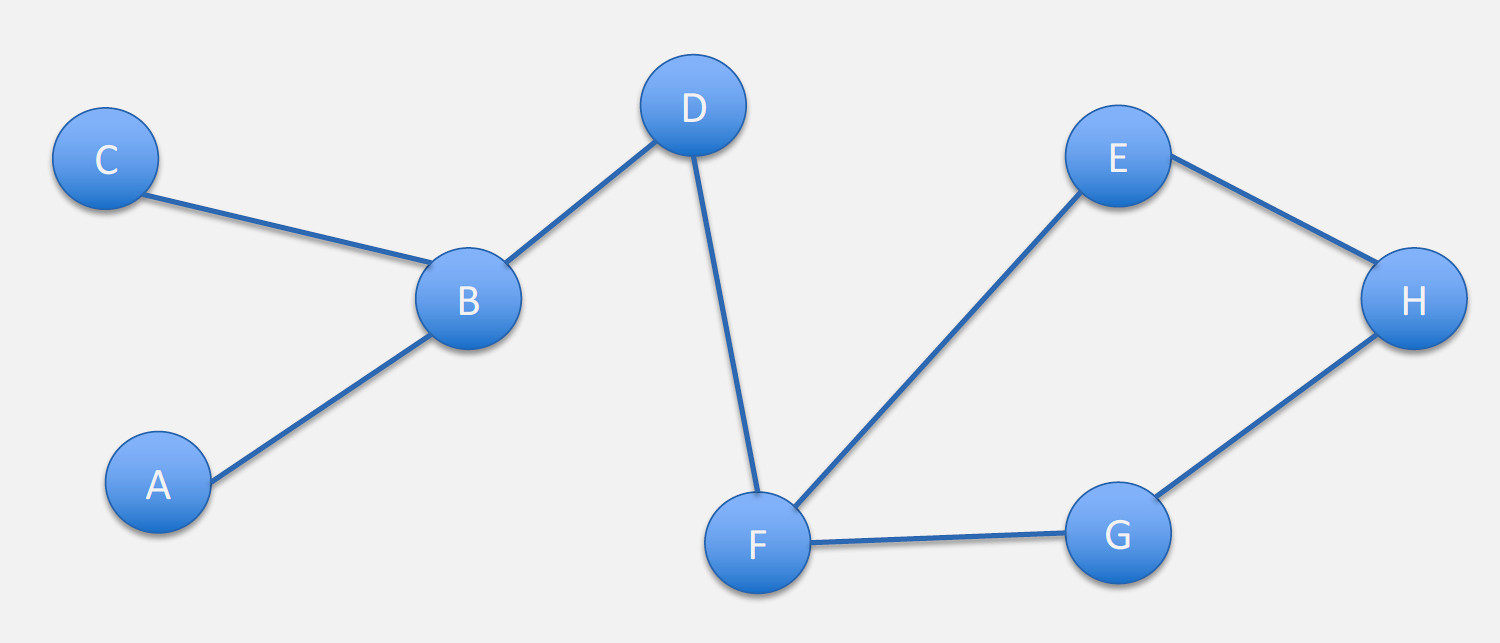
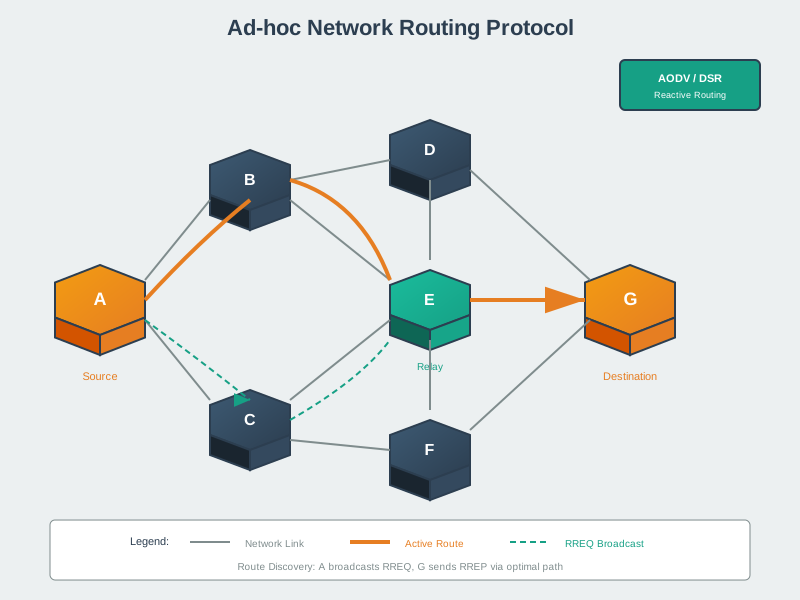
Ad-Hoc Networks: Devices connect directly to each other, forming a network without any central infrastructure. Every device can be a router, forwarding data for others.
Real-World Analogy: Imagine a town with no roads or postal service. To send a letter across town, you hand it to your neighbor, who hands it to their neighbor, and so on until it reaches the destination. Each person decides who to pass it to next. That’s ad-hoc networking!
Why “Ad-Hoc”? The term means “for this purpose” in Latin—these networks form spontaneously for a specific need and can dissolve when no longer required.
Key Characteristics:
| Feature | Ad-Hoc Network | Traditional Network |
|---|---|---|
| Infrastructure | None needed | Requires APs/towers |
| Setup | Instant, self-organizing | Pre-planned deployment |
| Failure tolerance | High (multiple paths) | Low (single point of failure) |
| Scalability | Limited (10-100 nodes) | High (thousands) |
| Latency | Variable (hop count) | Low (direct to AP) |
When to Use Ad-Hoc Networks:
- Disaster response (no existing infrastructure)
- Military/tactical (rapid deployment)
- Sensor networks (forests, oceans, farms)
- Vehicle-to-vehicle communication
- Temporary events (concerts, construction sites)
Bottom Line: Use ad-hoc networks when you can’t or don’t want to deploy fixed infrastructure, and devices need to communicate peer-to-peer.
242.3 What Is an Ad-Hoc Network?
An ad-hoc network (also called MANET - Mobile Ad-hoc Network) is a decentralized, self-configuring wireless network where devices communicate directly without relying on pre-existing infrastructure.
Misconception 1: “Ad-hoc networks are always mesh networks”
Reality: Not all ad-hoc networks use mesh topology. Ad-hoc refers to infrastructure-less operation; topology can be star (single-hop), tree, or mesh (multi-hop). Example: Bluetooth piconets are ad-hoc but use star topology (1 master, 7 slaves).
Misconception 2: “Ad-hoc networks don’t need any configuration”
Reality: While self-organizing, ad-hoc networks still require initial configuration: radio parameters (frequency, power), security keys (encryption), routing protocol selection. “Self-organizing” means topology forms automatically, not that setup is zero.
Misconception 3: “More hops always mean worse performance”
Reality: Multi-hop can improve performance if single-hop requires high transmit power. Example: 5-hop path using 10 mW/hop (50 mW total) beats 1-hop path using 1000 mW (Friis equation). Energy efficiency improves, though latency increases.
Misconception 4: “Reactive routing is always better for energy”
Reality: Reactive routing saves energy only for sparse traffic. For continuous traffic, route discovery overhead (flooding) exceeds proactive update cost. Example: Smart city sensors reporting every 30 seconds waste energy rediscovering routes; proactive routing is better.
Misconception 5: “Ad-hoc networks can scale infinitely”
Reality: Routing overhead and collision probability limit scalability. Flat ad-hoc networks struggle beyond 100-200 nodes. Solutions: Hierarchical routing (cluster heads), geographic routing (location-based), or hybrid approaches.
Misconception 6: “All nodes must be identical (homogeneous)”
Reality: Heterogeneous ad-hoc networks are common: some nodes have more battery (USB-powered vs coin cell), more memory (gateway vs sensor), or better radios (long-range vs short-range). Routing protocols can exploit heterogeneity (e.g., prefer high-battery nodes as relays).
242.4 Key Characteristics
⭐ Foundational
The five defining characteristics of ad-hoc networks are:
- No Infrastructure: Devices (nodes) communicate peer-to-peer without access points, base stations, or routers
- Self-Organizing: Network topology forms automatically as nodes join and leave
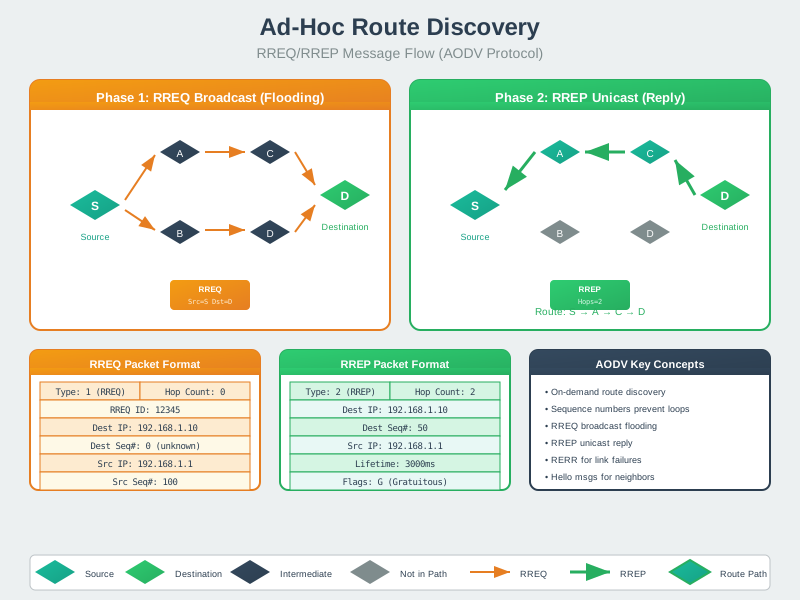
- Multi-Hop Communication: Packets may traverse multiple intermediate nodes to reach destinations
- Dynamic Topology: Node mobility and failures cause frequent topology changes
- Distributed Control: No centralized authority; routing decisions made locally
These characteristics differentiate ad-hoc networks from traditional infrastructure-based networks and create unique challenges for routing, security, and resource management.
242.5 Ad-Hoc vs Infrastructure Networks
242.6 Why Ad-Hoc Networks Matter for IoT
Ad-hoc networks are critical for IoT scenarios where:
- Rapid Deployment: Emergency response, military operations, temporary events
- No Infrastructure: Remote areas (forests, oceans, deserts), developing regions
- Cost Constraints: Infrastructure deployment too expensive for sparse node density
- Mobility: Vehicle-to-vehicle (V2V), drone swarms, wearable health monitors
- Resilience: Self-healing networks for critical infrastructure monitoring
| Factor | Ad-Hoc Network | Infrastructure Network | When to Choose |
|---|---|---|---|
| Deployment Time | Minutes (self-organizing) | Weeks-months (AP installation) | Ad-hoc for emergency/temporary deployments |
| Infrastructure Cost | None (peer-to-peer) | High ($500-5K per access point) | Ad-hoc when infrastructure ROI unclear |
| Scalability | Limited (10-200 nodes typical) | High (thousands per AP) | Infrastructure when >200 nodes needed |
| Latency | Variable (hop-dependent, 50-500ms) | Low and predictable (<20ms) | Infrastructure for real-time applications |
| Bandwidth | Limited (shared among hops) | High (dedicated backhaul) | Infrastructure for video/high-throughput |
| Reliability | Self-healing (multiple paths) | Single point of failure risk | Ad-hoc for mission-critical resilience |
| Mobility Support | Excellent (dynamic topology) | Limited (handoff overhead) | Ad-hoc for vehicular/drone networks |
| Management | Complex (distributed) | Simple (centralized) | Infrastructure when IT team available |
Quick Decision Rule: Choose ad-hoc networking when you cannot deploy infrastructure (disaster zones, remote areas, temporary events) or when device mobility is too high for infrastructure handoffs (VANETs, drone swarms).
Explore Related Topics:
Protocols Using Ad-Hoc Principles:
- Zigbee Mesh Networking - How Zigbee implements self-healing mesh using AODV-like routing
- Thread Mesh Architecture - Thread’s mesh networking with border routers
- Bluetooth Mesh - Managed flooding and friend nodes for low-power mesh
- RPL for IoT - Proactive routing optimized for low-power lossy networks
Architecture Patterns:
- Wireless Sensor Networks - WSNs as stationary ad-hoc networks with energy constraints
- UAV Networks - Flying ad-hoc networks (FANETs) with 3D topology and high mobility
- Edge Computing Patterns - How edge nodes collaborate in ad-hoc fashion for distributed inference
Design and Simulation:
- Network Design and Simulation - Simulating ad-hoc networks in NS-3, OPNET
- Network Topology Design - Mesh vs star vs tree topology trade-offs
- Simulations Hub - Interactive ad-hoc routing simulators
Security Challenges:
- Threats and Attacks - Sybil attacks, wormholes, and blackholes in ad-hoc networks
- Encryption Architecture - Securing ad-hoc communications without infrastructure
Real-World Applications:
- Smart City Applications - VANET for traffic management
- Industrial IoT - Ad-hoc sensor networks in factories
242.7 Understanding Check: Infrastructure vs Ad-Hoc Trade-offs
Scenario: You’re designing a temporary construction site monitoring system for a 6-month project. The site has 30 sensors (dust, noise, vibration) spread across 500m x 500m area. No existing Wi-Fi or cellular coverage. Budget: $10,000 total.
Think about:
- Should you deploy infrastructure (cellular base station or Wi-Fi APs) or use ad-hoc networking?
- What are the cost, reliability, and deployment time trade-offs?
- How does the 6-month temporary nature affect your decision?
Key Insight: Ad-hoc networking is ideal for this scenario.
Cost analysis:
- Infrastructure option: Install 5x Wi-Fi APs ($200 each) = $1,000. Trenching/mounting = $3,000. Monthly internet = $100 x 6 = $600. Total: $4,600 infrastructure + $5,400 for sensors.
- Ad-hoc option: Sensors with mesh radios ($180 each) = $5,400. Gateway with cellular backhaul ($500 + $50/month x 6) = $800. Total: $6,200 (saves $4,400).
Deployment time:
- Infrastructure: 2-3 weeks (permits, installation, wiring).
- Ad-hoc: 2-3 days (place sensors, power on, auto-mesh).
Reliability:
- Infrastructure: Single point of failure (AP down -> all sensors in that zone offline).
- Ad-hoc: Self-healing mesh (sensor fails -> neighbors route around it).
Temporary nature:
- Infrastructure investment wasted after 6 months (Wi-Fi APs remain, but no reuse).
- Ad-hoc sensors relocatable to next site.
Trade-offs: Infrastructure provides higher bandwidth and lower latency, but ad-hoc’s cost and deployment advantages dominate for temporary deployments.
General rule: Use ad-hoc for temporary (<1 year), mobile, or infrastructure-less scenarios. Use infrastructure for permanent deployments with high bandwidth needs.
242.8 Summary
Ad-hoc networks represent a fundamental paradigm shift from infrastructure-based networking to decentralized, self-organizing wireless communication. This chapter introduced the core concepts and characteristics that define ad-hoc networks.
242.8.1 Key Takeaways
Infrastructure-Less Operation: Ad-hoc networks eliminate the need for pre-deployed access points, base stations, or routers, enabling rapid deployment in remote, temporary, or disaster-affected areas.
Five Defining Characteristics: No infrastructure, self-organizing, multi-hop communication, dynamic topology, and distributed control.
Trade-Offs vs Infrastructure:
- Ad-hoc offers rapid deployment, self-healing, and no infrastructure cost
- Infrastructure offers higher bandwidth, lower latency, and better scalability
IoT Relevance: Ad-hoc networks are essential for disaster recovery, military operations, vehicular networks, sensor deployments, and drone swarms.
Decision Framework: Choose ad-hoc when infrastructure deployment is impractical, temporary, or when device mobility is high.
242.8.2 Common Pitfalls to Avoid
- Assuming self-organizing means zero configuration: Radio parameters, security keys, and routing protocols still require careful setup
- Expecting infinite scalability: Flat ad-hoc networks struggle beyond 100-200 nodes
- Confusing ad-hoc with mesh: Ad-hoc is infrastructure-less; topology can vary
242.9 What’s Next
Now that you understand the core concepts of ad-hoc networks, continue with:
- Ad-Hoc Networks: Multi-Hop Routing and Protocols: Learn about multi-hop communication and the three routing paradigms (proactive, reactive, hybrid)
- Ad-Hoc Networks: Applications and Practice: Explore real-world applications, worked examples, and test your knowledge
242.9.1 Deep Dive into Specific Protocols
- Ad-hoc Routing: Proactive (DSDV): Table-driven routing with sequence numbers
- Ad-hoc Routing: Reactive (DSR): On-demand source routing
- Ad-hoc Routing: Hybrid (ZRP): Zone-based hybrid routing