648 Layered Models: Fundamentals
648.1 Overview
Layered network models are the foundation of all IoT communication. This section covers the theoretical frameworks (OSI, TCP/IP) and IoT-specific reference models that enable billions of devices to communicate seamlessly.
Core concept: Network communication is organized into layers (OSI: 7 layers, TCP/IP: 4 layers) where each layer handles one specific function and adds its own header to data passing through - a process called encapsulation.
Why it matters: When IoT connectivity fails, understanding layers helps you diagnose whether the problem is physical (antenna/cable), network (IP/routing), or application (code/protocol) - each requires different troubleshooting.
Key takeaway: Think “bottom-up” when debugging: check Physical layer first (is the device powered and connected?), then Data Link (MAC address visible?), then Network (IP assigned?), and finally Application (service running?).
648.2 Learning Objectives
By the end of this section, you will be able to:
- Understand Network Standards: Explain why standards and protocols enable global connectivity
- Compare OSI and TCP/IP Models: Differentiate between the seven-layer OSI and four-layer TCP/IP models
- Explain Encapsulation: Describe how data moves through protocol layers
- Apply IoT Reference Models: Understand IoT-specific architectural frameworks
- Configure MAC and IP Addressing: Work with hardware and network layer addresses
648.3 Chapters in This Section
648.3.1 OSI and TCP/IP Models
The foundational layered network models that enable global interoperability.
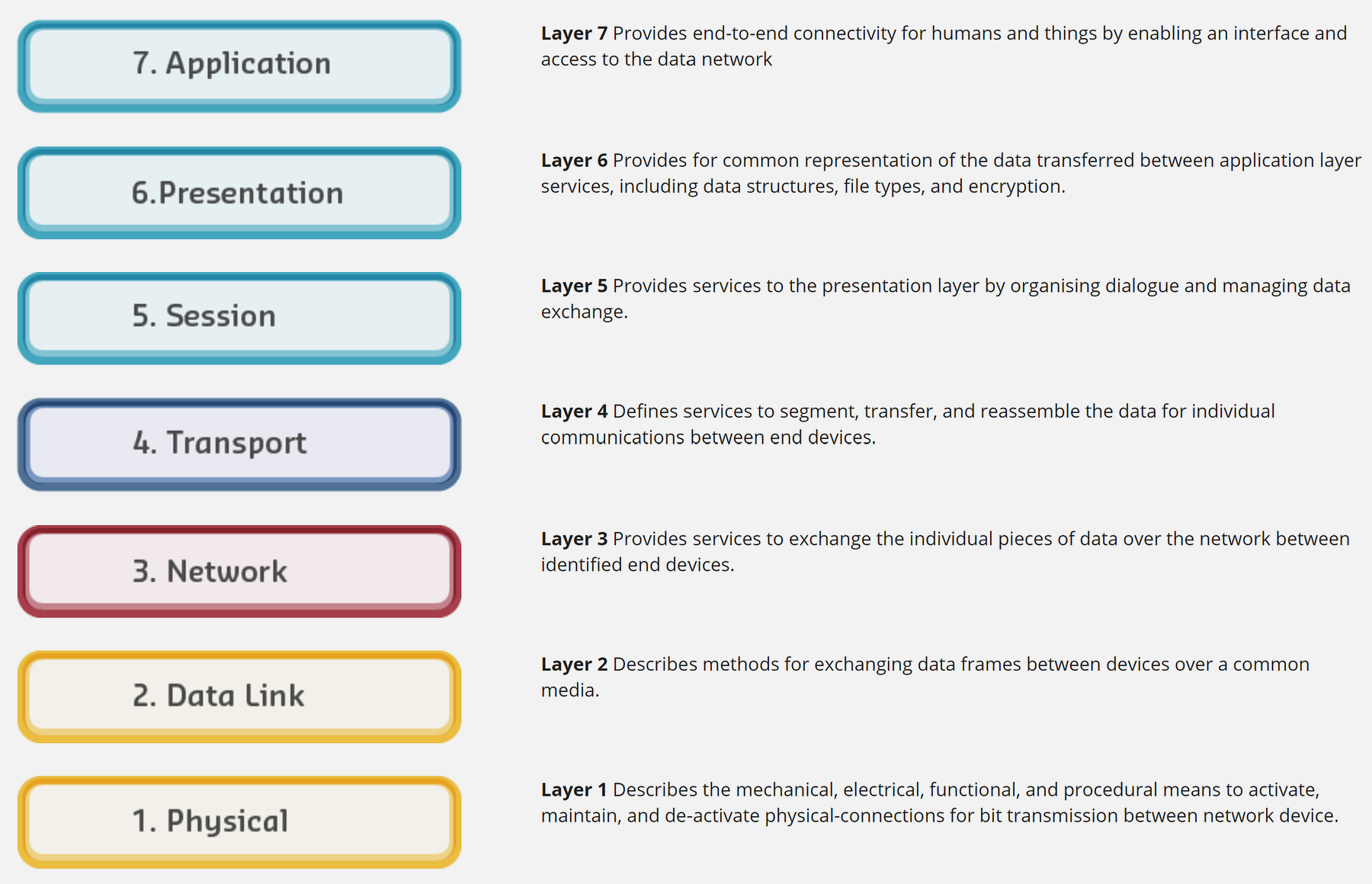
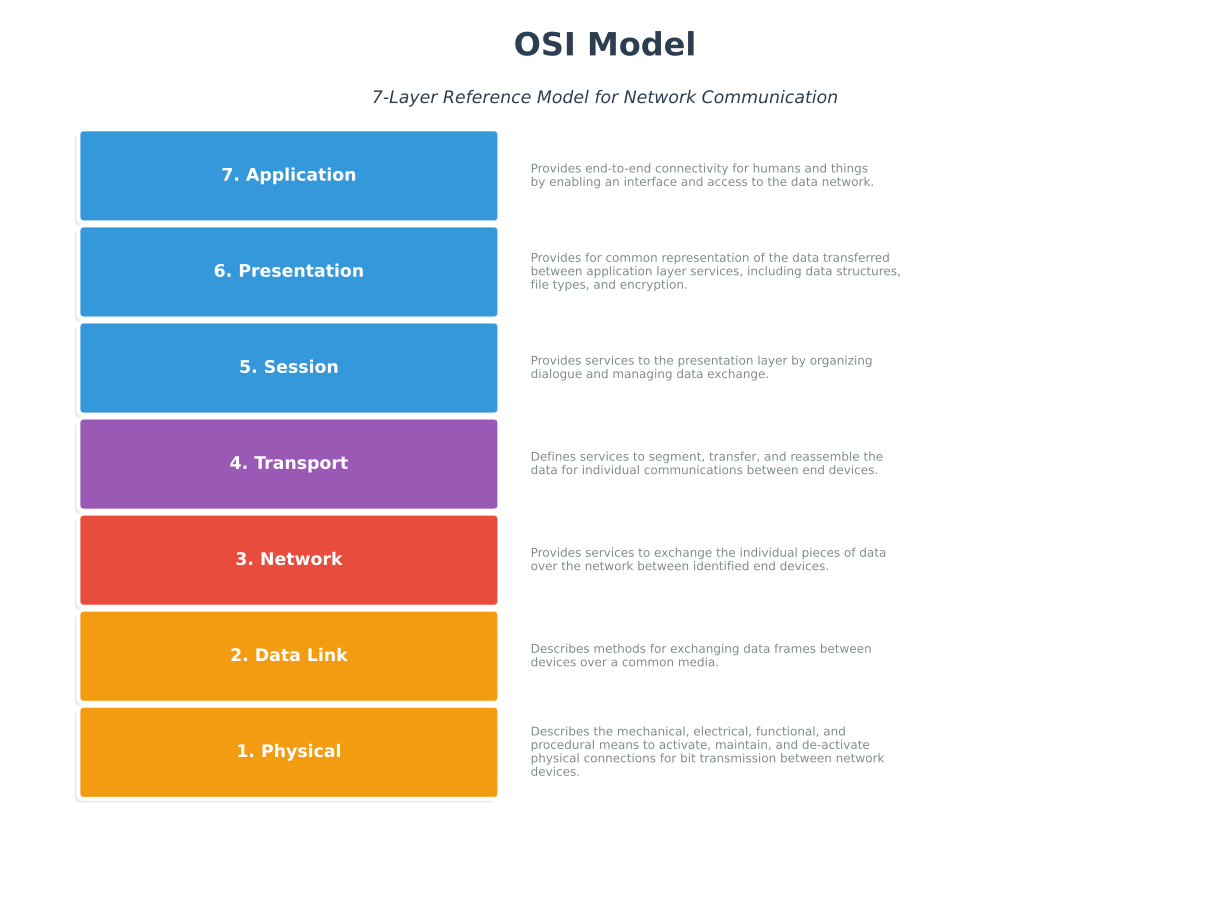
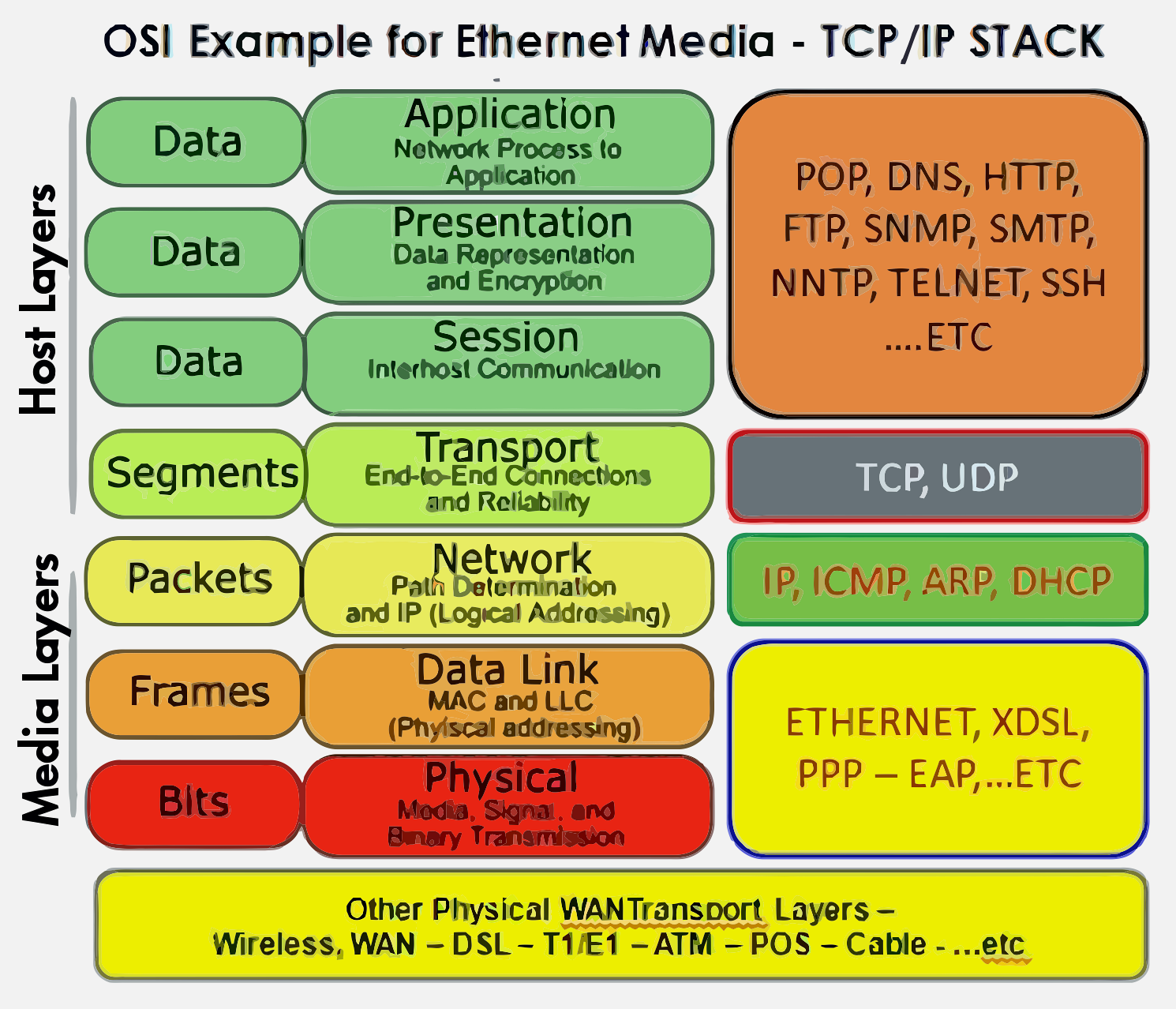
Topics covered: - Networking standards organizations (IEEE, IETF, ITU, ISO) - What is a protocol and why we need them - The OSI 7-layer theoretical framework - The TCP/IP 4-layer practical implementation - Layer-by-layer troubleshooting approach
Key figures:
648.3.2 Encapsulation and Protocol Data Units
How data is transformed as it moves through protocol layers.
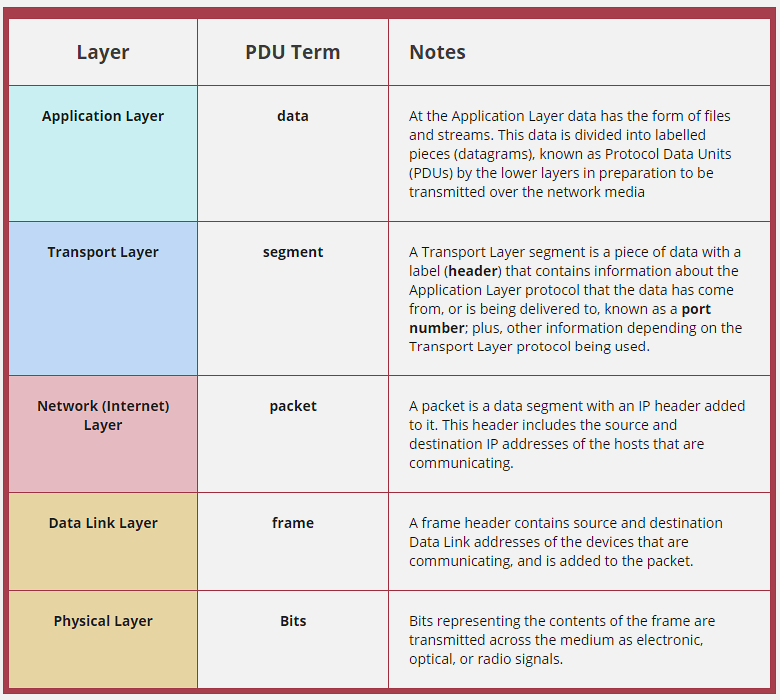
Topics covered: - Protocol Data Units (PDUs) at each layer - Encapsulation: headers added going down - Decapsulation: headers removed going up - Byte-level analysis of protocol overhead - Why IoT uses header compression
Key figures:
648.3.3 IoT Reference Models
IoT-specific architectural frameworks beyond traditional networking.
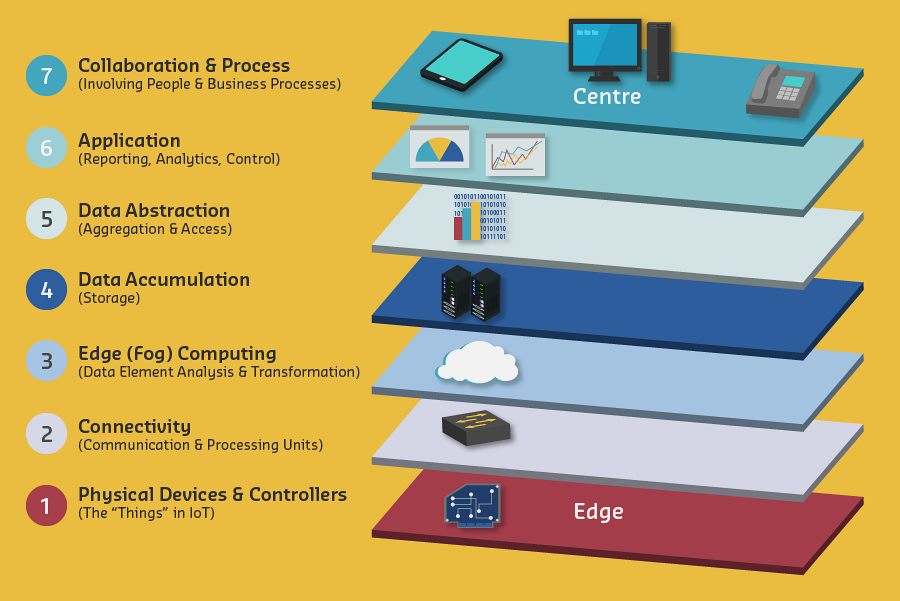
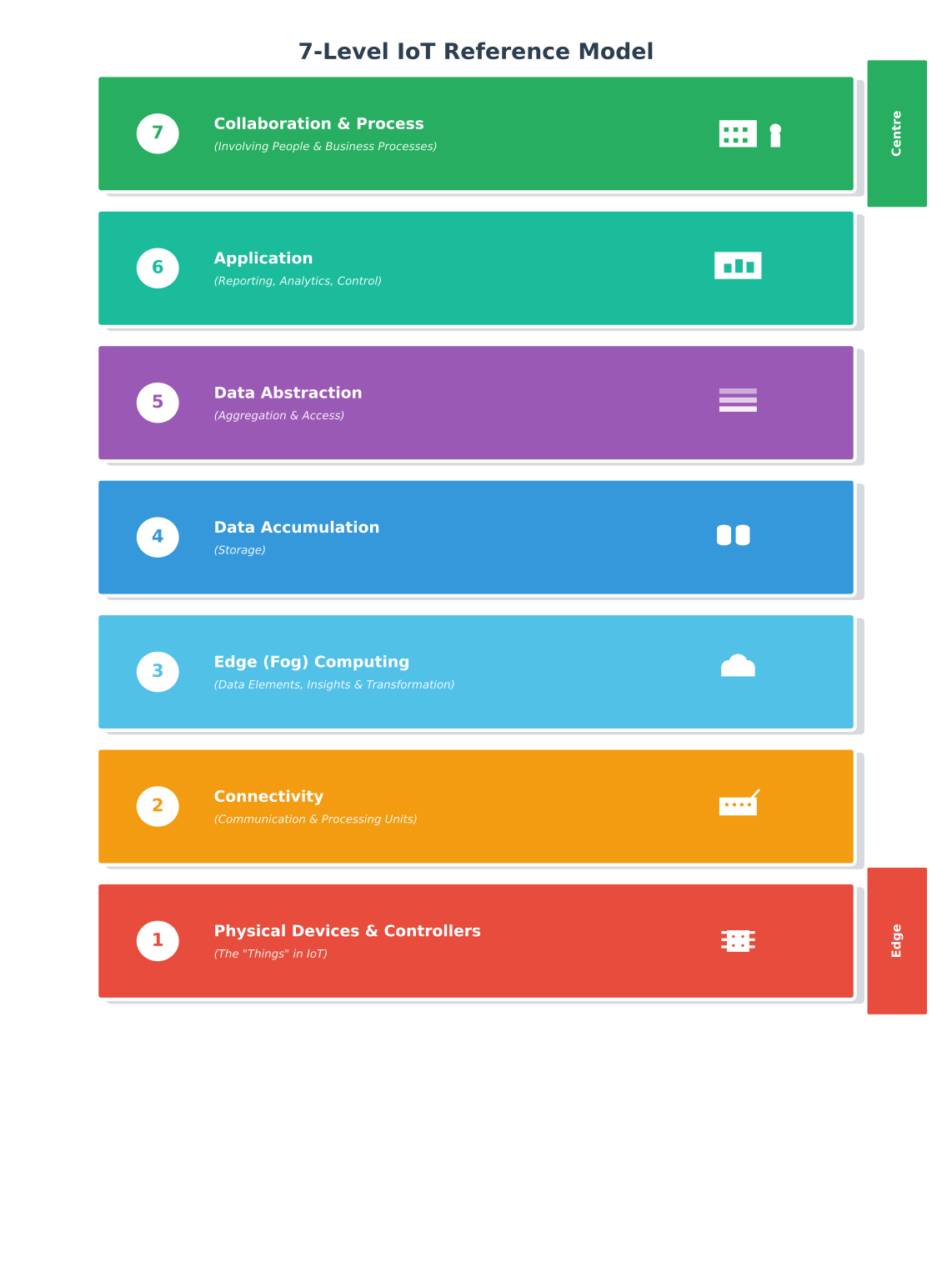
Topics covered: - Why IoT needs specialized reference models - ITU IoT Reference Model (4 layers + cross-cutting) - Cisco 7-Level IoT Reference Model (detailed) - Comparing Wi-Fi, Zigbee, and LoRaWAN stacks - Edge computing: where to process data
Key figures:
648.4 Quick Reference
| Model | Layers | Use Case |
|---|---|---|
| OSI | 7 (Application to Physical) | Teaching, troubleshooting, detailed analysis |
| TCP/IP | 4 (Application to Network Access) | Practical implementation, development |
| ITU IoT | 4 + cross-cutting | Standards compliance, architecture planning |
| Cisco 7-Level | 7 (Devices to Collaboration) | IoT system design, edge computing decisions |
648.5 What’s Next
Start with the foundational models, then progress through practical implementation:
- OSI and TCP/IP Models - Start here to understand the layered model foundation
- Encapsulation and Protocol Data Units - Learn how data moves through layers
- IoT Reference Models - Explore IoT-specific architectures
- Layered Models: Labs and Implementation - Hands-on MAC/IP addressing and Python implementations
- Layered Models: Review - Test your understanding with comprehensive knowledge checks
IoT Reference Architectures: - IoT Reference Models - Multi-layer IoT system architectures - Architectural Enablers - Technologies enabling IoT at each layer
Protocol Stack Components: - IoT Protocols Fundamentals - How IoT protocols fit into layered models - Networking Fundamentals - Core networking principles across layers - Application Protocols - Application layer protocols (MQTT, CoAP, HTTP)
Addressing: - Networking Addressing and Subnetting - IP addressing, subnet masks, CIDR