84 Protocol Selection: Real-World Scenarios
84.1 Learning Objectives
By the end of this chapter, you will be able to:
- Apply Framework to Real Scenarios: Work through complete protocol selection decisions
- Calculate TCO: Perform total cost of ownership analysis for 5+ year deployments
- Handle Multi-Protocol Systems: Design systems using different protocols for different needs
- Consider Edge Cases: Address challenging environments like underground, maritime, and building interiors
This Chapter Series: - Protocol Selection Framework - Overview and index - The Challenge - Understanding trade-offs - Systematic Selection - Step-by-step framework - Anti-Patterns and Tradeoffs - Common mistakes
Application Domains: - Application Domains - Requirements by domain - IoT Use Cases - Industry examples
84.2 Scenario 1: Smart City Parking System
84.3 Scenario 2: Wearable Health Monitor
84.4 Scenario 3: Fleet Tracking Across Three Continents
84.5 Scenario 4: Smart Building Retrofit
84.6 Summary
Key Takeaways:
- Smart City: LoRaWAN wins for large-scale deployments with infrastructure ownership and no recurring fees
- Wearables: BLE is the only practical choice for phone-connected, coin-cell-powered medical devices
- Global Logistics: Multi-protocol (Satellite + Cellular + Wi-Fi) is necessary for true global coverage
- Building Retrofit: Mesh protocols (Thread/Zigbee) handle RF challenges in dense environments
- TCO Analysis: Always calculate 5-year costs including infrastructure, subscriptions, and maintenance
- Edge Cases: Underground, maritime, and concrete buildings require special consideration
84.7 What’s Next
You’ve now completed the Protocol Selection Framework series. Return to the main overview for additional resources, or continue to Sensor to Network Pipeline to learn how data flows through the protocols you’ve selected.
Return to Framework Overview →
Continue to Sensor to Network Pipeline →
84.8 Visual Reference Gallery
The following AI-generated figures provide alternative visual perspectives on protocol selection concepts covered in this chapter series.
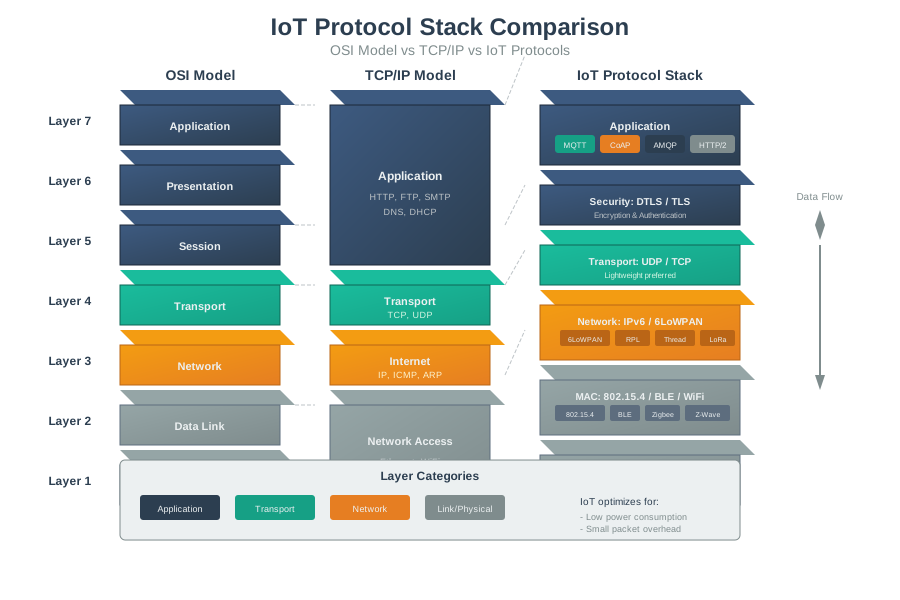
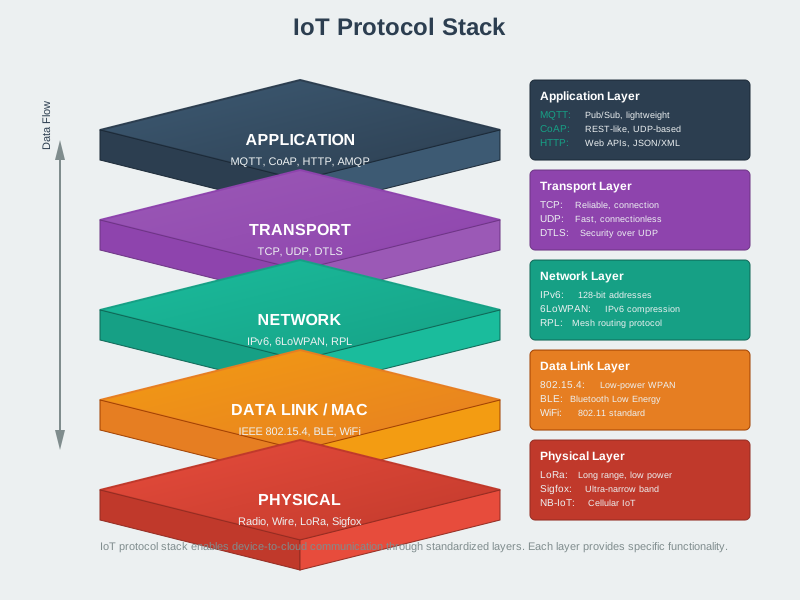
Different IoT protocols organize their functionality into distinct layer stacks. This visualization compares the major protocol families side-by-side: Wi-Fi/TCP/IP (high bandwidth, high power), BLE (short range, low power), Zigbee (mesh networking, moderate range), LoRaWAN (long range, very low power), and NB-IoT (cellular infrastructure, wide coverage). Understanding these stacks helps engineers select the right protocol for their application requirements and anticipate interoperability challenges when bridging between protocol domains.
Protocol selection involves navigating multiple trade-off dimensions simultaneously. This visualization maps common IoT protocols across the key decision axes: Wi-Fi offers high bandwidth but high power consumption, LoRaWAN provides extreme range at the cost of limited data rates, BLE balances power efficiency with short range, and cellular IoT (NB-IoT/LTE-M) trades subscription costs for wide coverage without deploying infrastructure. No protocol excels in all dimensions, making application requirements the primary driver of selection.
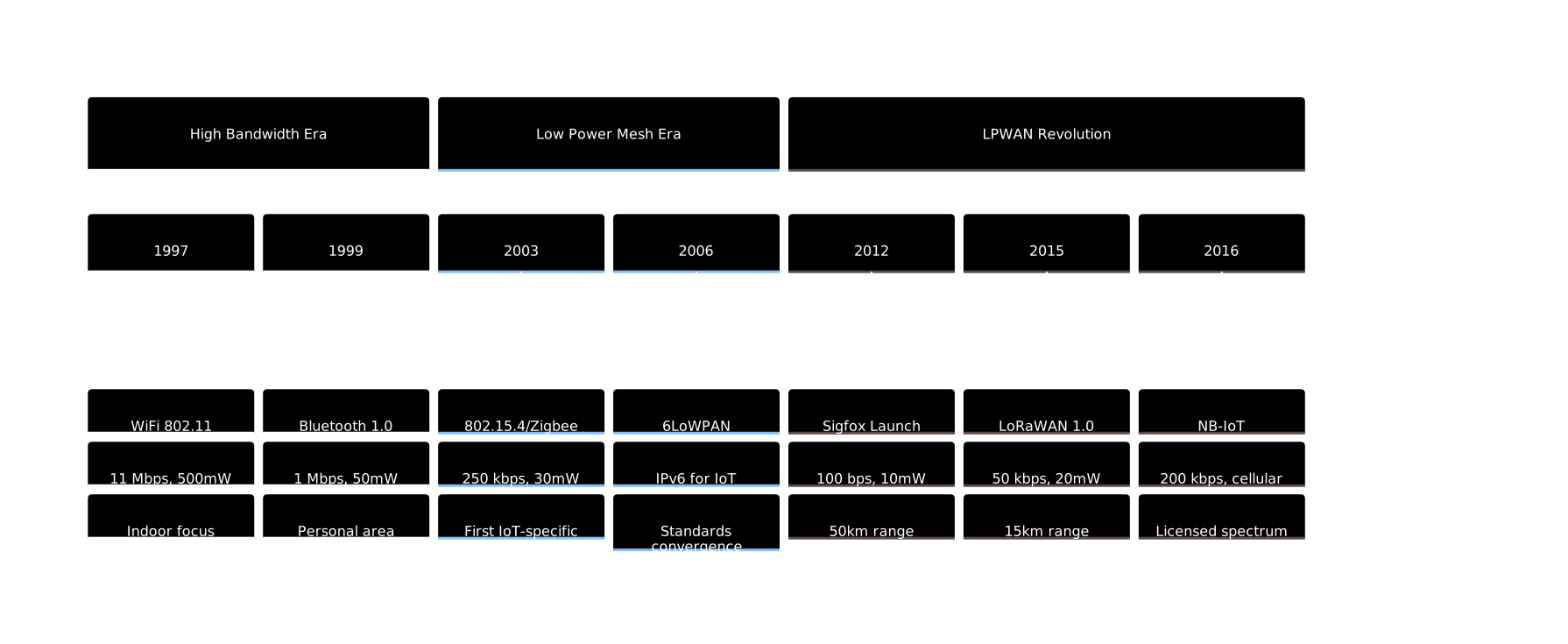
Understanding protocol evolution helps predict future directions and assess technology maturity. This timeline shows how IoT protocols emerged from different technology families: cellular IoT (NB-IoT, LTE-M, 5G RedCap) evolved from mobile networks, LPWAN protocols (LoRaWAN, Sigfox) emerged to fill the long-range/low-power gap, and mesh protocols (Zigbee, Thread, Matter) developed from home automation needs. Recognizing these lineages helps engineers evaluate ecosystem maturity and vendor commitment.