1026 Matter Architecture and Fabric
1026.1 Matter Architecture: Complete Guide
NoteLearning Objectives
By the end of this section, you will be able to:
- Understand Matter’s layered protocol architecture
- Explain the Matter Data Model (endpoints, clusters, attributes, commands)
- Describe Matter’s Interaction Model (read, write, subscribe, invoke)
- Understand fabric management and multi-admin architecture
- Explain CASE and PASE security handshakes
- Design Matter network topologies for different deployment scenarios
1026.2 Prerequisites
Before diving into this chapter, you should be familiar with:
- Matter Protocol Overview: Understanding what Matter is and why it was created
- Thread Fundamentals and Roles: Thread is Matter’s primary mesh transport
- Networking Basics: IP addressing and network fundamentals
- IoT Protocols Overview: Context for Matter’s position in the protocol landscape
1026.3 Chapter Overview
Matter’s architecture is comprehensive, covering protocol layers, data models, security, and network topology. This content has been organized into focused chapters for easier learning:
1026.3.1 Architecture Deep Dives
| Chapter | Focus | Time |
|---|---|---|
| Matter Protocol Stack and Data Model | Protocol layers, nodes, endpoints, clusters, attributes, commands | 15 min |
| Matter Interactions and Commissioning | Read, write, subscribe, invoke interactions; commissioning flow | 15 min |
| Matter Fabric and Security | Fabrics, multi-admin, PASE, CASE, encryption, network topology | 15 min |
1026.3.2 Quick Reference
1026.4 Key Concepts Summary
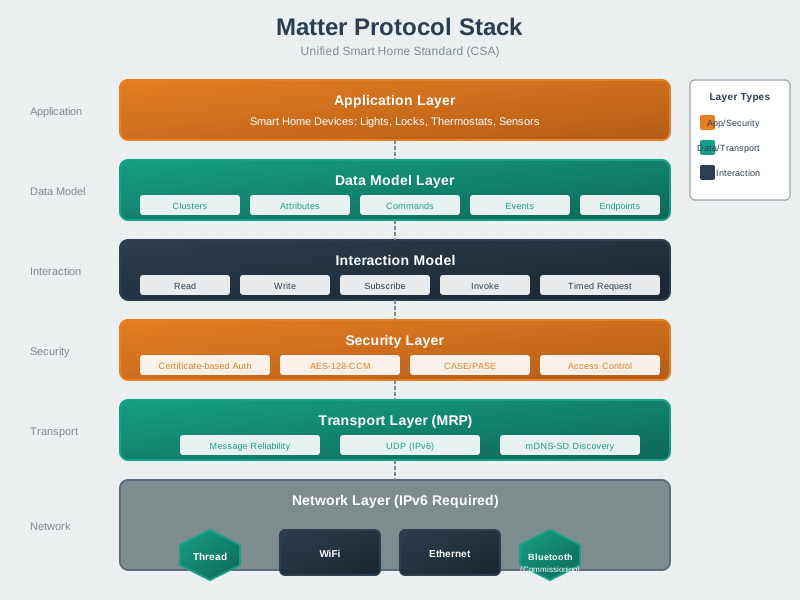
1026.4.1 Protocol Stack Layers
| Layer | Component | Responsibility |
|---|---|---|
| Application | Data Model | Define device capabilities |
| Application | Interaction Model | Define how to access capabilities |
| Security | CASE/PASE | Establish secure sessions |
| Security | AES-CCM | Encrypt and authenticate messages |
| Transport | MRP | Ensure reliable delivery over UDP |
| Network | IPv6 | Route packets between nodes |
| Link | Thread/Wi-Fi/Eth | Physical transmission |
1026.4.2 Data Model Hierarchy
Node (Physical Device)
├── Endpoint 0 (Root/Utility)
│   ├── Basic Information Cluster
│   └── Network Commissioning Cluster
└── Endpoint 1+ (Application)
    ├── Cluster (e.g., On/Off)
    │   ├── Attribute (OnOff: boolean)
    │   └── Command (Toggle)
    └── Cluster (e.g., Level Control)
        ├── Attribute (CurrentLevel: uint8)
        └── Command (MoveToLevel)
1026.4.3 Security Model
| Protocol | Purpose | When Used |
|---|---|---|
| PASE | Passcode-based session | Initial commissioning |
| CASE | Certificate-based session | Normal operation |
| AES-CCM | Message encryption | All messages after session |
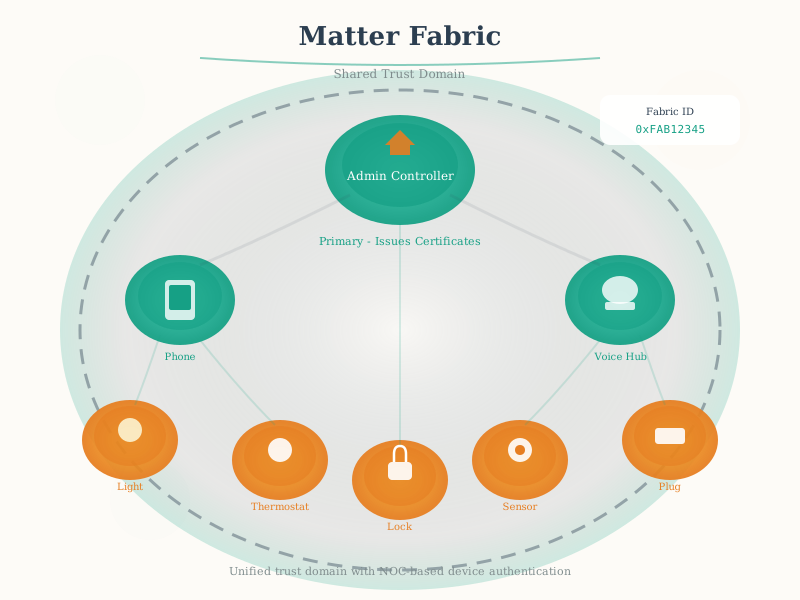
1026.4.4 Multi-Admin (Fabrics)
- Fabric = Administrative domain with shared Root CA
- Max Fabrics = Typically 5 per device
- Independent control = Each ecosystem operates separately
- No cloud bridging = Direct local control
1026.5 Learning Path
TipRecommended Order
- Start with Protocol Stack and Data Model - Understand the foundation
- Then Interactions and Commissioning - Learn how devices communicate
- Finally Fabric and Security - Master multi-admin and encryption
1026.7 What’s Next
Begin your deep dive into Matter architecture:
- Matter Protocol Stack and Data Model - Start with the foundational architecture