%%{init: {'theme': 'base', 'themeVariables': {'primaryColor': '#2C3E50', 'primaryTextColor': '#fff', 'primaryBorderColor': '#16A085', 'lineColor': '#E67E22', 'secondaryColor': '#16A085', 'tertiaryColor': '#7F8C8D'}}}%%
graph TB
    A[ISA 100.11A Protocol Stack] --> B[Application Layer]
    A --> C[Transport Layer]
    A --> D[Network Layer]
    A --> E[Data Link Layer]
    A --> F[Physical Layer]

    B --> B1[ISA 100 Application<br/>Tunneled Protocols:<br/>Modbus, HART, etc.]
    C --> C1[UDP<br/>End-to-End Security]
    D --> D1[IPv6 + 6LoWPAN<br/>Header Compression]
    E --> E1[IEEE 802.15.4 MAC<br/>TDMA + CSMA/CA<br/>Hop-by-Hop Security]
    F --> F1[IEEE 802.15.4 PHY<br/>2.4 GHz<br/>16 Channels]

    style A fill:#E67E22,stroke:#2C3E50,color:#fff
    style B fill:#2C3E50,stroke:#16A085,color:#fff
    style C fill:#16A085,stroke:#2C3E50,color:#fff
    style D fill:#16A085,stroke:#2C3E50,color:#fff
    style E fill:#2C3E50,stroke:#16A085,color:#fff
    style F fill:#7F8C8D,stroke:#2C3E50,color:#fff
1006 ISA 100.11A Protocol Stack and Comparison
1006.1 Introduction
This chapter explores the ISA 100.11A protocol stack architecture and provides a detailed comparison with WirelessHART. Understanding these differences is crucial for selecting the right industrial wireless standard for specific deployment requirements.
NoteLearning Objectives
By the end of this chapter, you will be able to:
- Explain the ISA 100.11A layered protocol architecture
- Understand the security key hierarchy and dual encryption approach
- Compare ISA 100.11A and WirelessHART across all protocol layers
- Identify the philosophical differences between the two standards
- Make informed decisions about protocol selection for industrial applications
1006.2 Prerequisites
Before studying this chapter, you should be familiar with:
- ISA 100.11A Fundamentals: Core concepts, technical specifications, and network architecture
- 6LoWPAN Fundamentals: IPv6 header compression essentials
- WirelessHART Fundamentals: Competing industrial wireless standard
1006.3 Protocol Stack
1006.3.1 Layered Architecture
ISA 100.11A offers more flexibility than WirelessHART in upper layers:
{fig-alt=“ISA 100.11A protocol stack showing Application layer with tunneled protocols (Modbus, HART), Transport layer with UDP security, Network layer with IPv6/6LoWPAN compression, Data Link layer with IEEE 802.15.4 MAC using hybrid TDMA/CSMA and hop-by-hop security, Physical layer with 2.4 GHz IEEE 802.15.4”}
NoteAlternative View: ISA100.11a vs WirelessHART Stack Comparison
This variant directly compares the protocol stacks side-by-side:
%%{init: {'theme': 'base', 'themeVariables': {'primaryColor': '#2C3E50', 'primaryTextColor': '#fff', 'primaryBorderColor': '#16A085', 'lineColor': '#E67E22', 'secondaryColor': '#16A085', 'tertiaryColor': '#7F8C8D', 'fontSize': '10px'}}}%%
graph TB
    subgraph ISA["ISA100.11a Stack"]
        IA["Application:<br/>Native + Tunneled<br/>(Modbus, HART, FF)"]
        IT["Transport:<br/>UDP"]
        IN["Network:<br/>IPv6 + 6LoWPAN"]
        IM["MAC:<br/>TDMA + CSMA/CA"]
        IP["PHY: IEEE 802.15.4<br/>2.4 GHz"]
        IA --> IT --> IN --> IM --> IP
    end

    subgraph WHART["WirelessHART Stack"]
        WA["Application:<br/>HART Commands Only"]
        WT["Transport:<br/>None (direct)"]
        WN["Network:<br/>Proprietary Graph Routing"]
        WM["MAC:<br/>TDMA Only"]
        WP["PHY: IEEE 802.15.4<br/>2.4 GHz"]
        WA --> WT --> WN --> WM --> WP
    end

    subgraph KEY["Key Differences"]
        K1["ISA: IPv6 = IT Integration"]
        K2["WHART: Graph = Determinism"]
        K3["ISA: CSMA = Flexibility"]
        K4["WHART: TDMA = Reliability"]
    end

    ISA --> KEY
    WHART --> KEY

    style ISA fill:#7F8C8D,stroke:#2C3E50,color:#fff
    style WHART fill:#16A085,stroke:#2C3E50,color:#fff
    style KEY fill:#2C3E50,stroke:#16A085,color:#fff
Both protocols share the same IEEE 802.15.4 PHY layer but diverge above that. ISA100.11a uses standard Internet protocols (IPv6/UDP), while WirelessHART uses proprietary optimized layers. The trade-off: IT compatibility vs proven industrial reliability.
1006.3.2 Security Architecture
Key Types: - Master Key: Long-term device credential - Session Keys: Per-device communication - DLL Keys: Data link layer encryption (hop-by-hop) - Network Keys: Network layer encryption (end-to-end)
Dual Security: - Data Link Layer encryption (hop-by-hop, like WirelessHART) - Transport Layer security (end-to-end, UDP/IPv6 layer)
1006.4 ISA 100.11A vs WirelessHART
1006.4.1 Comparison Table
| Feature | ISA 100.11A | WirelessHART |
|---|---|---|
| Standard Body | ISA | HART Communication Foundation |
| International Std | IEC 62734 | IEC 62591 |
| Physical Layer | IEEE 802.15.4 (2.4 GHz) | IEEE 802.15.4 (2.4 GHz) |
| MAC | TDMA + CSMA/CA (hybrid) | TDMA only |
| Network Layer | IPv6 / 6LoWPAN | Proprietary (graph routing) |
| Transport | UDP / TCP (IPv6) | Proprietary |
| Application | Native + Tunneled | HART commands only |
| Topology | Star, mesh, hybrid | Mesh |
| Flexibility | High (multiple options) | Moderate (optimized for HART) |
| Determinism | Optional (TDMA mode) | Always (TDMA only) |
| IT Integration | Excellent (IPv6 standard) | Moderate (proprietary above PHY) |
| Backward Compat | Tunneled protocols | HART devices |
| Market Focus | Broad industrial | Process automation (HART) |
| Adoption | Moderate | High (process automation) |
1006.4.2 Philosophical Differences
%%{init: {'theme': 'base', 'themeVariables': {'primaryColor': '#2C3E50', 'primaryTextColor': '#fff', 'primaryBorderColor': '#16A085', 'lineColor': '#E67E22', 'secondaryColor': '#16A085', 'tertiaryColor': '#7F8C8D'}}}%%
graph LR
    A[Design Philosophy] --> B[WirelessHART<br/>Specialized Industrial]
    A --> C[ISA 100.11A<br/>Flexible General]

    B --> B1[HART Backward Compatible<br/>Process Automation Focus]
    B --> B2[Proprietary Stack<br/>HART-7 Protocol]
    B --> B3[Fixed TDMA<br/>Deterministic Only]
    B --> B4[Source Routing<br/>Centralized]

    C --> C1[Internet Standards<br/>IPv6/6LoWPAN Native]
    C --> C2[Open Protocols<br/>Tunneling Support]
    C --> C3[TDMA + CSMA Hybrid<br/>Flexibility]
    C --> C4[Multiple Routing<br/>Graph + AODV]

    style A fill:#E67E22,stroke:#2C3E50,color:#fff
    style B fill:#2C3E50,stroke:#16A085,color:#fff
    style C fill:#16A085,stroke:#2C3E50,color:#fff
{fig-alt=“Philosophical differences between WirelessHART (specialized for process automation with HART backward compatibility, proprietary stack, fixed TDMA) versus ISA 100.11A (flexible general-purpose with IPv6/6LoWPAN, open protocols, hybrid TDMA/CSMA, multiple routing options)”}
NoteAlternative View: Industrial Wireless Protocol Selection
This variant presents the WirelessHART vs ISA 100.11A decision through a use-case flowchart - useful for engineers selecting the appropriate industrial wireless standard for specific plant requirements.
%%{init: {'theme': 'base', 'themeVariables': {'primaryColor': '#2C3E50', 'primaryTextColor': '#fff', 'primaryBorderColor': '#16A085', 'lineColor': '#E67E22', 'secondaryColor': '#16A085', 'tertiaryColor': '#7F8C8D', 'fontSize': '11px'}}}%%
flowchart TD
    START["Industrial Wireless<br/>Project Requirements"]

    Q1{"Existing HART<br/>infrastructure?"}
    Q2{"Need to tunnel<br/>multiple protocols?<br/>(Modbus, Profibus)"}
    Q3{"IT/IPv6 integration<br/>required?"}
    Q4{"Need both TDMA<br/>and CSMA/CA?"}

    WHART["✅ WirelessHART<br/>━━━━━━━━━━<br/>• HART backward compatible<br/>• Proven 99.9%+ reliability<br/>• Large installed base<br/>• Simpler deployment<br/>━━━━━━━━━━<br/>Cost: $150-300/device"]

    ISA["✅ ISA 100.11A<br/>━━━━━━━━━━<br/>• IPv6/6LoWPAN native<br/>• Protocol tunneling<br/>• Flexible MAC modes<br/>• IT-friendly addressing<br/>━━━━━━━━━━<br/>Cost: $200-400/device"]

    BOTH["Consider Both:<br/>Dual-protocol gateways<br/>available ($2,500-5,000)"]

    START --> Q1
    Q1 -->|"Yes<br/>(HART devices)"| WHART
    Q1 -->|"No"| Q2

    Q2 -->|"Yes"| ISA
    Q2 -->|"No"| Q3

    Q3 -->|"Yes<br/>(Enterprise IT)"| ISA
    Q3 -->|"No"| Q4

    Q4 -->|"Yes<br/>(Mixed traffic)"| ISA
    Q4 -->|"No<br/>(Deterministic only)"| WHART

    WHART -.->|"Legacy + New"| BOTH
    ISA -.->|"Greenfield"| BOTH

    style START fill:#2C3E50,stroke:#16A085,color:#fff
    style Q1 fill:#16A085,stroke:#2C3E50,color:#fff
    style Q2 fill:#16A085,stroke:#2C3E50,color:#fff
    style Q3 fill:#16A085,stroke:#2C3E50,color:#fff
    style Q4 fill:#16A085,stroke:#2C3E50,color:#fff
    style WHART fill:#E67E22,stroke:#2C3E50,color:#fff
    style ISA fill:#E67E22,stroke:#2C3E50,color:#fff
    style BOTH fill:#7F8C8D,stroke:#2C3E50,color:#fff
{fig-alt=“Decision tree for industrial wireless protocol selection. If existing HART infrastructure exists, choose WirelessHART for backward compatibility. If need to tunnel multiple protocols like Modbus/Profibus, choose ISA 100.11A. If IT/IPv6 integration required, choose ISA 100.11A. If need mixed TDMA and CSMA/CA, choose ISA 100.11A. Otherwise choose WirelessHART for proven deterministic performance. Dual-protocol gateways available for brownfield plants with mixed requirements.”}
1006.5 Key Concepts
- Hybrid MAC: Flexible medium access combining TDMA and CSMA/CA based on application needs
- IPv6 / 6LoWPAN: Standard internet protocol stack integration instead of proprietary layers
- Usage Classes: Different reliability/latency profiles (0-6) for diverse industrial applications
- Multiple Transports: Support for UDP, TCP, and other protocols
- CSMA/CA Option: For non-deterministic or monitoring applications without TDMA overhead
- DLL & Network Encryption: Defense-in-depth security with hop-by-hop and end-to-end encryption
- Flexibility over Optimization: Standard-based approach supporting multiple protocols and topologies
1006.6 Knowledge Check
Test your understanding of ISA 100.11a protocol stack and comparison.
1006.7 Visual Reference Gallery
Explore alternative visual representations of ISA 100.11a industrial wireless architecture.
NoteISA 100.11a Network Architecture
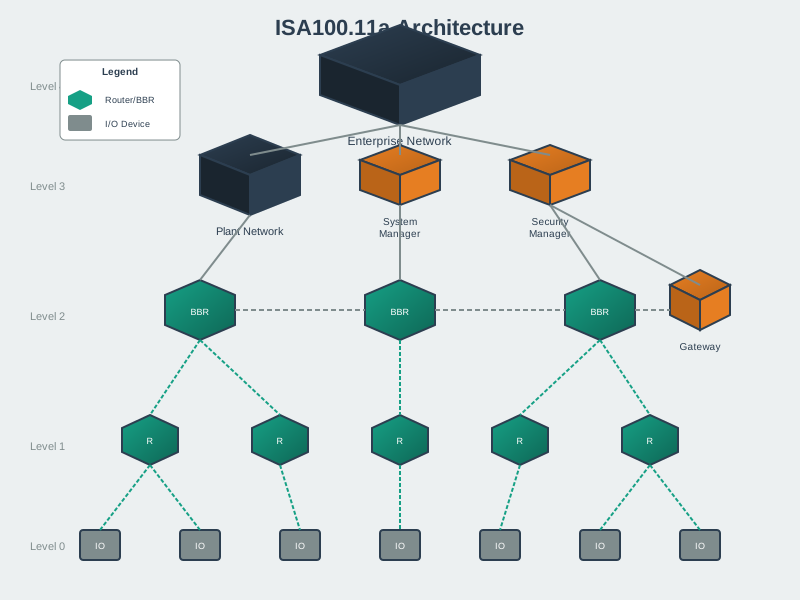
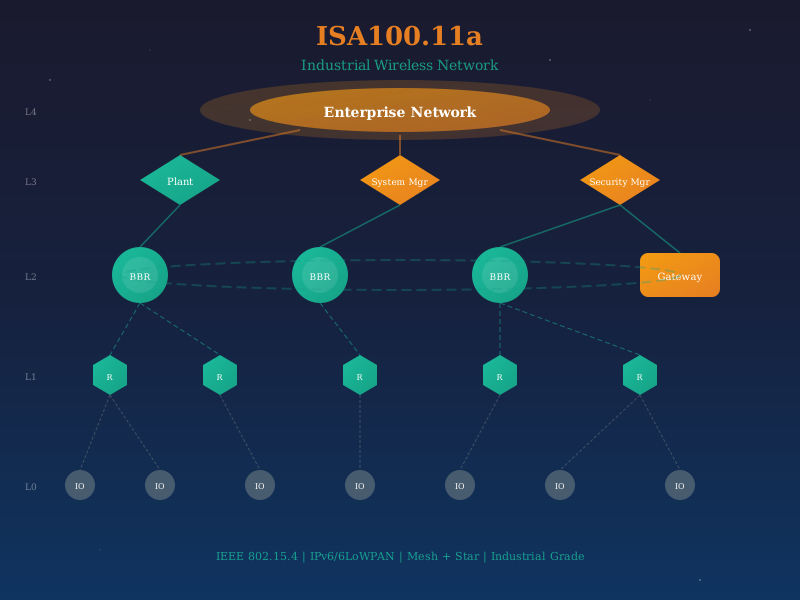
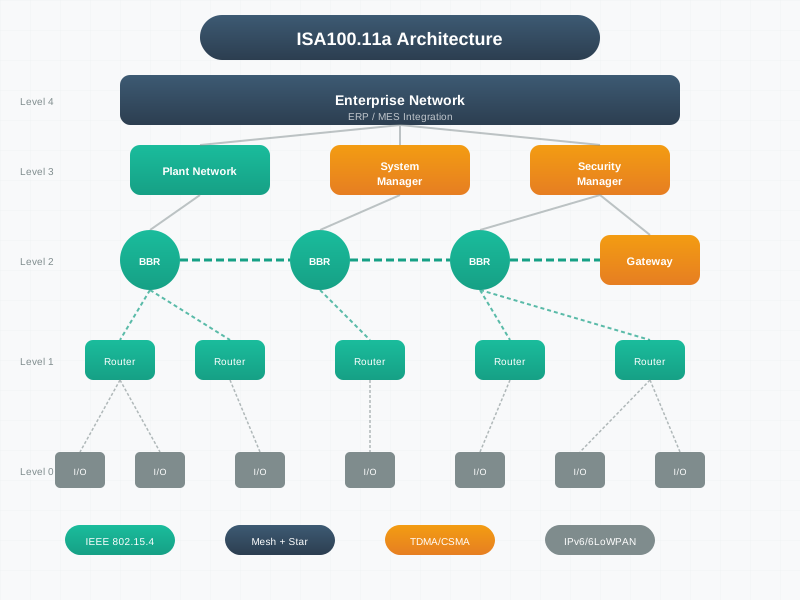
ISA 100.11a uses star-mesh hybrid topology with IPv6/6LoWPAN for IT integration, enabling both TDMA (deterministic) and CSMA/CA (flexible) communication modes.
NoteISA 100.11a Network Deployment
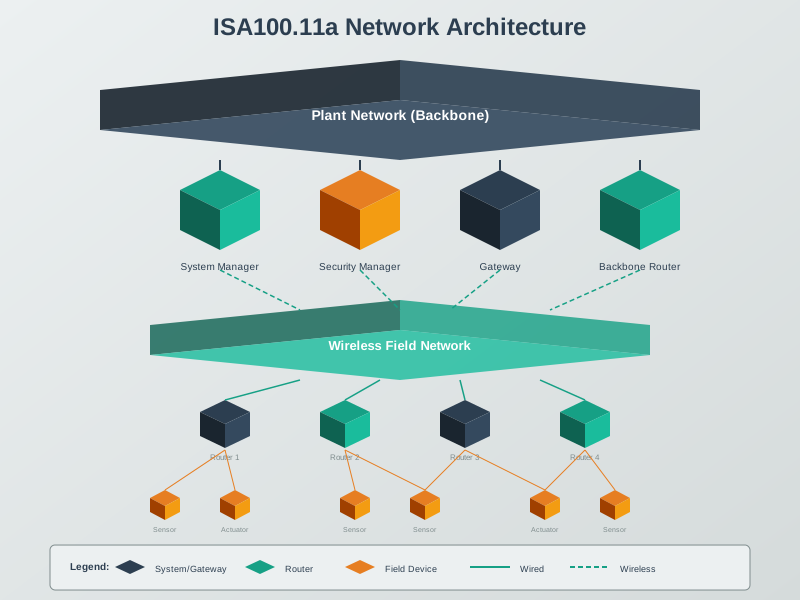
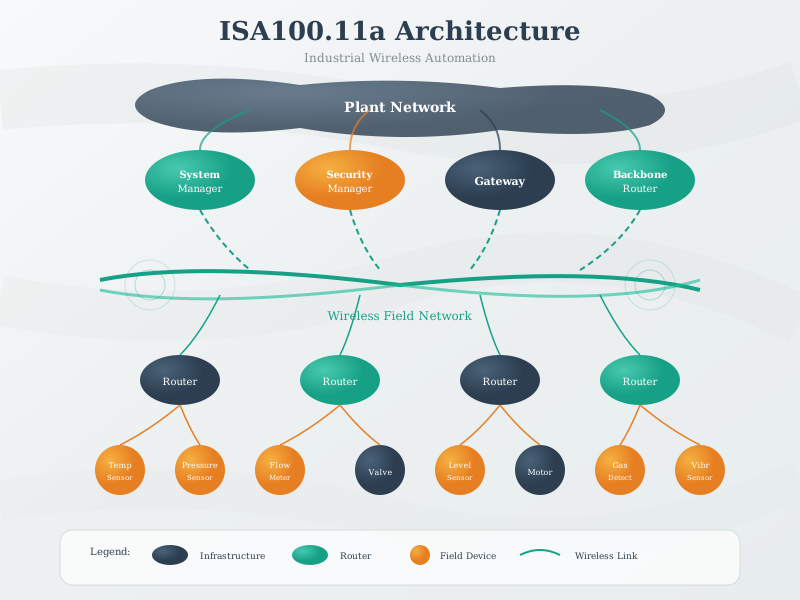
ISA 100.11a deployments use Non-Routing Devices (NRD) as sensors, Routing Devices (RD) for mesh backbone, and Backbone Routers (BBR) connecting to plant networks.
NoteWirelessHART Comparison
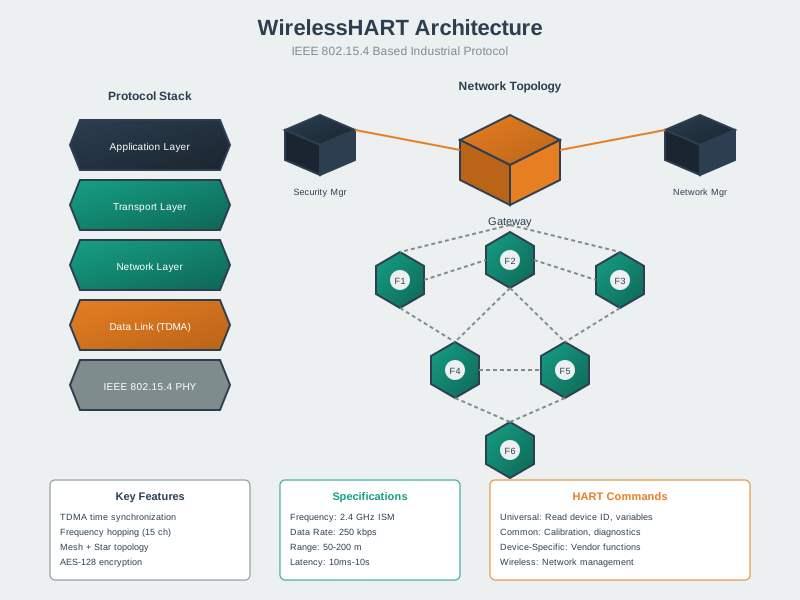
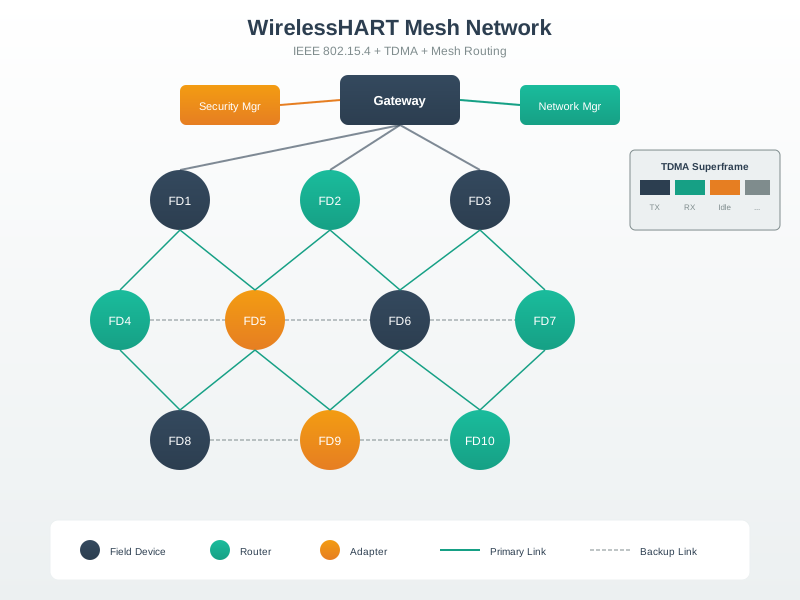
ISA 100.11a and WirelessHART both use IEEE 802.15.4 physical layer but differ in network layer approach: ISA100.11a uses IPv6 while WirelessHART uses proprietary graph routing.
1006.8 Summary
ISA 100.11A’s protocol stack reflects its flexible, standards-based approach to industrial wireless:
- The layered architecture includes Application (native + tunneled protocols), Transport (UDP), Network (IPv6/6LoWPAN), Data Link (IEEE 802.15.4 with TDMA/CSMA hybrid), and Physical layers
- Security uses dual encryption with DLL keys for hop-by-hop protection and Network keys for end-to-end confidentiality, providing defense-in-depth
- Compared to WirelessHART, ISA 100.11A offers IPv6 standard integration, protocol tunneling, flexible MAC modes, and multiple topology options
- WirelessHART prioritizes determinism and HART ecosystem compatibility, while ISA 100.11A emphasizes flexibility and IT integration
- Protocol selection depends on existing infrastructure (HART devices), multi-protocol needs, IT integration requirements, and determinism criticality
- Both standards share IEEE 802.15.4 physical layer but diverge significantly in upper layers, making them incompatible without dual-protocol gateways
1006.9 What’s Next
Continue to ISA 100.11A Labs and Security to explore hands-on simulations, protocol tunneling examples, and comprehensive security key management.
1006.10 References
- ISA100.11A-2011 Standard
- IEC 62734: Industrial Networks - Wireless Communication Network and Communication Profiles
- International Society of Automation: www.isa.org
- ISA100 Wireless Compliance Institute