%%{init: {'theme': 'base', 'themeVariables': {'primaryColor': '#2C3E50', 'primaryTextColor': '#fff', 'primaryBorderColor': '#16A085', 'lineColor': '#E67E22', 'secondaryColor': '#16A085', 'tertiaryColor': '#7F8C8D'}}}%%
graph TB
    A[ISA 100 Standards Family] --> B[ISA 100.11A<br/>Process Automation<br/>2009]
    A --> C[ISA 100.12<br/>Energy Harvesting<br/>Development]
    A --> D[ISA 100.15<br/>Backhaul & Infrastructure<br/>Planned]
    A --> E[ISA 100.21<br/>Asset Management<br/>Condition Monitoring]

    B --> B1[2.4 GHz Mesh<br/>IPv6/6LoWPAN<br/>TDMA + CSMA]
    C --> C1[Ultra-Low Power<br/>Wireless Sensors<br/>No Battery]
    D --> D1[Long-Range Backbone<br/>Gateway Connectivity]
    E --> E1[Vibration Sensors<br/>Predictive Maintenance]

    style A fill:#E67E22,stroke:#2C3E50,color:#fff
    style B fill:#2C3E50,stroke:#16A085,color:#fff
    style C fill:#16A085,stroke:#2C3E50,color:#fff
    style D fill:#7F8C8D,stroke:#2C3E50,color:#fff
    style E fill:#16A085,stroke:#2C3E50,color:#fff
1005 ISA 100.11A Fundamentals
1005.1 Introduction
ISA 100.11A is a wireless networking standard developed by the International Society of Automation (ISA) for industrial automation and process control applications. Like WirelessHART, it addresses the need for reliable, secure, and deterministic wireless communication in harsh industrial environments. ISA 100.11A competes directly with WirelessHART while offering different architectural choices and flexibility.
NoteLearning Objectives
By the end of this chapter, you will be able to:
- Understand ISA 100.11A’s position in industrial automation
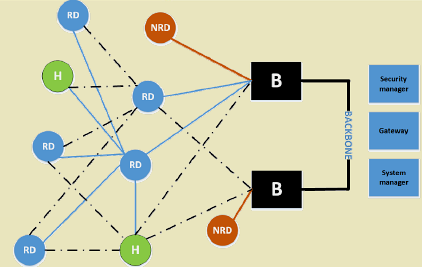
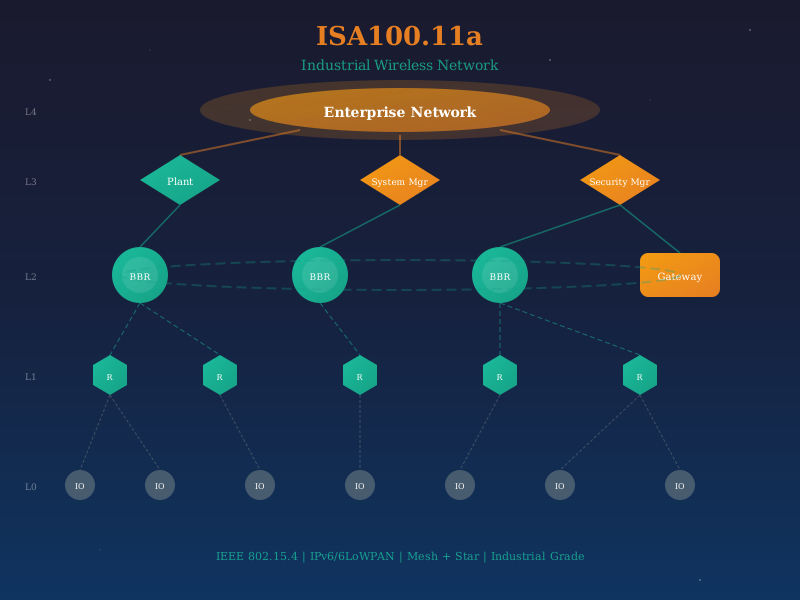
- Explain the ISA 100.11A architecture and network components
- Describe the design goals and target markets
- Understand the technical specifications and core parameters
- Recognize the ISA 100 standards family
1005.2 Prerequisites
Before diving into this chapter, you should be familiar with:
- Networking Basics for IoT: Understanding of fundamental networking concepts, network topologies, and protocol fundamentals provides context for ISA 100.11A’s hybrid topology and protocol architecture
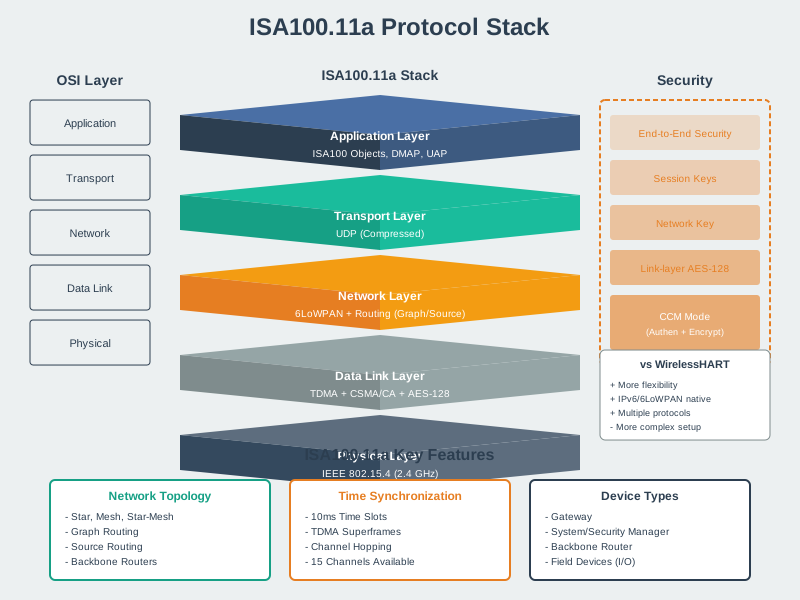
- Layered Models: Fundamentals: Knowledge of the OSI/TCP-IP layered models helps understand how ISA 100.11A uses IPv6/6LoWPAN at the network layer and IEEE 802.15.4 at the physical/link layers
- IoT Protocols Overview: Familiarity with IPv6, 6LoWPAN, UDP/TCP, and the IoT protocol stack provides the foundation for understanding ISA 100.11A’s protocol choices and header compression techniques
- Industrial IoT requirements: Basic understanding of industrial automation needs (reliability, deterministic latency, security) helps contextualize why ISA 100.11A was designed with TDMA scheduling and mesh routing
NoteRelated Chapters
Deep Dives: - 6LoWPAN Fundamentals - IPv6 header compression essentials - WirelessHART - Competing industrial wireless standard - Zigbee Architecture - Alternative mesh protocol comparison
Comparisons: - IoT Protocols Review - Cross-protocol comparison - LPWAN Fundamentals - Industrial wireless landscape
Hands-On: - Simulations Hub - Practice industrial protocol exercises
Learning: - Quizzes Hub - Test industrial IoT knowledge
NoteCross-Hub Connections
Learning Hubs: - Knowledge Map - See how ISA100.11a fits in the industrial IoT landscape - Simulations Hub - Interactive industrial protocol comparisons - Videos Hub - Visual explanations of 6LoWPAN and TDMA/CSMA - Quizzes Hub - Test your understanding of industrial wireless standards
NoteKey Takeaway
In one sentence: ISA 100.11a is a flexible industrial wireless standard that uses standard IPv6/6LoWPAN protocols for IT integration, offering both TDMA (deterministic) and CSMA/CA (flexible) modes to support diverse industrial applications.
Remember this: Choose ISA 100.11a when you need IPv6 addressing, multi-protocol tunneling (HART, Modbus, Profibus), or flexible MAC options; choose WirelessHART when you have existing HART infrastructure and need proven, deterministic-only communication.
TipFor Beginners: What is ISA 100.11A?
ISA 100.11A is another industrial wireless standard competing with WirelessHART. Think of it as a different approach to solving the same problem: reliable wireless communication in factories and plants. Both emerged around the same time (late 2000s) because industries desperately needed wireless sensors but existing technologies like Wi-Fi and Zigbee weren’t reliable enough for industrial use.
The key difference? WirelessHART evolved from the existing HART standard (ensuring backward compatibility), while ISA 100.11A was designed from scratch to use modern Internet protocols. ISA 100.11A uses IPv6 and 6LoWPAN—the same technologies being standardized for general IoT—making it more “Internet-native.”
Imagine two architects designing secure buildings: one renovates an existing structure (WirelessHART extending HART), while the other designs a new building from the ground up using the latest techniques (ISA 100.11A with IPv6/6LoWPAN). Both achieve security, but take different philosophical approaches.
ISA 100.11A offers more flexibility in network topology (star, mesh, or combined) and supports multiple routing protocols. It also allows both time-slotted (scheduled) and contention-based (random access) communication, giving engineers more options based on their specific needs. The trade-off is complexity—more options mean more configuration decisions.
| Term | Simple Explanation |
|---|---|
| ISA | International Society of Automation—professional organization |
| ISA 100.11A | Industrial wireless standard competing with WirelessHART |
| IPv6 | Internet Protocol version 6—modern Internet addressing with huge address space |
| 6LoWPAN | IPv6 over Low-power Wireless Personal Area Networks—adapts IPv6 for constrained devices |
| TDMA + CSMA | Hybrid approach—scheduled time slots plus random access |
| Backbone Router | Device connecting wireless field network to plant backbone |
| Star Topology | All devices connect to central hub |
| Hybrid Topology | Mix of star and mesh for flexibility |
WarningCommon Misconception: “ISA100.11a and WirelessHART are basically the same”
The Misconception: Many engineers assume ISA100.11a and WirelessHART are interchangeable because both use IEEE 802.15.4 physical layer (2.4 GHz) and target industrial automation. “They’re both just industrial Zigbee variants, right?”
Why It’s Wrong: While they share the same radio hardware, the protocols diverge significantly above the physical layer:
WirelessHART: - Proprietary network layer with graph routing - TDMA-only MAC (deterministic but inflexible) - HART commands only (no protocol tunneling) - 99.5% market share in process automation (2023)
ISA100.11a: - Standard IPv6/6LoWPAN network layer - Hybrid MAC: TDMA + CSMA/CA (flexible) - Tunnels multiple protocols (HART, Modbus, Profibus) - 15-20% market share (broader industrial scope)
Real-World Impact: A petrochemical plant discovered this the hard way when trying to integrate 200 ISA100.11a sensors with their existing WirelessHART gateway. Despite using the same 2.4 GHz band, the protocols were incompatible at layers 3-7. They needed a dual-protocol gateway ($12,000) and separate network management systems.
The Truth: These are competing standards with different philosophies: WirelessHART optimizes for HART ecosystem (backward compatible, proven reliability), while ISA100.11a prioritizes IT integration (IPv6, flexible transports). Choose based on your existing infrastructure, protocol requirements, and IT integration needs—not just the radio frequency.
Rule of Thumb: If your plant runs HART instruments (90% of process automation), choose WirelessHART. If you need multiple protocols, IPv6 addressing, or TCP/UDP transports, choose ISA100.11a.
1005.3 ISA 100.11A Overview
1005.3.1 International Society of Automation
ISA is a professional association founded in 1945 focused on industrial automation. The ISA100 committee was formed to develop wireless standards for industrial automation:
- ISA 100.11A: First standard released (2009), focuses on process automation
- ISA 100.12: Energy harvesting (in development)
- ISA 100.15: Backhaul and infrastructure
- ISA 100.21: Asset management and condition monitoring
{fig-alt=“ISA 100 standards family showing ISA 100.11A for process automation (2009, IPv6/6LoWPAN), ISA 100.12 for energy harvesting (development), ISA 100.15 for backhaul infrastructure (planned), and ISA 100.21 for asset management and condition monitoring”}
TipAlternative View: Industrial Wireless Protocol Selection Guide
This variant helps you choose between ISA100.11a and WirelessHART for industrial deployments:
%%{init: {'theme': 'base', 'themeVariables': {'primaryColor': '#2C3E50', 'primaryTextColor': '#fff', 'primaryBorderColor': '#16A085', 'lineColor': '#E67E22', 'secondaryColor': '#16A085', 'tertiaryColor': '#7F8C8D', 'fontSize': '11px'}}}%%
flowchart TD
    START["Industrial Wireless<br/>Protocol Selection"] --> Q1{"Existing<br/>HART devices?"}

    Q1 -->|"Yes (90%+)"| Q2{"Need tunneling<br/>other protocols?"}
    Q1 -->|"No/Few"| Q3{"IT integration<br/>priority?"}

    Q2 -->|"HART only"| WHART["WirelessHART<br/>Proven, 99.5% market share"]
    Q2 -->|"Modbus/Profibus/FF"| ISA["ISA100.11a<br/>Multi-protocol tunneling"]

    Q3 -->|"High (IPv6 native)"| ISA2["ISA100.11a<br/>Standard IPv6 addressing"]
    Q3 -->|"Low (OT focus)"| Q4{"Determinism<br/>critical?"}

    Q4 -->|"Yes (closed-loop)"| WHART2["WirelessHART<br/>TDMA-only, predictable"]
    Q4 -->|"Flexible OK"| ISA3["ISA100.11a<br/>TDMA+CSMA hybrid"]

    style START fill:#2C3E50,stroke:#16A085,color:#fff
    style Q1 fill:#E67E22,stroke:#2C3E50,color:#fff
    style Q2 fill:#E67E22,stroke:#2C3E50,color:#fff
    style Q3 fill:#E67E22,stroke:#2C3E50,color:#fff
    style Q4 fill:#E67E22,stroke:#2C3E50,color:#fff
    style WHART fill:#16A085,stroke:#2C3E50,color:#fff
    style WHART2 fill:#16A085,stroke:#2C3E50,color:#fff
    style ISA fill:#7F8C8D,stroke:#2C3E50,color:#fff
    style ISA2 fill:#7F8C8D,stroke:#2C3E50,color:#fff
    style ISA3 fill:#7F8C8D,stroke:#2C3E50,color:#fff
Rule of thumb: Choose WirelessHART for HART-centric process plants; choose ISA100.11a for multi-protocol environments or when native IPv6 addressing for IT integration is required.
1005.3.2 Design Goals
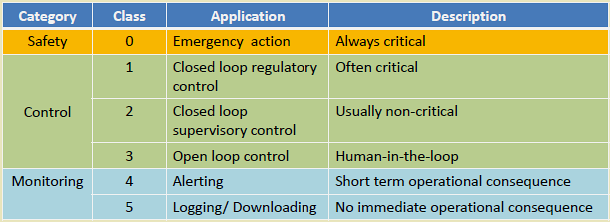
ISA 100.11A was designed for: - Large-scale industrial complexes and plants - Multiple application types (control, monitoring, diagnostics) - Protocol flexibility (support various upper layers) - Coexistence with other wireless systems - Security and reliability for critical infrastructure
Target markets: - Chemical and petrochemical plants - Oil and gas facilities - Power generation - Manufacturing - Water/wastewater treatment
1005.4 Technical Specifications
1005.4.1 Core Specifications
| Parameter | Specification |
|---|---|
| Standard | ISA 100.11A-2011, IEC 62734 |
| Frequency | 2.4 GHz ISM band |
| Channels | 16 channels (IEEE 802.15.4) |
| Modulation | O-QPSK (Offset QPSK) |
| Data Rate | 250 kbps (physical layer) |
| Topology | Star, mesh, star-mesh hybrid |
| Channel Access | TDMA + CSMA/CA (hybrid) |
| Timeslot | 10 ms typical |
| Range | 200 m line-of-sight, varies with environment |
| Transport | UDP/IPv6 or native 6LoWPAN |
| Application Support | Native ISA 100, tunneled protocols |
| Security | AES-128 encryption, multiple key types |
%%{init: {'theme': 'base', 'themeVariables': {'primaryColor': '#2C3E50', 'primaryTextColor': '#fff', 'primaryBorderColor': '#16A085', 'lineColor': '#E67E22', 'secondaryColor': '#16A085', 'tertiaryColor': '#7F8C8D'}}}%%
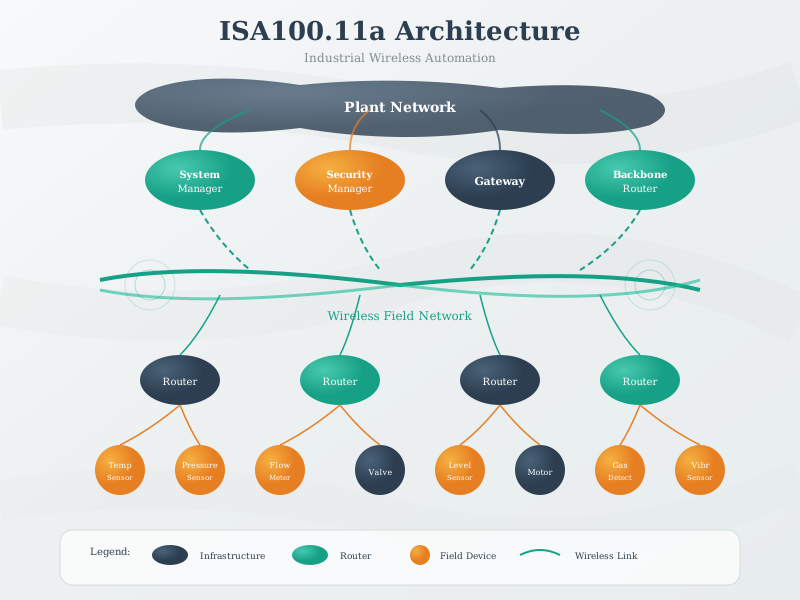
graph TB
    A[ISA 100.11A Network Architecture] --> B[Field Devices<br/>Sensors & Actuators]
    A --> C[Routing Devices<br/>Mesh Network]
    A --> D[Backbone Router<br/>Gateway]
    A --> E[System Manager<br/>Network Control]

    B --> B1[I/O Devices<br/>Non-Routing<br/>Battery/Mains]
    C --> C1[Routers<br/>Mesh Forwarding<br/>Mains Powered]
    D --> D1[IPv6 Gateway<br/>Plant Network Bridge]
    E --> E1[Topology Management<br/>Resource Allocation<br/>Security Keys]

    F[Topology Options] --> G[Star:<br/>Field → Backbone]
    F --> H[Mesh:<br/>Multi-Hop Routing]
    F --> I[Hybrid:<br/>Star + Mesh Mix]

    style A fill:#E67E22,stroke:#2C3E50,color:#fff
    style B fill:#2C3E50,stroke:#16A085,color:#fff
    style C fill:#16A085,stroke:#2C3E50,color:#fff
    style D fill:#7F8C8D,stroke:#2C3E50,color:#fff
    style E fill:#E67E22,stroke:#2C3E50,color:#fff
{fig-alt=“ISA 100.11A network architecture showing field devices (sensors/actuators), routing devices for mesh forwarding, backbone router as IPv6 gateway, system manager for network control, and flexible topology options (star, mesh, or hybrid)”}
1005.5 Knowledge Check
1005.6 Summary
ISA 100.11A is a flexible industrial wireless standard developed by the International Society of Automation:
- ISA founded in 1945 focuses on industrial automation standards with ISA100 committee developing wireless standards starting with ISA 100.11A in 2009
- The protocol uses IEEE 802.15.4 physical layer (2.4 GHz, 16 channels, 250 kbps) with O-QPSK modulation and 200m line-of-sight range
- ISA 100.11A supports flexible topologies including star, mesh, and star-mesh hybrid configurations to balance reliability with power efficiency
- The hybrid MAC approach combines TDMA (deterministic control) with CSMA/CA (flexible monitoring) based on application requirements
- Network components include Field Devices (sensors/actuators), Routing Devices (mesh backbone), Backbone Routers (IPv6 gateway), and System Manager (centralized control)
- Target markets include chemical plants, oil and gas, power generation, manufacturing, and water treatment facilities requiring reliable wireless automation
1005.7 What’s Next
Continue to ISA 100.11A Protocol Stack and Comparison to explore the layered architecture, security mechanisms, and detailed comparison with WirelessHART.
1005.8 References
- ISA100.11A-2011 Standard
- IEC 62734: Industrial Networks - Wireless Communication Network and Communication Profiles
- International Society of Automation: www.isa.org
- ISA100 Wireless Compliance Institute