990 Zigbee Review: Protocol Selection and Comparison
990.1 Learning Objectives
By the end of this chapter, you will be able to:
- Compare Zigbee with Alternatives: Evaluate Zigbee against Thread, Z-Wave, and BLE Mesh
- Apply Decision Frameworks: Select protocols based on time-to-market, device count, ecosystem, and budget
- Plan Dual-Protocol Strategy: Design products that support both Zigbee and Matter
- Understand Security Models: Compare Trust Center, Green Power, and encryption approaches
990.2 Prerequisites
Required Chapters:
- Zigbee Overview - Core concepts
- Zigbee Deployment - Network planning
- Thread Comprehensive Review - Thread comparison
Technical Background:
- Smart home ecosystem landscape
- Matter protocol basics
- IP networking fundamentals
Estimated Time: 25 minutes
Option A: Deploy Zigbee 3.0 immediately with proven ecosystem and mature tooling
Option B: Wait for Matter ecosystem maturity or use dual-protocol chips for future upgrade path
Decision Factors: Choose Zigbee 3.0 now (A) when time-to-market is critical, you’re expanding an existing Zigbee network, or you need the largest device selection today. Choose dual-protocol/Matter-ready (B) when building new infrastructure with 12+ month timeline, multi-ecosystem compatibility is essential (Apple + Google + Amazon), or when long-term interoperability outweighs short-term cost (~$1.50/chip premium).
990.3 Protocol Comparison Matrix
Interactive comparison to help select the right protocol for your smart home or IoT application.
Zigbee Device Types:
| Device | Role | Example |
|---|---|---|
| Coordinator | Network formation | Hub |
| Router | Mesh relay | Light switch |
| End Device | Leaf node | Sensor |
Zigbee vs Thread:
| Feature | Zigbee | Thread |
|---|---|---|
| IP Native | No | Yes |
| Application Layer | ZCL | Matter |
| Mature Ecosystem | Yes | Growing |
Question 1: What’s your time to market?
- < 12 months: Zigbee 3.0 (mature, fast development)
- 12-18 months: Thread 1.3 or Zigbee + Matter firmware plan
- 18+ months: Matter 1.0 (native multi-ecosystem)
Question 2: How many devices in your network?
- < 50 devices: Any protocol works
- 50-200 devices: Zigbee or Thread
- 200+ devices: Zigbee (65K limit) or multiple Thread networks
Question 3: What ecosystem are you targeting?
- Single ecosystem (e.g., only Apple): Thread
- Existing Zigbee hubs (Hue, SmartThings): Zigbee 3.0
- Multi-ecosystem (Apple + Google + Amazon): Matter
Question 4: What’s your budget per device?
- < $5: Zigbee 3.0 ($2-5 chips)
- $5-10: Thread 1.3 or Matter over Thread
- $10+: Matter over Wi-Fi/Ethernet (high bandwidth)
Recommended Strategy: For most smart home products launching in 2024-2025, use Zigbee 3.0 with dual-protocol chip to enable Matter firmware update later. This provides:
- Immediate market access (Zigbee ecosystem)
- Lowest cost ($2-5/chip)
- Fastest time to market (6-12 months)
- Future-proofing (Matter upgrade via firmware)
- Marketing advantage (“Matter-ready”)
990.4 Knowledge Check: Protocol Selection
Your client is building a new smart home product line (lights, sensors, locks). They ask: “Should we use Zigbee, Thread, or wait for Matter?” Provide a comprehensive comparison and recommendation.
Recommendation: Support BOTH Zigbee 3.0 initially, add Matter later via firmware update. This provides immediate market access while future-proofing.
Detailed Comparison:
Expected Output:
==========================================================================================
SMART HOME PROTOCOL COMPARISON
==========================================================================================

------------------------------------------------------------------------------------------
  TECHNICAL
------------------------------------------------------------------------------------------

Network Layer:
  Zigbee 3.0            Zigbee NWK (proprietary)
  Thread 1.3            IPv6 (6LoWPAN)
  Matter 1.0            IPv6 (over Thread/Wi-Fi/Ethernet)

Physical Layer:
  Zigbee 3.0            IEEE 802.15.4 (2.4GHz)
  Thread 1.3            IEEE 802.15.4 (2.4GHz)
  Matter 1.0            Multiple (Thread/Wi-Fi/Ethernet)

Power Consumption:
  Zigbee 3.0            Ultra-low (5 stars)
  Thread 1.3            Ultra-low (5 stars)
  Matter 1.0            Low-Medium (4 stars, depending on transport)

[... continued comparison matrix ...]

==========================================================================================
PRODUCT STRATEGY RECOMMENDATION
==========================================================================================

 Requirements:
  time_to_market_months: 12
  battery_powered: True
  ecosystem_priority: multi-platform
  budget_per_unit: 6.0
  volume_units_year: 250000

 Protocol Scores:
  Zigbee 3.0            13/15
  Thread 1.3            10/15
  Matter 1.0            7/15

------------------------------------------------------------------------------------------
RECOMMENDED STRATEGY
------------------------------------------------------------------------------------------

PRIMARY: Zigbee 3.0
  Rationale:
  - Fastest time to market (6-12 months)
  - Lowest cost ($2-5 per module)
  - Proven reliability and battery life
  - Large existing market (100M+ devices)
  - Many compatible hubs (SmartThings, Hue Bridge, etc.)

SECONDARY: Plan Matter upgrade path
  Strategy:
  - Launch with Zigbee 3.0 immediately
  - Use dual-protocol chip (Zigbee + Matter capable)
  - Add Matter via firmware update in Year 2
  - Market as 'Matter-ready' from day 1

 Cost Analysis:
  Zigbee-only chip:       $2.50
  Dual-protocol chip:     $4.00 (+$1.50)
  Extra cost at 250000 units: $375K
  Worth it for future-proofing!

------------------------------------------------------------------------------------------
IMPLEMENTATION ROADMAP
------------------------------------------------------------------------------------------

 Phase 1: Zigbee Launch (Months 0-12)
  - Develop Zigbee 3.0 products
  - Use dual-protocol chip (e.g., Silicon Labs EFR32MG24)
  - Zigbee certification
  - Launch to market
  - Build customer base

 Phase 2: Matter Preparation (Months 12-18)
  - Monitor Matter ecosystem maturity
  - Develop Matter firmware
  - Beta testing with early adopters
  - Matter certification

 Phase 3: Matter Update (Months 18-24)
  - Release Matter firmware (OTA)
  - Dual-protocol operation (Zigbee + Matter)
  - Marketing: 'Now works with Alexa/Siri/Google natively'
  - New products ship with Matter enabled

==========================================================================================
Summary Recommendation:
Short-term (0-12 months): Zigbee 3.0
- Launch products immediately with proven technology
- Target existing 100M+ Zigbee device market
- Compatible with SmartThings, Hue Bridge, Home Assistant
Long-term (12-24 months): Add Matter via firmware
- Use dual-protocol chip from day 1 (marginal cost increase)
- Firmware update enables Matter without hardware change
- Future-proof without delaying market entry
Why this hybrid approach wins:
- Revenue now: Don’t wait 18-24 months for Matter
- Future-proof: Dual-chip enables Matter later
- Risk mitigation: Established Zigbee while Matter matures
- Marketing advantage: “Matter-ready” branding today
- Cost effective: +$1.50/unit vs missing 2 years of sales
This is exactly what major brands (Philips, IKEA) are doing!
990.5 Quiz: Security and Protocol Features
Question 1: What is the primary purpose of the Zigbee Trust Center?
Explanation: The Trust Center (C) manages security keys and authenticates joining devices. Typically implemented in the Coordinator, it:
- Distributes the Network Key (NWK key) to all devices
- Manages Link Keys for device-to-device encryption
- Authenticates devices during join process
- Can revoke device access by removing keys
- Implements install codes (Zigbee 3.0) for secure commissioning
This is critical for smart home security - prevents unauthorized devices from joining your network. Routing (A) is handled by AODV protocol, time sync (B) is not a core Zigbee feature, and frequency agility (D) is a Zigbee PRO feature separate from Trust Center.
Question 2: What is the main advantage of Zigbee Green Power feature?
Explanation: Zigbee Green Power (D) enables energy harvesting devices that operate without batteries:
- Kinetic switches: Generate power from button press (piezoelectric)
- Solar sensors: Powered by ambient light (photovoltaic cells)
- Thermal sensors: Powered by temperature differential
These devices use simplified communication (no full Zigbee stack) and work with Green Power Proxy devices (Routers/Coordinators) that translate messages. Benefits:
- Zero battery maintenance
- Environmentally friendly (no battery waste)
- Ideal for hard-to-reach installations
- Lower lifetime cost
Example: Philips Hue Tap switch (kinetic), EnOcean wall switches. Green Power proxies are built into most modern Zigbee Coordinators and many Router devices.
990.6 Visual Reference Gallery
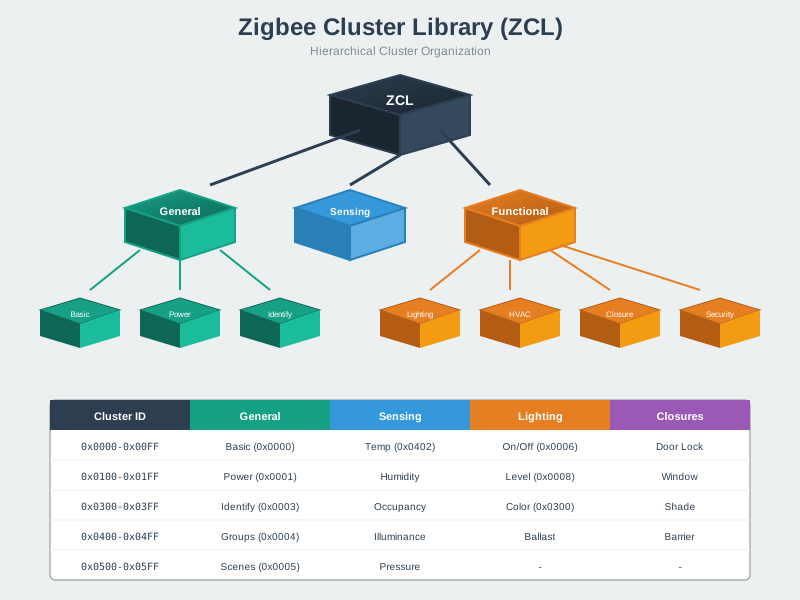
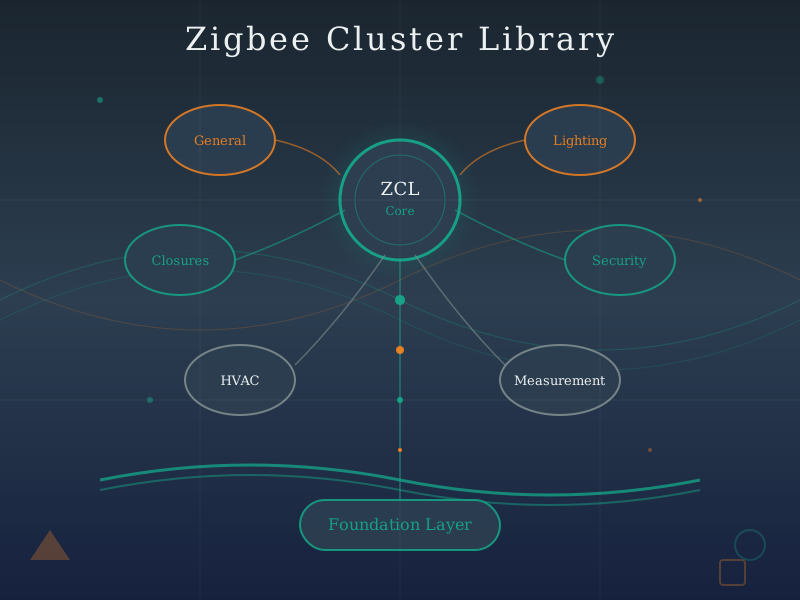
The Zigbee Cluster Library (ZCL) defines standardized commands and attributes enabling devices from different manufacturers to communicate using common data models.
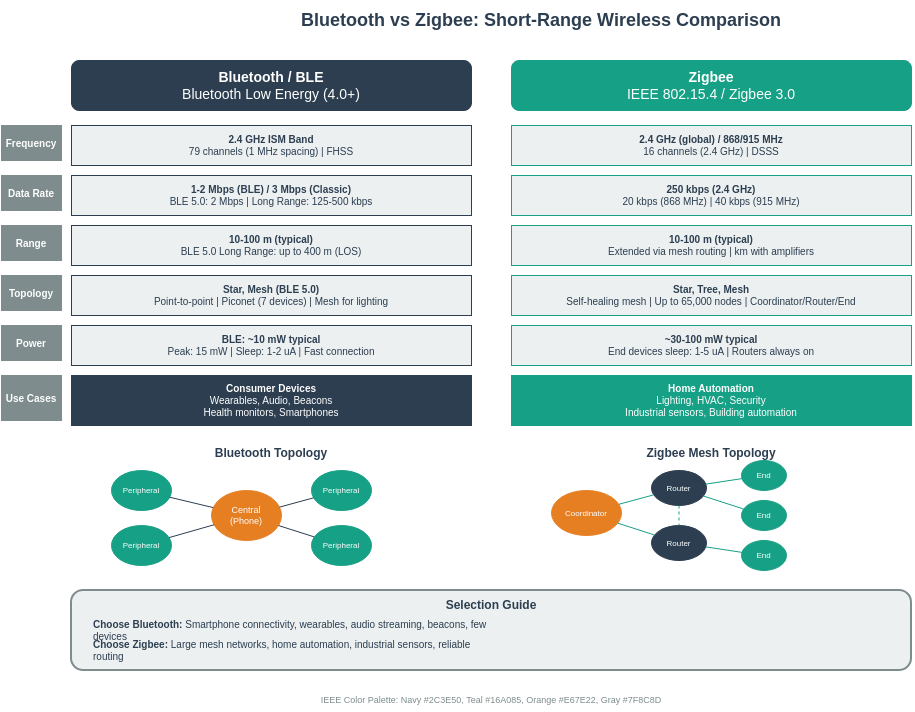
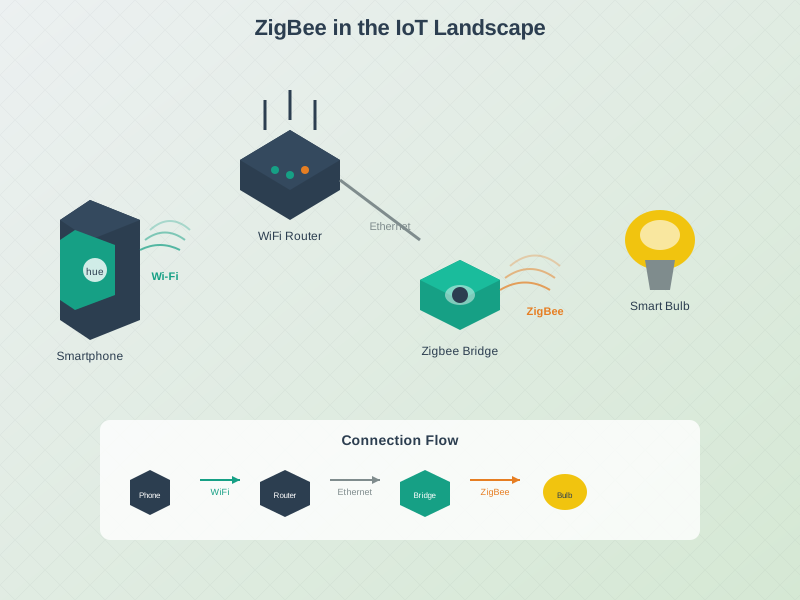
Zigbee and Bluetooth serve different IoT niches: Zigbee excels at low-power mesh networks (smart home, industrial), while Bluetooth dominates personal area networks and audio.
990.7 Summary
This chapter covered Zigbee protocol selection and comparison:
- Protocol Comparison: Zigbee vs Thread vs Matter across technical, market, and cost dimensions
- Decision Framework: Time-to-market, device count, ecosystem, and budget factors
- Dual-Protocol Strategy: Launch Zigbee 3.0 now, add Matter via firmware update later
- Security Features: Trust Center manages keys and authentication; Green Power enables battery-free devices
- Cost Analysis: +$1.50/chip premium for dual-protocol worthwhile for future-proofing
990.8 What’s Next
Continue to Zigbee Review: Worked Examples for detailed calculations covering mesh coverage, route recovery timing, channel selection, multi-endpoint configuration, and binding troubleshooting.