515 Applications of Sensors
IoT Sensor Applications Across Domains
515.1 Overview
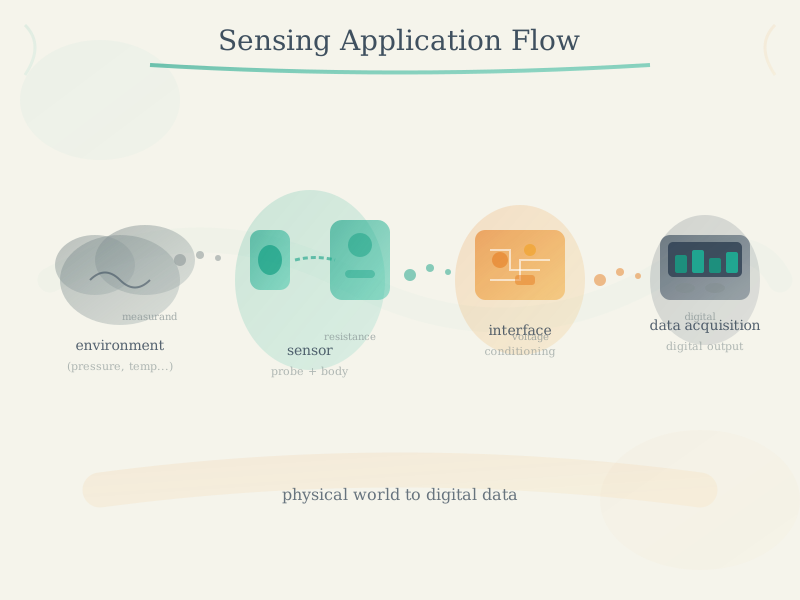
Sensors are the fundamental building blocks of Internet of Things (IoT) systems, serving as the interface between the physical and digital worlds. This series explores the diverse applications of sensors across 12 major domains, covering 61 specific use cases from smart cities to healthcare.
515.2 Chapter Series
This content has been organized into focused chapters for easier learning:
515.2.1 1. Sensor Applications Overview
Introduction to sensor applications across IoT domains
- Getting started guide for beginners
- 12 application domain tables with 61 use cases
- Sensor types mapped to Smart Cities, Environment, Water, Metering, Security, Retail, Logistics, Industrial, Agriculture, Animal Farming, Home, and Health
- Control systems fundamentals (open/closed loop)
- Light sensing technology
515.2.2 2. Sensor Selection Wizard
Interactive tools for choosing the right sensors
- Step-by-step sensor selection wizard
- Hardware recommendations by domain
- Bill of Materials (BOM) examples
- Power budget calculations
- Cost optimization strategies
- Microcontroller and connectivity selection guides
515.2.3 3. Sensor Application Architecture
System design patterns and data flow
- Domain hierarchy mindmap
- Criticality-level sensor requirements
- Sensor selection decision tree
- End-to-end data flow architecture
- Sensor usage statistics
- Deployment lifecycle (9 phases)
- Coverage and bandwidth planning
515.2.4 4. Sensor Application Labs
Hands-on exercises and assessment
- Lab 1: Smart City sensor planning
- Lab 2: Multi-sensor deployment optimization
- Lab 3: Data rate and network planning
- Lab 4: Cross-domain sensor integration
- Common pitfalls and how to avoid them
- 10 knowledge check questions
- 10 comprehensive quiz questions
- Visual reference gallery
515.3 Quick Reference
Application Domains Covered:
| Domain | Applications | Key Sensors |
|---|---|---|
| Smart Cities | Parking, traffic, lighting, waste | Magnetic, ultrasonic, LDR, PIR |
| Environment | Fire, air quality, earthquake | Gas, accelerometer, temperature |
| Water | Quality, leakage, floods | pH, flow, level, conductivity |
| Industrial | M2M, monitoring, diagnostics | Vibration, current, voltage |
| Agriculture | Soil, weather, greenhouses | Moisture, temperature, humidity |
| Healthcare | Fall detection, vitals, sports | Accelerometer, ECG, pulse |
Recommended Learning Path:
- Start here: Sensor Applications Overview - understand the landscape
- Select hardware: Sensor Selection Wizard - choose sensors for your project
- Design system: Sensor Application Architecture - plan your deployment
- Practice: Sensor Application Labs - hands-on exercises
515.4 Prerequisites
Before exploring sensor applications, you should be familiar with:
- Sensor Fundamentals and Types - Basic sensor principles
- IoT Reference Models - System architecture
- Electricity Fundamentals - Power requirements
515.5 What’s Next
Ready to explore sensor applications? Start with the overview chapter: