26 Knowledge Gaps Tracker
26.1 Learning Objectives
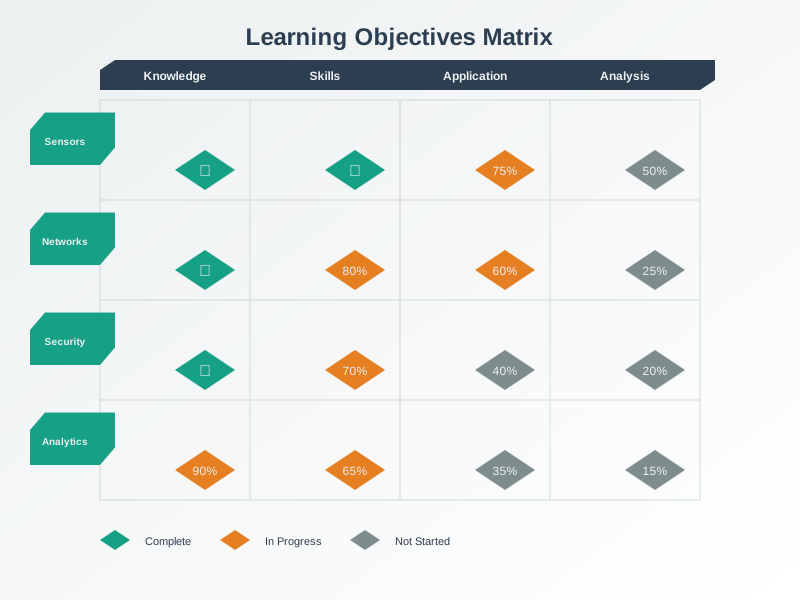
By using this knowledge gaps tracker, you will be able to:
- Identify weak areas: Recognize topics where your understanding needs reinforcement
- Access targeted refreshers: Find focused content to address specific knowledge gaps
- Create a study plan: Organize follow-up activities to close gaps systematically
- Track improvement: Monitor your progress as you revisit challenging topics
In one sentence: Knowledge gaps are discoveries, not failures - identifying what you do not know is the first step toward mastery.
Remember this rule: When you score below 70% on any quiz, treat it as a learning opportunity - follow the structured path of read, watch, practice, and retest until you reach 80%.
26.2 Prerequisites
Before Using This Hub: - Complete at least one chapter from each major section you want to assess - Have access to quiz results or self-assessment notes - Set aside 30-60 minutes for thorough gap analysis
How This Hub Helps: This self-assessment tool helps you identify topics that need review. Unlike quizzes that test specific knowledge, this hub helps you discover what you don’t know.
Recommended Approach:
| Learning Stage | How to Use |
|---|---|
| Just Starting | Review “Spotlight Refreshers” to identify unfamiliar terms |
| Mid-Course | Use gap tables to find weak areas before exams |
| Project Work | Reference specific protocol/architecture gaps for your domain |
| Exam Prep | Systematically work through all gap areas |
Related Hubs: - After identifying gaps → Quizzes Hub to test understanding - For visual learning → Videos Hub for tutorials - For hands-on practice → Simulations Hub
26.3 Close Your Knowledge Gaps
Use this tracker when a quiz or lab reveals a topic you want to revisit. Each entry pairs summary notes, recommended resources, and follow-up practice.
Recommended Learning Path: 1. Identify gaps - Review the tables below to find topics you’re unsure about 2. Study fundamentals - Follow links to the relevant chapter sections 3. Test understanding - Take the linked quizzes to verify comprehension 4. Track progress - Return here to check off mastered topics
Best for: Self-assessment before exams, identifying prerequisite knowledge gaps, planning study sessions
Common Misconception: “Scoring low means I’m failing this course.”
Reality: Identifying knowledge gaps is the first step to mastery. Every expert started with gaps.
Key Points: - Scoring 3/10 on a quiz reveals 7 specific topics to study (that’s valuable data!) - Knowledge gaps are learning opportunities, not deficiencies - The best students actively seek out their weak spots - Discovery → Study → Practice → Mastery is the proven path
Remember: You can’t fix what you can’t see. Finding gaps is progress.
26.4 Hub Contents
This Knowledge Gaps Hub is organized into three focused chapters:
26.4.1 Gap Closure Process
Learn the systematic methodology for closing knowledge gaps:
- Gap Closure Workflow - Step-by-step process from quiz to mastery
- Timeline Planning - Budget your study time effectively (90-115 minutes per gap)
- Case Study - Real example of closing an MQTT QoS gap in 2 hours
- Low Score Recovery - Detailed 90-minute recovery plan
26.4.2 Knowledge Categories & Refreshers
Explore the five major IoT knowledge domains with targeted refreshers:
- Networking Concepts - Topologies, IP addressing, routing
- IoT Protocols - MQTT, CoAP, RPL
- Wireless Technologies - RFID/NFC, Bluetooth/BLE, LoRaWAN
- Sensing & Data - Calibration, fusion, edge vs cloud
- Security - DTLS, threat modeling, encryption
- Architecture & Design - Edge/Fog/Cloud, reference models
- Human Factors - User research, UX design
26.4.3 Progress Tracking & Assessment
Track your improvement and assess your knowledge:
- Visual Progress Tracker - Knowledge Assessment Matrix
- Self-Assessment Checklist - 5-step systematic approach
- Progress Tracking Template - Copy-paste tracker for your notes
- Interactive Self-Assessment - OJS-powered tool with personalized recommendations
- Domain Status Dashboard - View all 9 IoT knowledge domains
26.5 Summary
The knowledge gaps tracker helps you take a systematic approach to learning:
- Spotlight Refreshers: Direct links to theory, practice, and assessment for each topic
- Three-Step Process: Log results → Bookmark weak areas → Schedule follow-up
- Continuous Expansion: New topics added as assessments are developed
26.6 What’s Next
- Start with the Gap Closure Process to learn the methodology
- Use Knowledge Categories to find your weak spots
- Track progress with the Interactive Assessment
- Return to the Quiz Navigator to test your improved understanding
- Try related Simulations for hands-on reinforcement