1018 Thread: Comprehensive Review
Read this chapter after:
thread-fundamentals-and-roles.qmd- roles (Router, REED, SED, MED), mesh architecture, and security model.6lowpan-fundamentals-and-architecture.qmdandrpl-fundamentals-and-construction.qmd- the IPv6 + RPL + 6LoWPAN stack that Thread builds upon.
This comprehensive review covers capacity planning, device optimization, and protocol comparison for Thread networks. The content is organized into three focused chapters:
- Topology and Device Roles - Network architecture and device type selection
- Protocol Stack and Comparison - Thread vs Zigbee and Matter integration
- Planning and Optimization - Battery life, IPv6 addressing, and deployment
If you’re still getting comfortable with the foundational chapters, treat this review as a “boss level” you come back to after another pass through the fundamentals.
Deep Dives:
- Thread Overview - Core Thread concepts
- Thread Operation - Network formation
- 802.15.4 Fundamentals - Physical/MAC layer
Comparisons:
- Zigbee Comprehensive Review - Zigbee vs Thread comparison
- Matter Integration - Thread + Matter ecosystem
Protocols:
- RPL Production - Routing protocol used by Thread
- 6LoWPAN - IPv6 compression layer
Learning:
- Quizzes Hub - Test your Thread knowledge
- Videos Hub - Visual learning resources
1018.1 Learning Objectives
By the end of this review, you will be able to:
- Design Thread Networks: Plan device distributions within the 32-router and 250-device limits
- Assign Device Roles: Configure Router, REED, SED, MED, and FED roles for optimal performance
- Calculate Network Capacity: Estimate device counts and router requirements for building deployments
- Compare with Alternatives: Evaluate Thread against Zigbee and BLE Mesh for smart home applications
- Apply Matter Integration: Understand Thread’s role as Matter’s primary wireless protocol
- Optimize Battery Life: Calculate and maximize battery longevity for sleepy end devices
1018.2 Prerequisites
Required Chapters:
- Thread Overview - Core Thread concepts
- Thread Operation - Network formation
- 802.15.4 Fundamentals - Physical layer
Technical Background:
- Mesh networking concepts
- IPv6 addressing
- Border router functionality
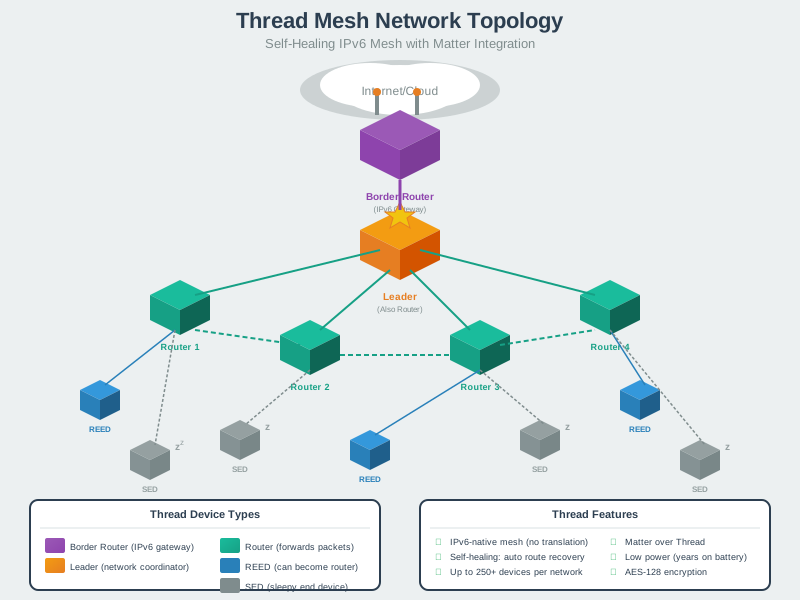
Thread Device Types:
| Device Type | Role | Power | Example |
|---|---|---|---|
| Border Router | IPv6 gateway | Mains | Hub |
| Router | Mesh relay | Mains | Light switch |
| REED | Router-eligible | Either | Sensor |
| SLEEPY End Device | Low-power | Battery | Sensor |
Estimated Time: 1.5 hours (all three chapters)
1018.3 Chapter Organization
This comprehensive review is organized into three focused chapters:
1018.3.1 Chapter 1: Network Topology and Device Roles
Thread Review: Topology and Roles
Topics Covered:
- Thread’s hierarchical mesh architecture
- Device role selection (Router, REED, SED, MED, FED)
- Decision tree for device type assignment
- Network capacity planning (32 routers, 250 devices)
- End device configuration and poll intervals
Key Takeaways:
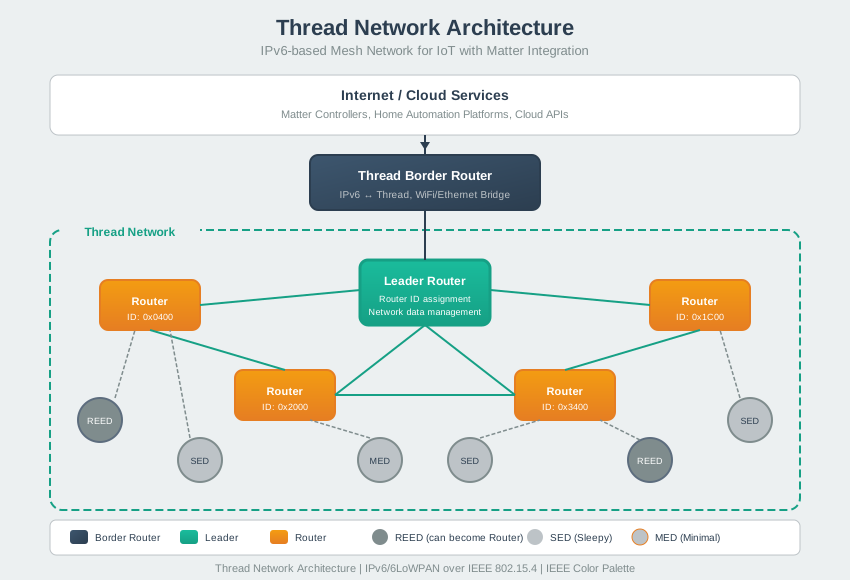
- Understanding the Border Router > Leader > Router > End Device hierarchy
- Selecting appropriate device types based on power and response requirements
- Planning router placement for coverage and reliability
Time: 25 minutes
1018.3.2 Chapter 2: Protocol Stack and Comparison
Thread Review: Protocol Stack and Comparison
Topics Covered:
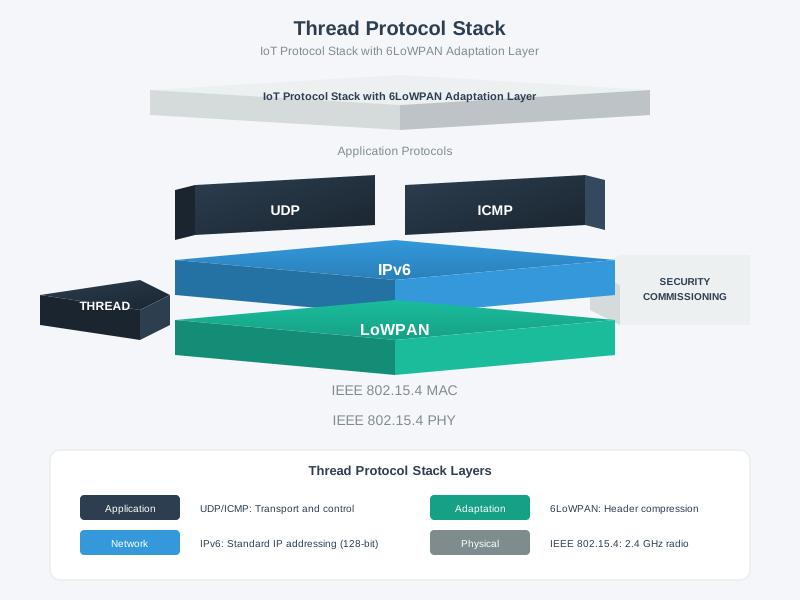
- Thread protocol stack (OSI layer mapping)
- Matter integration (network vs application layer)
- Thread vs Zigbee technical comparison
- Security architecture (dual-layer encryption)
- 2.4 GHz frequency advantages
Key Takeaways:
- Thread provides OSI layers 1-4; Matter provides layer 7
- Native IPv6 is Thread’s defining advantage over Zigbee
- Dual-layer security with MAC (hop-by-hop) and DTLS (end-to-end)
Time: 30 minutes
1018.3.3 Chapter 3: Planning and Optimization
Thread Review: Planning and Optimization
Topics Covered:
- Common misconceptions (“more routers = better”)
- Battery life calculation and optimization
- IPv6 addressing (5 address types)
- Network sizing guidelines
- Worked examples (network formation, battery optimization)
Key Takeaways:
- 16-20 routers optimal for most homes (not 32)
- Poll interval is dominant battery life factor
- Mesh-Local addresses for 80%+ of application traffic
Time: 35 minutes
1018.4 Quick Reference Summary
1018.4.1 Thread Network Limits
| Limit | Value | Reason |
|---|---|---|
| Maximum devices | 250 | Protocol design |
| Maximum routers | 32 | 5-bit router ID space |
| Minimum routers | 16 | Recommended for coverage |
1018.4.2 Device Type Quick Guide
| Type | Power | Poll Interval | Battery Life | Use Case |
|---|---|---|---|---|
| Router | Mains | N/A | N/A | Light bulbs, switches |
| REED | Either | N/A | Varies | Smart plugs |
| FED | Mains | Always-on | N/A | Smoke alarms |
| MED | Battery | 5-30s | 1-3 years | Motion sensors |
| SED | Battery | 60s-5min | 7-10+ years | Door sensors |
1018.4.3 Thread vs Zigbee Comparison
| Feature | Thread | Zigbee |
|---|---|---|
| Network Layer | Native IPv6 | Proprietary |
| Device Limit | 250 | 65,000 |
| Matter Support | Native | Requires bridge |
| Internet Access | Direct | Gateway required |
1018.4.4 Key IPv6 Address Types
| Type | Prefix | Purpose |
|---|---|---|
| Link-Local | fe80::/10 | Neighbor discovery |
| Mesh-Local | fd00::/8 | Application traffic (80%) |
| RLOC | fd00::/8 | Routing (auto-managed) |
| EID | fd00::/8 | Stable device ID |
| Global | 2000::/3 | Internet access |
1018.5 Visual Reference Gallery
1018.6 Knowledge Check
Test your understanding with these review questions. Detailed answers are provided in the individual chapters.
What is the primary technical advantage of Thread over Zigbee?
- Thread has longer range
- Thread has lower power consumption
- Thread uses native IPv6 addressing
- Thread supports more devices per network
Answer: C - See Protocol Stack and Comparison
In a Thread network with 200 devices, what is the maximum number that can be routers?
- 16
- 32
- 64
- 200 (all devices can be routers)
Answer: B - See Topology and Roles
A battery-powered Thread door sensor (SED) wakes every 60 seconds to poll. Using a 2000 mAh battery, what is the approximate battery life?
- 3-6 months
- 1-2 years
- 3-5 years
- 7-10 years
Answer: D - See Planning and Optimization
What is the relationship between Thread and Matter?
- They are competing protocols
- Matter is a replacement for Thread
- Thread is the network layer, Matter is the application layer
- Thread is only used for commissioning
Answer: C - See Protocol Stack and Comparison
1018.7 Key Concepts Summary
- Thread: IPv6-based mesh protocol backed by Google, Apple, Amazon, and Samsung
- Border Router: Gateway connecting Thread mesh to internet via Wi-Fi or Ethernet
- Leader: Network manager elected from router devices
- REED: Router Eligible End Device that can be promoted to router if needed
- Mesh-Local Prefix: Unique network identifier (fd00::/64) for Thread network
- DTLS Commissioning: Secure out-of-band device joining mechanism
- Matter Integration: Application layer built on Thread network layer
- IPv6 Native: Every device has global, routable IP address
- 32-Router Limit: Fixed by 5-bit router ID space in RLOC addressing
- 250-Device Limit: Maximum devices per Thread network partition
1018.8 Chapter Summary
This comprehensive review covered Thread networking from device roles to deployment optimization:
Network Architecture:
- Thread uses hierarchical mesh with Border Router, Leader, Routers, and End Devices
- Maximum 32 routers and 250 devices per network
- 16-20 routers optimal for typical homes (not 32)
Device Types:
- Routers: Always-on mesh backbone (mains-powered)
- REEDs: Can promote to router when needed
- FEDs: Always listening, instant response
- MEDs/SEDs: Battery-powered with configurable poll intervals
Protocol Stack:
- Thread: OSI layers 1-4 (PHY to Transport)
- Matter: Layer 7 (Application interoperability)
- Native IPv6 is Thread’s key advantage over Zigbee
Optimization:
- Poll interval dominates battery life
- SED (60s poll): 10+ years on coin cell
- MED (5s poll): 1-3 years on AAA
- Match poll interval to application latency needs
Security:
- MAC layer: Hop-by-hop encryption (Network Master Key)
- DTLS layer: End-to-end encryption (per-device keys)
- Protects against both eavesdropping and compromised routers
1018.9 What’s Next
Choose your next step:
- Deep dive: Start with Topology and Roles for detailed device configuration
- Comparison focus: Jump to Protocol Stack and Comparison for Thread vs Zigbee analysis
- Practical planning: Go to Planning and Optimization for deployment guidance
- Alternative protocol: Continue to Z-Wave for another low-power mesh protocol