%%{init: {'theme': 'base', 'themeVariables': {'primaryColor': '#2C3E50', 'primaryTextColor': '#fff', 'primaryBorderColor': '#16A085', 'lineColor': '#16A085', 'secondaryColor': '#E67E22', 'tertiaryColor': '#7F8C8D', 'background': '#ffffff', 'mainBkg': '#2C3E50', 'secondBkg': '#16A085', 'tertiaryBkg': '#E67E22'}}}%%
graph TB
    subgraph characteristics[" LPWAN Key Characteristics "]
        LP["<b>Low Power</b><br/>5-10 year battery<br/>Infrequent transmission<br/>Sleep modes"]
        LR["<b>Long Range</b><br/>2-15 km urban<br/>40+ km rural<br/>Sub-GHz spectrum"]
        LBR["<b>Low Bit Rate</b><br/>100 bps - 50 kbps<br/>Small payloads<br/>12-243 bytes typical"]
        LPC["<b>Low Processing</b><br/>Simple 8-bit MCU<br/>Low cost €5-20<br/>Minimal RAM/Flash"]
        MS["<b>Massive Scale</b><br/>10,000+ devices/gateway<br/>Star topology<br/>Duty cycle limits"]
    end

    subgraph applications[" Ideal LPWAN Applications "]
        AG["Smart Agriculture<br/>Soil moisture<br/>Hourly updates"]
        UT["Utility Metering<br/>Water/gas/electric<br/>Daily readings"]
        AS["Asset Tracking<br/>Location beacons<br/>Periodic GPS"]
        SM["Smart City<br/>Parking sensors<br/>Event-driven"]
    end

    LP --> AG
    LR --> AG
    LBR --> UT
    MS --> SM
    LPC --> AS

    style characteristics fill:#f0f0f0,stroke:#2C3E50,stroke-width:2px
    style applications fill:#f0f0f0,stroke:#16A085,stroke-width:2px
    style LP fill:#16A085,stroke:#2C3E50,color:#fff
    style LR fill:#16A085,stroke:#2C3E50,color:#fff
    style LBR fill:#E67E22,stroke:#2C3E50,color:#fff
    style LPC fill:#2C3E50,stroke:#16A085,color:#fff
    style MS fill:#2C3E50,stroke:#16A085,color:#fff
    style AG fill:#7F8C8D,stroke:#2C3E50,color:#fff
    style UT fill:#7F8C8D,stroke:#2C3E50,color:#fff
    style AS fill:#7F8C8D,stroke:#2C3E50,color:#fff
    style SM fill:#7F8C8D,stroke:#2C3E50,color:#fff
1052 LPWAN Fundamentals: Core Concepts
1052.1 What is LPWAN?
LPWAN technologies are designed specifically for:
- Low power: Battery life measured in years (5-10 years typical)
- Low bit rate: Hundreds of bits per second to a few kilobits per second
- Long range: 2-15 kilometers in urban areas, 40+ kilometers in rural areas
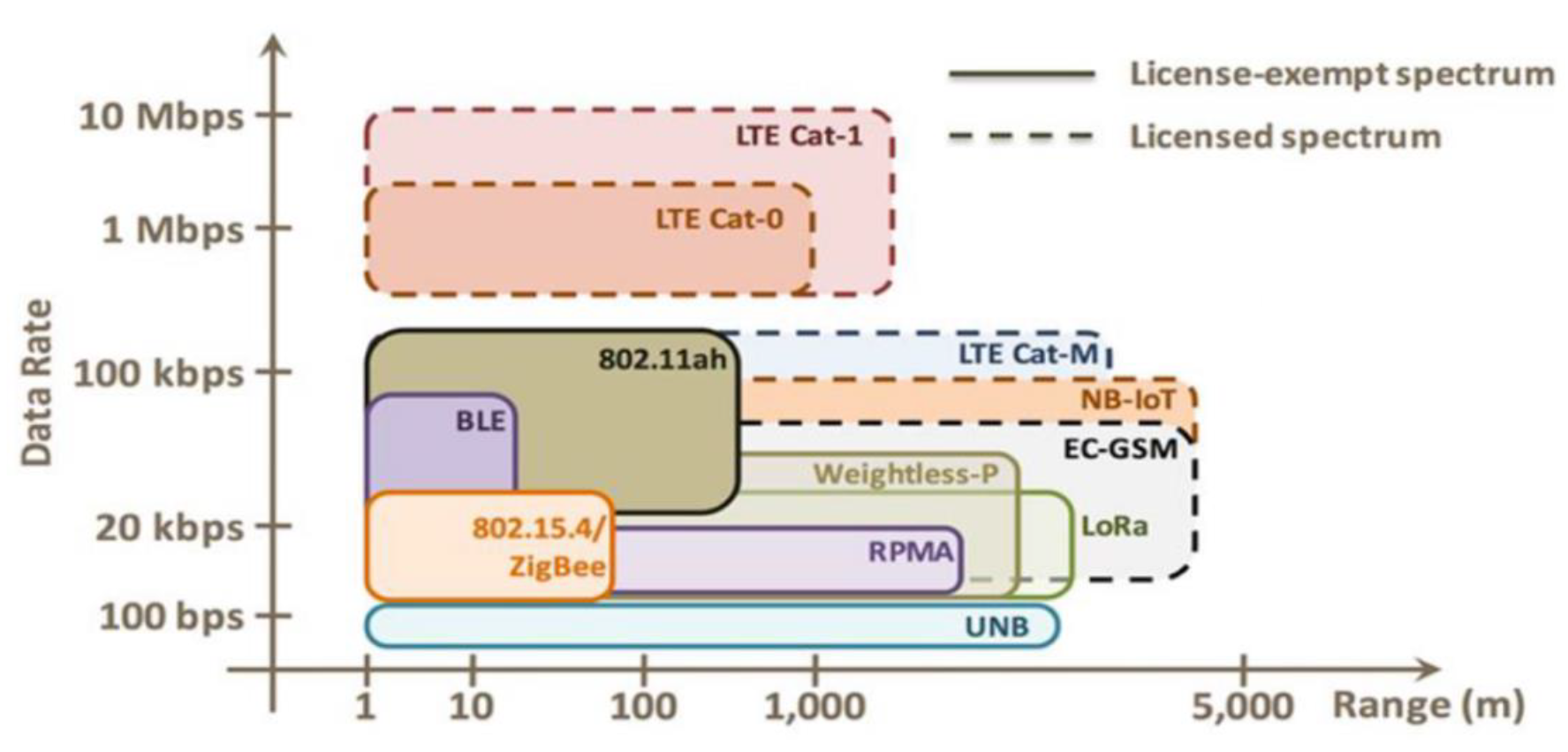
- Low processing: Simple, inexpensive devices
- Massive scale: Support for tens of thousands of devices per base station
NoteUnderstanding Massive Multiple Access Networks
Tomorrow’s IoT networks operate fundamentally differently from traditional networks like cellular voice or Wi-Fi data. Think of a murmuration—thousands of starlings flying together, with only a few visible at any moment but collectively creating stunning patterns.
Key characteristics of massive IoT networks:
| Characteristic | Traditional Network | Massive IoT Network |
|---|---|---|
| Active devices | Most active simultaneously | Few active at a time (0.1-1%) |
| Traffic pattern | Continuous streams | Bursty, few bits per transmission |
| Device complexity | Full protocol stack | Minimal, energy-constrained |
| Node identity | Critical (billing, routing) | May not be relevant (aggregate data) |
Why “node identity may not be relevant”: In many IoT applications, we care about the aggregate data, not which specific sensor reported it. A smart city with 10,000 parking sensors doesn’t need to know “Sensor #7,842 detected a car”—it needs to know “Block 5 has 3 available spaces.” This enables simpler protocols, reduced addressing overhead, and data aggregation at the edge.
This paradigm shift from “every device matters” to “the aggregate matters” drives LPWAN protocol design decisions like group acknowledgments, class-based polling, and data-centric routing.
{fig-alt=“LPWAN key characteristics diagram showing five defining features: low power (5-10 year battery life), long range (2-40 km), low bit rate (100 bps to 50 kbps), low processing (simple MCU), and massive scale (10,000+ devices per gateway). Connected to ideal application domains including smart agriculture, utility metering, asset tracking, and smart cities.”}