%%{init: {'theme': 'base', 'themeVariables': { 'primaryColor': '#2C3E50', 'primaryTextColor': '#fff', 'primaryBorderColor': '#16A085', 'lineColor': '#16A085', 'secondaryColor': '#E67E22', 'tertiaryColor': '#7F8C8D'}}}%%
graph TB
    subgraph "IoT Reference Model"
        L7["Layer 7: Application<br/>(Business Logic, UI)"]
        L6["Layer 6: Collaboration<br/>(Processes, Workflows)"]
        L5["Layer 5: Data Abstraction<br/>(Aggregation, Filtering)"]
        L4["Layer 4: Data Accumulation<br/>(Storage, Databases)"]
        L3["Layer 3: Edge Computing<br/>(Analytics, Processing)"]
        L2["Layer 2: Connectivity<br/>(Networks, Protocols)"]
        L1["Layer 1: Physical Devices<br/>(Sensors, Actuators)"]
    end

    L1 --> L2 --> L3 --> L4 --> L5 --> L6 --> L7

    style L1 fill:#16A085,stroke:#2C3E50,color:#fff
    style L3 fill:#E67E22,stroke:#2C3E50,color:#fff
    style L5 fill:#2C3E50,stroke:#16A085,color:#fff
    style L7 fill:#2C3E50,stroke:#16A085,color:#fff
161 Introduction to IoT Reference Models
161.1 Learning Objectives
By the end of this chapter, you will be able to:
- Define reference models: Explain what a reference model is and why it’s valuable for IoT system design
- Identify the seven layers: Name and describe the primary function of each layer in the Cisco IoT reference model
- Apply the model conceptually: Map a simple IoT system (like a smart thermostat) to the appropriate layers
- Recognize layer benefits: Explain how layered architecture simplifies troubleshooting and system design
161.2 Prerequisites
Before diving into this chapter, you should be familiar with:
- Overview of IoT: A general understanding of IoT systems and use cases will help you see how the seven levels map onto real deployments
- Architectural Enablers: Knowing the enabling trends (compute, miniaturisation, energy, connectivity) makes it easier to reason about why each layer in the model exists
161.3 Getting Started (For Beginners)
161.3.1 What is a Reference Model? (Simple Explanation)
Analogy: Think of a reference model as a “recipe template” for building complex systems.
Just as a recipe breaks cooking into steps (prep ingredients, mix, cook, serve), a reference model breaks IoT systems into layers that each handle specific tasks. This makes it easier to:
- Understand how the pieces fit together
- Design new systems without reinventing everything
- Troubleshoot problems by isolating which layer is failing
161.3.2 The 7-Layer Model in Everyday Terms
Imagine you want to know the temperature in your backyard from your phone:
{fig-alt=“IoT reference model showing 7 layers: Physical devices with sensors and actuators, connectivity with networks and protocols, edge computing with analytics and processing, data accumulation in storage and databases, data abstraction with aggregation and filtering, collaboration with processes and workflows, and application layer with business logic and UI”}
Each layer has ONE job:
- Layer 1: Sense the physical world
- Layer 2: Move data reliably
- Layer 3: Quick local processing
- Layer 4: Store for later
- Layer 5: Make data meaningful
- Layer 6: Present to users
- Layer 7: Enable human decisions
NoteAcademic Resource: Stanford IoT Course - IoT Growth Timeline
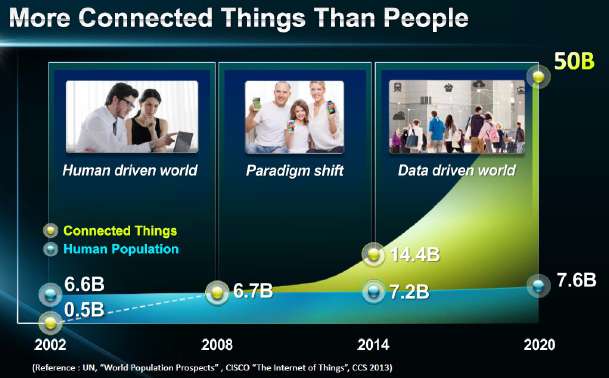
Source: Stanford University IoT Course (Cisco data) - IoT growth timeline showing the paradigm shift from human-driven to data-driven world, illustrating why structured reference models are essential for managing billions of connected devices
161.3.3 Why Does This Matter?
Real-world example: Smart Home Thermostat
| Layer | Component | What It Does |
|---|---|---|
| 7 | You | Decide to set temp to 72F |
| 6 | Nest App | Shows current temp, lets you adjust |
| 5 | Nest Cloud | Learns your schedule, optimizes |
| 4 | Cloud Database | Stores your preferences, history |
| 3 | Nest Hub | Processes locally when internet down |
| 2 | Wi-Fi | Connects Nest to your router |
| 1 | Temp Sensor | Measures room temperature |
Without layered thinking, designing this system would be overwhelming. With it, you can focus on one layer at a time.
161.3.4 Self-Check Questions
Before continuing, make sure you understand:
- What problem does a reference model solve? (Answer: It organizes complex systems into manageable layers)
- Why separate data storage (Layer 4) from data processing (Layer 5)? (Answer: Different concerns - one is “keep it safe,” the other is “make it useful”)
- What happens at the Edge (Layer 3)? (Answer: Quick, local processing before sending to the cloud)
Ready to dive deeper? The Seven-Level Architecture chapter explains each layer in technical detail.
NoteKey Takeaway
In one sentence: The 7-layer IoT reference model separates concerns so you can design one layer (sensors, connectivity, edge, storage, abstraction, application, collaboration) without getting overwhelmed by the others.
Remember this: When debugging IoT problems, ask “which layer is failing?” - a sensor problem (Layer 1) needs different skills than a cloud database issue (Layer 4) or a business workflow bug (Layer 6).
TipFor Kids: Meet the Sensor Squad!
An IoT system is like a seven-story treehouse where each floor has a special job!
161.3.5 The Sensor Squad Adventure: The Seven-Story Sensor Treehouse
Imagine the coolest treehouse ever built - one with seven floors! Each floor has its own special job, and the Sensor Squad lives and works on every level. When they work together, amazing things happen!
Floor 1 - The Ground Floor (Physical Devices): This is where Sammy the Temperature Sensor, Lux the Light Sensor, Motio the Motion Detector, and Pressi the Pressure Sensor all live. They’re like the treehouse’s eyes, ears, and fingertips - always touching and sensing the world outside. “I just felt someone step on the ladder!” announces Pressi. “The treehouse needs to know!”
Floor 2 - The Mailroom (Connectivity): Signal Sam the Communication Expert works here, collecting all the messages from Floor 1 and sending them upstairs. “I take Sammy’s temperature reading, put it in an envelope, and zip it up to the next floor!” Signal Sam uses special languages like Wi-Fi and Bluetooth to make sure messages get through.
Floor 3 - The Quick-Thinking Room (Edge Computing): This floor is special - it can make fast decisions WITHOUT waiting for the top floors. When Motio detects someone falling, Eddie the Edge Computer acts immediately: “EMERGENCY! Turn on all the lights NOW!” Some things are too urgent to wait!
Floor 4 - The Library (Data Storage): Dana the Database Keeper files away everything. “I remember that last Tuesday at 3pm, the temperature was 72 degrees. Last month’s average? Let me check my files!” Dana keeps records of everything the sensors have ever detected.
Floor 5 - The Translation Office (Data Abstraction): The data from Floor 4 is organized but messy. Ava the Abstractor cleans it up and makes it useful. “Instead of 1,000 temperature readings, I’ll tell you: ‘The room was comfortable all day except from 2-3pm when it got hot.’” Ava turns confusing numbers into helpful summaries.
Floor 6 - The App Factory (Application): This is where Apple the App Builder creates the buttons and screens humans actually use. “Want to see a colorful chart of today’s temperatures? Press this button! Want to set an alarm if it gets too hot? I made a switch for that!”
Floor 7 - The Planning Room (Collaboration): At the very top, Clara the Collaborator helps people make decisions. “Based on all this data, I suggest we open the windows every day at 2pm to cool things down.” Clara helps the treehouse data become real actions!
“The magic is how we all work together,” explains Sammy from Floor 1. “A temperature reading starts with me, travels up through every floor getting smarter and more useful, until finally a human can say ‘Ah, I should open a window!’ We’re like a team stacking building blocks - each layer adds something new!”
161.3.6 Key Words for Kids
| Word | What It Means |
|---|---|
| Reference Model | A blueprint that shows how to organize a system into layers - like a recipe with steps in order |
| Layer | One level of the system that does one special job before passing information to the next layer |
| Edge Computing | Making quick decisions locally (on Floor 3) instead of waiting to send everything to the cloud |
| Data Abstraction | Taking lots of confusing details and turning them into simple, useful summaries |
161.3.7 Try This at Home!
Build Your Own Seven-Layer Snack Stack!
Make a “reference model” you can eat! Each layer represents one of the seven IoT levels:
- Layer 1 (Bottom) - Graham cracker = Physical foundation (sensors touching the real world)
- Layer 2 - Peanut butter spread = Connectivity (sticky stuff that connects layers!)
- Layer 3 - Banana slices = Edge computing (quick energy, fast decisions)
- Layer 4 - Another graham cracker = Storage (holds everything together)
- Layer 5 - Honey drizzle = Abstraction (makes raw ingredients taste better)
- Layer 6 - Chocolate chips = Application (the part users enjoy!)
- Layer 7 (Top) - Whipped cream = Collaboration (the finishing touch for decisions)
What this teaches:
- Each layer builds on the one below it
- You can’t skip layers - try removing the middle graham cracker!
- The bottom layers (sensors) support everything above
- The top layers (apps, decisions) are what people actually see and use
Discussion questions while you eat:
- What happens if Layer 2 (connectivity) breaks? (Hint: the top falls apart!)
- Why is Layer 3 (edge) close to the bottom? (Quick response to sensors!)
- Which layer is most important? (Trick question - they all are!)
TipMVU: IoT System Building Blocks
Core Concept: Every IoT system consists of seven functional layers - physical devices (sensors/actuators), connectivity, edge computing, data storage, data abstraction, applications, and collaboration processes - each with a distinct responsibility. Why It Matters: This layered architecture enables modularity (swap Wi-Fi for cellular without changing your sensors), troubleshooting (isolate which layer is failing), and team coordination (different experts own different layers). Key Takeaway: Data flows upward through the stack, gaining value at each layer - raw sensor readings become actionable business insights through successive transformation and enrichment.
161.4 The Seven-Level Model Overview
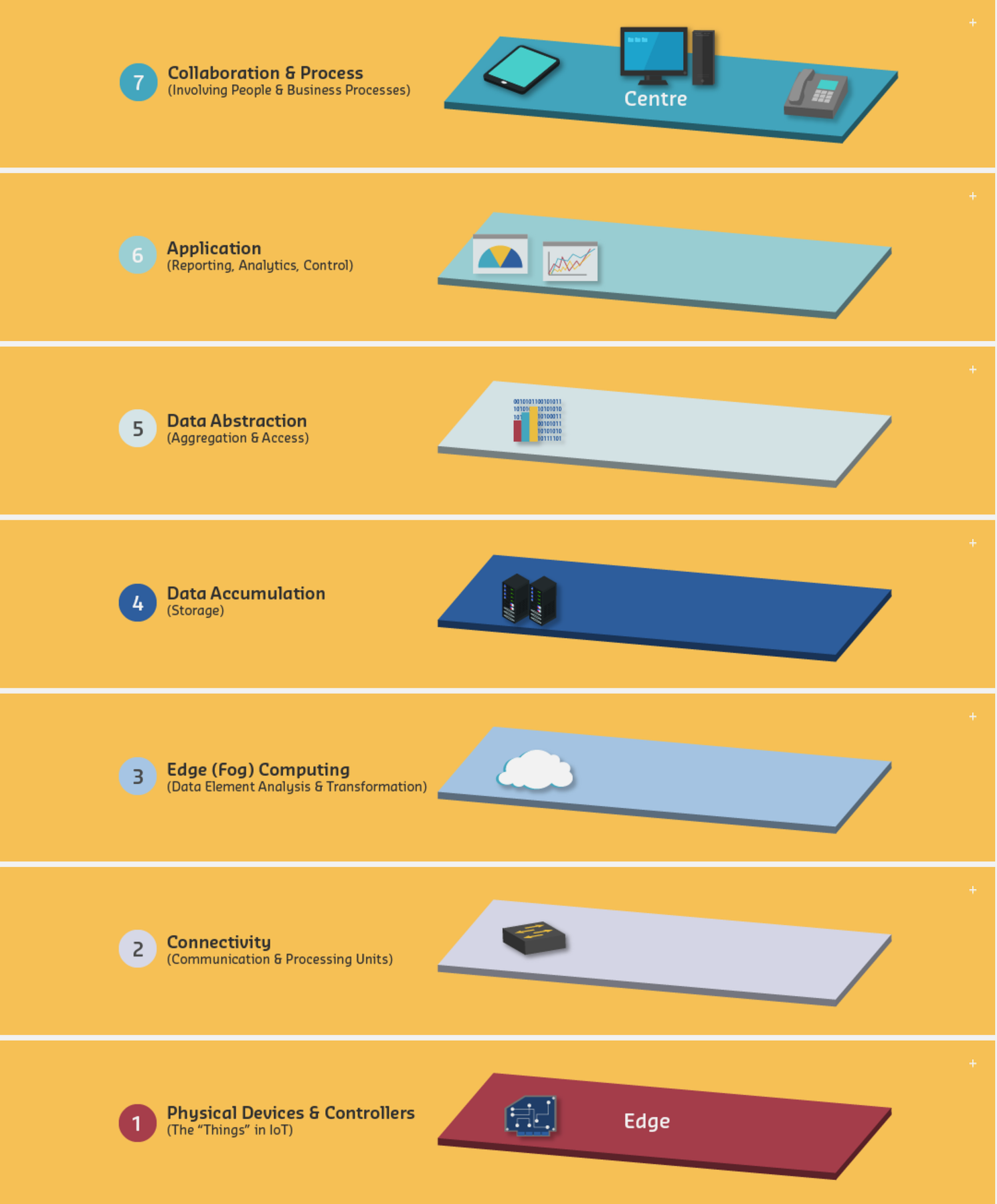
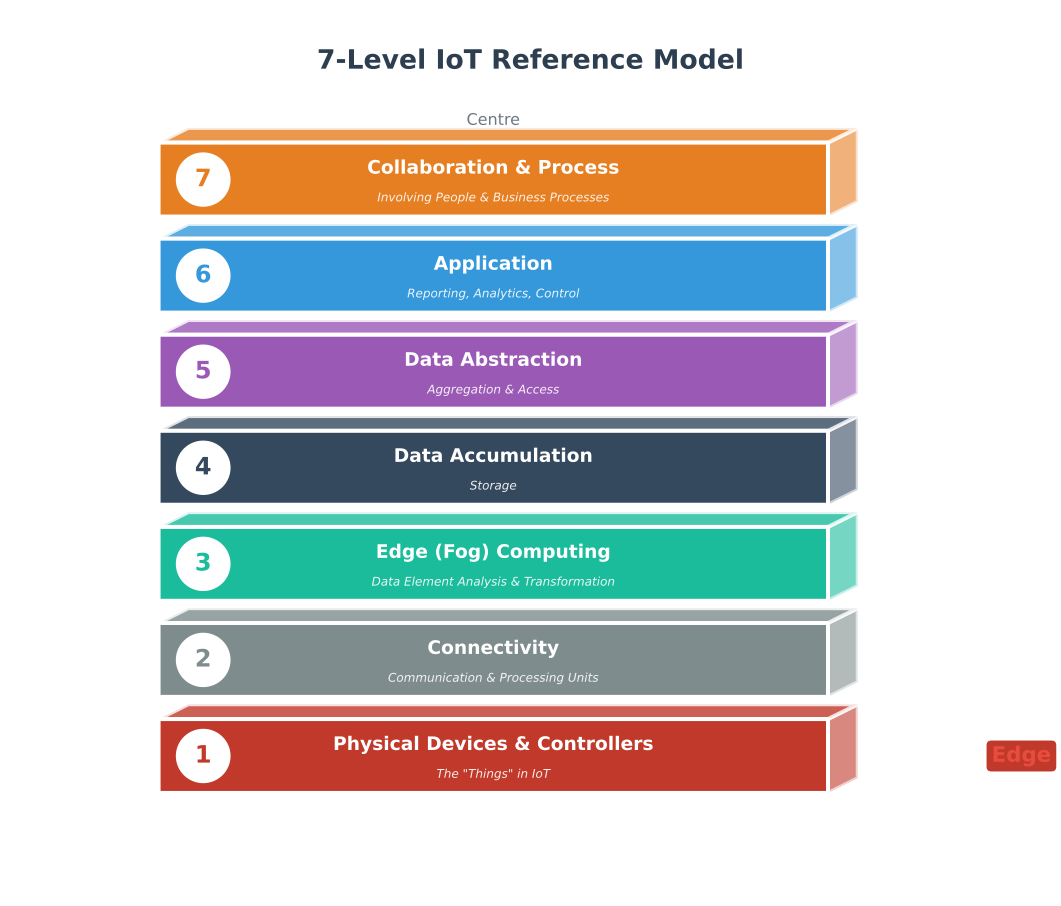
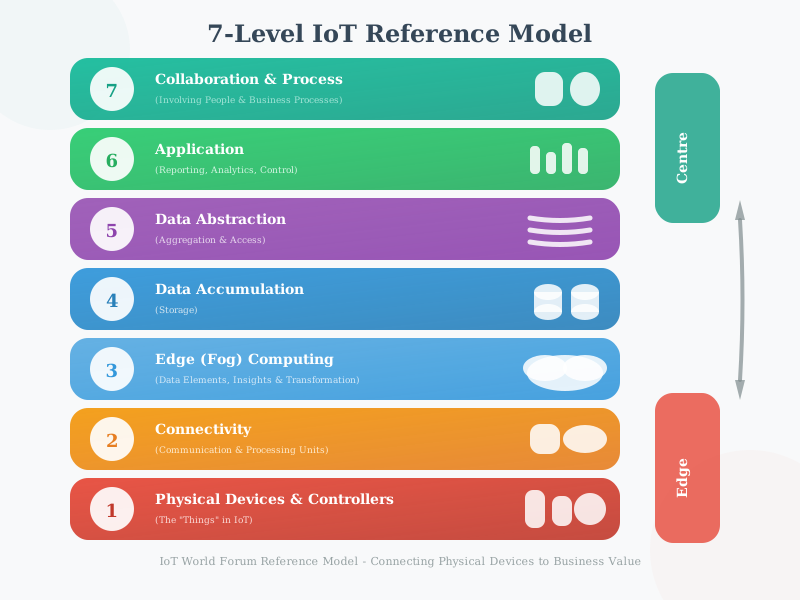

Figure Caption: The seven-level model shows both northbound data flow (sensors to humans) and southbound control flow (human decisions to actuators), with each layer adding value through filtering, storage, abstraction, and presentation.
%%{init: {'theme': 'base', 'themeVariables': { 'primaryColor': '#2C3E50', 'primaryTextColor': '#fff', 'primaryBorderColor': '#16A085', 'lineColor': '#16A085', 'secondaryColor': '#E67E22', 'tertiaryColor': '#7F8C8D'}}}%%
graph TB
    subgraph Cloud["CLOUD DATACENTER (Levels 4-7)"]
        L7[L7: User Dashboard<br/>Web/Mobile Apps]
        L6[L6: Business Workflows<br/>Automation Rules]
        L5[L5: Data Lake<br/>Analytics Engine]
        L4[L4: Time-Series DB<br/>Long-term Storage]
    end

    subgraph Fog["FOG / GATEWAY (Level 3)"]
        L3[L3: Edge Server<br/>Local Processing<br/>Raspberry Pi / Industrial PC]
    end

    subgraph Edge["EDGE DEVICES (Levels 1-2)"]
        L2_1[L2: Wi-Fi Router<br/>Protocol Gateway]
        L2_2[L2: Zigbee Hub<br/>Mesh Coordinator]
        L1_1[L1: Temp Sensors<br/>ESP32 + DHT22]
        L1_2[L1: Smart Plugs<br/>Power Monitoring]
        L1_3[L1: Door Sensors<br/>Battery-powered]
    end

    L1_1 --> L2_1
    L1_2 --> L2_1
    L1_3 --> L2_2
    L2_1 --> L3
    L2_2 --> L3
    L3 -->|MQTT/HTTPS| L4
    L4 --> L5
    L5 --> L6
    L6 --> L7

    style Cloud fill:#2C3E50,color:#fff
    style Fog fill:#E67E22,color:#fff
    style Edge fill:#16A085,color:#fff
This seven-level IoT Reference Model, originally promoted by Cisco Systems, Inc., provides a structured way to analyze and develop IoT networks. By defining clear boundaries and functions for each level, it becomes easier to consider required features and processes without being distracted by non-adjacent layers.
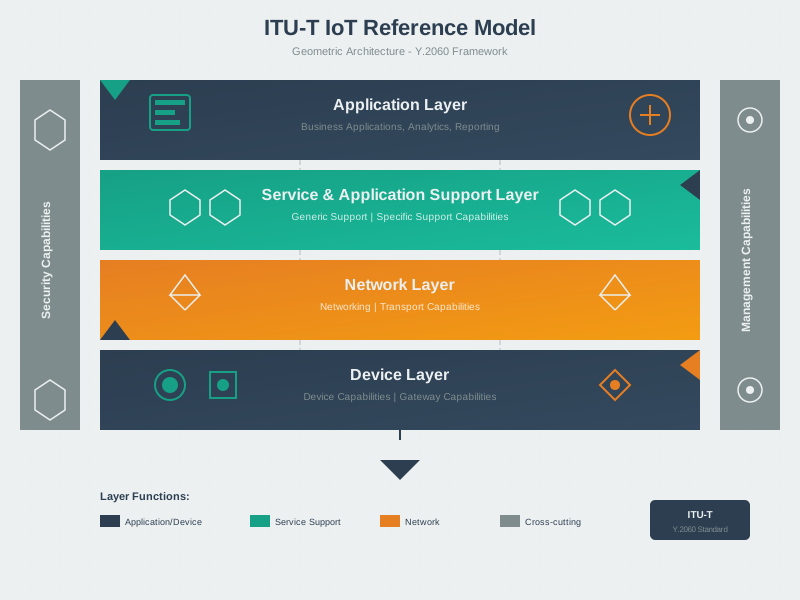
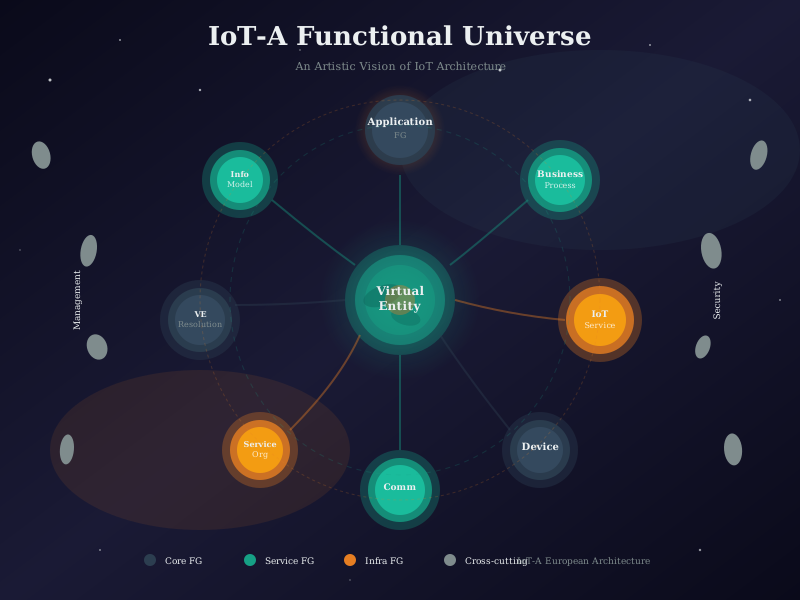
The IoT draws on the frameworks and protocols of traditional data networks, yet it also incorporates specialized technologies that support many low-power devices, often operating in previously unconnected locations and generating large volumes of data over time.
NoteKnowledge Check: IoT Reference Layers
161.5 Summary
In this introductory chapter, you learned:
- Reference models organize complex IoT systems into manageable layers with clear responsibilities
- The Cisco Seven-Level Model provides a comprehensive framework from physical devices to human collaboration
- Layered architecture simplifies design by allowing you to focus on one layer at a time
- Troubleshooting becomes systematic when you can ask “which layer is failing?”
- Data flows upward through the stack, gaining value at each layer
161.6 What’s Next
Continue to the Seven-Level IoT Architecture chapter to explore each layer in technical detail, including:
- Detailed responsibilities and functions of each layer
- Real-world examples and use cases
- Knowledge checks to test your understanding of each layer
- Common patterns and best practices