%% fig-alt: "Comparison diagram showing 50 smart home devices connected to either a local server requiring $5000 upfront with limited storage, or a cloud platform costing $20/month with unlimited scale capability"
%%{init: {'theme': 'base', 'themeVariables': { 'primaryColor': '#2C3E50', 'primaryTextColor': '#fff', 'primaryBorderColor': '#16A085', 'lineColor': '#16A085', 'secondaryColor': '#E67E22', 'tertiaryColor': '#7F8C8D', 'fontSize': '14px'}}}%%
graph LR
    Devices[50 Smart Home Devices]
    Local[Local Server<br/>$5000 upfront<br/>Limited storage]
    Cloud[Cloud Platform<br/>$20/month<br/>Unlimited scale]

    Devices --> Local
    Devices --> Cloud

    style Devices fill:#2C3E50,stroke:#16A085,color:#fff
    style Local fill:#E67E22,stroke:#16A085,color:#fff
    style Cloud fill:#16A085,stroke:#2C3E50,color:#fff
270 Cloud Computing Fundamentals for IoT
270.1 Learning Objectives
By the end of this chapter, you will be able to:
- Explain Cloud Computing: Define cloud computing using the NIST model and its five essential characteristics
- Trace Cloud Evolution: Understand the progression from grid computing to utility computing to modern cloud
- Identify IoT-Cloud Benefits: Articulate why IoT systems benefit from cloud infrastructure
- Apply NIST Characteristics: Map each NIST characteristic to specific IoT use cases
270.2 Prerequisites
Before diving into this chapter, you should be familiar with:
- Networking Basics: Knowledge of TCP/IP, HTTP, and network protocols is essential for understanding cloud connectivity
- IoT Reference Models: Familiarity with IoT architectural frameworks provides context for how cloud services integrate with device layers
270.3 For Kids: The Giant Computer in the Sky!
TipExplain Like I’m 5: What is the Cloud?
Have you heard grown-ups talk about “the cloud”? It’s not actually up in the sky with rain clouds!
270.3.1 What IS the Cloud?
The cloud is just really big, powerful computers that live in special buildings (called data centers) far away. When you use “the cloud,” you’re borrowing these super computers through the internet!
270.3.2 A Cloud Story
Imagine you have a tiny toy box at home (that’s your small device). But your toys are getting too many to fit!
Your friend has a HUGE warehouse with endless shelves. They say “You can keep your extra toys at my warehouse! Just tell me when you want to play with them, and I’ll send them to you!”
That’s the cloud! A giant warehouse for your data and computer work.
270.3.3 Why Use Someone Else’s Computer?
| At Home | In the Cloud |
|---|---|
| Your computer might be slow | Super fast computers! |
| You run out of space | Almost unlimited space! |
| Costs a lot to buy big computers | Pay only for what you use |
| If it breaks, you’re stuck | They have backups everywhere! |
270.3.4 The Cloud and Your Smart Home
When Temperature Terry reads “75F,” where does that information go?
- First: Terry sends it through your Wi-Fi
- Then: It travels through the internet
- Finally: It arrives at a big computer in the cloud!
- Later: When you open your phone app, the cloud sends the info back to you!
270.3.5 Cloud Words for Kids
| Word | What It Means |
|---|---|
| Cloud | Big computers far away you can use through the internet |
| Data Center | A special building full of computers |
| Upload | Sending stuff TO the cloud |
| Download | Getting stuff FROM the cloud |
| Storage | A place to keep your data |
270.3.6 Fun Fact!
When you watch a YouTube video, it’s not stored on your tablet - it comes from the cloud! The video lives on Google’s computers, and they send it to you when you press play!
TipFor Kids: Meet the Sensor Squad!
Cloud computing is like having a super-smart friend with a giant brain who lives far away!
270.3.7 The Sensor Squad Adventure: The Case of Too Many Memories
One day, the Sensor Squad was collecting SO much data that their tiny brains couldn’t remember it all! Sunny the Light Sensor was tracking sunrise to sunset every single second. Thermo the Temperature Sensor was measuring hot and cold 100 times per minute. Motion Mo was detecting every little movement in the whole house!
“Help!” cried Power Pete the Battery Manager. “We’re running out of space to store all these numbers, and I’m getting tired carrying all this data around!”
That’s when Signal Sam the Communication Expert had a brilliant idea. “I know some SUPER powerful computers that live in special buildings far away! They have rooms and rooms full of memory. Let’s send our data there through the internet!”
And that’s exactly what they did! Now whenever the Sensor Squad collects data, Signal Sam sends it zooming through the internet to the CLOUD - giant buildings full of computers that never forget anything. When the family wants to see what temperature it was last Tuesday at 3pm, the cloud remembers! The Sensor Squad can now focus on sensing, while their cloud friends handle all the heavy thinking.
270.3.8 Key Words for Kids
| Word | What It Means |
|---|---|
| Cloud | Super powerful computers in special buildings that store your data through the internet |
| Data Center | A building full of computers that never sleep - they keep your information safe 24/7 |
| Upload | Sending your information UP to the cloud, like mailing a letter |
270.3.9 Try This at Home!
Cloud Memory Game: Close your eyes and try to remember what you had for breakfast every day last week. Hard, right? Now imagine remembering EVERY breakfast for the past 5 years! That’s what the cloud does - it remembers everything so our small devices don’t have to. Ask a parent to show you a photo app on their phone. All those thousands of photos are stored in the cloud, not just on the tiny phone!
270.4 Getting Started (For Beginners)
270.4.1 What is Cloud Computing? (Simple Explanation)
Analogy: Think of cloud computing like renting vs. owning a car.
| Approach | Car Analogy | Computing Equivalent |
|---|---|---|
| Own everything | Buy a car, garage, tools | Buy servers, build data center |
| Rent as needed | Uber/Lyft when you need a ride | Use cloud when you need compute |
The Cloud = Someone else’s computers that you rent by the hour
270.4.2 Why Does IoT Need the Cloud?
Your smart home has 50 devices. Where should data go?
270.4.3 How IoT Data Flows to Cloud
%% fig-alt: "Complete IoT to cloud data flow diagram showing IoT sensors sending data through gateway using MQTT/HTTP protocols to cloud services for storage and analytics"
%%{init: {'theme': 'base', 'themeVariables': { 'primaryColor': '#2C3E50', 'primaryTextColor': '#fff', 'primaryBorderColor': '#16A085', 'lineColor': '#16A085', 'secondaryColor': '#E67E22', 'tertiaryColor': '#7F8C8D', 'fontSize': '14px'}}}%%
graph LR
    Sensors[IoT Sensors]
    Gateway[Gateway]
    Internet[Internet]
    CloudServices[Cloud Services]
    Storage[Storage]
    Analytics[Analytics]
    Action[Automated Actions]

    Sensors -->|Data| Gateway
    Gateway -->|MQTT/HTTP| Internet
    Internet --> CloudServices
    CloudServices --> Storage
    CloudServices --> Analytics
    Analytics --> Action

    style Sensors fill:#2C3E50,stroke:#16A085,color:#fff
    style Gateway fill:#16A085,stroke:#2C3E50,color:#fff
    style CloudServices fill:#7F8C8D,stroke:#16A085,color:#fff
    style Action fill:#E67E22,stroke:#16A085,color:#fff
270.4.4 Self-Check Questions
Before continuing, make sure you understand:
- What’s the main advantage of cloud for IoT? (Answer: Scalability - handle millions of devices without buying hardware)
- Why might you NOT use cloud for IoT? (Answer: Latency concerns, data privacy requirements, or unreliable internet)
NoteKey Takeaway
In one sentence: Cloud computing provides virtually unlimited scale and powerful analytics for IoT, but introduces latency and connectivity dependencies that make it unsuitable for real-time control.
Remember this rule: Use cloud for storage, analytics, and management; use edge for real-time decisions and offline operation.
270.5 Introduction
Cloud Computing has become a fundamental enabler for Internet of Things (IoT) systems, providing the scalable infrastructure needed to store, process, and analyze massive volumes of sensor data. The combination of IoT’s distributed sensing capabilities with cloud computing’s centralized processing power creates powerful applications across domains.
This chapter explores cloud computing fundamentals and the NIST model that defines cloud characteristics.
NoteNIST Definition of Cloud Computing
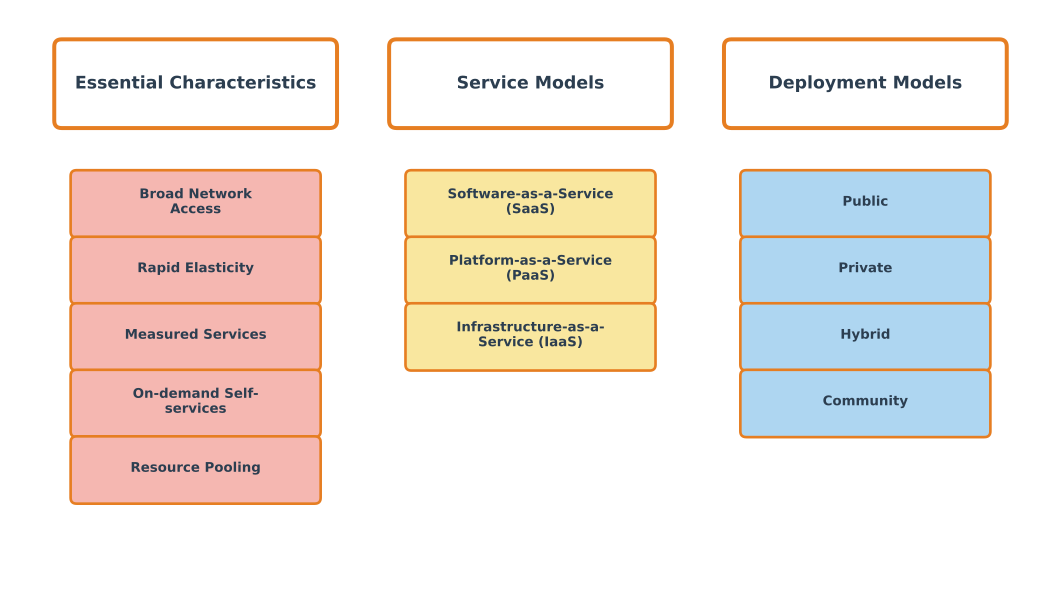
“Cloud computing is a model for enabling convenient, on-demand network access to a shared pool of configurable computing resources (e.g., networks, servers, storage, applications, and services) that can be rapidly provisioned and released with minimal management effort or service provider interaction.”
– NIST Special Publication 800-145
%% fig-alt: "NIST cloud computing definition mindmap showing Essential Characteristics, Service Models, and Deployment Models"
%%{init: {'theme': 'base', 'themeVariables': { 'primaryColor': '#2C3E50', 'primaryTextColor': '#fff', 'primaryBorderColor': '#16A085', 'lineColor': '#16A085', 'secondaryColor': '#E67E22', 'tertiaryColor': '#7F8C8D', 'fontSize': '16px'}}}%%
mindmap
  root((NIST Cloud<br/>Computing))
    Essential Characteristics
      On-demand Self-service
      Broad Network Access
      Resource Pooling
      Rapid Elasticity
      Measured Service
    Service Models
      SaaS: Software
      PaaS: Platform
      IaaS: Infrastructure
    Deployment Models
      Public Cloud
      Private Cloud
      Hybrid Cloud
      Community Cloud
270.6 Evolution: From Grid to Utility to Cloud
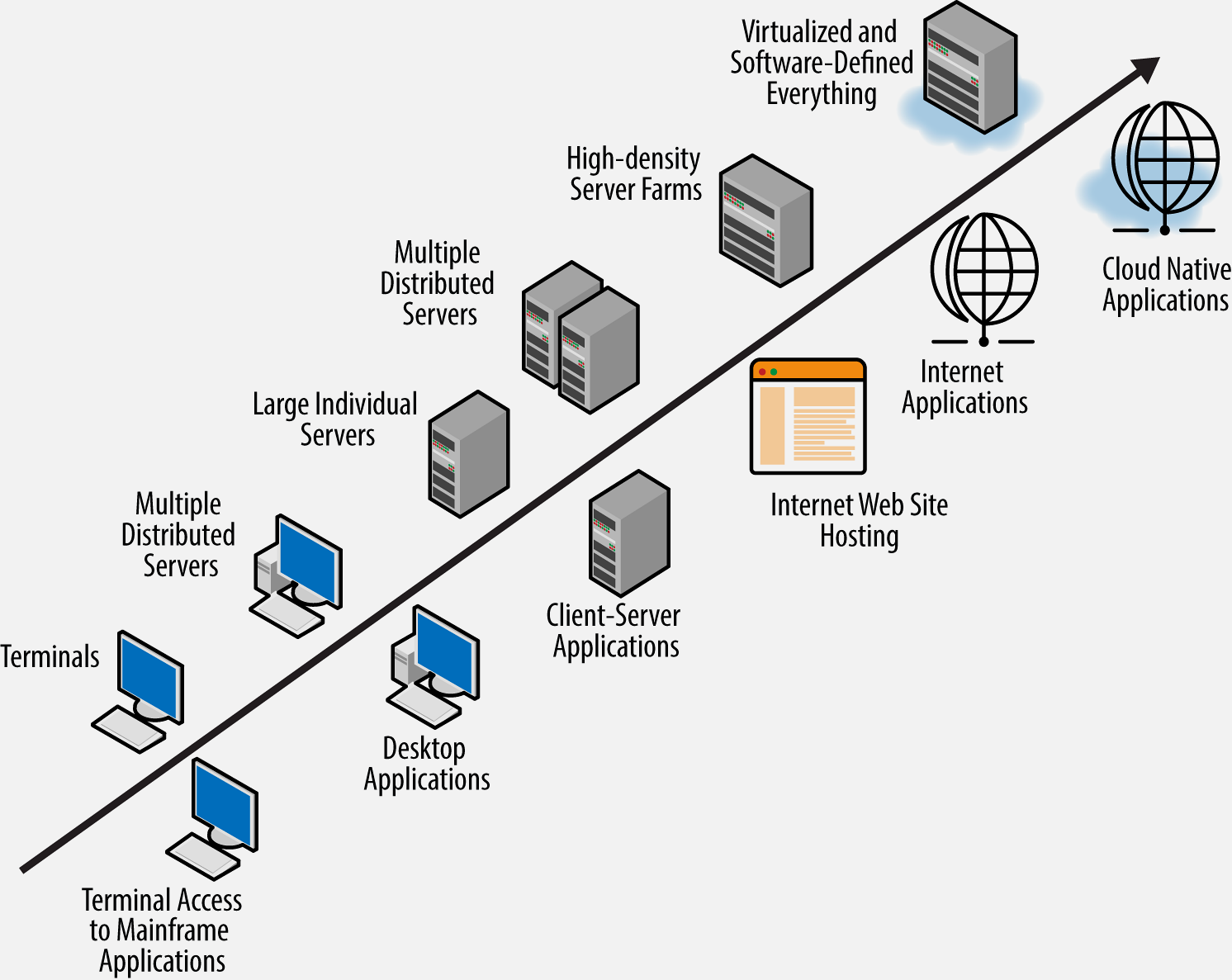
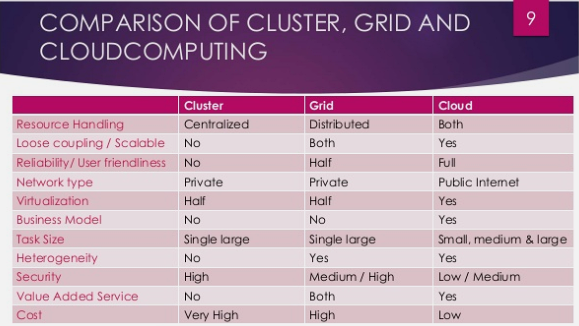
%% fig-alt: "Cloud computing evolution timeline showing progression from Grid Computing to Utility Computing to modern Cloud Computing"
%%{init: {'theme': 'base', 'themeVariables': { 'primaryColor': '#2C3E50', 'primaryTextColor': '#fff', 'primaryBorderColor': '#16A085', 'lineColor': '#16A085', 'secondaryColor': '#E67E22', 'tertiaryColor': '#7F8C8D', 'fontSize': '14px'}}}%%
graph LR
    Grid[Grid Computing<br/>2000s<br/>Scientific HPC]
    Utility[Utility Computing<br/>2005-2010<br/>Metered Resources]
    Cloud[Cloud Computing<br/>2010-Present<br/>On-demand Services]

    Grid -->|Evolution| Utility
    Utility -->|Evolution| Cloud

    style Grid fill:#2C3E50,stroke:#16A085,color:#fff
    style Utility fill:#16A085,stroke:#2C3E50,color:#fff
    style Cloud fill:#E67E22,stroke:#16A085,color:#fff
Key Differences:
| Aspect | Grid Computing | Utility Computing | Cloud Computing |
|---|---|---|---|
| Focus | Scientific HPC | Metered resources | On-demand services |
| Granularity | Coarse-grained jobs | Resource-level | Service-level |
| Access | Limited community | Metered users | Public/private/hybrid |
| Abstraction | Low (hardware-aware) | Medium | High (infrastructure-hidden) |
| Elasticity | Limited | Moderate | High |
270.7 NIST Cloud Computing Model
The NIST model defines cloud computing through three dimensions: Essential Characteristics, Service Models, and Deployment Models.
%% fig-alt: "NIST cloud computing model architecture showing three dimensions"
%%{init: {'theme': 'base', 'themeVariables': { 'primaryColor': '#2C3E50', 'primaryTextColor': '#fff', 'primaryBorderColor': '#16A085', 'lineColor': '#16A085', 'secondaryColor': '#E67E22', 'tertiaryColor': '#7F8C8D', 'fontSize': '16px'}}}%%
graph TB
    subgraph Characteristics[Essential Characteristics]
        C1[On-demand Self-service]
        C2[Broad Network Access]
        C3[Resource Pooling]
        C4[Rapid Elasticity]
        C5[Measured Service]
    end
    subgraph Services[Service Models]
        S1[SaaS: Applications]
        S2[PaaS: Platform]
        S3[IaaS: Infrastructure]
    end
    subgraph Deploy[Deployment Models]
        D1[Public Cloud]
        D2[Private Cloud]
        D3[Hybrid Cloud]
        D4[Community Cloud]
    end

    Characteristics --> Services
    Services --> Deploy

    style Characteristics fill:#2C3E50,stroke:#16A085,color:#fff
    style Services fill:#16A085,stroke:#2C3E50,color:#fff
    style Deploy fill:#E67E22,stroke:#16A085,color:#fff
270.7.1 Essential Characteristics
1. On-Demand Self-Service
- Users provision resources automatically without human intervention
- No need to contact provider for each resource request
- Self-service portals and APIs
2. Broad Network Access
- Resources available over network
- Accessible via standard protocols (HTTP, MQTT, WebSockets)
- Support heterogeneous devices (mobile, desktop, IoT)
3. Resource Pooling
- Multi-tenant model shares resources
- Location-independent resource assignment
- Dynamic allocation based on demand
4. Rapid Elasticity
- Resources scale up/down automatically
- Appears unlimited to consumers
- Responds to traffic spikes instantaneously
5. Measured Service
- Resource usage monitored and metered
- Pay-per-use billing model
- Transparency for provider and consumer
270.8 Knowledge Check: Rapid Elasticity in Practice
270.9 Common Misconceptions
WarningCommon Misconceptions About Cloud Computing
Misconception 1: “Cloud is always cheaper than on-premises” - Reality: Cloud is cheaper for variable workloads and small-scale deployments. For stable, predictable workloads at massive scale, on-premises can be 40-60% cheaper after 3+ years.
Misconception 2: “Cloud means no security responsibility” - Reality: Shared responsibility model means customers manage application security, access control, and data encryption even in SaaS.
Misconception 3: “All cloud services auto-scale infinitely” - Reality: Services have default rate limits. You must request limit increases weeks in advance.
Misconception 4: “Multi-cloud avoids vendor lock-in” - Reality: Multi-cloud adds complexity (2x operational burden, cross-cloud data transfer costs).
Misconception 5: “Edge eliminates the need for cloud” - Reality: Edge handles real-time processing, cloud handles historical analytics, ML training, global orchestration. They’re complementary.
270.10 Key Concepts
NoteKey Concepts Summary
- Cloud Computing: On-demand delivery of IT resources over the Internet with pay-as-you-go pricing
- Essential Characteristics: On-demand self-service, broad network access, resource pooling, rapid elasticity, measured service
- Data Centers: Facilities housing servers, storage, and networking equipment that provide cloud computing services
- Elastic Scalability: Ability to rapidly scale computational resources up or down based on demand
270.11 Summary
This chapter introduced cloud computing fundamentals:
- Definition: Cloud computing provides on-demand, scalable IT resources over the internet
- Evolution: Grid computing -> Utility computing -> Modern cloud
- NIST Model: Five essential characteristics define true cloud computing
- IoT Relevance: Cloud enables storage, processing, and analytics for massive IoT data volumes
270.12 What’s Next?
Now that you understand cloud computing fundamentals, continue with:
- Cloud Service Models - Learn about IaaS, PaaS, and SaaS
- Cloud Deployment Models - Understand public, private, and hybrid clouds