%% fig-alt: "Diagram showing IoT architecture components and their relationships with data flow and processing hierarchy."
%%{init: {'theme': 'base', 'themeVariables': { 'primaryColor': '#2C3E50', 'primaryTextColor': '#fff', 'primaryBorderColor': '#16A085', 'lineColor': '#16A085', 'secondaryColor': '#E67E22', 'tertiaryColor': '#7F8C8D'}}}%%

graph LR
    subgraph Medical["Medical Nanonetworks"]
        Drug[Drug Delivery<br/>Nano-devices]
        Monitor[Health<br/>Monitoring]
        Target[Targeted<br/>Therapy]
    end

    subgraph Environmental["Environmental"]
        Water[Water Quality<br/>Nano-sensors]
        Air[Air Pollution<br/>Detection]
    end

    subgraph Industrial["Industrial"]
        Material[Material<br/>Inspection]
        Quality[Quality<br/>Control]
    end

    Medical & Environmental & Industrial --> Network[Nanonetwork<br/>Coordinator]
    Network --> Gateway[Nano-Macro<br/>Gateway]
    Gateway --> Cloud[Cloud Analytics]

    style Drug fill:#16A085,stroke:#2C3E50,color:#fff
    style Monitor fill:#16A085,stroke:#2C3E50,color:#fff
    style Target fill:#16A085,stroke:#2C3E50,color:#fff
    style Water fill:#E67E22,stroke:#2C3E50,color:#fff
    style Air fill:#E67E22,stroke:#2C3E50,color:#fff
    style Material fill:#7F8C8D,stroke:#2C3E50,color:#fff
    style Quality fill:#7F8C8D,stroke:#2C3E50,color:#fff
    style Network fill:#2C3E50,stroke:#16A085,color:#fff
    style Gateway fill:#2C3E50,stroke:#16A085,color:#fff
401 Nanonetworks: The Future of IoT
TipFor Beginners: Networks Smaller Than a Cell
What if sensors were so tiny they could travel through your bloodstream? Nanonetworks are networks of devices so small (less than 100 nanometers - smaller than a human cell!) that they can work inside your body!
Amazing Nano Facts: - A nanometer is one billionth of a meter - 100,000 times thinner than a human hair! - These tiny devices can’t use radio waves (the antenna would need to be bigger than the device) - Instead, they “talk” by releasing molecules - like how your cells naturally communicate!
Real-World Example: Imagine swallowing a “smart pill” containing millions of nano-devices. They travel to a tumor, detect cancer cells, and release medicine precisely where needed - leaving healthy cells alone!
| Term | Simple Explanation |
|---|---|
| Nanonetwork | Networks of microscopic devices that communicate using molecules |
| Nano-device | A machine smaller than 100 nanometers (smaller than a cell) |
| Molecular Communication | Sending messages by releasing molecules (like cells do!) |
| THz Communication | Super-high frequency radio waves (terahertz) for nano-antennas |
| Diffusion | Molecules spreading randomly through a medium |
| Brownian Motion | Random wiggling of molecules due to heat |
Why this matters: Nanonetworks could revolutionize medicine (targeted drug delivery, early cancer detection), environmental monitoring (detecting individual pollutant molecules), and materials science (self-healing structures).
401.1 Learning Objectives
By the end of this chapter, you will be able to:
- Understand Nanonetwork Scales: Explain the unique challenges of communication at sub-cellular dimensions
- Compare Communication Paradigms: Evaluate molecular vs electromagnetic communication for nano-scale applications
- Analyze Molecular Communication: Describe information encoding, transport, and reception via molecules
- Explore THz Electromagnetic: Understand nano-antenna operation at terahertz frequencies
- Apply to Medical Applications: Design conceptual nanonetworks for drug delivery and health monitoring
- Evaluate Trade-offs: Balance speed, biocompatibility, and range in nanonetwork design
401.2 Prerequisites
Before diving into this chapter, you should be familiar with:
- Wireless Sensor Networks: Understanding of WSN architecture and communication concepts
- Wireless Multimedia Sensor Networks: Event-driven activation and specialized sensing
- Underwater Acoustic Sensor Networks: Alternative propagation mechanisms beyond radio
401.3 Nanonetwork Fundamentals
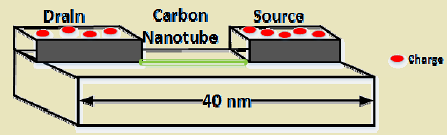
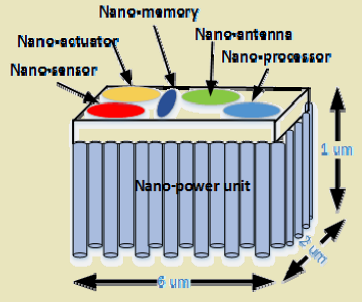
Nanonetworks are networks of nano-scale devices (components < 100 nanometers) communicating for ultra-small sensing and actuation applications.
401.3.1 Scale Comparison
| Scale | Size | Example | Communication |
|---|---|---|---|
| Macro | > 1 cm | Smartphone | RF (Wi-Fi, Cellular) |
| Micro | 1 um - 1 cm | MEMS sensor | RF (Zigbee, BLE) |
| Nano | < 100 nm | Cell-sized device | Molecular or THz EM |
Challenge at nano-scale: - Radio antenna size proportional to wavelength - For 2.4 GHz Wi-Fi, antenna ~ 6 cm (way bigger than nano-device!) - Must use alternative communication methods
401.4 Nanonetwork Applications
Nanonetwork application domains: medical (drug delivery, health monitoring), environmental (water/air quality at nano-scale), and industrial (material inspection). Nano-devices (< 100nm) communicate via molecular or THz electromagnetic methods, requiring nano-macro gateways to bridge to conventional networks.
401.4.1 Medical Applications
Targeted Drug Delivery: - Nano-devices travel through bloodstream - Detect tumor markers (specific proteins on cancer cells) - Release drug payload precisely at tumor site - Minimize side effects on healthy tissue
Health Monitoring: - Continuous glucose monitoring for diabetics - Early cancer detection via biomarker sensing - Infection detection in implants - Post-surgical recovery monitoring
Smart Pills: - Ingestible nano-sensors - Monitor digestive tract conditions - Transmit data to external receiver - Report medication adherence
401.4.2 Environmental Applications
Water Quality: - Detect individual pollutant molecules - Real-time contamination alerts - Distributed sensing in water supplies
Air Pollution: - Nano-scale particulate detection - VOC (volatile organic compound) sensing - Personal exposure monitoring
401.4.3 Industrial Applications
Material Inspection: - Structural health monitoring at nano-scale - Crack detection in composites - Corrosion monitoring
Quality Control: - Nano-scale defect detection - Surface analysis - Contamination identification
401.5 Communication Paradigms
Nanonetworks use two primary communication methods: molecular and electromagnetic.
401.5.1 Molecular Communication
Information encoded in molecules, transported via diffusion or flow:
%% fig-alt: "Diagram showing IoT architecture components and their relationships with data flow and processing hierarchy."
%%{init: {'theme': 'base', 'themeVariables': { 'primaryColor': '#2C3E50', 'primaryTextColor': '#fff', 'primaryBorderColor': '#16A085', 'lineColor': '#16A085', 'secondaryColor': '#E67E22', 'tertiaryColor': '#7F8C8D'}}}%%

graph LR
    Transmitter[Nano-Transmitter<br/>Encode Information] -->|Release| Molecules[Information<br/>Molecules]
    Molecules -.->|Diffusion<br/>mm/s| Medium[Biological<br/>Medium]
    Medium -.->|Brownian<br/>Motion| Receiver[Nano-Receiver]
    Receiver -->|Binding| Decode[Decode<br/>Information]
    Decode -->|Action| Response[Biological<br/>Response]

    style Transmitter fill:#16A085,stroke:#2C3E50,color:#fff
    style Molecules fill:#E67E22,stroke:#2C3E50,color:#fff
    style Medium fill:#7F8C8D,stroke:#2C3E50,color:#fff
    style Receiver fill:#16A085,stroke:#2C3E50,color:#fff
    style Decode fill:#2C3E50,stroke:#16A085,color:#fff
    style Response fill:#2C3E50,stroke:#16A085,color:#fff
Molecular communication in nanonetworks: transmitter encodes information by releasing specific molecules, which diffuse through biological medium (blood, tissue) via Brownian motion at mm/s speeds. Receiver detects molecule binding and decodes information to trigger biological response. Extremely slow (seconds to minutes propagation) but biocompatible.
How Molecular Communication Works:
- Encoding: Information encoded in:
- Molecule type (different proteins = different bits)
- Concentration (more molecules = higher value)
- Release timing (pulse patterns)
- Transport: Molecules move via:
- Diffusion (random Brownian motion)
- Active transport (using molecular motors)
- Flow (blood circulation, air flow)
- Reception: Receiver detects molecules via:
- Chemical binding to receptors
- Concentration sensing
- Pattern recognition
Example: Drug Delivery System
Transmitter (nano-device in bloodstream):
    IF (tumor marker detected) THEN
        Release drug molecules

Receiver (tumor cells):
    IF (drug molecules bind to receptors) THEN
        Trigger apoptosis (cell death)
Molecular Communication Characteristics:
| Property | Value | Implication |
|---|---|---|
| Propagation Speed | mm/s | Very slow communication |
| Diffusion Rate | 1-10 um^2/s | Seconds-minutes for um distances |
| Range | < 1 mm | Very short range |
| Data Rate | bits/minute | Extremely low throughput |
| Biocompatibility | Excellent | Safe for in-body use |
| Noise | High (Brownian motion) | Error-prone communication |
Challenges: - Very slow (diffusion rate: mm/s) - High noise (Brownian motion) - Limited range (< 1 mm) - Molecule degradation over time
401.5.2 Electromagnetic-Based Communication
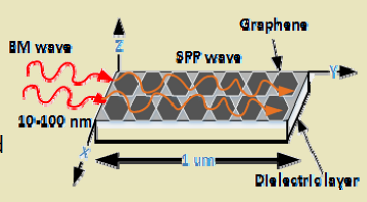
Nano-antennas operating in Terahertz band (0.1-10 THz):
%% fig-alt: "Diagram showing IoT architecture components and their relationships with data flow and processing hierarchy."
%%{init: {'theme': 'base', 'themeVariables': { 'primaryColor': '#2C3E50', 'primaryTextColor': '#fff', 'primaryBorderColor': '#16A085', 'lineColor': '#16A085', 'secondaryColor': '#E67E22', 'tertiaryColor': '#7F8C8D'}}}%%

graph TB
    subgraph TX["Nano-Transmitter"]
        Encoder[Data<br/>Encoder]
        Modulator[THz<br/>Modulator]
        Antenna_TX[Nano-antenna<br/>0.1-10 THz]
    end

    subgraph Channel["THz Channel"]
        Wave[EM Wave<br/>Speed of Light]
        Loss[High Path Loss<br/>Short Range]
    end

    subgraph RX["Nano-Receiver"]
        Antenna_RX[Nano-antenna<br/>0.1-10 THz]
        Demod[THz<br/>Demodulator]
        Decoder[Data<br/>Decoder]
    end

    Encoder --> Modulator --> Antenna_TX
    Antenna_TX -.->|THz Wave| Wave
    Wave -.->|Attenuation| Loss
    Loss -.->|Received| Antenna_RX
    Antenna_RX --> Demod --> Decoder

    style Encoder fill:#16A085,stroke:#2C3E50,color:#fff
    style Modulator fill:#16A085,stroke:#2C3E50,color:#fff
    style Antenna_TX fill:#E67E22,stroke:#2C3E50,color:#fff
    style Wave fill:#7F8C8D,stroke:#2C3E50,color:#fff
    style Loss fill:#7F8C8D,stroke:#2C3E50,color:#fff
    style Antenna_RX fill:#E67E22,stroke:#2C3E50,color:#fff
    style Demod fill:#2C3E50,stroke:#16A085,color:#fff
    style Decoder fill:#2C3E50,stroke:#16A085,color:#fff
Electromagnetic-based nanonetwork communication using THz frequencies (0.1-10 THz). Nano-antennas enable high data rates (1-100 Gbps theoretical) at speed of light propagation, but suffer very high path loss limiting range to millimeters. Faster than molecular communication but more complex to fabricate at nano-scale.
THz Communication Characteristics:
| Property | Value | Implication |
|---|---|---|
| Frequency | 0.1-10 THz | Nano-scale antenna possible |
| Wavelength | 30 um - 3 mm | Matches nano-device size |
| Propagation Speed | 3 x 10^8 m/s | Fast (speed of light) |
| Data Rate | 1-100 Gbps (theoretical) | Very high throughput |
| Range | mm-cm | Short but longer than molecular |
| Path Loss | Very high | Limits practical range |
Advantages: - High data rate (1-100 Gbps theoretical) - Longer range than molecular (mm-cm) - Fast propagation (speed of light)
Challenges: - Very high path loss in THz band - Requires nano-scale fabrication - Energy harvesting difficult at nano-scale - Less biocompatible than molecular approach
401.5.3 Paradigm Comparison
| Aspect | Molecular | THz Electromagnetic |
|---|---|---|
| Speed | Very slow (mm/s) | Very fast (speed of light) |
| Data Rate | bits/minute | Gbps |
| Range | < 1 mm | mm-cm |
| Biocompatibility | Excellent | Potentially harmful |
| Fabrication | Can use biological mechanisms | Requires nano-fabrication |
| Energy | Low (chemical energy) | Higher (EM radiation) |
| Noise | Brownian motion | Interference, path loss |
| Best For | In-body medical | Industrial, external |
401.6 Propagation Speed Analysis
Molecular diffusion is extremely slow:
The diffusion coefficient D determines how fast molecules spread: - D = kT/(6 pi eta r) - k = Boltzmann constant - T = temperature - eta = viscosity - r = molecule radius
Typical values: 1-10 um^2/s
Propagation time calculation: For distance d, average arrival time t ~ d^2/(2D)
Example: - Distance: 10 um - Diffusion coefficient: 5 um^2/s - Propagation time: 100/(2 x 5) = 10 seconds!
Over just 10 micrometers!
Comparison to electromagnetic: - Radio propagates at 3 x 10^8 m/s - 10 um = 10 x 10^-6 m - Propagation time = 3.3 x 10^-14 seconds (33 femtoseconds) - Molecular: 10 seconds
Electromagnetic is 10^14 times faster!
401.7 Knowledge Check
TipQuestion: Nanonetwork Paradigm Selection
When designing a nanonetwork for targeted cancer drug delivery inside the human body, why would molecular communication be preferred over THz electromagnetic communication?
Options: - A) Molecular communication provides higher data rates - B) THz electromagnetic has longer range, making molecular unnecessary - C) Molecular communication is biocompatible and naturally integrates with cellular processes - D) THz electromagnetic uses too much power
NoteAnswer
Correct: C) Molecular communication is biocompatible and naturally integrates with cellular processes
Why molecular communication for in-body applications:
Biocompatibility: Molecules (proteins, ions, pheromones) are natural to biological systems. THz radiation can potentially damage cells and DNA.
Natural integration: Cells already communicate via molecular signaling. Nanonetworks can leverage existing biological mechanisms:
- Calcium ion signaling
- Hormone release/reception
- Neurotransmitter pathways
Targeted delivery: Drug molecules carry both information AND therapeutic payload simultaneously. The molecule IS the message AND the medicine.
Energy efficiency: Molecular release uses chemical energy (ATP) which is naturally available in biological environments. THz radiation requires external power.
Trade-off accepted: - Molecular is much slower (seconds vs femtoseconds) - For drug delivery, seconds-to-minutes timing is acceptable - Precision targeting matters more than speed
When to use THz: - Industrial nano-inspection (non-biological) - High-speed nano-computing - External nano-sensors (not implanted)
401.8 Future Directions
Emerging Technologies:
Hybrid Communication: Combining molecular and electromagnetic for different scenarios
- Molecular for in-body sensing
- THz for nano-macro gateway
DNA Computing: Using DNA molecules for both computation and communication
Quantum Nanonetworks: Quantum effects at nano-scale for secure communication
Self-Assembly: Nanonetworks that build themselves from molecular components
Energy Harvesting: Nano-scale energy collection from:
- Chemical reactions
- Mechanical vibrations
- Thermal gradients
- Light
Research Challenges:
| Challenge | Current State | Required Breakthrough |
|---|---|---|
| Fabrication | Laboratory prototypes | Scalable manufacturing |
| Energy | External power needed | Integrated harvesting |
| Reliability | High error rates | Error correction codes |
| Biocompatibility | Short-term tests | Long-term safety studies |
| Integration | Isolated demos | Nano-macro interfaces |
401.9 Summary
This chapter explored nanonetworks - networks of devices at molecular scales enabling revolutionary applications:
Nanonetwork Fundamentals: - Devices smaller than 100 nm (smaller than human cells) - Traditional RF communication impossible (antenna size constraints) - Two paradigms: molecular communication and THz electromagnetic
Molecular Communication: - Information encoded in molecules, transported via diffusion - Propagation speed: mm/s (10^14 times slower than RF!) - Data rate: bits per minute - Range: < 1 mm - Advantage: Biocompatible, integrates with biological systems
THz Electromagnetic Communication: - Nano-antennas operating at 0.1-10 THz frequencies - Propagation speed: 3 x 10^8 m/s (speed of light) - Data rate: 1-100 Gbps theoretical - Range: mm-cm - Advantage: Much faster than molecular
Applications: - Medical: Targeted drug delivery, cancer detection, smart pills - Environmental: Nano-scale water/air quality monitoring - Industrial: Material inspection, quality control
Key Trade-offs: - Molecular: Slow but biocompatible (best for in-body) - THz EM: Fast but potentially harmful (best for external/industrial)
Future Outlook: - Hybrid communication systems combining both paradigms - DNA computing for computation + communication - Self-assembling nanonetworks - Nano-scale energy harvesting
401.10 What’s Next
Return to the WSN Tracking: Verticals and Applications index to explore other specialized sensing domains, or continue to WSN Stationary and Mobile Networks to learn about mobile data collection strategies.