325 Edge, Fog, and Cloud: Architecture
325.1 Learning Objectives
By the end of this chapter, you will be able to:
- Understand Alternative Terminologies: Recognize MGC (eMbedded-Gateway-Cloud) architecture naming
- Explain the Three-Layer Architecture: Describe Edge, Fog, and Cloud nodes in detail
- Compare Device Types: Differentiate between edge nodes, fog nodes, and cloud nodes
- Design Protocol Translation: Plan data conversion across architecture layers
- Previous: Edge-Fog-Cloud Introduction - Prerequisites and overview
- Next: Edge-Fog-Cloud Devices and Integration - Device selection patterns
- Reference Models: IoT Reference Models - Foundational frameworks
325.2 Prerequisites
Before diving into this chapter, you should have completed:
- Edge-Fog-Cloud Introduction: Understanding of the three-tier concept
325.3 Key Concepts
- Three-Layer Architecture: IoT systems are organized into Edge Nodes (sensors/devices), Fog Nodes (gateways/intermediate processing), and Cloud Nodes (data centers for large-scale analytics and storage)
- Seven-Level IoT Reference Model: Cisco’s structured framework defining layers from physical devices through connectivity, edge computing, storage, abstraction, applications, to collaboration and processes
- Edge Nodes: Physical devices and sensors that collect data from the environment, including microcontrollers, embedded devices, and smart appliances
- Fog Nodes: Intermediate processing layer using single-board computers and gateways to filter data and reduce cloud bandwidth requirements
- Cloud Nodes: Centralized data centers providing extensive computational resources for machine learning, analytics, and device management
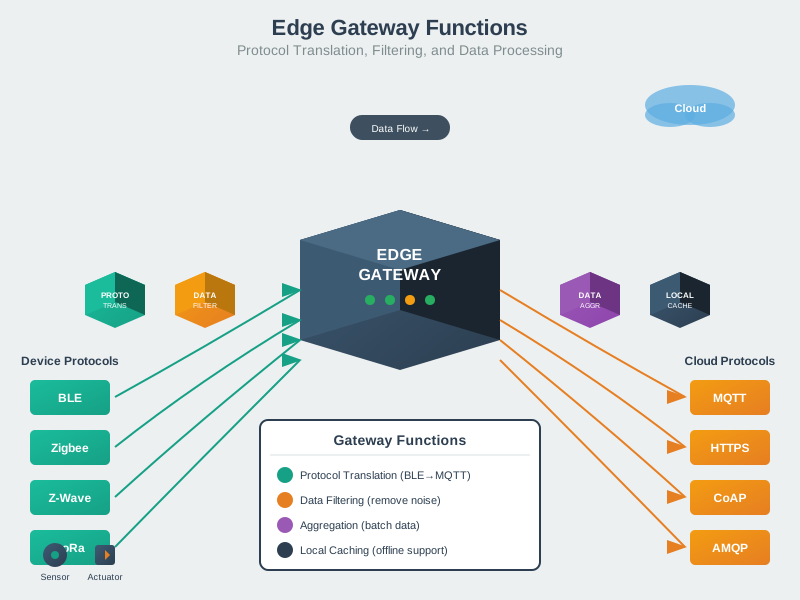
- Protocol Translation: Converting data between different communication protocols (Bluetooth, Zigbee, MQTT, HTTP) as it flows through the architecture layers
You may encounter the three-tier architecture described as MGC (eMbedded–Gateway–Cloud). The following diagram from Stanford’s IoT course illustrates this hierarchical architecture:
Three-tier MGC architecture showing the hierarchical organization of IoT systems from embedded devices through gateways to cloud infrastructure, with clear delineation of processing responsibilities at each tier.
The diagram shows how embedded devices (sensors, wearables, appliances) connect to gateways (smartphones, vehicles, hubs) which bridge to cloud services (storage, analytics, ML/AI). Each tier has distinct characteristics:

| This Chapter | MGC Terminology | Description |
|---|---|---|
| Edge | eMbedded | Sensors, wearables, smart appliances with constrained resources |
| Fog | Gateway | Smartphones, vehicles, hubs that bridge protocols and aggregate data |
| Cloud | Cloud | Data centers for storage, analytics, and ML training |
The MGC terminology emphasizes the role of each tier rather than its location, making it useful when discussing protocol translation (embedded devices speak different languages than cloud services) and data aggregation patterns.
325.3.1 MGC Architecture with Protocol Details
The following figure from Stanford’s IoT course provides a detailed view of the MGC architecture showing specific devices and communication protocols at each tier:
MGC architecture with detailed device and protocol mapping across tiers: Embedded layer shows specific sensors (temperature, motion, GPS) and MCUs (Arduino, ESP32), Gateway layer illustrates protocol bridging (Zigbee→MQTT, BLE→HTTP), and Cloud layer displays platform services (AWS IoT Core, Azure IoT Hub, ThingSpeak) for storage and analytics.
This detailed architecture view illustrates how different IoT protocols and devices map to the three-tier MGC model. At the embedded tier, constrained devices use low-power protocols (Zigbee, BLE, LoRa) optimized for battery operation. The gateway tier performs critical protocol translation—converting Zigbee packets to MQTT messages, BLE advertisements to HTTP REST calls, and LoRaWAN frames to JSON payloads. Finally, the cloud tier receives standardized data formats (typically MQTT or HTTP) that platform services can process uniformly regardless of the original embedded protocol.
Key Protocol Translation Examples:
| Embedded Protocol | Gateway Translation | Cloud Protocol | Use Case |
|---|---|---|---|
| Zigbee (802.15.4) | Zigbee2MQTT gateway | MQTT over TCP | Smart home sensors (battery-powered, mesh network) |
| BLE Advertisements | BLE-HTTP bridge | HTTP REST API | Asset tracking beacons (periodic broadcasts) |
| LoRaWAN | Network server | JSON/HTTP webhook | Agricultural sensors (long-range, low data rate) |
| Modbus RTU | Modbus-TCP gateway | MQTT/OPC-UA | Industrial PLCs (wired serial to IP networks) |
This architecture enables heterogeneous device integration—your cloud application receives uniform MQTT messages regardless of whether data originated from Zigbee sensors, BLE beacons, or LoRaWAN nodes.
325.4 Edge, Fog, and Cloud
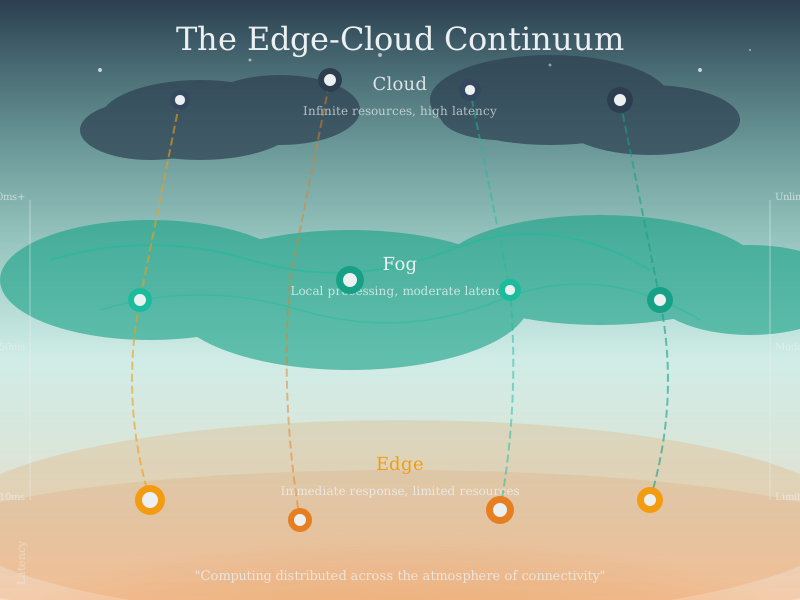
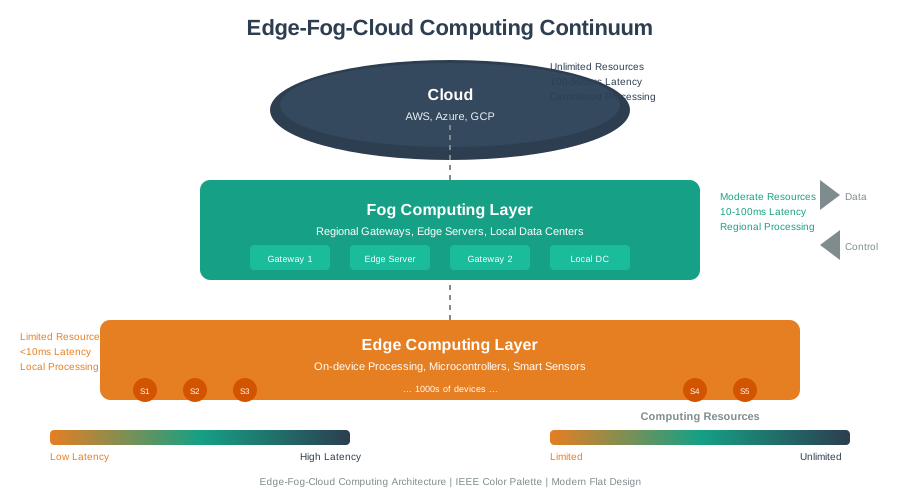
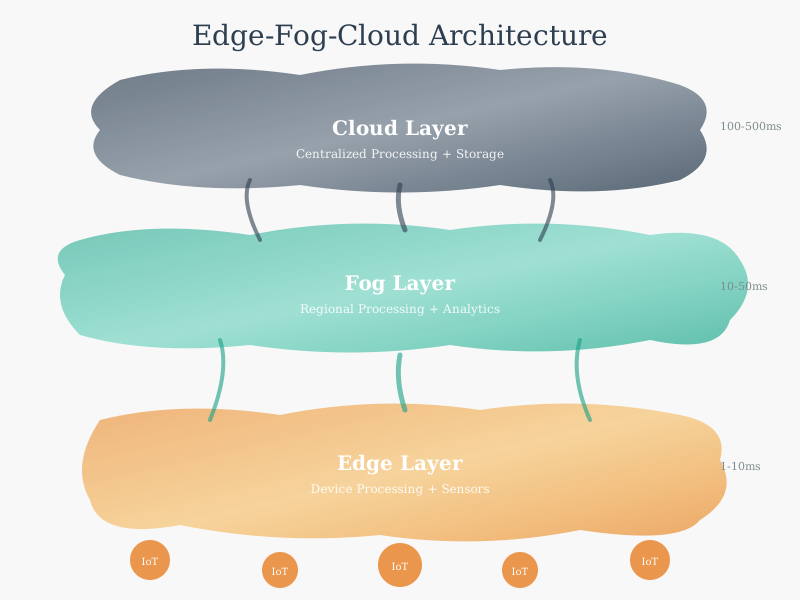
The architecture of IoT systems is typically organized into three main layers: Edge Nodes, Fog Nodes, and Cloud Nodes. Each layer plays a crucial role in the overall functionality and efficiency of the IoT system. Below, we discuss these components in detail, supported by visual representations from the slides.
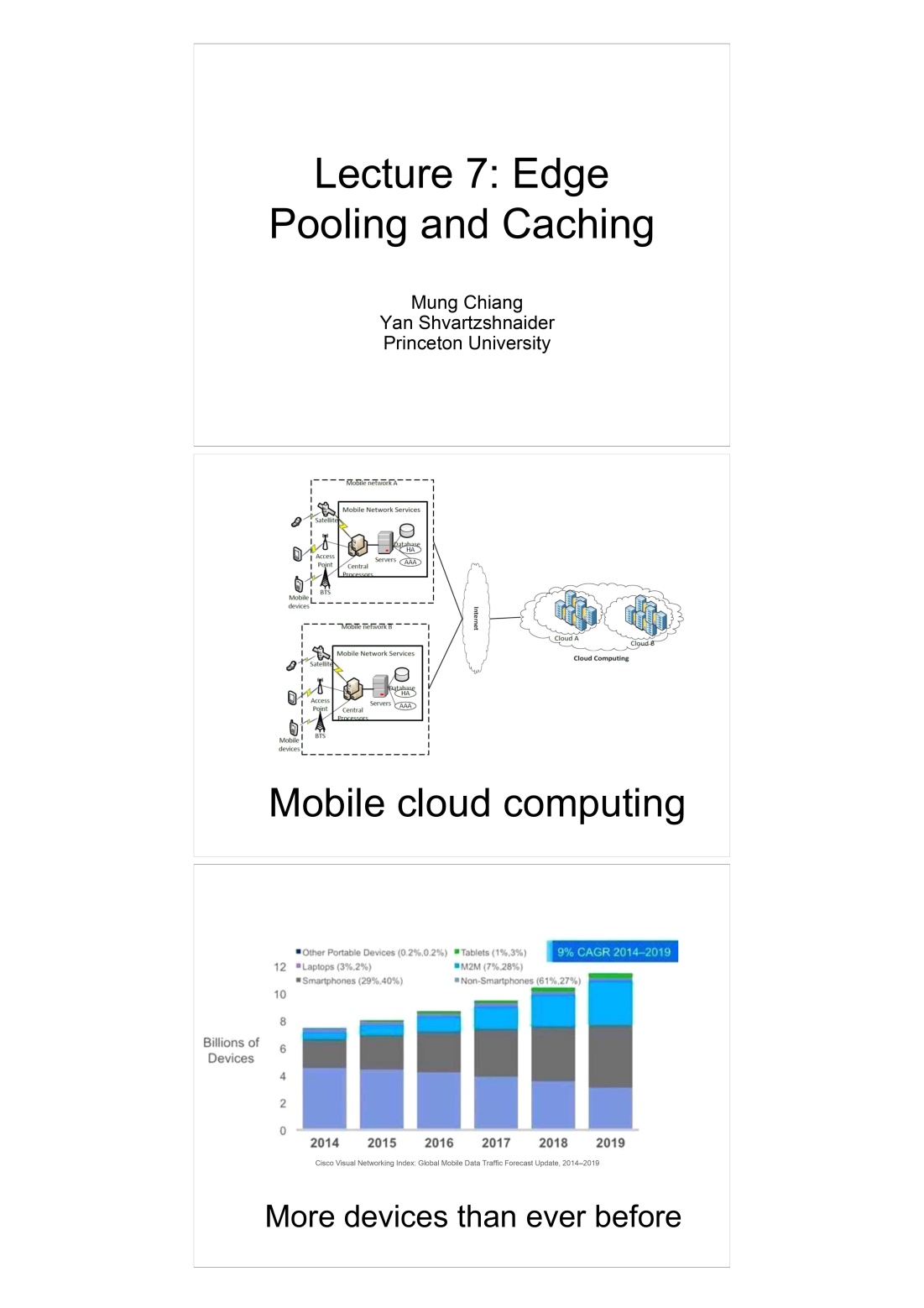
Source: Princeton University, Coursera Fog Networks for IoT (Prof. Mung Chiang)
Core Concept: Device management encompasses the lifecycle operations of IoT devices - provisioning, configuration, monitoring, firmware updates, and decommissioning - across potentially thousands of geographically distributed endpoints.
Why It Matters: A factory with 500 sensors or a retail chain with 10,000 devices cannot manage each unit manually. Without automated device management, organizations face unpatched security vulnerabilities, inconsistent configurations, and operational blind spots. The fog layer typically hosts device management agents that aggregate status from edge devices and relay commands from cloud platforms, enabling centralized control with local execution.
Key Takeaway: Design for zero-touch provisioning from day one - devices should self-register with fog gateways using secure bootstrapping (certificates, TPM), receive their configuration automatically, and report health metrics without manual intervention.
325.4.1 Edge Nodes
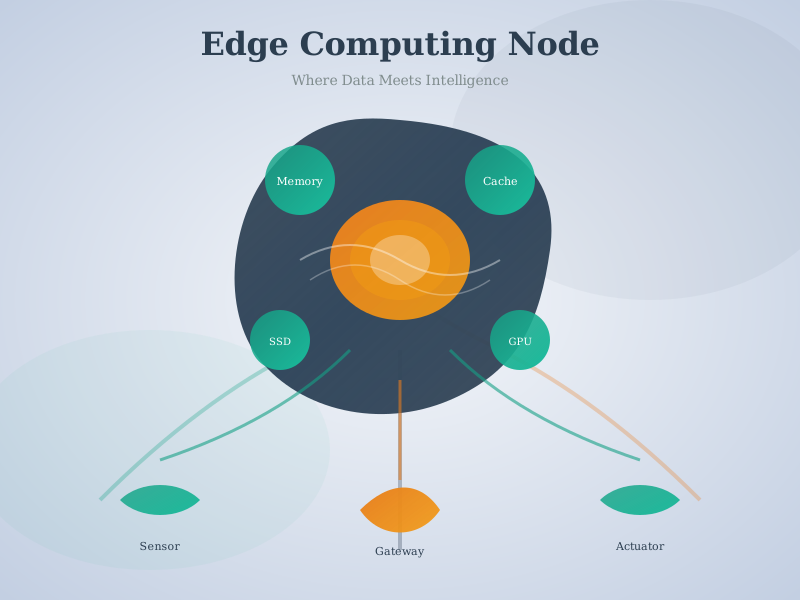
Edge Nodes are the physical devices or sensors that collect data from the environment. They are the first point of interaction with the physical world and are responsible for data acquisition.
- Micro-Controller Based Edge Nodes: These include devices such as the Intel Edison, Arduino boards, and other microcontroller units (MCUs) that perform simple processing tasks at the edge.
- Embedded Devices: Common examples include smart appliances like refrigerators, smart locks, and wearable devices like smartwatches. These devices are embedded with sensors and connectivity modules to gather and transmit data.
Examples of Edge Nodes: - Intel Edison: A compact computing platform designed for building IoT projects. - Arduino: A popular open-source electronics platform based on easy-to-use hardware and software. - Smart Appliances: Refrigerators, smart locks, and smart lighting systems that collect and transmit data to other IoT components.
325.4.2 Fog Nodes
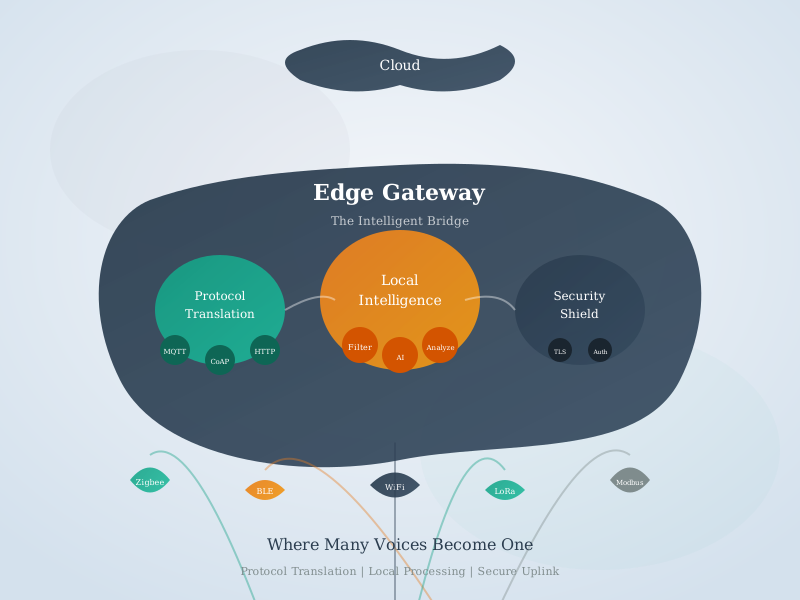
Fog Nodes act as intermediaries between edge devices and the cloud. They perform intermediate processing, data filtering, and storage to reduce the data volume sent to the cloud and to improve response times.
- Single Board Computers: These include devices like Raspberry Pi and BeagleBone that can handle more complex processing tasks compared to simple microcontrollers.
- Gateways: Devices that aggregate data from multiple edge nodes and provide a secure pathway to transmit data to the cloud. They often support various communication protocols such as 6LoWPAN, Zigbee, Z-Wave, Bluetooth, Wi-Fi, and WirelessHART.
Examples of Fog Nodes: - Raspberry Pi: A versatile single-board computer that can act as a fog node, performing local data processing and analytics. - BeagleBone: Another single-board computer used for IoT applications requiring more processing power. - Gateways: Devices that bridge communication between edge nodes and the cloud, ensuring efficient data transfer and processing.
325.4.3 Cloud Nodes
Cloud Nodes represent the data centers or cloud platforms that provide extensive computational resources for large-scale data processing, storage, and analytics. They form the backbone of IoT systems, offering services such as machine learning, data visualization, and device management.
- Cloud Data Centers: These include platforms like Amazon Web Services (AWS), Microsoft Azure IoT Suite, IBM Bluemix, and Kaa IoT Platform.
- Services: Cloud platforms offer various services including data analytics, storage, device management, and application hosting.
Examples of Cloud Nodes: - Amazon Web Services (AWS): Provides a comprehensive suite of IoT services for building scalable IoT applications. - Microsoft Azure IoT Suite: Offers tools and services for connecting, monitoring, and controlling IoT assets. - IBM Bluemix: A cloud platform that helps in developing, managing, and running IoT applications.
325.4.4 Integration of Architectural Components
The integration of edge, fog, and cloud nodes creates a seamless and efficient IoT architecture. Data collected from edge devices are pre-processed at fog nodes to reduce latency and bandwidth usage before being transmitted to cloud nodes for further analysis and storage. This layered architecture enhances the performance, scalability, and reliability of IoT systems.
Understanding the architectural components of IoT systems is essential for designing efficient and effective IoT solutions. By leveraging the strengths of edge, fog, and cloud nodes, IoT systems can achieve optimal performance and scalability, catering to a wide range of applications from smart homes to industrial IoT.
This section provides a detailed overview of the architectural components of IoT systems, supported by examples and visual aids from the provided slides, making it suitable for inclusion in a textbook or educational material on IoT.
325.5 What’s Next
Continue to:
- Edge-Fog-Cloud Devices and Integration: MCU vs SBC selection, integration patterns
- Edge-Fog-Cloud Advanced Topics: Worked examples and misconceptions