104 IoT Requirements and Characteristics
104.1 Learning Objectives
By the end of this chapter, you will be able to:
- Explain IoT architecture: Understand the complete data flow through IoT system layers
- Apply minimum requirements: Identify the three essential components every IoT device must have
- Evaluate IoT characteristics: Assess IoT systems against eleven ideal characteristics
- Select appropriate technologies: Choose IoT solutions based on application requirements
IoT Overview Series: - IoT Introduction - Getting started with IoT and the Five Verbs - IoT Perspectives and Definitions - Different stakeholder views on IoT - Device Evolution - Embedded vs Connected vs IoT products - IoT History and Paradigm Shifts - Lessons from technology evolution
Deep Dive Chapters: - Application Domains - Industry-specific IoT applications - IoT Use Cases - Real-world implementation examples
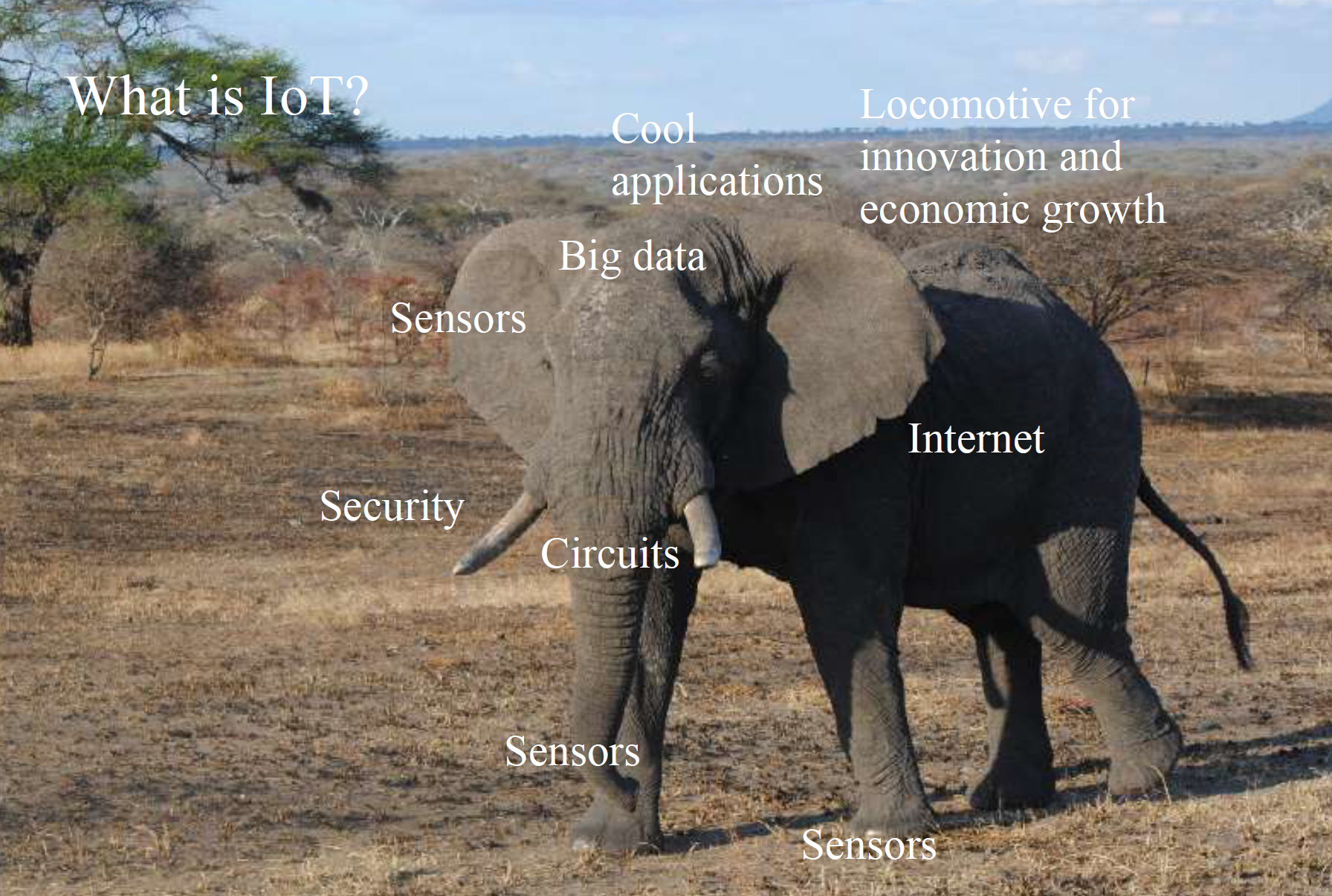
104.2 What is Internet of Things (IoT)
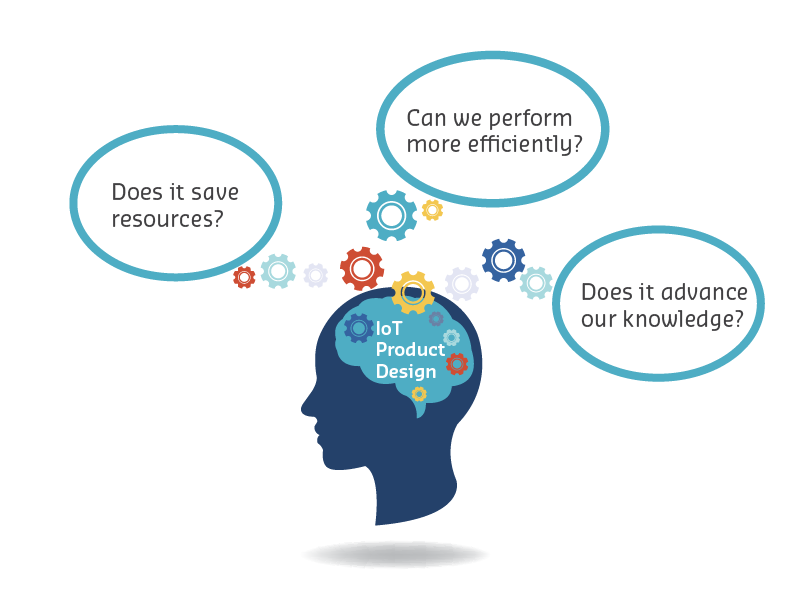
The Internet of Things (IoT) is the concept of connecting everyday physical objects to the internet. These objects can range from household appliances to industrial machinery, enabling them to collect, exchange, and act upon data. IoT bridges the physical and digital worlds, making our environments smarter and more responsive.
Simple Definition: At its core, the Internet of Things refers to the interconnection of physical devices with the internet. This connectivity allows these devices to communicate with each other and with users, often improving functionality and efficiency.
Diverse Interpretations: Various researchers and institutions define IoT in slightly different ways. While these definitions may vary, the central idea remains consistent - IoT is about connectivity and data sharing. Importantly, there is no universally “right” or “wrong” definition.
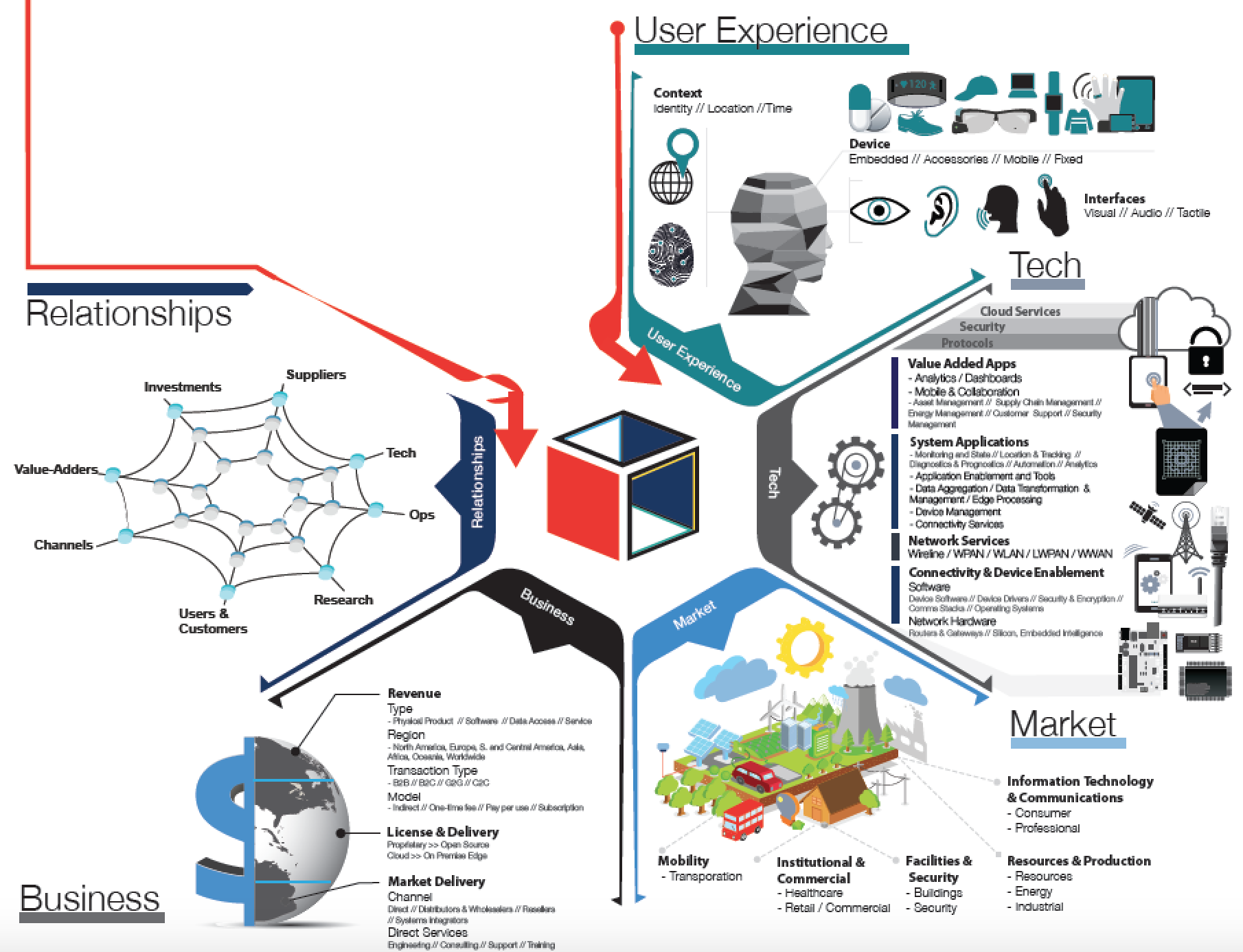
104.2.1 How IoT Works: The Complete Flow
Beginner-Level View: Four Simple Steps

Real Example - Smart Thermostat:
- Sense: Temperature sensor reads 65F (you set target to 72F)
- Connect: Thermostat sends data to cloud via Wi-Fi
- Process: Cloud compares 65F vs 72F, decides “too cold”
- Act: Cloud sends command to turn on heater + alerts your phone
This cycle repeats continuously, keeping your home comfortable automatically!
104.2.2 Examples of IoT Devices

| Device | Description |
|---|---|
| Plug | A smart plug that can be controlled remotely to turn devices on and off. |
| Microwave | A connected microwave that can be programmed via a smartphone. |
| Washing Machine | A smart washing machine that monitors energy use and sends notifications when cycles are complete. |
| Coffee Machine | A coffee machine that can be set to brew automatically at specific times. |
| Truck | A connected truck equipped with sensors to track location, fuel efficiency, and maintenance needs. |
| Recycling Bin | Smart bins that monitor waste levels and optimize collection schedules. |
IoT has become a foundational technology in various fields, transforming how we live and work by making systems more intelligent and interconnected.
104.2.3 Complete IoT Architecture Layers

Complete IoT Ecosystem - Data Flow:
| Layer | Components | Function | Example |
|---|---|---|---|
| Physical Layer | Sensors (Temperature, Motion, Pressure, Light), Actuators (Motors, Relays, Valves), Smart Objects (Appliances, Vehicles) | Sense environment, act on commands | Thermostat sensor reads 65F |
| Edge Layer | Gateways, Edge Computing, Protocol Translation | Local processing, filtering | Gateway converts Zigbee to Wi-Fi |
| Connectivity Layer | Wi-Fi/Ethernet, Cellular (4G/5G), LPWAN (LoRa, Sigfox), PAN (Bluetooth, Zigbee) | Data transmission | Wi-Fi sends data to cloud |
| Cloud Layer | Data Storage, Analytics and ML, Business Logic, APIs | Intelligence, processing | ML learns your schedule |
| Application Layer | Mobile Apps, Web Dashboards, Automation Rules, Alerts and Reports | User value delivery | App shows energy savings |
Data Flow: Physical -> Edge -> Network -> Cloud -> Application Command Flow: Application -> Cloud -> Network -> Edge -> Physical (actuators respond)
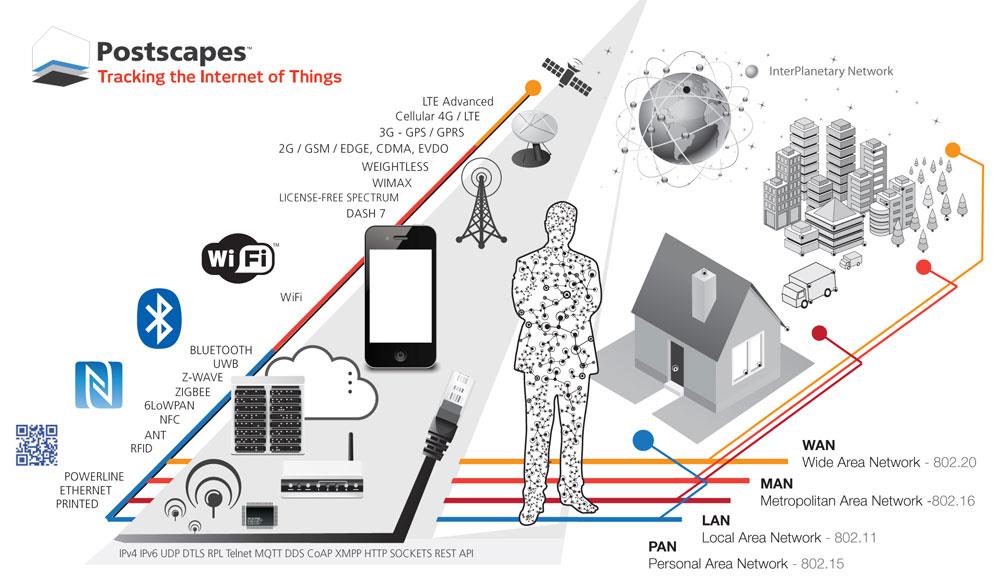
104.3 Minimum Requirements of IoT
To qualify as part of the Internet of Things (IoT), a physical object must meet three minimum requirements: it should start as an everyday object, be enhanced with computational intelligence, and be equipped with internet communication capability. These components ensure the object can perform smart functions and communicate effectively within an IoT ecosystem.
Everyday Thing: The starting point for any IoT device is a physical object commonly found in daily life, such as furniture, appliances, or vehicles. These objects are made “smart” by adding computational and connectivity features.
Computation: Objects must be enhanced with computational capabilities to process data, execute tasks, and enable intelligent behavior. This often involves embedding microprocessors, sensors, and actuators into the object.
Internet Connectivity: Connectivity is the defining feature of IoT devices. It enables them to communicate with other devices, users, or cloud systems via direct or indirect internet communication channels.
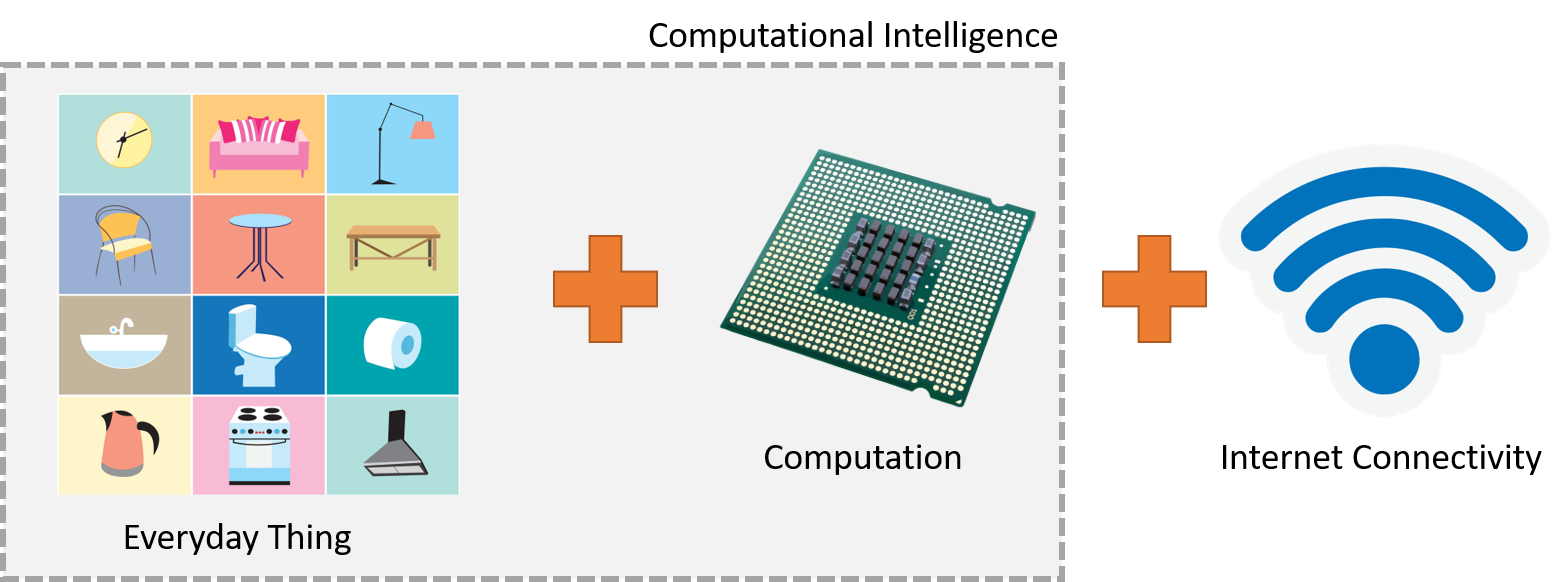
IoT devices transform the ordinary into extraordinary by leveraging computational intelligence and connectivity, enabling seamless integration into smart environments.
Scenario: Your company is launching a smart lock product with annual revenue projections of $50M. The engineering team proposes a design with a physical deadbolt mechanism, a microcontroller for keypad control and motor operation, and Bluetooth connectivity to communicate with smartphones within 30 feet. Marketing wants to call it an “IoT smart lock” and price it at $299 (premium over $150 traditional locks).
Think about: 1. Does Bluetooth-only connectivity truly enable “control from anywhere” marketing promises? 2. What would competitors with Wi-Fi-enabled locks offer that this version cannot?
Key Insight: Understanding the difference between “connected” and “IoT” is critical for product positioning and customer expectations.
Current Design Status: - Thing: Physical deadbolt mechanism - Computation: Microcontroller for control logic - Internet: Only Bluetooth (local wireless, NOT internet)
Classification: This is a Connected Product, not a full IoT device. Bluetooth provides 10-100 feet range (requires proximity), while Internet enables global access.
Real Example - August Smart Lock Evolution: - Version 1.0: Bluetooth only -> Connected Product (30-foot range, $249) - Version 2.0: Bluetooth + Wi-Fi bridge -> IoT Device (remote access, $279) - Version 3.0: Integrated Wi-Fi -> Full IoT (cloud intelligence, remote unlock, $299)
Business Impact: - Connected: Unlock when standing at door, limited value proposition - IoT: Unlock remotely for delivery ($2B package delivery market), monitor access logs, receive cloud alerts, 3x higher customer lifetime value
Scenario: Your logistics company wants to monitor temperature and humidity in 50 warehouses (200,000+ sq ft each) across the country to protect sensitive pharmaceutical inventory worth $2.5B annually. FDA compliance requires documented temperature control. The IT team presents two competing approaches:
Approach A (Wi-Fi): $50 sensors, $10/month/warehouse, 30-second updates, requires Wi-Fi infrastructure Approach B (LoRaWAN): $80 sensors + $200 gateway, $5/month/warehouse, 10-minute updates, 10-year battery
Think about: 1. What happens when temperature drifts out of range in a 200,000 sq ft warehouse with metal racking blocking signals? 2. Is the $30 sensor price difference more important than 5-year operational costs and reliability?
Key Insight: IoT technology selection depends on application requirements, not “newest” or “fastest” technology.
Critical Requirements Analysis:
Warehouse Environment Challenges: - Large buildings (200,000+ sq ft) - Wi-Fi coverage gaps common - Metal racking - blocks Wi-Fi signals, creates dead zones - Power outlets scarce - sensors need battery-powered - Temperature changes slowly - no need for 30-second updates
5-Year Total Cost of Ownership:
| Approach | Sensors | Installation | Monthly Ops | 5-Year Total |
|---|---|---|---|---|
| Wi-Fi | $10K | $15K (Wi-Fi + power) | $500/mo ($30K) | $55,000 |
| LoRaWAN | $16K | $3K (simple placement) | $250/mo ($15K) | $44,000 (20% savings) |
Why 10-Minute Intervals Suffice: - Pharmaceutical storage temperature changes gradually (hours, not seconds) - Refrigeration systems have thermal mass - temperature drifts slowly - 10-minute intervals provide ample warning (regulations require hourly checks) - Real-time creates data overload: 1,051,200 readings/year vs 52,560
LoRaWAN Advantages: - Single gateway covers entire warehouse (vs dense Wi-Fi AP deployment) - 10-year battery eliminates power infrastructure ($15K savings) - Excellent signal penetration through metal racking - Dedicated IoT network isolated from business Wi-Fi
104.4 Characteristics of Ideal IoT Systems
What distinguishes a well-designed IoT system from a mediocre one? Understanding the characteristics of ideal IoT implementations helps engineers, designers, and product managers create systems that deliver real value. These eleven characteristics represent design goals that the best IoT solutions strive to achieve.
104.4.1 The Eleven Characteristics of Ideal IoT

This variant shows the 11 characteristics as a priority matrix - different IoT domains prioritize different characteristics:

Why this variant helps: The original mindmap lists all 11 characteristics as equally important. This variant shows the design reality: different applications prioritize different characteristics. A factory needs millisecond response times (Fast), while a farm sensor can wait hours (Growing is more important). Understanding these trade-offs is essential for IoT product design.
| Characteristic | Description | Real-World Example |
|---|---|---|
| Ubiquitous | Available everywhere, seamlessly integrated across environments | Smart lighting works identically at home, office, and hotel |
| Smart | Makes intelligent decisions based on data and context | Thermostat learns your schedule and pre-heats before you arrive |
| Agile | Quickly adapts to changing conditions and requirements | Factory sensors detect anomaly and immediately adjust process parameters |
| On Demand | Instantly accessible when needed, responsive to user requests | Voice assistant responds within milliseconds to commands |
| Blend into Background | Operates unobtrusively, ambient computing that doesn’t demand attention | Environmental sensors work silently without user interaction |
| Secure | Protected against cyber threats, data breaches, and unauthorized access | End-to-end encryption, secure boot, and regular security updates |
| Low Maintenance | Self-monitoring, self-healing, minimal human intervention required | Devices automatically download updates and report health status |
| Fast | Low latency responses, real-time data processing | Industrial control systems respond in less than 10ms to sensor inputs |
| Upgradable | Can evolve through OTA updates without hardware replacement | Tesla cars gain new features through software updates |
| Growing | Scales seamlessly from prototype to millions of devices | Platform handles 10 devices in pilot and 10 million in production |
| Adaptable | Flexible to new use cases, protocols, and integrations | Smart home hub supports new device types as they emerge |
Trade-off Reality: No single IoT system perfectly achieves all eleven characteristics. Designers must prioritize based on use case:
| Use Case | Priority Characteristics | Acceptable Trade-offs |
|---|---|---|
| Medical Wearable | Secure, Fast, Low Maintenance | May sacrifice Ubiquitous (works only in certain regions) |
| Smart Agriculture | Low Maintenance, Growing, Adaptable | May sacrifice Fast (hourly updates sufficient) |
| Industrial Control | Fast, Secure, Agile | May sacrifice Blend into Background (operators need visibility) |
| Consumer Smart Home | On Demand, Upgradable, Blend into Background | May sacrifice Growing (fixed home size) |
Design Principle: Identify your 3-4 must-have characteristics and ensure they’re exceptional, rather than achieving mediocrity across all eleven.
104.5 Summary
In this chapter, you learned:
- IoT works in four steps: Sense -> Connect -> Process -> Act, repeating continuously
- Three minimum requirements define IoT: Thing + Computation + Internet connectivity
- Eleven characteristics distinguish ideal IoT systems: Ubiquitous, Smart, Agile, On Demand, Blend into Background, Secure, Low Maintenance, Fast, Upgradable, Growing, Adaptable
- Trade-offs are necessary: Different applications prioritize different characteristics
- Technology selection should be driven by requirements, not by “newest” or “fastest”
104.6 What’s Next?
Continue to IoT Perspectives and Definitions to understand how different stakeholders view IoT and explore formal definitions from academia and industry.