37 M2M Architectures and Standards
More
Depth: Practitioner
Progress saves as you read. Mark sections complete as you go; your progress appears in the sidebar.
37.1 Start Simple
This section: Start Simple — Picture a cold room with a temperature sensor and a cooling unit.
Picture a cold room with a temperature sensor and a cooling unit. The sensor notices heat, and the cooling unit must respond. Machine-to-machine (M2M) design decides how those two machines share that event. A gateway is a local bridge between devices and a wider system. A protocol is a set of rules for exchanging messages.
Follow the heat event from the cold-room sensor to local cooling.
-
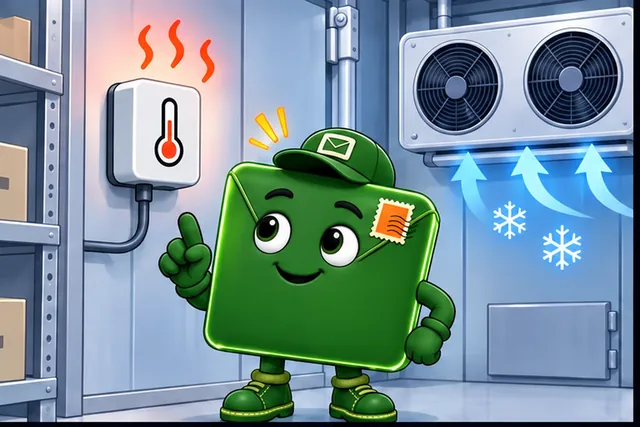
A cold-room sensor sees heat and the cooling unit must respond.
-
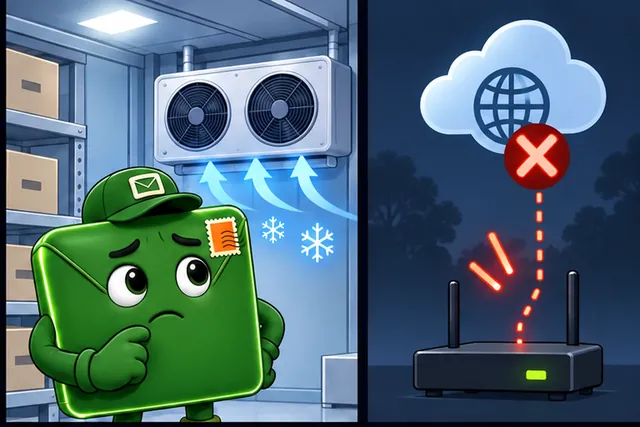
The wider network may fail while the room still needs cooling.
-
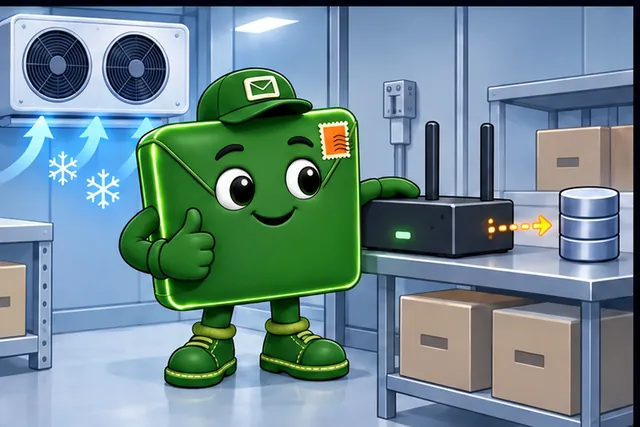
Keep the safe action local and let the bridge save records for later.
-
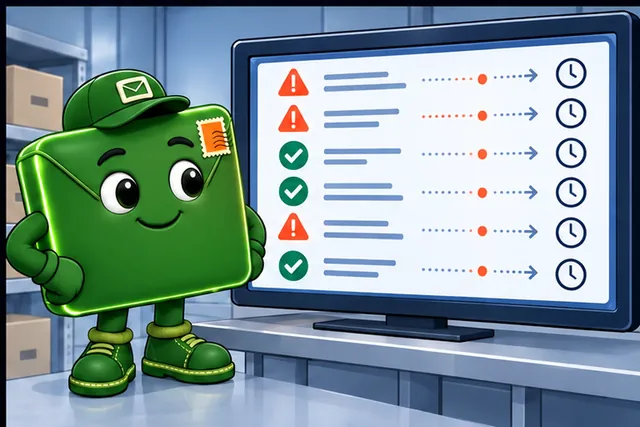
Lost messages and delayed commands now leave a visible recovery record.
First decide what must happen if the wider network disappears. The cooling unit may need to act locally while the gateway saves records for later. Then name each machine, the messages it can send, and the service that checks permission. Test a lost message, a delayed command, and a busy reporting period. These checks show whether the design can fail safely.
Keep the first test calm and small. Change one thing. Watch one result. Save what happened. Then test one failure. A clear small record is the base for a larger fleet.
Read the sketch aloud. Point to the event. Point to the local action. Point to the saved record. Point to the outside service. Point to the owner. If one point is unclear, fix the design record. Repeat the check for normal work, a lost link, and a restart.
For a first sketch, use plain labels. Write “sensor sees heat.” Write “controller starts cooling.” Draw where each record waits. Mark the person who handles a fault. Add a safe local action. Add a clear sign when data is missing. Keep the normal path and failure path on the same page. Someone new to the project should be able to explain both paths.
Use a simple review before choosing a platform. Draw the two machines. Mark the event between them. Name who owns each machine. Mark the local network edge. Write the action that must still work offline. Set a limit for saved records. Decide how old data will be labeled. Give every machine its own identity. Limit each identity to its job. Spread routine reports across time. Keep failed actions in a visible log. Recheck the plan when a machine, link, or owner changes.
The result should be a clear service story. A reader should see who sends, who decides, and who recovers. If any arrow has no owner, the design is not ready.
This simple story does not cover every service, resource, or security rule. Real fleets also need shared records, update ownership, schedules, and access controls. The Practitioner section shows how common services and resource trees organize those jobs. Under the Hood follows the standards and scaling choices in detail.
Start with two machines that need to coordinate a job without waiting for a person to interpret every message. In M2M Architectures and Standards, the practical question is what event, gateway boundary, fallback behavior, and evidence record make the exchange trustworthy.
37.2 Learning Objectives
This section: Learning Objectives
By the end of this chapter, you will be able to:
- Describe the role of a common service layer in M2M systems.
- Explain how oneM2M uses Application Entities, Common Services Entities, and resource trees.
- Compare direct IP device communication with gateway-mediated legacy integration.
- Apply scheduling, buffering, identity, and logging checks from M2M service requirements.
- Build a resource-tree sketch for an M2M deployment.
- Identify architecture mistakes that make machine fleets hard to operate.
37.3 Why Architecture Matters
This section: Why Architecture Matters — M2M systems often start small: a few meters, pumps, vending machines, vehicles, or building controllers report state to a server.
M2M systems often start small: a few meters, pumps, vending machines, vehicles, or building controllers report state to a server. The architecture problem appears when the system becomes a fleet. Devices may come from different vendors, speak different protocols, operate without people nearby, and remain deployed for years.
A useful M2M architecture answers five questions:
37.3.1 What Is the Device Identity?
The platform needs a durable way to identify a device, its application role, credentials, owner, location or site, and lifecycle state.
37.3.2 Where Are Common Services?
Registration, discovery, data storage, subscription, security, and management should be shared services rather than duplicated inside every application.
37.3.3 Which Network Pattern Fits?
Some devices can use IP directly. Others need a gateway because they use industrial protocols, local field buses, or constrained radio networks.
37.3.4 What Happens During Degraded Operation?
The design must state what continues locally, what is buffered, what is dropped, and how the platform recovers after an outage.
37.4 Common Service Layer Pattern
This section: Common Service Layer Pattern — The central pattern in oneM2M is a common service layer.
The central pattern in oneM2M is a common service layer. Applications register as Application Entities, and shared services are provided by a Common Services Entity. A CSE can run in a cloud platform, on a gateway, or on a capable local device. That placement is a design choice: cloud placement centralizes management, gateway placement improves local resilience, and device placement can reduce latency for constrained deployments.
The service layer does not remove the need for application design. It gives applications a stable way to find devices, subscribe to updates, read current or historical content, and send permitted commands without embedding every field protocol directly.
37.4.1 Registration
Devices and applications become known to the platform, receive identifiers, and expose capabilities.
37.4.2 Discovery
Applications can find resources by type, site, owner, capability, or other metadata instead of hardcoding addresses.
37.4.3 Data Management
Readings, commands, and status records are stored or exposed using a consistent resource model.
37.4.4 Subscription
Applications can receive notifications when a resource changes instead of polling every endpoint.
37.4.5 Security
Identity, access control, authorization, and audit records are part of the service layer.
37.4.6 Device Management
The platform tracks configuration, health, firmware, and lifecycle state.
37.5 oneM2M Resource Tree
This section: oneM2M Resource Tree — oneM2M represents applications, devices, data containers, content, policies, and subscriptions as resources.
oneM2M represents applications, devices, data containers, content, policies, and subscriptions as resources. Before choosing resource paths, inspect Figure 37.1 to see where identity, stored content, policy, and notification responsibility attach within the hierarchy.
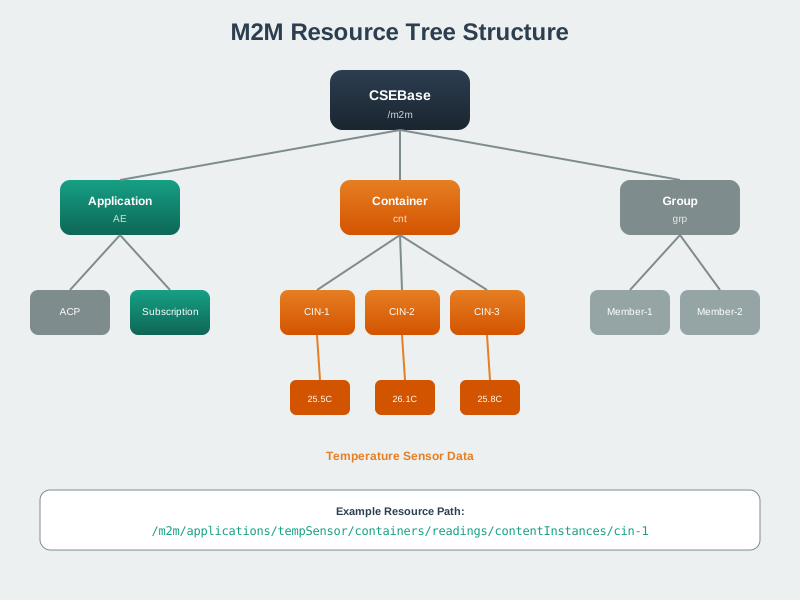
Read Figure 37.1 from CSEBase down to an Application Entity, then into its container and content instances. Next locate the access-control policy and subscription resources, because authorization and notification attach to addressable parts of the same tree. This connects the model to operation: the design record should make registration, current and historical readings, applicable policy, and notification ownership unambiguous.
37.5.1 Resource Sketch Example
/cse-site-a
|- /ae-cold-room-controller
|  |- /container-temperature
|  |  |- /contentInstance-2026-06-12T08-00-00Z
|  |  +- /contentInstance-2026-06-12T08-01-00Z
|  |- /container-door-state
|  +- /subscription-temperature-alerts
|- /ae-compressor-meter
|  +- /container-energy
|- /group-cold-chain-assets
+- /acp-facility-operator
Use names that reveal ownership and purpose. A tree made only from generic IDs can be technically valid but still hard to operate during an incident.
37.5.2 Application Entity
Represents an application or device-facing application that uses common services. It is usually the point where the platform knows what capability is being exposed.
37.5.3 Container
Groups data or state resources. A temperature container, command container, or alarm container can have different retention and subscription behavior.
37.5.4 Content Instance
Stores an individual data record, such as a reading, command result, or event. Retention policy matters because fleets can produce many records.
37.5.5 Access Control Policy
Defines who can create, retrieve, update, delete, or discover resources. The policy should match operational roles, not only developer convenience.
37.6 Network Architecture Choices
This section: Network Architecture Choices — M2M architecture is not a single network shape.
M2M architecture is not a single network shape. The right pattern depends on device capability, legacy constraints, latency needs, outage behavior, and ownership boundaries.
37.7 Gateway and Scheduling Pattern
This section: Gateway and Scheduling Pattern — Gateways are often the practical bridge between legacy M2M and modern platform services.
Gateways are often the practical bridge between legacy M2M and modern platform services. A gateway may translate protocols, normalize data, apply local alert rules, buffer during outages, and forward records to a cloud or site CSE.
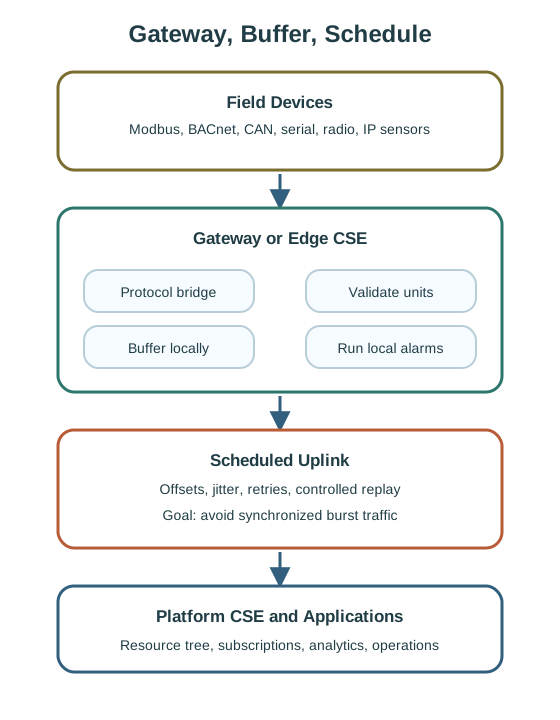
Scheduling is as important as translation. If every device reports at the top of the minute, the platform sees a burst. If devices are assigned offsets across a reporting interval, the same volume becomes smoother and easier to operate.
For N devices reporting every T seconds, an even offset schedule targets about N / T reports per second instead of N simultaneous reports. The design record should state how offsets are assigned, how jitter is handled, and what happens when devices wake after an outage.
37.7.1 Gateway Design Record
For each gateway, record:
- Device side: protocols, bus limits, polling rates, and failure indicators.
- Platform side: destination CSE, topic or resource mapping, authentication, and retry behavior.
- Local behavior: alert rules, buffering depth, clock source, and operator visibility.
- Update path: how gateway software, certificates, and mappings are patched.
- Recovery rule: how old buffered readings are marked, replayed, summarized, or discarded.
37.8 Standards and Requirements
This section: Standards and Requirements — ETSI M2M specifications established important service requirements and functional architecture concepts for machine communication.
ETSI M2M specifications established important service requirements and functional architecture concepts for machine communication. oneM2M extends this into a global common service layer approach with shared resource models, APIs, and interworking concepts.
For chapter purposes, treat the standards as design checks:
37.8.1 Addressing and Discovery
Can applications find the right device, resource, group, or gateway without hardcoded private knowledge?
37.8.2 Management
Can the platform monitor, configure, update, and retire devices and gateways across their lifecycle?
37.8.3 Security and Access Control
Are identities unique, credentials revocable, permissions scoped, and access attempts auditable?
37.8.4 Communication Control
Does the system support appropriate delivery, scheduling, retry, buffering, and path selection behavior?
37.8.5 ETSI Service Requirements
ETSI’s M2M service requirements name specific checks worth testing directly: scalability (does throughput and management effort hold up as connected objects grow), anonymity (can a device’s identity be hidden from applications when policy requires it, even though the platform still authenticates it), and event logging (are failed installations, service outages, and faulty readings recorded and available on request)?
Avoid treating standards as a badge. The engineering value is in the evidence: a resource model, an access policy, a scheduling rule, a management process, and a tested degraded-mode behavior.
37.9 Security and Operations
This section: Security and Operations — Machine fleets are security-sensitive because devices may be unattended, physically accessible, long-lived, and hard to recall.
Machine fleets are security-sensitive because devices may be unattended, physically accessible, long-lived, and hard to recall. Architecture must make compromise containable.
37.9.2 Use Scoped Device Identity
Provision unique credentials, bind them to device records, and support revocation or quarantine.
37.9.3 Log Important State Changes
Registration, credential changes, configuration updates, failed authentication, and command execution need audit records.
37.10 Cold-Chain Site Architecture
This section: Cold-Chain Site Architecture — A cold-chain warehouse has refrigerated rooms, door sensors, compressor meters, and alarms.
A cold-chain warehouse has refrigerated rooms, door sensors, compressor meters, and alarms. Some controllers speak BACnet locally. The business needs live alarms at the site, cloud dashboards for operations, and auditable temperature history.
37.10.1 Architecture Choice
- Device domain: BACnet controllers and IP temperature sensors remain in the site network.
- Gateway: A site gateway maps BACnet points into platform resources, validates units, stores a local buffer, and keeps alarm rules running during WAN outages.
- Common services: A CSE exposes room temperature containers, door-state containers, compressor energy containers, subscriptions, and access control policies.
- Applications: Facility operators receive alarms; compliance users retrieve historical records; maintenance users review compressor behavior.
37.10.2 Scheduling Sketch
If 240 sensors report every 60 seconds, a synchronized burst produces 240 reports at one instant. With offset scheduling, the target is about four reports per second. If the WAN returns after an outage, the gateway should not replay the entire backlog as one burst; it should tag records with original timestamps and drain the buffer at a controlled rate.
37.10.3 Resource Sketch
/cse-cold-chain-site
|- /ae-room-a-temperature
|  |- /container-current
|  |- /container-history
|  +- /subscription-high-temperature
|- /ae-room-a-door
|  +- /container-state
|- /ae-compressor-line-1
|  +- /container-energy
|- /group-food-safety-assets
+- /acp-operator-maintenance-compliance
The important decision is not the exact tree names. The important decision is that the architecture separates live alarms, historical evidence, command authority, and maintenance access.
37.11 Practice Checks
This section: Practice Checks
37.12 Common Mistakes
This section: Common Mistakes
37.12.1 Treating Gateways as Invisible
A gateway is a managed system. It needs ownership, patching, certificates, monitoring, local storage policy, and failure handling.
37.12.2 Building a Flat Device List
A fleet list without resource structure, metadata, groups, and policies becomes hard to query, authorize, or operate.
37.12.3 Assuming the Cloud Is Always Reachable
WAN outages should be designed, not discovered. Decide what continues locally and how buffered records rejoin the platform.
37.12.4 Ignoring Burst Timing
Average traffic can look small while synchronized reporting overloads the network or broker. Always review timing distribution.
37.13 Architecture Review Checklist
This section: Architecture Review Checklist
Before approving an M2M architecture, check that it records:
- Device classes, ownership, protocol, credential, and lifecycle states.
- Common service placement: cloud, gateway, device, or hybrid.
- Resource tree structure, subscriptions, and access control policies.
- Gateway mappings, local rules, buffering, update path, and failure behavior.
- Scheduling, retry, replay, and back-pressure behavior.
- Audit records for registration, authentication, command execution, and configuration changes.
- References to the standards or profiles the implementation claims to follow.
37.14 How Machines Talk to Machines
This section: How Machines Talk to Machines
37.14.1 Start Simple
A gateway is the point that passes, stores, filters, or changes messages between parts of a system. Its rules and owner are part of the machine job.
Imagine a freezer that is getting warm. Its controller sends a warning to a gateway. The gateway passes the warning to a service, and the service opens a repair job. No person has to copy the reading from one screen to another.
Start by naming that narrow machine job. State who sends the message, who receives it, what the message means, and how old it may be. Then break the path. Turn off the gateway, send the same warning twice, and restart the sender. Check whether the repair job is lost, repeated, or made from stale data.
This is machine-to-machine work, often shortened to M2M. It does not mean that machines may act without rules or owners. A successful message also does not prove safe recovery, correct time, or valid command rights.
Go deeper in two steps. The Practitioner section builds an M2M Decision Record for the whole path. Under the Hood examines message age and command authority when links fail or systems disagree.
Write one line for each handoff. Name the sender, receiver, message, time limit, and reply. Add the safe action when that line is broken. Keep the machine ID and message time at every step.
Run a normal case first. Then block one line. Restart one end. Send an old message. Send the same message twice. Change the unit. Check that the final action and support record match the rule for each case.
The machine path may cross several teams. Put an owner beside each fault. A clear owner turns a message trace into a repair path. Review the record after a device, gateway, message rule, or outside service changes.
Start with two machines that need to coordinate a job without waiting for a person to interpret every message. In How Machines Talk to Machines, the practical question is what event, gateway boundary, fallback behavior, and evidence record make the exchange trustworthy.
37.14.2 Overview: M2M Starts With a Machine Job
Machine-to-machine communication is a designed exchange where devices, gateways, networks, and applications share state or commands without a person interpreting every message first. The pattern is common in metering, industrial telemetry, equipment monitoring, local controls, and other systems where routine machine behavior must continue for long periods.
The first design question is not which protocol is fashionable. The first question is what machine job must keep working, what data or command supports that job, and what evidence proves the exchange behaved correctly under normal and degraded conditions.
M2M is often confused with industrial supervisory control and data acquisition, or SCADA, because both connect machines without a person reading every message. The difference is scope and openness: SCADA was built for one isolated plant or utility system using proprietary, vendor-specific links, while M2M is designed from the start for cross-platform integration, with devices, gateways, and applications from different vendors and domains exchanging messages over shared, standard networks. A single M2M exchange can therefore chain machine jobs that would never share a SCADA loop: a car's crash sensors report an event, that event reaches a remote server, the server alerts a hospital and dispatches an ambulance, and the patient's vitals later stream automatically from the ambulance to the treating doctors. Each hop is still a narrow machine job with its own contract and evidence; M2M is the pattern that lets those jobs interoperate across organizations instead of staying trapped inside one proprietary system.
Figure 37.3 shows M2M connects the device job, gateway boundary, managed messages, platform behavior, and operations evidence.
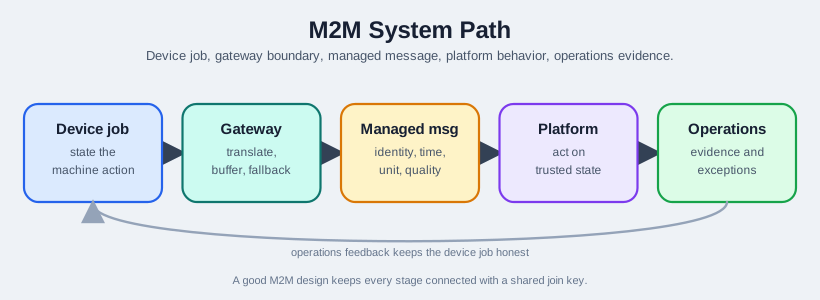
State the machine action
A device reports state, receives a command, or coordinates a narrow operating process such as measuring level, counting cycles, or protecting equipment.
GatewayMake the boundary explicit
The gateway may translate field protocols, buffer records, enforce local fallback, and expose normalized messages to the wider system.
ContractGive messages meaning
Identity, timestamp, sequence, unit, quality, freshness, and command authority make the exchange machine-readable and auditable.
EvidenceTest degraded behavior
Outage, reboot, duplicate, stale-data, bad-sensor, and retry paths matter as much as the happy path.
37.14.3 M2M Decision Record
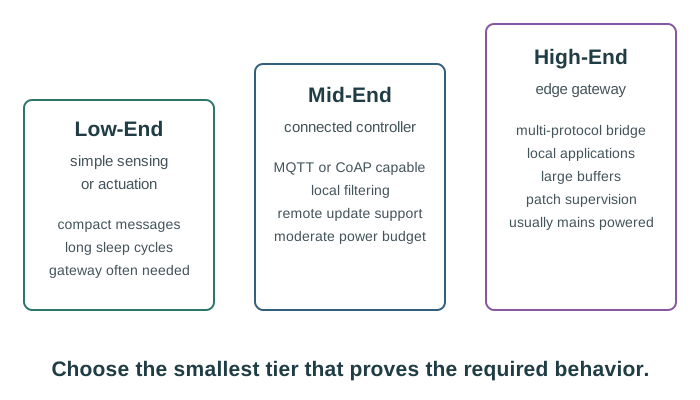
A durable M2M decision record assigns responsibilities across the field device, gateway, network path, platform, and operations team. The same physical box may perform several roles, but the record should still name each responsibility and the evidence that proves it.
Figure 37.4 shows node-tier selection balances the device job against power, update, and security costs.
37.14.4 Message Freshness and Authority
The hard part of M2M is not sending a value once. The hard part is deciding whether a machine should act on a value after retries, outages, clock drift, gateway restarts, duplicate messages, and delayed commands. That is why the message contract is part of the architecture, not a formatting detail.
Figure 37.5 shows degraded operation and recovery tests close the M2M decision loop.
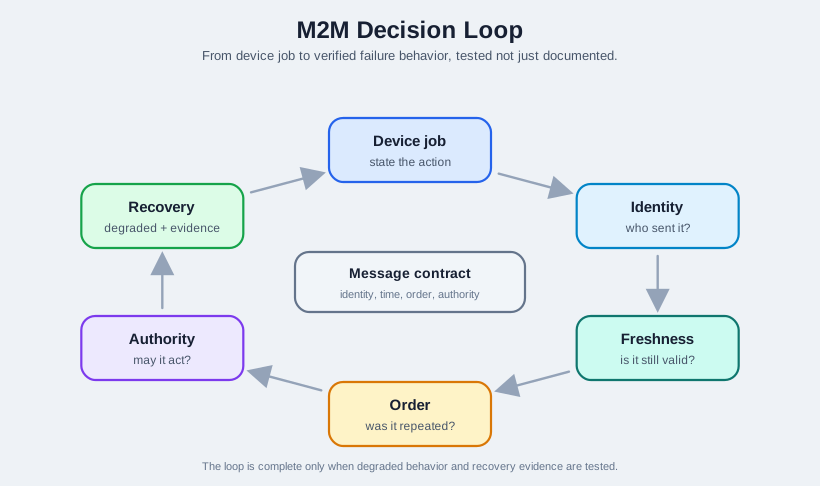
Who sent it?
Stable device and credential identity let the platform separate field devices, gateways, replacements, and spoofed or misrouted records.
FreshnessIs it still valid?
Timestamps, clock-quality markers, and maximum age rules keep stale values from silently driving current decisions.
OrderWas it repeated?
Sequence numbers, idempotent commands, and duplicate handling prevent retries from becoming false events or repeated actions.
AuthorityMay it act?
Command permissions, acknowledgements, timeouts, and safe-state rules decide whether machines can act without a person watching.
37.14.5 Summary
M2M communication is a disciplined machine exchange. Start with the device job, make the gateway boundary explicit, define the message contract, and test how the system behaves during outage, reboot, stale data, duplicate messages, and recovery. A good M2M design lets machines keep routine work moving while giving operators enough evidence to review exceptions.
37.14.6 Key Takeaway
M2M succeeds when every machine message is tied to a job, an owner, a boundary, and evidence for degraded behavior. Sending a value is easy; proving that machines can safely act on it is the real architecture work.
37.14.7 See Also
M2M Architectures and Standards
Connects M2M fundamentals to service layers, gateway interworking, resource models, and security boundaries.
M2M Design Patterns
Applies buffering, retries, duty cycling, edge filtering, authentication, and failover patterns.
M2M Service Platforms
Explains platform responsibilities for scheduling, network boundaries, and managed delivery methods.
M2M Case Studies
Uses production scenarios to compare architecture evidence and degraded-mode decisions.
37.15 References and Further Reading
This section: References and Further Reading
- oneM2M. Introduction to oneM2M Architecture. Useful for AE, CSE, and Common Service Function framing.
- oneM2M. What are oneM2M Resources? Useful for
CSEBase,AE,container,contentInstance,AccessControlPolicy, andsubscriptionexamples. - ETSI TS 102 689. Machine-to-Machine communications; M2M service requirements. Useful for service-requirement checks.
- ETSI TS 102 690. Machine-to-Machine communications; Functional architecture. Useful for historical M2M architecture framing.
- IETF RFC 7252. The Constrained Application Protocol (CoAP). Useful for constrained IP device communication.
- OASIS MQTT Version 5.0. Useful for publish-subscribe messaging design.
37.16 Service Layer as Contract
This section: Service Layer as Contract — The M2M service-platform figure treats the service layer as a contract between applications and heterogeneous device networks.
If you only need the operating rule, this layer is enough: an M2M architecture is ready when devices, gateways, common services, applications, and operators can all rely on the same identity, resource, policy, schedule, and degraded-mode contract.
The M2M service-platform figure treats the service layer as a contract between applications and heterogeneous device networks. Applications consume registered resources and subscriptions rather than embedding every device protocol.

Read the M2M service-platform figure from top to bottom. Application entities depend on the common-services entity for identity, discovery, events, fleet control, trust, context, and interworking. A semantic contract keeps the resource types and schemas stable while persistence, transport bindings, and underlying networks vary. That boundary is what allows an application to survive a change from one device or bearer protocol to another.
Resource model
Use Application Entities, containers, content instances, access policies, and subscriptions to show where state lives and who may act on it.
Gateway role
Record which protocol translation, validation, local alarm, buffering, replay, and patch responsibilities belong to each gateway.
Fleet timing
Spread reports, limit outage replay, and preserve back-pressure evidence so average traffic does not hide a synchronized burst.
37.17 Cold-Chain Architecture Record
This section: Cold-Chain Architecture Record — For the cold-chain site, the useful record is not "use oneM2M." It is the specific operating proof that keeps alarms local, history auditable, commands authorized, and replay controlled.
For the cold-chain site, the useful record is not "use oneM2M." It is the specific operating proof that keeps alarms local, history auditable, commands authorized, and replay controlled.
Live alarm path
Temperature and door-state containers trigger local subscriptions at the gateway during WAN outage, with cloud notification replayed later as a delayed record.
Resource boundary
Current state, historical records, command results, access policies, and maintenance groups are separate resources instead of one flat device table.
Gateway ownership
The site gateway has named owners for BACnet mapping, certificate rotation, buffer depth, clock source, patching, and replay-rate limits.
Rejected shortcut
Reject a cloud-only dashboard that speaks each field protocol directly because it loses local alarm behavior, common access policy, and managed replay.
37.18 Why Bursts and Replay Break Fleets
This section: Why Bursts and Replay Break Fleets — M2M fleets often fail through timing and recovery, not through raw message count.
M2M fleets often fail through timing and recovery, not through raw message count. A platform that accepts normal average load can still fail when many endpoints report, retry, or replay at the same boundary.
Treat why Bursts and Replay Break Fleets as one connected review. Begin with synchronized wakeups: identical reporting timers create broker, database, and radio pressure even when daily volume looks small. With that boundary fixed, examine outage replay: gateways can flood the CSE after WAN recovery unless buffered records keep original timestamps and drain under a controlled replay rule. Then connect it to policy collapse: a flat resource model makes it hard to separate observe, configure, and command permissions during incident response. Close the review by checking gateway opacity: unmanaged mappings, clocks, and certificates turn the gateway into a silent source of stale or misattributed machine records. The order matters: each later judgment depends on the owner, state, constraint, or failure evidence retained by the preceding step, so the resulting record can support the next chapter decision.
37.19 Summary
This section: Summary — M2M architecture is about making machine fleets discoverable, manageable, secure, and resilient.
M2M architecture is about making machine fleets discoverable, manageable, secure, and resilient. The strongest designs separate device protocols from common services, model devices and data as resources, use gateways deliberately, spread traffic across time, and make degraded operation explicit.
37.20 Concept Relationships
This section: Concept Relationships
- M2M architecture defines how machines, gateways, common services, and applications are arranged.
- oneM2M provides a common service layer and resource model for interoperable M2M and IoT systems.
- ETSI M2M requirements help evaluate scalability, management, communication, security, and operational behavior.
- Gateways translate and localize behavior but also become managed assets.
- Scheduling and buffering turn fleet scale from bursty and fragile into controlled and observable behavior.
37.21 What’s Next
This section: What’s Next
- M2M Case Studies shows how architecture choices appear in real deployment patterns.
- M2M Communication Applications connects these architecture patterns to application domains.
- M2M Design Patterns turns the architecture checks into reusable design templates.
37.22 Key Takeaway
This section: Key Takeaway — M2M architecture connects devices, gateways, platforms, applications, and operations processes.
M2M architecture connects devices, gateways, platforms, applications, and operations processes. Topology, protocol, identity, and management choices should follow scale, autonomy, reliability, and lifecycle needs.
Find help
3 reviewed answers.
Where should I start in a module?
Open the module page from the sidebar to see its chapters in order. Use the module map to return to a topic you need.
Modules and pathsReviewed
What can I try when a project does not work?
Check the symptom, then work through the diagnostic steps. Keep the error message and the smallest example that reproduces it.
When you are stuckReviewed
How do interactive examples work?
Use the interactive guide to check how examples and simulations work before changing your project.
Interactive examples guideReviewed