21 Digital Twin Architecture
More
Depth: Practitioner
Progress saves as you read. Mark sections complete as you go; your progress appears in the sidebar.
21.1 Start Simple
This section: Start Simple — Picture a wind turbine shown as a live model on an engineer’s screen.
Keep the Digital Copy Tied to the Real Thing
Picture a wind turbine shown as a live model on an engineer’s screen. The model says a bearing is healthy, but the last field reading arrived two hours ago. A detailed picture is dangerous if people mistake old data for current truth.
Compare the live turbine with the digital view that may have fallen behind.
-
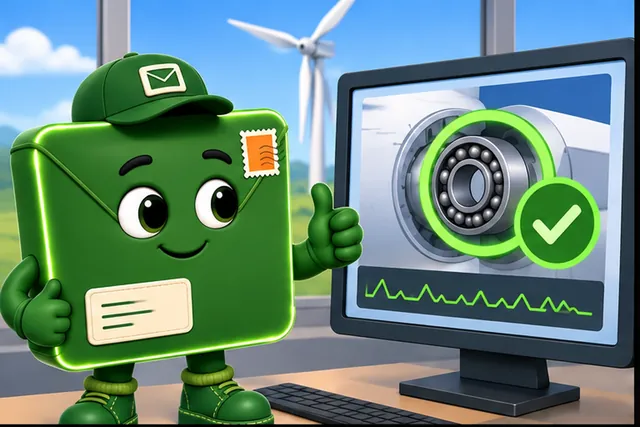
A screen shows a wind turbine bearing as healthy.
-

Its last field reading is two hours old.
-
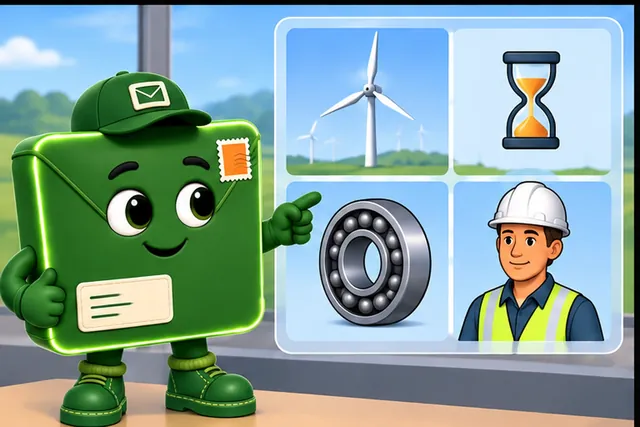
Name the real machine, allowed age, model version, and person who acts.
-
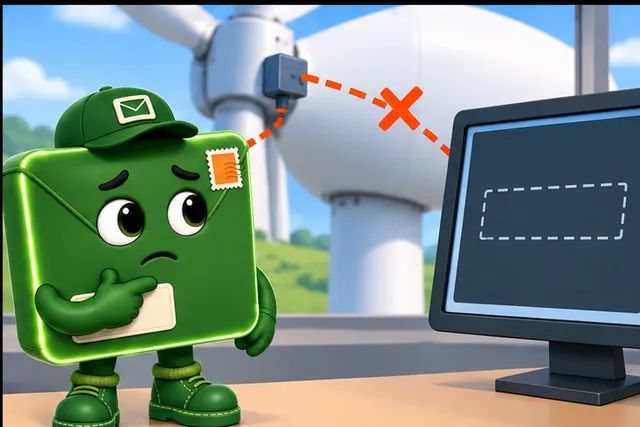
A broken link leaves a clear stale gap instead of false live health.
A digital twin is a managed digital view of a real object or process. The architect should begin with the decision it supports. Name the real thing, each source of facts, the allowed age, the model version, and the person who acts on the result.
Trace one change both ways. Update the real machine and check the digital view. Send an allowed command back and confirm the final physical state. Break a link and make the gap clear instead of filling it silently.
The digital view is always incomplete. Practitioner designs its data and control contracts. Under the Hood explains state matching, model error, time order, and safe command boundaries.
Start with one decision that would be safer if a live model stayed aligned with the physical system. In Digital Twin Architecture, the practical question is what state must be synchronized, who acts on it, and what evidence proves the twin is still fit to use.
21.2 Digital Twins as Boundaries
This section: Digital Twins as Boundaries — A digital twin architecture connects a physical asset or process to a digital representation that is updated by evidence.
A digital twin architecture connects a physical asset or process to a digital representation that is updated by evidence. The useful twin does more than show charts. It defines which physical state is observed, which model state is trusted, which decisions the model may influence, and which safety or governance boundary prevents unsupported control.
The architecture starts small: choose one asset, one operating claim, one synchronization path, and one decision that the twin is allowed to support. Expand only when the evidence record proves that the model remains useful under normal, stale, missing, and degraded data conditions.
A practical architecture names the physical interface before it names the platform. Telemetry might arrive through OPC UA, MQTT, a gateway batch file, or a historian export, but the twin record should say which fields are authoritative, which timestamps are used, and which owner resolves conflicts. The virtual side then has a current-state store, a model or rules layer, a time-series history, and a decision path. If any one of those pieces is missing, the system may still be valuable monitoring, but it should not be allowed to make twin-backed claims.
That boundary is especially important for IoT work because sensors often report proxies, not the real condition. Vibration, current draw, temperature, and packet loss can suggest a motor problem, but they do not prove one by themselves. A trustworthy twin keeps the observation, model inference, and action recommendation separate so operators can see what is measured, what is estimated, and what is merely assumed.
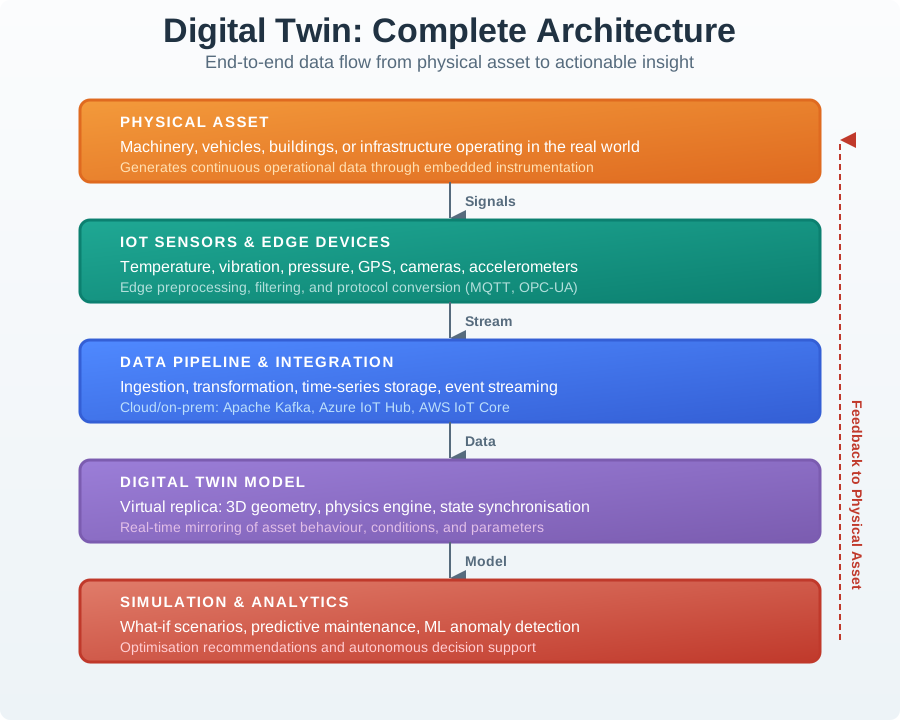
Asset or process boundary
Defines the machine, site, line, vehicle, building, or workflow that the twin is allowed to represent.
Model state
Stores the current estimate, relationships, assumptions, uncertainty, and model version used for decisions.
Decision layer
Turns model state into alerts, simulations, recommendations, maintenance plans, or bounded control actions.
21.3 Twin Architecture Record
This section: Twin Architecture Record — The architecture record is the control surface for a digital twin project.
The architecture record is the control surface for a digital twin project. It prevents vague claims such as "a twin will optimize operations" by asking exactly what state is mirrored, how the data reaches the model, what model is trusted, what decision changes, and who owns exceptions.
Treat the record like a contract between operations, data engineering, and the control owner. For each field, record the source system, sample interval, units, timestamp semantics, transformation step, retention location, and the rule for late or duplicated values. A temperature value pulled from an edge gateway, a PLC register read through OPC UA, and a cloud event carried over MQTT can all be legitimate, but they do not have the same latency, loss, or authority profile.
The model section should name both the model family and its promotion rule. A first pilot may use a threshold table or regression model, while a later architecture may use a physics simulation, Kalman-filter state estimate, graph relationship model, or ML anomaly detector. In every case, promotion should require comparison against observed asset behavior, an owner-approved version record, and a rollback plan for when the model starts disagreeing with the site.
21.4 Sync Quality Sets Twin Risk
This section: Sync Quality Sets Twin Risk — The hardest part of digital twin architecture is not drawing the layers.
The hardest part of digital twin architecture is not drawing the layers. It is keeping the virtual state useful when physical systems drift, sensors fail, gateways buffer messages, networks partition, models age, and operations teams override recommendations. A twin should expose those conditions instead of hiding them behind a clean interface.
Under the hood, the synchronization loop needs an explicit state machine. An update can be current, delayed, replayed, estimated, rejected, or superseded by a manual observation. The twin service should preserve that status next to the value instead of overwriting it with a clean "latest" field. This is why production twins often separate an immutable event log, a curated current-state table, a model registry, and an audit trail. Each layer answers a different question: what happened, what do we currently believe, which model produced that belief, and who allowed the belief to influence work?
Risk rises sharply when the output path changes from advice to control. A maintenance recommendation can tolerate slower review if its confidence and evidence are visible. A closed-loop actuator command needs stricter freshness budgets, command authorization, interlock checks, and a safe fallback when the model cannot prove its state. The architecture should therefore define stop conditions as carefully as success conditions: stale telemetry, sensor disagreement, model drift, missing calibration, and rejected operator review must all prevent the twin from silently escalating authority.
State age matters
Every recommendation should know whether it used current telemetry, buffered telemetry, estimated state, or stale state.
Minimum useful model
The right model is the simplest model that changes the decision. More detail is only useful when it improves the outcome.
Human or automatic
Recommendations, schedules, and actuator commands need different approval, audit, and rollback rules.
Models age
Sensor calibration, equipment wear, firmware changes, and environment shifts can make a once-useful model untrustworthy.
Inspect Figure 21.6 to see how three twins meet enterprise systems.
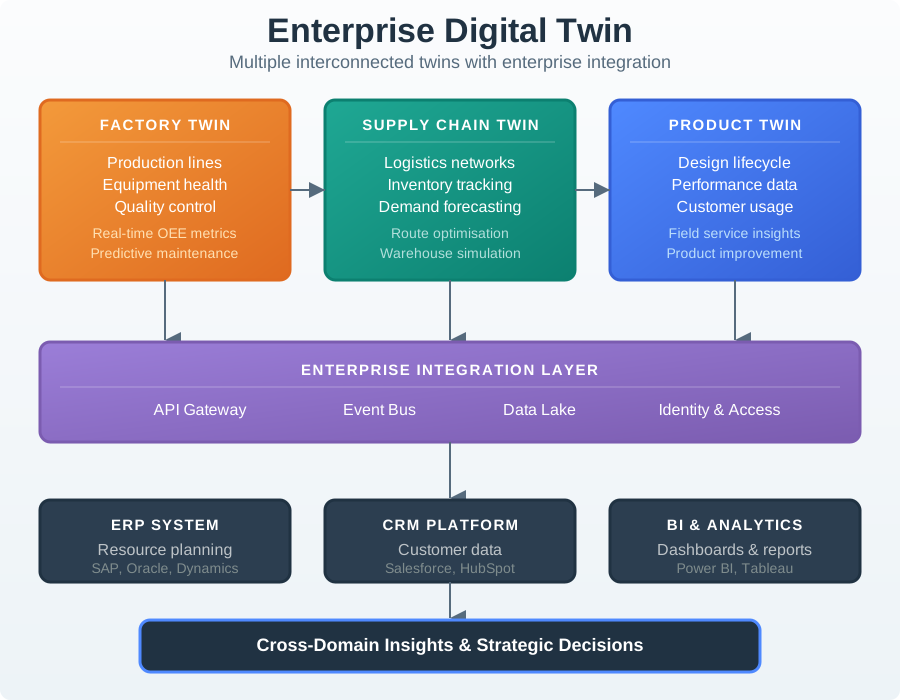
The factory twin covers production lines and equipment health; the supply-chain twin covers inventory and routes; the product twin covers field use and service. All three feed an enterprise integration layer with an API gateway, event bus, data lake, and identity access. That layer connects to ERP, CRM, and BI systems, where cross-domain insights can inform decisions. The layout helps the reader ask which twin supplies each fact and which system may use it. The drawing does not show edge filters, twin ownership rules, or audit trails, so those controls still need a separate design record.
The final test is auditability. A useful twin can reconstruct why a recommendation appeared: the input events, freshness status, model version, threshold or simulation result, confidence or uncertainty, user acknowledgement, and any downstream command or ticket. If the team cannot replay that chain after an incident or failed pilot, the system is not yet a reliable architecture; it is an attractive interface over ungoverned state.
21.5 What Is a Digital Twin?
This section: What Is a Digital Twin?
21.5.1 Start Simple
Imagine a building model that recommends when to open a vent. The model is useful only while it matches the real building. Ask what data keeps it current, who acts on its advice, and what evidence proves that the advice still works.
21.5.2 Overview: Start With the Decision Loop
A digital twin is a digital model kept in step with a real asset, process, place, or system. It supports a decision about that real thing. A realistic-looking screen is not enough. Current evidence must update the model. The model must explain or predict behavior. Its result must guide a controlled decision and later be checked against the real outcome.
Other tools can still be useful. A dashboard displays values. A simulation tests a possible event. A digital shadow mirrors the current state. A digital twin links current state, model behavior, a decision, a physical action, and a check of the result.
Write the decision in one sentence before choosing tools. For example, a twin might use current building data to suggest a vent schedule before people become uncomfortable. By contrast, a live 3D building view only promises to display data. The first claim names the real boundary, data loop, model, action path, and final check. If data is stale, the model conflicts with observations, or the result cannot be checked, the system must fall back to monitoring or advice.
This test prevents the word "twin" from being used too widely. A digital shadow can show a motor's current temperature without deciding whether to inspect it. A simulation can ask "what if?" without any link to the live motor. Only the twin keeps live evidence, model reasoning, physical action, and proof of the result in one controlled loop.
If you remember one rule, use this: define the physical decision before choosing sensors, 3D views, cloud tools, or analytics.
In Figure 21.7, begin with the real system and its current evidence. Follow the model, analysis, decision, and physical action. The VALIDITY GATE checks the result against Operator observations. New evidence then starts the loop again.
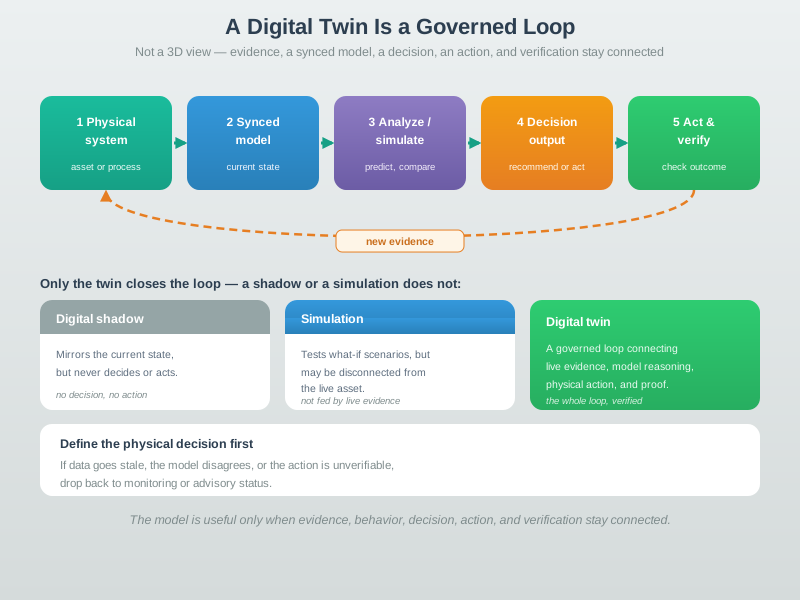
Read VALIDITY GATE as the stop check. Read Operator observations as evidence from the real system. If those observations disagree with the model, the next decision must not reuse the old claim without review.
First-Pass Test
Physical evidence
The model receives trustworthy measurements, events, work orders, inspections, images, or operator observations from the real system.
Model behavior
The model estimates state, relates entities, checks constraints, predicts risk, compares options, or simulates what-if changes.
Feedback path
The output changes a physical workflow through an alert, recommendation, schedule, work order, setpoint, route, or governed command.
Overview Knowledge Check
21.5.3 First-Twin Record
A first twin should be scoped as a decision record, not as a platform wish list. The record names the physical boundary, evidence streams, model behavior, feedback level, owner, and verification method. This prevents a broad "twin everything" project from becoming an expensive data display.
The feedback level matters. Some twins are advisory because people must approve the action. Others are closed-loop because automatic commands are allowed inside guardrails. Both can be legitimate if the governance matches the physical risk.
Write the first-twin record before wiring the platform. Use stable asset identifiers, named telemetry or event sources, sampling cadence, timestamp policy, stale-data rules, model version, decision owner, and allowed action type. If the twin uses a building-management system, an OPC UA gateway, MQTT events, a time-series store, or maintenance work orders, name which source is authoritative for each field. That prevents the model from blending convenient data with trusted evidence.
For the first release, keep the feedback level intentionally modest. Advisory twins are often safer because they let operators compare model output with site knowledge before authority expands. Closed-loop control should wait until the team can show prediction error, missing-data behavior, rollback rules, approval ownership, and post-action verification records.
Inspect Figure 21.8 and look for the step where displayed state becomes a behavior-aware physical decision.
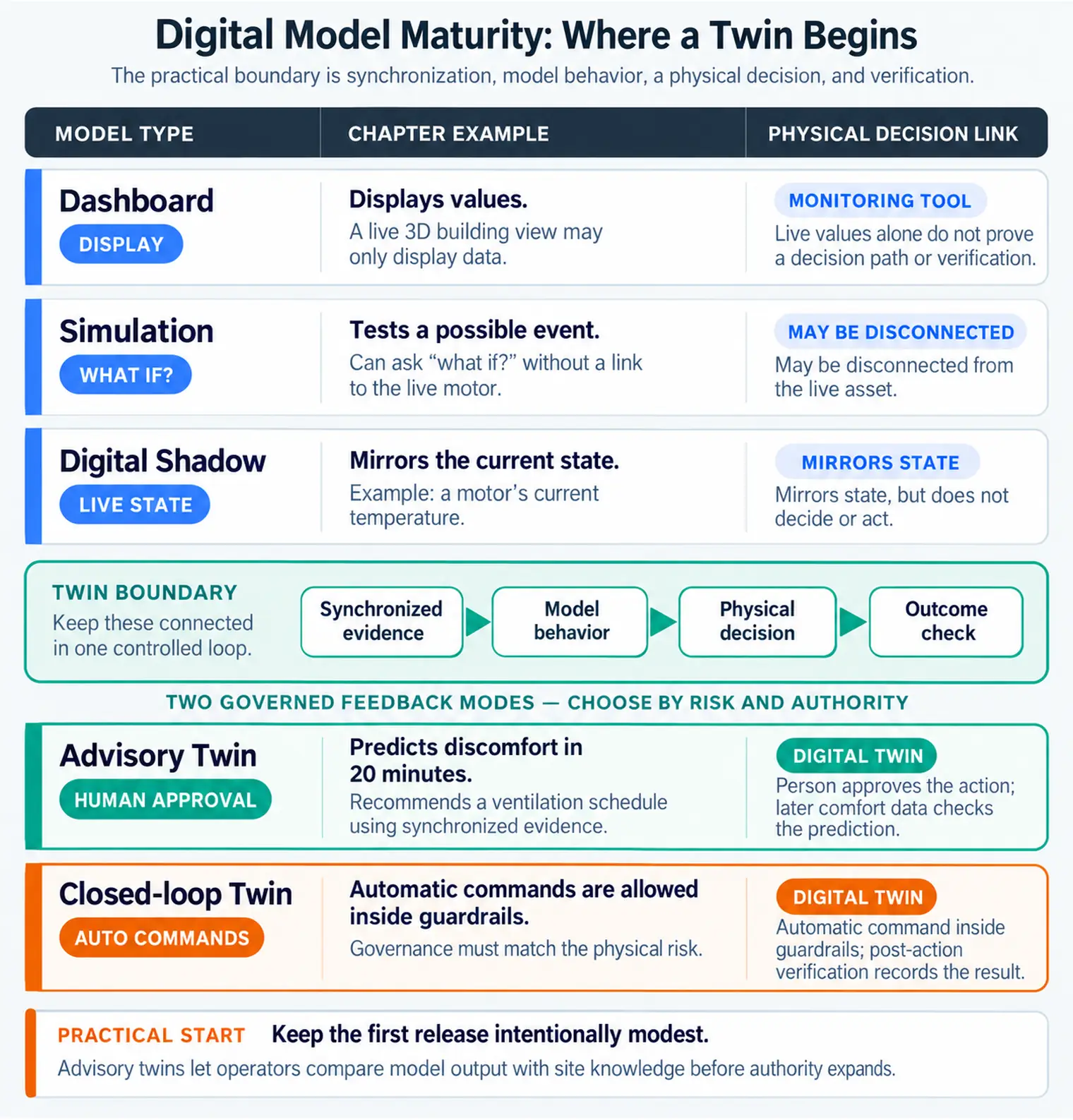
Climb Figure 21.8 from a model to a dashboard, test model, live shadow, and twin. A dashboard shows values but may not match the asset's current state. A test model can predict behavior without a live identity. The shadow joins physical state, model state, and update time. Advice about a future fault adds a decision. A return command adds a real-world result and more risk. The ladder does not grade visual polish. It grades how identity, current data, behavior proof, feedback rights, and control rules form one loop suited to the physical risk.
Minimum Record
Worked Record: Building Zone Comfort
Physical scope
One floor, four HVAC zones, classrooms, corridor, supply fan, return sensor, occupancy sensors, thermostats, and room schedule.
Model behavior
The model estimates how each zone responds to occupancy, outdoor conditions, ventilation changes, and recent equipment behavior.
Feedback path
The twin recommends pre-conditioning and flags inspection candidates. An operator approves schedule changes before controls move.
Practitioner Knowledge Check
21.5.4 Twin Sync, Boundaries, Governance
The hard part of a digital twin is keeping the decision trustworthy as the physical system changes. Synchronization requires identity mapping, time alignment, data-quality checks, stale-data behavior, and a clear rule for when the model is no longer valid. A twin that cannot say what it knows, how old that evidence is, and what action it is allowed to influence becomes a risk amplifier.
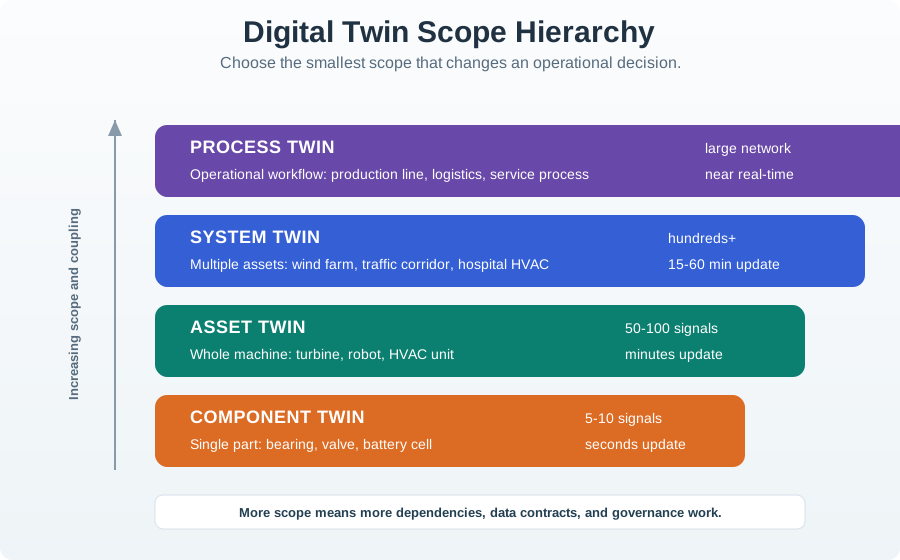
Model scope is also a control. A component twin may model one pump. An asset twin may include a machine and maintenance history. A system twin may include relationships among assets. A process twin may include workflow, demand, and constraints. Larger scope needs stronger evidence and governance.
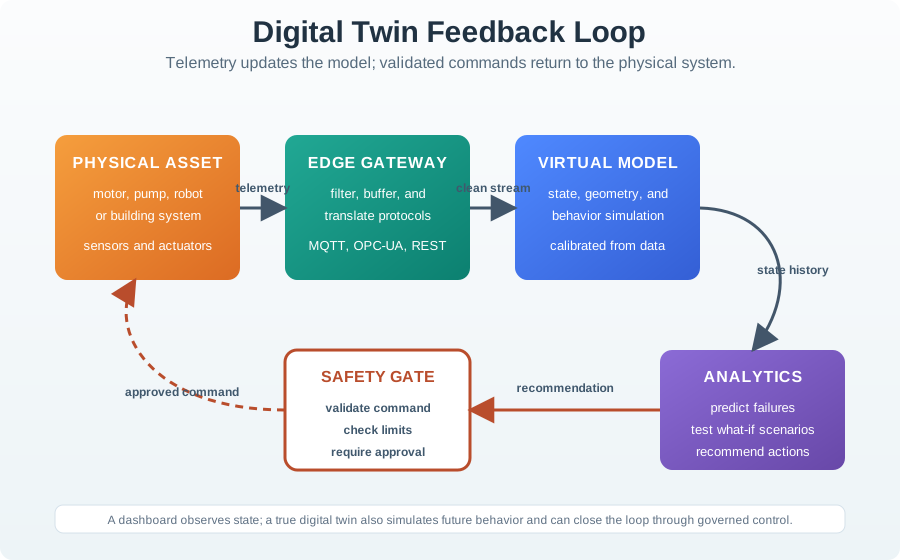
The governance problem becomes clearer when the return path is visible. Figure 21.1 distinguishes evidence moving into the twin from actions moving back into the asset, so use it to decide where synchronization ends and controlled intervention begins.
In Figure 21.1, PHYSICAL ASSET sends telemetry through the EDGE GATEWAY, where filtering, buffering, and protocol translation shape the clean stream used by the VIRTUAL MODEL. The model’s state and history then feed ANALYTICS, but a recommendation is not yet permission to act: VALIDATION checks safety limits and policy before APPROVAL releases a command. The SAFETY GATE across the top is therefore the chapter’s governing boundary. A dashboard may stop at observed state, whereas a closed-loop twin must justify every step from evidence age and model validity to authorised actuation.
21.5.4.1 Boundary Rules
Start the boundary record with identity: name the physical asset, zone, route, process, or component and its owner so observations cannot drift between unlike things. For each evidence stream, state update cadence, timestamp policy, missing-data handling, and the age at which data becomes stale. Then expose what the model estimates, what it ignores, and which change forces recalibration. If the twin can recommend or command, add operating limits, approval rules, audit evidence, and recovery behaviour. The loop closes only when later observations are compared with the prediction, recommendation, and physical outcome.
Those rules also define where to go next in the digital-twin sequence. Figure 21.2 makes the accumulation explicit: vocabulary leads to a boundary record, synchronization proof, bounded sector evidence, and finally a defensible assessment.
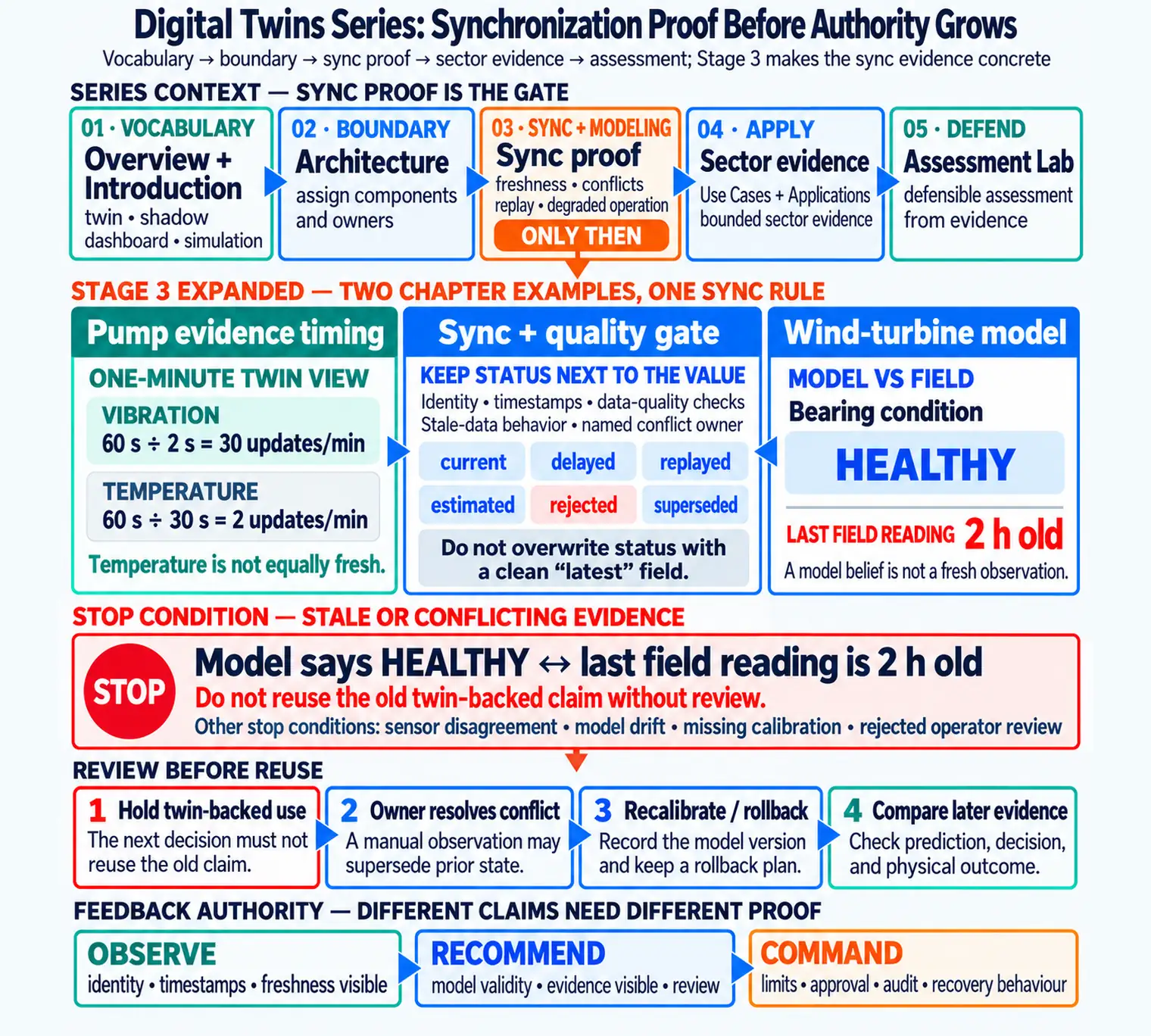
Figure 21.2 opens with Overview and Introduction, separating a twin, shadow, dashboard, and simulation. Architecture assigns components and owners before Sync + Modeling tests freshness, conflicts, replay, and degraded operation. Only then can sector examples support Assessment Lab. The lower authority rail is the governing rule: observation, recommendation, and command are different claims with different proof burdens.
Retest Signals
Treat retest Signals as one connected review. Begin with retest if a sensor, gateway, event source, inspection process, timestamp policy, or data-quality rule changes. With that boundary fixed, examine retest if the physical asset, operating mode, location, route, environment, or maintenance state changes. Then connect it to retest if the model starts missing outcomes, producing stale recommendations, or hiding uncertainty from operators. Then connect it to retest if the feedback path changes from display to recommendation, from recommendation to command, or from human approval to automation. Close the review by checking retest if ownership, audit, safety, privacy, or interoperability constraints change. The order matters: each later judgment depends on the owner, state, constraint, or failure evidence retained by the preceding step, so the resulting record can support the next chapter decision.
Under-the-Hood Knowledge Check
21.5.5 Summary
A digital twin is a model kept in step with a real system. It supports a decision and later checks the result. It is more than a 3D view, dashboard, simulation, or one-way shadow. Start with the physical decision. Name the evidence, model boundary, action level, and final check. The safest first twin is small and reviewable. Its scope, owner, stale-data response, feedback path, and reasons to test again must be clear.
21.5.6 Key Takeaway
Define the decision before the platform: a digital twin is trustworthy only when synchronized evidence, model behavior, governed feedback, and verification stay connected to the physical system.
21.5.7 See Also
Digital Twin Architecture
Use this when the first-twin record needs data, model, platform, integration, and governance architecture.
Synchronization and Modeling
Use this when update cadence, stale data, model calibration, and behavior assumptions drive the design.
Digital Twins Use Cases
Use this to compare where twins are useful across assets, buildings, factories, infrastructure, and services.
Digital Twin Concepts and Scenario Assessment
Use this to test whether a proposed twin has evidence, boundaries, feedback, and verification.
21.6 Bound a Digital Twin for One Pump
This section: Bound a Digital Twin for One Pump — A real pump vibrates, heats, and moves water while its digital twin receives only selected measurements.
A real pump vibrates, heats, and moves water while its digital twin receives only selected measurements. In Figure 21.3, follow the physical asset through the edge gateway, virtual model, analytics, validation, approval, and safety gate. Figure 21.4 then places the pump inside larger equipment and process scopes, while Figure 21.5 returns an approved action toward the physical asset.
If vibration arrives every 2 s and temperature every 30 s, a one-minute twin view contains up to (60/2=30) vibration updates but only (60/30=2) temperature updates. The richer vibration cadence does not make temperature equally fresh. The digital twin architecture must carry timestamps and model assumptions so analytics can distinguish those two ages before proposing a pump action.
21.6.1 Worked Example: Predict the Twin Boundary
- Predict: Analytics recommends a speed change, but the safety gate rejects it. Did the digital twin fail to close the loop? Check: No. A controlled twin architecture includes approval and rejection, not automatic actuation at any cost.
- Predict: The physical pump is replaced but the model keeps its old curve. Can live sensor flow alone repair the mismatch? Check: No. The virtual model and asset identity need an explicit update and validation.
21.7 Summary
This section: Summary
Digital twin architecture is a governed synchronization system: physical evidence updates a virtual model, the model supports a bounded decision, and control or recommendation paths are gated by freshness, validation, ownership, and safety rules. The strongest projects start with a narrow claim and expand only when the evidence record proves the model remains useful under degraded conditions.
21.8 Key Takeaway
This section: Key Takeaway
A digital twin is valuable only when its model state is trustworthy enough for the decision it supports. Define scope, synchronization, model fidelity, decision authority, and retest triggers before scaling.
21.9 See Also
This section: See Also
Digital Twins Introduction
Introduces the core idea of live model state and evidence-backed twin decisions.
Digital Twin Sync and Modeling
Deepens synchronization, calibration, and model-fidelity tradeoffs.
Digital Twin Use Cases
Connects architecture choices to practical asset, process, and system scenarios.
Digital Twin Industry Applications
Shows how governance and operating evidence vary across domains.
Find help
3 reviewed answers.
Where should I start in a module?
Open the module page from the sidebar to see its chapters in order. Use the module map to return to a topic you need.
Modules and pathsReviewed
What can I try when a project does not work?
Check the symptom, then work through the diagnostic steps. Keep the error message and the smallest example that reproduces it.
When you are stuckReviewed
How do interactive examples work?
Use the interactive guide to check how examples and simulations work before changing your project.
Interactive examples guideReviewed