19 WSN Tracking Fundamentals

More
Depth: Practitioner
Progress saves as you read. Mark sections complete as you go; your progress appears in the sidebar.
19.1 Start With the Field Story
This section: Start With the Field Story — Picture a lone worker moving through a large plant during an inspection.
Carry One Track Across the Handoff
Picture a lone worker moving through a large plant during an inspection. One group of sensors sees the badge near a pump, then another group sees a weak trace near the next room. The safety desk must decide whether both observations belong to the same person and whether the track is still current.
-
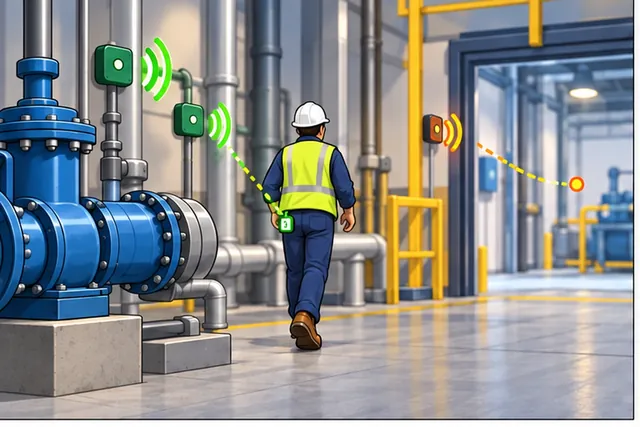
Two sensor groups track one worker between factory rooms.
-
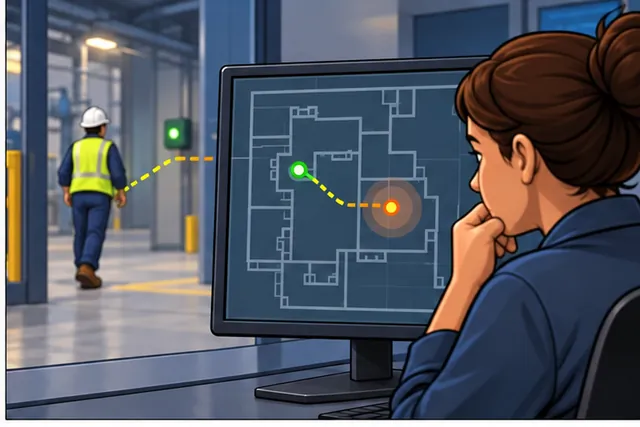
A weak or late handoff can join the wrong sightings.
-
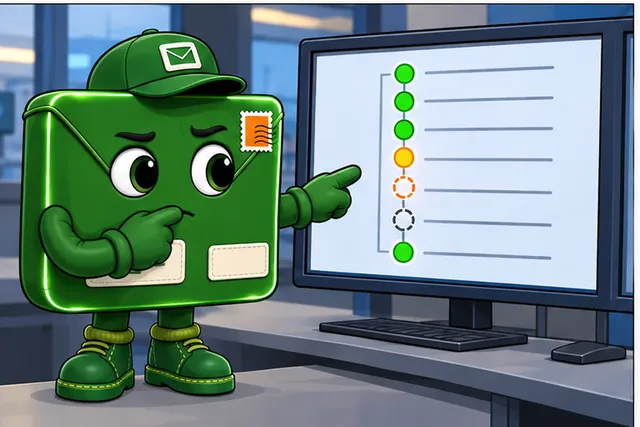
Keep time, source, place, doubt, age, and owner with the track.
-
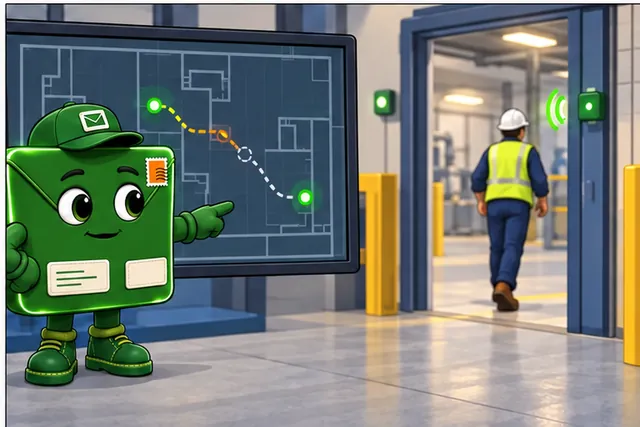
Mark each result as seen, predicted, lost, or found.
Build one track record from direct observations. Keep the target label, event time, source group, estimated place, doubt, prediction age, and current owner. Mark when the record changes from seen to predicted, lost, or found again. Never present an estimate as a direct sighting.
Test a missed reading, two nearby targets, a late handoff, a sleeping relay, a failed node, and a clock shift. Check what the next group received and what it confirmed. A line on a map is not proof that identity and time survived the handoff.
Keep urgent worker safety based on the freshest local evidence and a clear lost state. A remote history can aid review, but it must not turn an old estimate into a live location.
This opening does not select a sensing method or promise exact position. Practitioner builds the handoff and release rules. Under the Hood examines location clues, fusion, energy, prediction, doubt, and recovery across a changing field.
Tracking begins when one reading is not enough. A WSN must connect observations over time, manage uncertainty, hand off between nodes, and decide when an estimate is good enough for action without pretending that every target path is known.
Wireless sensor network target tracking is the work of keeping a moving target record honest as evidence moves from sensing nodes to an operator, gateway, or automated decision. A tracking page should not only say that a target was found. It should show what was observed, what was estimated, which sensors owned the record, when the state changed, and when uncertainty became too large to trust.
The core difference between detection and tracking is continuity. Detection asks whether a target was observed. Tracking asks whether the network can maintain a labeled target state as the target moves across coverage areas, gateways, failure modes, and time.
19.2 In 60 Seconds
This section: In 60 Seconds — A tracking record should separate observation, estimate, prediction, and release label.
A tracking record should separate observation, estimate, prediction, and release label. Handoffs are the main continuity risk: the next sensor group must know what evidence it received, what it confirmed, and what remains uncertain. Localization evidence can come from signal strength, timing, angle, proximity, camera or acoustic detections, and fusion, but every position estimate needs a quality label. Energy efficiency comes from selective activity, not from hiding missed observations. Sleeping, waking, sampling, relaying, and recovery all belong in the evidence record. A tracked target should be labeled as current, predicted, delayed, ambiguous, lost, recovered, partial, or historical before a learner or operator acts on it.
19.3 Learning Objectives
This section: Learning Objectives
By the end of this chapter, you will be able to:
- Explain the difference between detection, localization, prediction, and tracking continuity.
- Identify the evidence a WSN target record must preserve before it is released.
- Review handoff and recovery points where a moving target can be mislabeled.
- Describe how energy state, measurement quality, and gateway custody affect tracking claims.
- Apply release labels before approving a tracking fundamentals page, lab, simulation, or prototype.
19.4 WSN Tracking Fundamentals
This section: WSN Tracking Fundamentals
19.5 Tracking Claim
This section: Tracking Claim — This claim avoids three shortcuts.
Start with a claim that can be reviewed:
Tracking fundamentals review claim: The system can maintain a target state over time by preserving observation evidence, position estimates, uncertainty, sensor ownership, energy state, gateway custody, handoff history, recovery actions, and release labels.
This claim avoids three shortcuts. It does not treat one detection as a track. It does not treat a prediction as an observation. It does not treat an energy-saving sleep schedule as acceptable unless the page also shows how missed, stale, or recovered target states are handled.
19.6 Tracking Evidence Loop
This section: Tracking Evidence Loop — Before applying Tracking Evidence Loop, view Figure 19.1 and compare INPUT with Observe.
Before applying Tracking Evidence Loop, view Figure 19.1 and compare INPUT with Observe. Their relationship makes the evidence behind Tracking Evidence Loop reviewable.
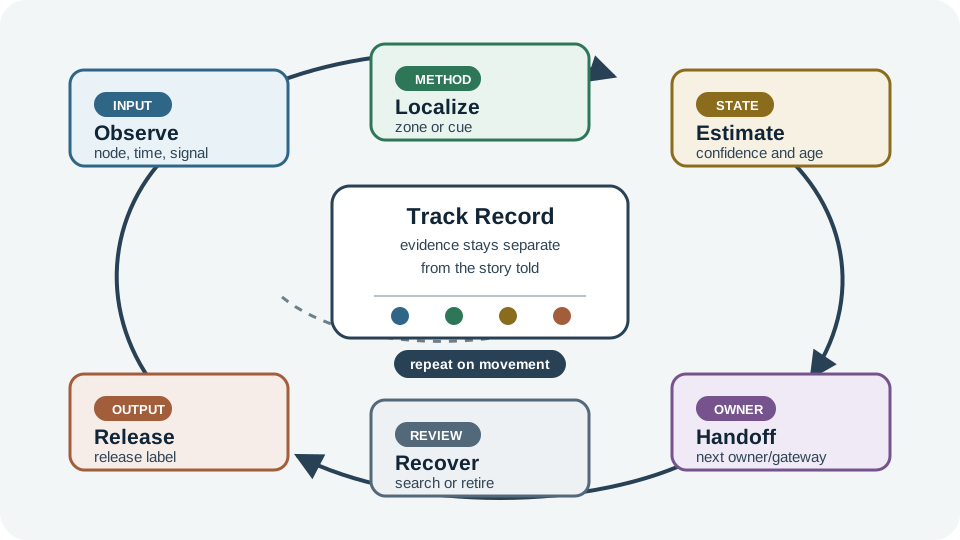
Figure Figure 19.1 follows a worker’s badge observation between sensor groups. The first group sees the badge near a pump and keeps the event time and source. Handoff must pass the last observation, prediction boundary, confidence label, and owner action if the worker does not appear. A weak trace near the next room may confirm, correct, or leave the track uncertain. The loop below separates observation, localization, estimate, handoff, release, and recovery. This prevents a late or weak handoff from joining unrelated sightings or showing a predicted state as a fresh direct observation.
The evidence loop starts with a sensor observation and ends with a released state. The loop repeats whenever the target moves, a sensor sleeps, a gateway receives a summary, or the track is recovered after a gap.
The next Tracking Evidence Loop step depends on the evidence behind Tracking Evidence Loop. Read Figure 19.2 first, focusing on WSN Tracking Interactive Evidence Record and SCENARIO.
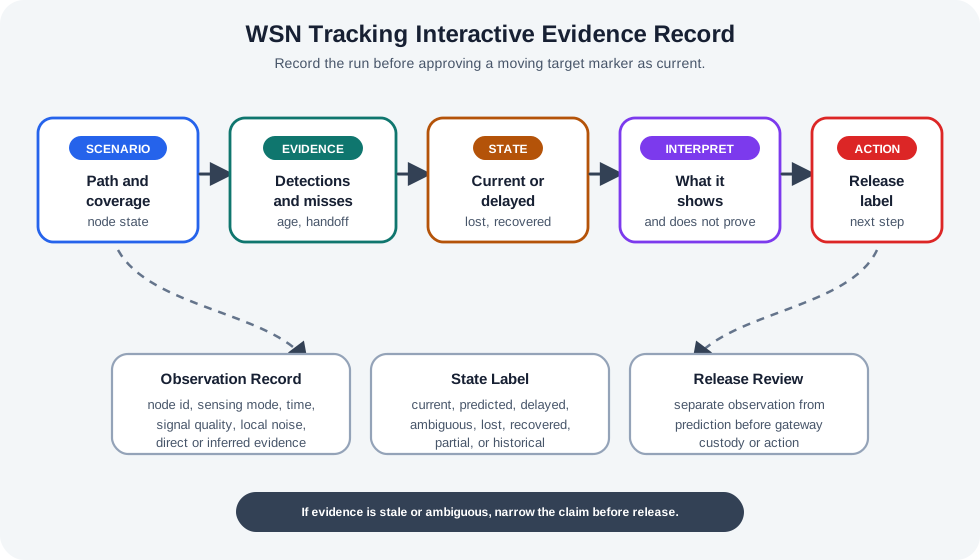
Figure Figure 19.2 makes the handoff record explicit. It keeps a confirmed observation at time t₀ apart from a predicted state for t₁ and a weak new trace at t₁. The observation field needs node, mode, time, quality, and whether evidence is direct. Localization adds method and confidence boundary; the estimate adds age, assumptions, and retirement rule. Release records custody, safe conclusion, state label, and limits. A line across the map cannot prove identity or timing. The next sensor group must confirm continuity before the dashboard can call the target current.
19.6.1 Detect, Localize, Predict, Report
A tracking cycle is easier to review when the four actions are separated:
The loop does not make prediction the same as observation. A current label needs recent evidence. A predicted label needs a last observation, a bounded motion assumption, and a retirement rule.
19.7 Knowledge Check: Tracking Cycle
This section: Knowledge Check: Tracking Cycle
19.8 Detection Is Not Tracking
This section: Detection Is Not Tracking — A single detection can be useful, but it is not a track by itself.
A single detection can be useful, but it is not a track by itself. Tracking requires a sequence of states that remain interpretable as the target moves through the network.
A common quality problem is a page that moves from “a node detected motion” to “the target is at this location” without explaining geometry, uncertainty, or handoff. The review should force that missing step into the open.
19.9 Measurement Evidence
This section: Measurement Evidence — Wireless tracking can use several measurement families.
Wireless tracking can use several measurement families. Each family has different uncertainty, calibration, and failure behavior. The chapter should explain the evidence boundary instead of promising a universal accuracy.
19.9.1 Targets and Association
Multiple targets add a new review problem: data association. When several measurements arrive, the tracker must decide which measurement belongs to which target. If two targets pass close together, a weak association rule can swap identities, merge two paths, or split one target into several tracks.
| Scenario | Dominant review question |
|---|---|
| Single target | Does the record preserve energy-aware observation, localization, handoff, and recovery evidence? |
| Multiple targets | Does each measurement stay attached to the correct target identity or carry an uncertainty label? |
| Coverage gap | Does the page label the broken continuity instead of stitching two disconnected fragments into one certain track? |
For multi-target cases, preserve identity evidence as carefully as position evidence. A useful record keeps the target id, candidate measurements, rejected associations, confidence boundary, and release label together.
19.10 Knowledge Check: Data Association
This section: Knowledge Check: Data Association
19.11 Handoff and Recovery Gates
This section: Handoff and Recovery Gates — At this point, handoff and recovery gates needs an inspectable chain rather than another rule of thumb.
At this point, handoff and recovery gates needs an inspectable chain rather than another rule of thumb. The figure at Figure 19.3 supplies it by linking Observation to source, age,.
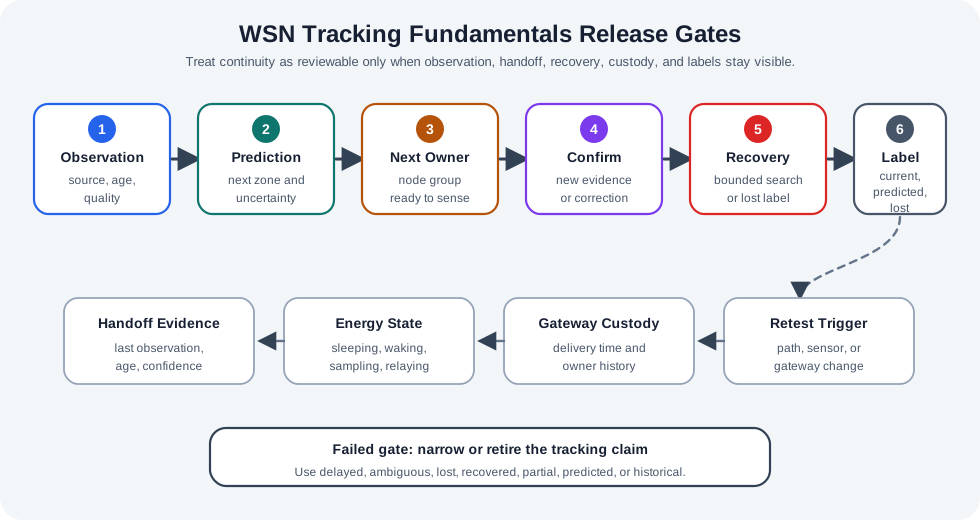
Treat Observation, source, age,, and quality in the diagram at Figure 19.3 as three separate gates. The first identifies the field observation, the second establishes the starting condition, and the third marks the acceptance limit. Their combined message is specific: WSN tracking fundamentals release gates showing observation evidence, prediction boundary, next owner, confirmation, recovery, gateway custody, energy state, and retest trigger. Use that message, with its limits, in the ensuing handoff and recovery gates decision.
A handoff is not just a routing event. It is the transfer of tracking responsibility. The receiving node group needs the last observation, the prediction boundary, the confidence label, and the action to take if the target does not appear.
WSN tracking narrated tour
Narrated audio tour. The full transcript is below.
Play the tour to open the simulator. Pause, replay a beat, or read the full transcript below.
Some beats explain situations this teaching model cannot show; those beats keep the existing frame and provide captions only.
Full transcript — WSN tracking (8 beats)
B1 — Safety desk
You are at the safety desk while a lone worker inspects a large plant. Sensors detect the worker's badge near a pump, then another group reports a weak trace near the next room. Your decision matters: does the tracking history still describe the worker's current location?
Model caption: You staff the safety desk. A worker's badge observations must support a current location.
B2 — Observation evidence
A wireless sensor network connects observations over time. Detection means a sensor observed the target. Tracking means maintaining a labeled location history as the target moves. Keep the observation time with the location history. A prediction also needs an age, so the safety desk knows how old its supporting observation is.
Model caption: Detection is an observation. Tracking connects observations over time. Preserve observation time and prediction age.
B3 — Prediction and handoff
The worker keeps moving while some sensors sleep. Prediction estimates a future position and helps wake sensors near the expected next position. A handoff transfers tracking responsibility to the next sensor group. The receiving group needs the last observation and the uncertainty attached to it while waiting for confirmation.
Model caption: Prediction prepares likely next sensors. A real handoff carries the last observation and uncertainty to the next owner.
B4 — Detection lost
Use the teaching model's Recovery test: twelve sensors, a detection radius of fifteen metres, and a prediction lead of eight model steps. The target speed multiplier is one point six. Detection uses an ideal circular limit. After six advances, no sensor detects the target, and the lost count reaches one.
Model caption: Recovery test: 12 sensors; radius 15 m; speed 1.6x; prediction lead 8 steps. Step 6: 0 detecting, 1 lost frame.
B5 — Recovery radius
To find the recovery search radius, start with the count of consecutive advances without a detection, or zero, whichever is greater. For one missed detection, multiply one by two point two to get two point two metres. Add the fifteen metre detection radius to get seventeen point two metres. Add the model's fixed allowance of eight metres to get twenty five point two metres. The limit is forty two metres. Twenty five point two metres stays within the limit, so search within that distance of the predicted position.
Model caption: Search radius = min(42, 15 + max(0, 1) × 2.2 + 8) = 25.2 m around predicted position.
B6 — Detection resumes
On the next advance, a sensor detects the target again, and the lost count returns to zero. Recovery search can wake more sensors, adding energy cost. The model's energy figure counts awake sensor time only. Its detection and energy figures describe the teaching model, rather than field measurements about your worker.
Model caption: Step 7: 1 detecting, 0 lost frames. Detection resumes. Energy savings count awake sensor time only; model figures are not field evidence.
B7 — Forecast versus detection
A common mistake is to assume a handoff prediction confirms the worker's location, but prediction bridges a gap between observations; it does not refresh an old observation. During a handoff without confirmation, keep the uncertainty with the location history. The safety desk needs to distinguish a forecast from a fresh detection.
Model caption: Misconception: prediction proves a current location. An old observation stays old; preserve uncertainty until confirmation.
B8 — Fresh evidence
For your worker, a forecast is not a fresh detection.
Model caption: A forecast is not a fresh detection.
19.11.1 Prediction and Sampling Discipline
Detection and localization tell the reviewer where the target was at the last sample. In a duty-cycled WSN, the target keeps moving while nodes sleep, radios wait, and gateway delivery happens. Prediction bridges those gaps by waking likely next-zone nodes and by carrying a bounded future state until a new observation confirms, corrects, or retires it.
Prediction must still be labeled as prediction. A Kalman filter, particle filter, nearest-neighbor update, or simple dead-reckoning step can improve the next wake decision, but none of them turns a stale observation into a fresh one. The tracker should carry age, confidence boundary, missed-detection count, and retirement rule alongside the state.
The same fields protect energy-aware tracking. Selective activation saves energy only if sleeping zones, late wake commands, missing observations, and recovery-search costs remain visible in the evidence record.
19.12 Knowledge Check: Prediction and Sampling
This section: Knowledge Check: Prediction and Sampling
19.13 Energy State Is Evidence
This section: Energy State Is Evidence — Target tracking often reduces energy by activating only part of the network.
Target tracking often reduces energy by activating only part of the network. That is acceptable only when energy state is visible in the tracking record. A sleeping node cannot confirm a target. A recently awakened node may miss early evidence. A relay path may spend more energy than the sensing task.
19.14 Gateway Custody
This section: Gateway Custody — The target record may pass from sensor nodes to a cluster head, mobile collector, gateway, cloud service, dashboard, or operator.
The target record may pass from sensor nodes to a cluster head, mobile collector, gateway, cloud service, dashboard, or operator. Each custody step can change what the record means.
19.15 Worked Review: Boundary Motion
This section: Worked Review: Boundary Motion — Scenario: a perimeter WSN detects motion near a boundary and shows a target marker moving toward a restricted zone.
Scenario: a perimeter WSN detects motion near a boundary and shows a target marker moving toward a restricted zone.
19.16 Worked Review: Asset Lookup
This section: Worked Review: Asset Lookup — Scenario: an operator asks where a tagged tool was last seen in a facility.
Scenario: an operator asks where a tagged tool was last seen in a facility.
19.17 Worked Review: Mobile Collector
This section: Worked Review: Mobile Collector — Scenario: a mobile collector receives target summaries from a sparse sensor field while moving past several zones.
Scenario: a mobile collector receives target summaries from a sparse sensor field while moving past several zones.
19.18 Common Tracking Mistakes
This section: Common Tracking Mistakes
19.19 Readiness Checklist
This section: Readiness Checklist
19.20 Knowledge Check: Continuity
This section: Knowledge Check: Continuity
19.21 Knowledge Check: Measurement Evidence
This section: Knowledge Check: Measurement Evidence
19.22 Matching: Tracking Vocabulary
This section: Matching: Tracking Vocabulary
19.23 Ordering: Tracking Record Review
This section: Ordering: Tracking Record Review
19.24 Summary
This section: Summary — WSN tracking fundamentals are about preserving target meaning over time.
WSN tracking fundamentals are about preserving target meaning over time. A strong chapter separates detection from tracking, observation from prediction, and current state from stale or historical state. It makes handoff, uncertainty, energy state, custody, and recovery visible before asking learners to trust a target marker.
The practical review question is simple: can another person reconstruct why the page displayed this target state? If the answer is yes, the tracking record is ready for formulation, algorithm, prediction, implementation, and application-specific review.
19.25 Key Takeaway
This section: Key Takeaway — WSN Tracking Fundamentals Review should connect tracking models, prediction, localization, handoff, sampling rate, energy cost, uncertainty, and deployment evidence before accepting a design.
WSN Tracking Fundamentals Review should connect tracking models, prediction, localization, handoff, sampling rate, energy cost, uncertainty, and deployment evidence before accepting a design.
19.26 Concept Relationships
This section: Concept Relationships
19.27 What’s Next
This section: What’s Next — Use WSN Lab Exercises to connect tracking claims to repeatable evidence records.
Previous: WSN Lab Exercises
Next: WSN Tracking Formulations Review
Use WSN Lab Exercises to connect tracking claims to repeatable evidence records. Continue to WSN Tracking Formulations Review for push, poll, guided, and hybrid tracking behavior.
Find help
3 reviewed answers.
Where should I start in a module?
Open the module page from the sidebar to see its chapters in order. Use the module map to return to a topic you need.
Modules and pathsReviewed
What can I try when a project does not work?
Check the symptom, then work through the diagnostic steps. Keep the error message and the smallest example that reproduces it.
When you are stuckReviewed
How do interactive examples work?
Use the interactive guide to check how examples and simulations work before changing your project.
Interactive examples guideReviewed