After completing this chapter, you will be able to:
Explain fundamental IoT architectural models and frameworks
Apply layered architecture patterns to IoT system design
Distinguish between three-layer and five-layer architectures
Evaluate trade-offs in different architectural choices
Apply the IoT-A reference model to system design
19.2 Prerequisites
Before diving into this chapter, you should be familiar with:
IoT Reference Models: Understanding of basic IoT architectural concepts provides the foundation for applying design models and frameworks
Communication Networks: Knowledge of networking protocols helps you understand how the network layer fits into overall IoT design models
Sensor Fundamentals: Familiarity with sensors and actuators is essential for understanding the perception layer in IoT design models
For Beginners: What is a Design Model?
Think of a design model like a blueprint for building a house.
Before construction starts, architects create blueprints showing where walls go, how plumbing connects, and where electrical wires run. Design models for IoT are similar–they’re organized frameworks that show how all the pieces of your system fit together.
Why do we need design models?
Without a Model
With a Model
“Let’s just start coding!”
“Here’s how sensors connect to the cloud”
Random architecture
Organized layers with clear responsibilities
Hard to scale or maintain
Easy to add features, troubleshoot issues
Team confusion
Everyone speaks the same language
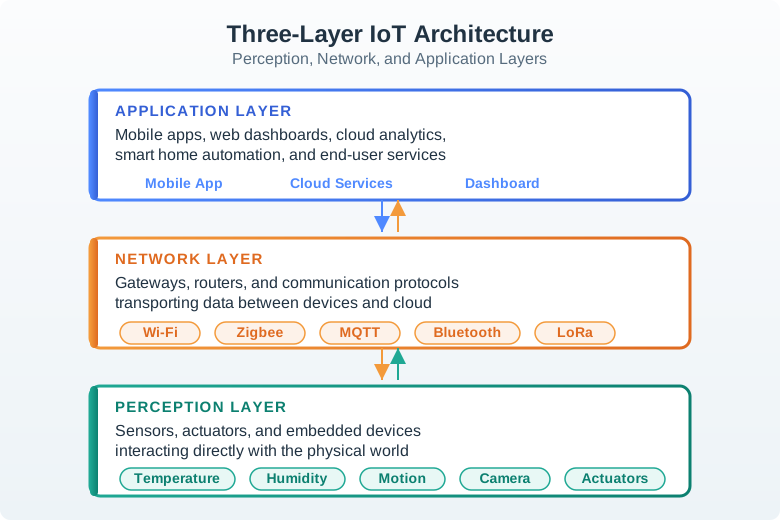
The three-layer model (simplest IoT architecture):
Figure 19.1: Three-layer IoT architecture showing perception layer at bottom with sensors and actuators, network layer in middle with Wi-Fi/Zigbee/MQTT, and application layer at top with mobile apps and cloud services.
Key insight: A design model isn’t just theory–it’s your roadmap. Without it, building IoT systems is like constructing a house by randomly stacking bricks and hoping it turns out okay.
Sensor Squad: The Layer Cake!
“I like to think of IoT architecture like a three-layer cake,” said Sammy the Sensor. “The bottom layer is where I live – the perception layer. We sensors and actuators do all the hands-on work, touching and measuring the real world. Without us, the cake has no foundation!”
“The middle layer is the network – that is the frosting holding everything together,” added Max the Microcontroller. “Wi-Fi, Bluetooth, and MQTT carry data between the bottom and the top. Without good frosting, the layers fall apart!” Lila the LED pointed up, “And the top layer is the application – the decoration! That is where the phone app, dashboard, and cloud analytics live. It is the part people actually see and interact with.”
Bella the Battery gave a wise warning: “Some people try to make a five-layer cake when a three-layer one would be just fine. More layers means more complexity, more things that can go wrong, and more of my energy used up. Always pick the simplest architecture that does the job!”
Key Concepts
Design Model: Abstract representation of system behaviour, user interaction, and data flow used to guide implementation decisions.
Calm Technology: Design philosophy creating technology that informs without demanding attention, residing at the periphery of user awareness.
Design Thinking: Human-centred innovation process: empathise, define, ideate, prototype, and test in iterative cycles.
Reference Architecture: Documented, validated design pattern for a class of IoT systems, reducing design time and avoiding known pitfalls.
Facet Model: Framework decomposing IoT system design into orthogonal dimensions (physical, cyber, social) for structured analysis.
Context Awareness: System capability to sense and respond to its physical, social, and operational environment.
System-of-Systems: IoT architecture where multiple autonomous systems interact to produce emergent capabilities no single system provides alone.
19.3 Introduction
Designing IoT systems requires a structured approach that addresses the unique challenges of integrating physical devices, network connectivity, data processing, and user interaction. Unlike traditional software systems, IoT designs must consider hardware constraints, real-time requirements, energy efficiency, scalability, and the physical environment.
This chapter explores established reference architectures that provide systematic approaches to IoT system development. These models help architects and developers make informed decisions about system structure, component interactions, and technology choices.
Common Misconception: “More Architecture Layers = Better Design”
The Myth: “We should use the five-layer architecture (Business, Application, Middleware, Network, Perception) for every IoT project because it’s more comprehensive and professional than the three-layer model.”
The Reality: Architecture complexity should match system complexity, not organizational aspirations.
Real-World Example: A startup building a smart pet feeder with 5 engineers chose the five-layer architecture to “look professional to investors.” After 3 months:
70% of meetings were spent debating which layer owned specific features (“Does scheduling logic belong in Application or Middleware?”)
Development velocity dropped 40% as engineers navigated unnecessary abstraction layers
Business layer had 2 functions (user authentication and billing) that could have lived in the application layer
Middleware layer had 1 service (device management) that was essentially a pass-through to the network layer
They simplified to three layers: Application (UI + business logic), Network (gateway + device management), Perception (feeder hardware). Development velocity immediately increased 60%, product shipped 5 weeks earlier, and codebase complexity dropped from 18,000 to 11,000 lines.
The Lesson: Start with the simplest architecture that meets your requirements (often three layers for small-to-medium systems). Add layers only when complexity demands it:
Five layers appropriate for: Enterprise IoT platforms serving multiple business units, systems requiring complex device management middleware, or products with distinct business intelligence layers
Three layers appropriate for: Single-domain IoT products, startups with small teams, systems with straightforward device-to-cloud data flows
Key metric: If you can’t clearly articulate what functionality lives in each layer and why it can’t live elsewhere, your architecture has too many layers.
19.4 Three-Layer Architecture
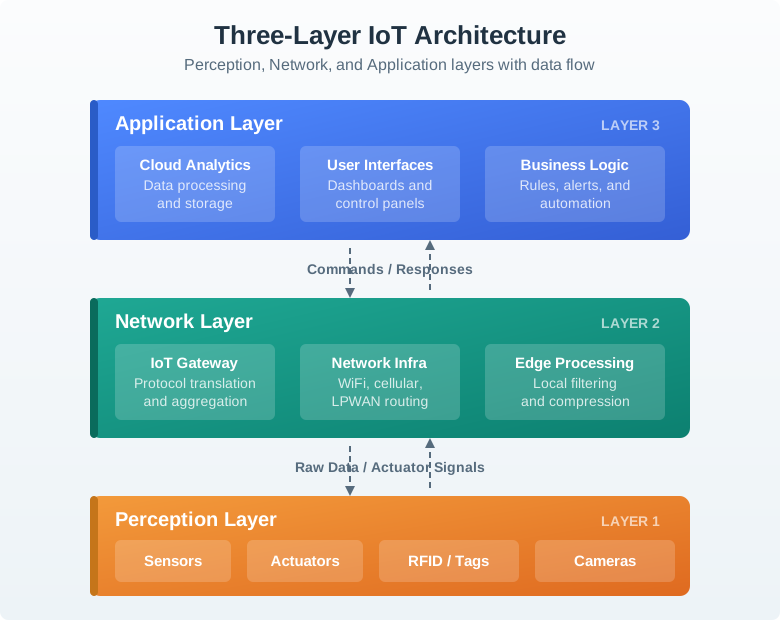
The most basic IoT architecture consists of three layers:
Figure 19.2: Three-layer IoT architecture diagram showing perception layer at bottom with sensors and actuators collecting raw data, network layer in middle with IoT gateway and network infrastructure processing and routing data, and application layer at top with cloud platform and user applications providing services.
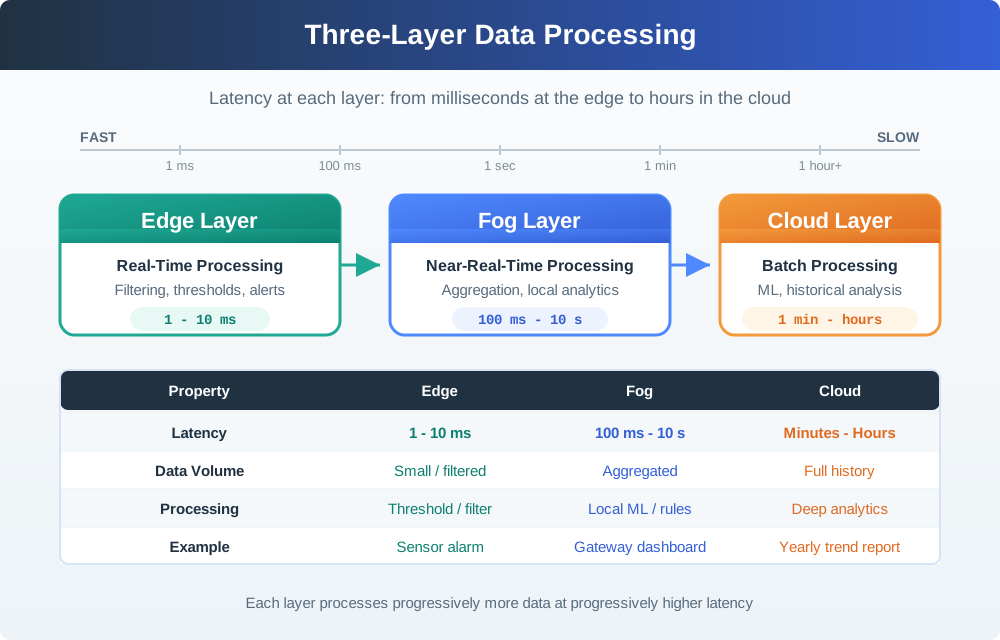
Figure 19.3: Three-Layer Architecture Timeline: Sequence diagram showing actual data flow from sensor sampling through gateway processing to cloud storage and user display, with typical latencies at each stage.
Perception Layer: Physical devices that sense and interact with the environment
Sensors, actuators, RFID tags, embedded controllers
Responsible for data acquisition and physical control
Constrained by power, memory, and processing capabilities
Network Layer: Communication infrastructure connecting devices to applications
Gateways, routers, protocol translators
Handles data transmission, protocol conversion, edge processing
Manages connectivity across different network technologies
Application Layer: Services and interfaces for users and systems
Cloud platforms, analytics engines, dashboards
Provides business logic, data storage, and user interaction
Supports high-level decision making and system management
19.5 Five-Layer Architecture
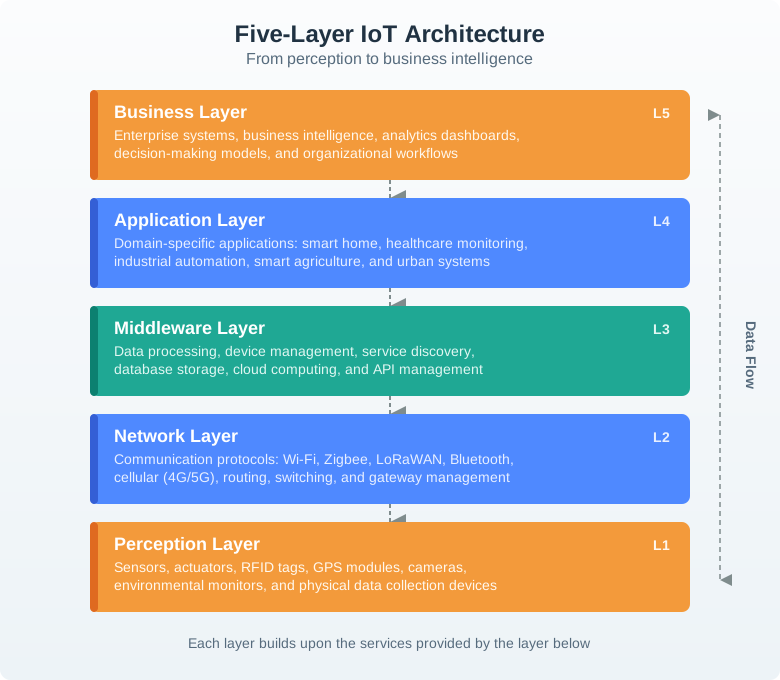
A more detailed model adds middleware and business layers:
Figure 19.4: Five-layer IoT architecture showing perception layer at bottom with sensors and RFID collecting data, network layer with Wi-Fi/Zigbee/LoRaWAN protocols, middleware layer processing data and managing devices, application layer with domain-specific apps for smart home and healthcare, and business layer at top with enterprise systems and business intelligence.
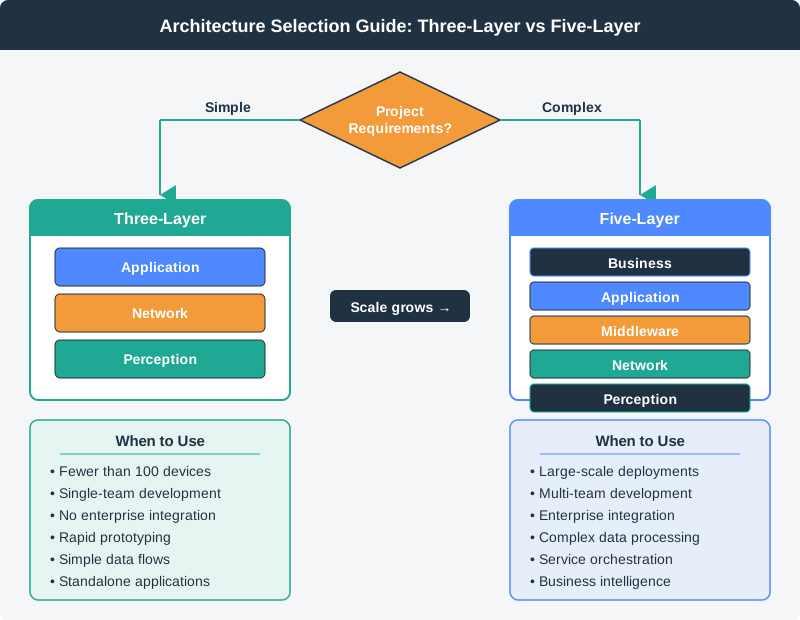
19.5.1 Architecture Selection Decision Guide
This decision-oriented view helps system designers choose between three-layer and five-layer architectures based on project requirements. The choice depends on scale, integration needs, and organizational complexity rather than technical preferences alone.
Figure 19.5: Architecture selection guide: Three-layer suits simple systems with fewer than 100 devices and no enterprise integration needs. Five-layer adds middleware and business layers essential for large-scale deployments, multi-team development, and enterprise system integration.
Business Layer: Enterprise systems, business intelligence, and decision support Application Layer: Domain-specific applications (smart home, healthcare, agriculture) Middleware Layer: Data processing, device management, service orchestration Network Layer: Communication protocols and network management Perception Layer: Physical devices and sensors
19.6 IoT-A Reference Model
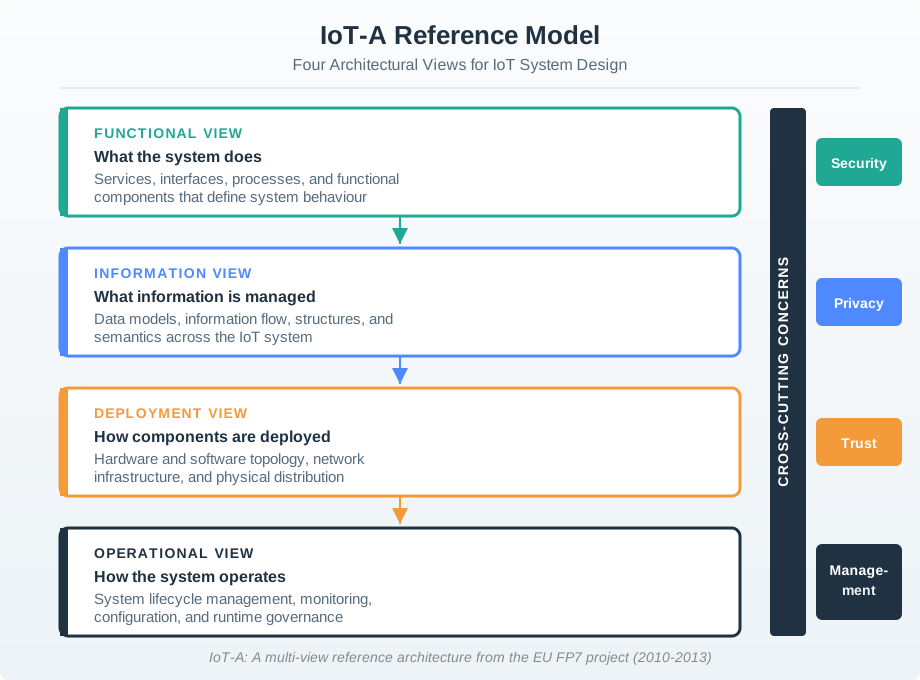
The IoT Architecture (IoT-A) reference model, developed by the European FP7 project, provides a comprehensive framework:
Figure 19.6: IoT-A reference model diagram showing four primary architectural views arranged vertically: functional view defining services and processes, information view modeling data structures and information flow, deployment view showing hardware and software topology, and operational view managing system lifecycle.
Key aspects of IoT-A:
Functional View: What the system does (services, processes)
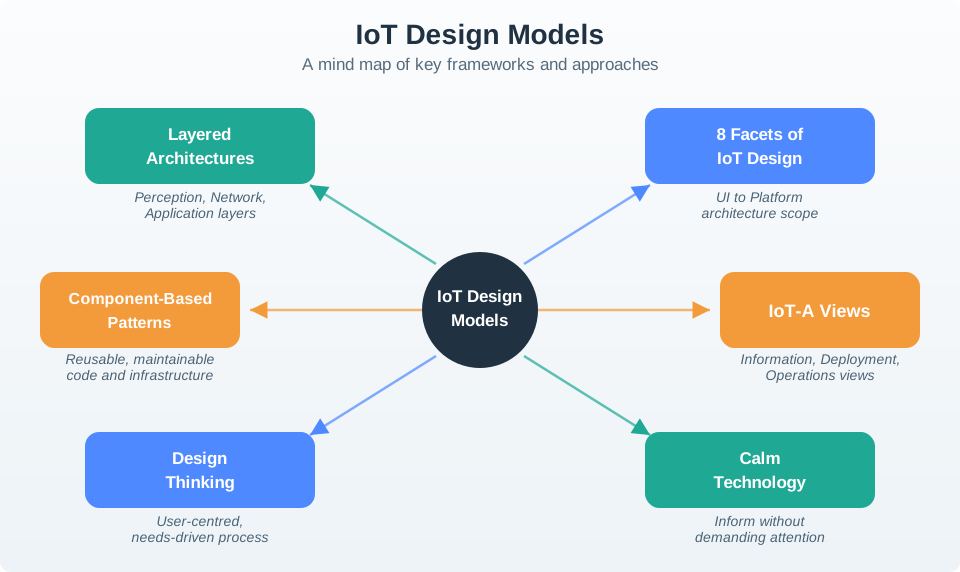
Before diving into individual frameworks, it helps to see how they relate at a glance:
Figure 19.7: Mind map of IoT design models with central node labeled IoT Design Models branching into five major concepts.
Use this mental map as you read:
Start with layered architectures to understand the basic stack.
Consider the 8 facets of IoT design to ensure you address visibility from user interface down to platform architecture.
Apply calm technology principles to create IoT systems that inform without demanding attention–essential for user acceptance.
Use IoT-A views when you need to reason about information, deployment, and operations across a whole system.
Apply design thinking to keep the model grounded in real user needs.
Implement the design using component-based patterns that make code and infrastructure maintainable.
19.8 Worked Example: Choosing Architecture for a Smart Campus
Scenario: A university wants to deploy an IoT system across 12 buildings to monitor classroom occupancy, HVAC efficiency, and energy usage. The system will serve 3 user groups: facilities managers, energy auditors, and campus security.
Step 1: Requirements Analysis
Requirement
Details
Devices
~2,000 sensors (CO2, temperature, occupancy, power meters)
Users
3 distinct groups with different dashboards
Integration
Must feed data to existing building management system (BMS)
Scale
12 buildings now, 8 more planned over 3 years
Compliance
Energy reporting to state regulators quarterly
Step 2: Architecture Evaluation
Criterion
Three-Layer
Five-Layer
2,000 devices
Manageable but tight
Middleware handles fleet management
3 user groups
Single application layer
Application + Business separation
BMS integration
Custom code in application
Middleware provides API abstraction
Scaling to 20 buildings
Major refactoring needed
Add nodes to middleware
Compliance reporting
Mixed with app logic
Business layer handles separately
Step 3: Decision
Five-layer architecture is appropriate here because: - Middleware layer: Manages 2,000 device connections, firmware updates, and health monitoring. Also provides API abstraction for BMS integration. - Business layer: Handles compliance reporting, energy analytics, and cross-building benchmarking separately from the user-facing dashboards. - Application layer: Three separate dashboard views (facilities, energy, security) share the same middleware and business layers.
Putting Numbers to It: Middleware Layer Sizing for 2,000 Devices
The worked example mentions 2,000 sensors across 12 buildings. How do we size the middleware layer to handle this load?
Message rate calculation:
2,000 sensors reporting every 5 minutes (300 seconds)
Horizontal scaling checkpoint: At 10,000 devices (\(5\times\) growth), message rate hits \(6.67 \times 5 = 33.35\) messages/s average, peak ~100 messages/s. Single middleware server can handle ~200 messages/s before needing to add second broker node.
Key insight: The middleware layer decouples perception from application — even when adding 8 more buildings (3,333 devices total), only the middleware tier scales, not the application dashboards.
Small deployment: 500 sensors, 600s interval → lightweight single server
Medium deployment: 2,000 sensors, 300s interval → standard middleware tier
Large deployment: 10,000 sensors, 300s interval → requires horizontal scaling
In 60 Seconds
This chapter covers iot reference architectures, explaining the core concepts, practical design decisions, and common pitfalls that IoT practitioners need to build effective, reliable connected systems.
Step 4: Layer Assignment
Business Layer:     Energy compliance reports, cost optimization models
Application Layer:  Facilities dashboard, Energy dashboard, Security dashboard
Middleware Layer:    Device management, BMS connector, MQTT broker, data pipeline
Network Layer:      LoRaWAN gateways per building, campus backbone
Perception Layer:   CO2/temp/occupancy sensors, smart power meters
Key lesson: The five-layer architecture earned its complexity here because each layer has clear, substantial responsibilities. If the project had only 50 sensors in one building with no BMS integration, the three-layer model would be the right choice.
19.9 Decision Table: When to Add Architecture Layers
Choosing between three-layer and five-layer architectures is one of the most consequential early design decisions. This decision table provides concrete criteria based on real project characteristics.
Project Characteristic
Three-Layer Sufficient
Five-Layer Justified
Device count
<100 devices
>500 devices requiring fleet management
Team size
1-5 developers (single team)
3+ teams with separate firmware, cloud, and app responsibilities
Integration needs
Cloud dashboard only
ERP, CRM, BMS, or other enterprise system connectors
User groups
1-2 user types with similar views
3+ user groups with distinct workflows and permissions
Multiple device types with different protocols and capabilities
Growth trajectory
Fixed deployment (one site)
Multi-site expansion planned within 2 years
Common Architecture Migration Path
Many successful IoT products follow a predictable evolution:
Prototype (3 layers): Sensors + Raspberry Pi gateway + cloud dashboard. 2-4 weeks to MVP.
Pilot (3 layers, stretched): Same architecture handling 50-100 devices. Gateway code grows complex. Device management done manually via SSH.
Production (5 layers): Device management middleware extracted. Business logic separated from dashboard. API layer enables third-party integration. 3-6 month refactoring effort.
The migration from 3 to 5 layers typically costs 2-4x more than starting with 5 layers if the team knows early that they will need the additional separation. However, starting with 5 layers when only 3 are needed adds 40-60% unnecessary complexity to every development sprint.
Rule of thumb: If you cannot name a specific, concrete responsibility for each layer that justifies its existence, remove it. An empty middleware layer is worse than no middleware layer.
Interactive Quiz: Match Concepts
Interactive Quiz: Sequence the Steps
Common Pitfalls
1. Over-Engineering the Initial Prototype
Adding too many features before validating core user needs wastes weeks of effort on a direction that user testing reveals is wrong. IoT projects frequently discover that users want simpler interactions than engineers assumed. Define and test a minimum viable version first, then add complexity only in response to validated user requirements.
2. Neglecting Security During Development
Treating security as a phase-2 concern results in architectures (hardcoded credentials, unencrypted channels, no firmware signing) that are expensive to remediate after deployment. Include security requirements in the initial design review, even for prototypes, because prototype patterns become production patterns.
3. Ignoring Failure Modes and Recovery Paths
Designing only for the happy path leaves a system that cannot recover gracefully from sensor failures, connectivity outages, or cloud unavailability. Explicitly design and test the behaviour for each failure mode and ensure devices fall back to a safe, locally functional state during outages.
Label the Diagram
💻 Code Challenge
19.10 Summary
This chapter introduced the foundational reference architectures for IoT system design:
Key Takeaways:
Three-Layer Architecture: The simplest approach with perception, network, and application layers–ideal for prototypes, startups, and single-purpose systems
Five-Layer Architecture: Adds middleware and business layers for enterprise IoT platforms requiring complex device management and business intelligence
IoT-A Reference Model: Provides comprehensive views (functional, information, deployment, operational) with cross-cutting concerns for security, privacy, and trust
Architecture Selection: Match architecture complexity to system complexity–more layers aren’t better, they’re appropriate when genuine separation of concerns demands them
Design Model Overview: Understanding how layered architectures, calm technology, design thinking, and component patterns relate helps you choose the right approach for your project
The next chapter explores the 8 Facets of IoT Design and Calm Technology, examining how to design IoT systems that address all dimensions from visible UI to invisible platform architecture, and how to create systems that inform without demanding attention.