11 Device Evolution: Boundaries and Connected Products
More
Depth: Practitioner
Progress saves as you read. Mark sections complete as you go; your progress appears in the sidebar.
- Podcast audio coming soon
- Character narration audio coming soon
11.1 Start With Who Decides
A thermostat with a radio is connected, but the radio alone does not tell you who decides its actions. This chapter separates three stages of product development: isolated embedded operation, connected service, and adaptive IoT. The distinction matters when a product promises convenience, efficiency, or an ongoing service. You will classify devices from evidence of sensing, an internet path, and decision ownership, then judge how far that evidence supports the product claim.
Keep Washy the Washing Machine in mind. In the 1980s, you pressed a button, chose a cycle, and walked away. Washy followed the same instructions each time. In the connected version of the story, Washy sends a completion alert to your phone and accepts START from the couch. You still choose the settings. In the adaptive version, load measurements, usage history, water clarity, and electricity prices can influence the cycle itself.
The problem is that all three versions may be called “smart.” A remote button and a system that adjusts a cycle carry different claims and responsibilities. We need two tests: first establish whether a physical thing has computation and an internet path; then examine how its decisions change. Learning and autonomy describe maturity beyond that baseline.
This is part 2 of 4, following Device Evolution: Claims and Evidence. No programming background is required: washing machines, thermostats, light bulbs, and alarm clocks make the differences concrete. We will first follow Washy’s changing capabilities, then compare the responsibility boundaries and test a named thermostat’s value claim.
KEY CONCEPTS
- Connected product
Its service path extends beyond the physical device.
- Boundary choice
Timing, power, and ownership determine where computation belongs.
- Lifecycle
Updates and support continue beyond the first installation.
11.2 Learning Objectives
- Separate embedded, connected, and IoT products by decision ownership.
- Classify a device from its sensing, network, and autonomy evidence.
11.3 Follow Washy From Local Control to Adaptation
An embedded system is computation built into a product for a focused task. Washy’s traditional programmable timer is the example: you select the cycle manually and it executes a pre-programmed sequence. A kitchen timer similarly counts down and beeps. In this chapter’s embedded stage, the product works locally, without an internet service or a way to learn your preferences.
Bella the button sensor supplies Washy’s starting signal. Lila the light sensor compares this version to a music box that plays one song well but cannot learn another. The analogy helps explain fixed functionality: pressing the same controls produces the same programmed behavior. It does not mean the device cannot contain several selectable cycles.
A connected product extends its service beyond the physical device. In Washy’s 2010s version, Sammy the sound sensor hears the phone’s completion “ding,” and you can start the machine remotely. The connection carries status and commands, while you still decide whether the load contains towels or t-shirts and choose its settings. Max the motion sensor compares it to a music box with a remote: you can start and stop it, but you choose the song.
Once the physical machine has computation and an internet path, it meets this chapter’s baseline IoT test. A Wi-Fi thermostat controlled through an app can therefore be a basic IoT product while following fixed rules. Adaptive IoT adds decisions shaped by sensor history, context, or learned patterns, reducing manual input.
Washy 3.0 illustrates that further step. Max’s load measurements represent evidence about fabric weight and type; Lila’s water-clarity reading represents evidence about dirt. Usage history can reveal Monday sports-clothes washes. Sammy listens for electricity-price signals so the machine can choose a cheaper washing time. Together these inputs can change water use, timing, or the selected cycle. Bella’s final music-box analogy is a player that learns favorites and chooses a playlist to suit the situation.
Treat these as capabilities of the illustrative washer, rather than promises about every appliance. The word LEARNS signals a more adaptive product; it is not the definition of IoT. An alarm clock that beeps at 7 AM illustrates the embedded stage. Setting it from a phone illustrates connected control. A networked alarm clock using sleep-cycle data to choose a wake time illustrates connected data improving the decision.
Notice what stays with the user as Washy changes. In the local version, the user starts the cycle and selects every setting. In the connected version, the starting button moves to a phone, but selection remains manual. In the adaptive version, the machine can use measurements and history to choose differently. Looking at the decision makes the added capability visible without relying on the appearance of the app or the product badge.
This also explains why “does one job” is useful shorthand rather than a count of buttons. The traditional washer may offer several cycles, just as the music box may offer several songs. It remains in the illustrated embedded stage because the user selects among programmed choices and there is no networked service. More selectable modes alone do not demonstrate learning, and a notification alone does not demonstrate autonomous optimization.
11.4 Compare the Boundaries and Responsibilities
The three stages organize the evolution story; their dates are broad historical anchors, not rules for classifying a product today. Figure 1 compares connectivity, decision ownership, and business value across the 1970s–1990s embedded era, the 1990s–2000s connected era, and the 2010s onward adaptive era. Washy’s connected example belongs to the 2010s even though the broader connected pattern began earlier.

Read one era down, then compare the same row across eras. Local operation can support a one-time product sale. Remote control can support a convenience premium. Learning, integration, and improved outcomes may support subscriptions or other recurring value. Moving the connectivity row does not automatically move the decision or value rows. A service that merely adds remote buttons can struggle to justify adaptive-service pricing and sustain subscription revenue.
The practical differences also involve resources and support. The isolated washer’s small memory and processing budget are optimized for cost. Its deterministic behavior follows a fixed rule: the same input under the same conditions produces the same output. This gives predictable operation and reliability for a focused task. Without network exposure, it avoids that route for security vulnerabilities. The illustrated standalone version cannot be remotely monitored, updated, or optimized from usage history; those limits describe this example rather than every embedded system.
Connected Washy adds internet-enabled data exchange, smartphone or web control, centralized cloud storage, and status notifications. Most meaningful choices still require a person: this is a human-in-the-loop product. Connectivity improves convenience and engagement, supports remote monitoring and firmware updates, and permits basic scheduled automation. Its efficiency gains remain limited when people must still perform the optimization.
The comparison below collects the chapter’s maturity patterns. A mature IoT product need not have every feature in its right-hand column. Cloud analytics, learning, and ecosystem integration describe possible capabilities, not compulsory ingredients.
| Characteristic | Embedded pattern (1970s–1990s) | Connected pattern (1990s–2000s) | Adaptive IoT pattern (2010s+) |
|---|---|---|---|
| Connectivity | None; isolated operation | Point-to-point or proprietary links; an internet path for connected IoT | Internet/cloud through standard protocols such as HTTP, MQTT, CoAP |
| Intelligence | Fixed program in ROM/Flash | Remote updates possible; behavior may remain fixed | Edge AI, machine learning, data-driven adaptation |
| Data flow | Local storage, if any | Periodic uploads to a central server | Real-time bidirectional streaming with cloud analytics |
| Interoperability | Proprietary, vendor-locked | Vendor-specific APIs and protocols | Standards-based ecosystems, including IEEE, IETF, OCF work |
| Decision-making | Pre-programmed local logic | Human operators issue remote commands | Sensor fusion, ML models, and context inform autonomous decisions |
| Examples | Washing-machine timer, digital thermostat, microwave controller | App-controlled Wi-Fi thermostat, connected security camera | Nest Learning Thermostat, predictive-maintenance smart factory |
IoT Analytics estimated 21.1 billion active IoT connections at end-2025 and forecast 39 billion by 2030. Those totals do not establish a universal device taxonomy or show how many products learn. Classify the product’s actual behavior rather than inferring it from a market category.
11.5 Device Evolution Boundaries
Connectivity also adds duties around firmware, users, device identity, monitoring, security, and lifecycle support. It does not force every local decision into the cloud. Place computation where timing, power, and ownership permit, while retaining useful local control. For a layered record of those choices, Device Evolution Operating Boundary Contracts covers embedded, connected, and IoT responsibility boundaries, product claims, device identity, over-the-air (OTA) updates, state semantics, observability, and pricing credibility.
For Washy’s owner, these differences appear in ordinary use. A completion notification saves a trip to check the machine, and remote START changes where the user can issue a command. Neither feature by itself shows that the machine knows which load needs warm water or that it can reduce water use. The adaptive example makes a stronger claim because the sensor inputs and learned routine can influence those choices. That stronger claim is the one whose continuing value must support a recurring charge.
11.6 Classify the Evidence Before the Label
-
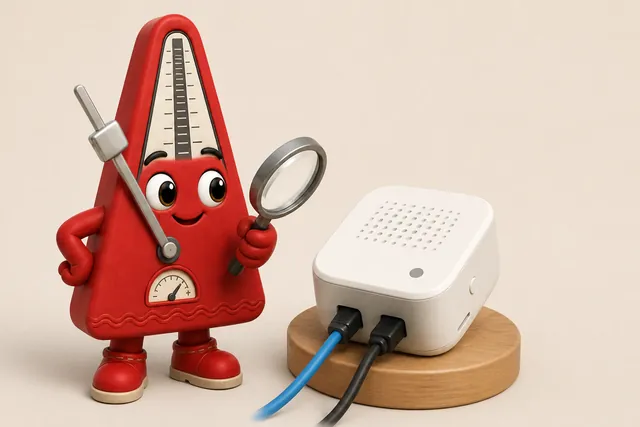
First, check what the device can control.
-
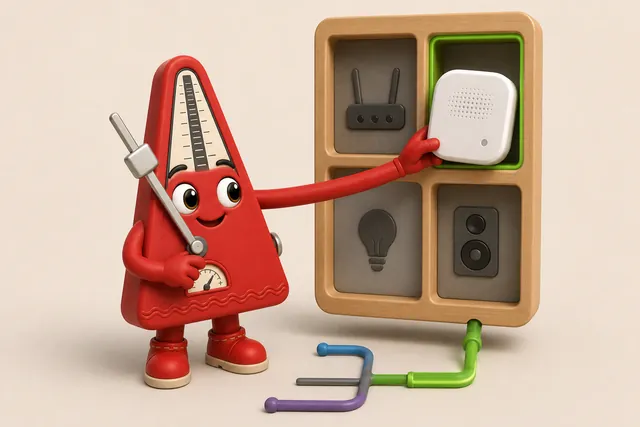
Then trace its connection, learning, and wider links.
-
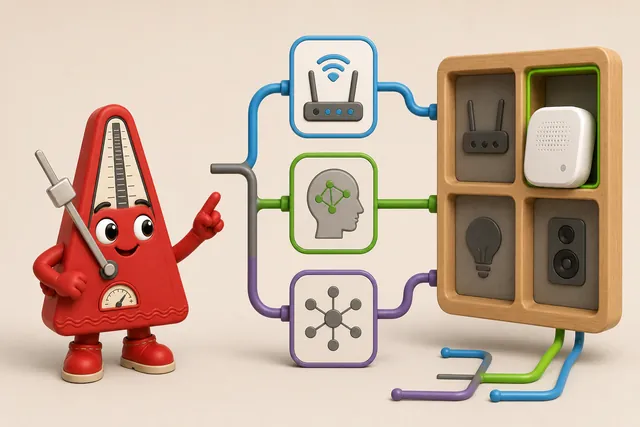
Use those facts to place the device.
With those boundaries established, use Figure 2 to ask four questions in order: does the product contain computation, have an internet path, learn or act autonomously, and coordinate with other systems? The first pair establishes the baseline. The later questions locate the claimed maturity. “Not stated” means the example supplies no evidence; it does not prove that a real product lacks the capability.

For traditional Washy, the programmable timer establishes computation, but the absent network path keeps this example in the isolated embedded stage. For connected Washy, phone notifications and remote START establish the networked service. They do not show that it selects wash settings independently. For Washy 3.0, the load, water, schedule, and price inputs explain how evidence could change the decision itself.
Apply the same reasoning to a home security camera that streams video and sends fixed motion alerts. It has internet reach and is a baseline IoT device. If it cannot distinguish a pet, person, or car and does not adapt its decisions, it remains in the basic connected maturity tier. Neither its price nor its choice of Wi-Fi or Bluetooth supplies the missing behavioral evidence. A direct cloud link is not compulsory when another path reaches the internet.
A classification record should therefore keep the observation next to the conclusion. “A phone starts the selected cycle” supports remote control. “The machine changes the cycle using load and water measurements” supports a more adaptive decision. If the example gives no evidence of coordination, leave that claim open instead of assuming it from a polished interface. The distinction between an absent feature and absent evidence matters when comparing named products from short descriptions.
“Connect, learn, coordinate” is useful shorthand for increasing maturity, provided you keep the baseline test separate. Learning, autonomous decisions, sensor fusion, machine learning, and ecosystem integration can strengthen an outcome claim. A deterministic networked sensor or actuator can still qualify as IoT while applying the same rule for years.
11.7 Test the Nest Claim Against Its Evidence
Nest Learning Thermostat supplies a named example of movement from basic connected service toward adaptive IoT. Remote app control establishes connected operation. Learning recurring setpoint patterns from manual adjustments can support an adaptive schedule. A thermostat that notices you lower the heat at 10 PM and then does so automatically illustrates the behavioral change: the history influences a later action.
The chapter’s proposed sequence starts with Weeks 1–2 of sensing, recording manual temperature adjustments with time, day, current temperature, and target temperature. It also cites 2–3 weeks of baseline data before autonomous changes. Treat those timings as claims requiring a Nest technical study, along with the proposed 92% prediction accuracy. A plausible learning sequence alone does not establish either measurement.
The proposed Week 4+ sequence adds pre-heating 30 minutes before waking, phone GPS location for “away” mode, and weather-forecast integration. These describe the kinds of context an adaptive thermostat might use; the applicable model and evaluation must establish the exact behavior. The claim that an average user never touches the thermostat after Week 6, with 138 kWh saved per year attributed to EPA data, also needs its underlying evidence before reuse as a measured outcome. Likewise, identify the model and evaluation before asserting weekly retraining or 12–15% efficiency improvement per season. A changing schedule is observable behavior; a precise savings percentage requires a defined comparison.
The economic comparison needs the same care. The source’s ecobee3 lite example uses a $140 price to illustrate remote control and scheduling. That example does not establish the product’s full capabilities or show that every benefit is convenience alone. Google reports typical Nest energy-bill savings of about $131–145 per year; purchase prices and savings vary by model and home. With an assumed $110 price premium, dividing the premium by those annual savings gives about 9–10 months of simple payback, before installation or rebates. Keep the premium and savings assumptions attached to that result.
This value claim depends on both the product’s decisions and the cost of operating its service. Two enabling-technology examples set up the next chapter: ARM Cortex-M (2004), described here as 32-bit computing with sub-1 µA sleep current, and BLE (2006/2013), described through a 30-byte-packet-per-second workload lasting a year on a coin cell. These figures need a specific implementation and operating budget; they are not guarantees for every chip or BLE device. They explain why computing and radio capabilities matter alongside the headline claim of intelligence.
Summary
Washy’s timer, phone-controlled cycle, and adaptive operation separate three kinds of evidence. Local programmed logic establishes embedded computation. An internet-enabled service adds remote status and control. History and context can then improve decisions with less manual input. The baseline IoT test remains a physical thing, computation, and an internet path.
Decision ownership and lifecycle responsibility make that classification useful. Connected products add firmware, identity, security, monitoring, and support duties. Adaptive capabilities may support stronger recurring-value claims, but evidence must connect the behavior to the promised outcome. Nest’s proposed learning sequence and payback show why model, timing, savings, and price assumptions belong beside the claim.
Classify the connection first, then the decision. A product can meet the IoT baseline without learning; an adaptive-service premium needs evidence that the service improves outcomes.
Carry Washy’s evidence into Device Evolution: IoT Products and Enablers, beginning with IoT Products (2010s–Present).