21 IoT Requirements: Definition and Value Flow
21.1 Start With the Decision
An IoT product joins a physical thing, local code, and an internet path. Test all three before using the label.
21.2 Route Overview
This is part 2 of 2. Review IoT Requirements: Classification and Connectivity for the preceding evidence.
21.3 Learning Objectives
- Test what is internet of things (iot) with a concrete scenario and pass criteria.
- Validate iot connectivity tco with a concrete scenario and pass criteria.
21.4 Chapter Roadmap
- What is Internet of Things (IoT)
- Key Concepts
- Definition
- How IoT Works: The Complete Flow
- Examples of IoT Devices
- Knowledge Check: IoT Fundamentals
- Complete IoT Architecture Layers
- Minimum Requirements of IoT
- Device Classification Decision Tree
- IoT Classification Check
- Warehouse Tech Selection Check
- IoT Connectivity TCO
- Continue to Part 2
21.5 What is Internet of Things (IoT)
Key Concepts
- Three Ingredients Test: Simple filter for deciding whether a product qualifies as IoT: physical thing, embedded computation, and internet reach.
- Gateway Distinction: Local wireless is not the same as internet connectivity; many products remain merely connected unless a gateway gives them remote reach.
- Five-Layer Architecture: Teaching model that separates physical devices, edge logic, connectivity, cloud functions, and applications.
- Characteristic Prioritization: The eleven qualities of strong IoT systems are design goals that must be weighted differently by domain.
- Requirements-Driven Connectivity: Range, power budget, update rate, and environment should drive protocol choice rather than familiarity or hype.
- Trade-off Mapping: Strong IoT design means making the right compromises explicitly instead of optimizing every quality equally.
21.6 Definition
The Internet of Things (IoT) is the concept of connecting everyday physical objects to the internet. These objects can range from household appliances to industrial machinery, enabling them to collect, exchange, and act upon data. IoT bridges the physical and digital worlds, making our environments smarter and more responsive.
Simple Definition: At its core, the Internet of Things refers to the interconnection of physical devices with the internet. This connectivity allows these devices to communicate with each other and with users, often improving functionality and efficiency.
Diverse Interpretations: Various researchers and institutions define IoT in slightly different ways. While these definitions may vary, the central idea remains consistent - IoT is about connectivity and data sharing. Importantly, there is no universally “right” or “wrong” definition.
Figure 21.1 shows why definitions differ: each one starts from a different corner of the same picture.
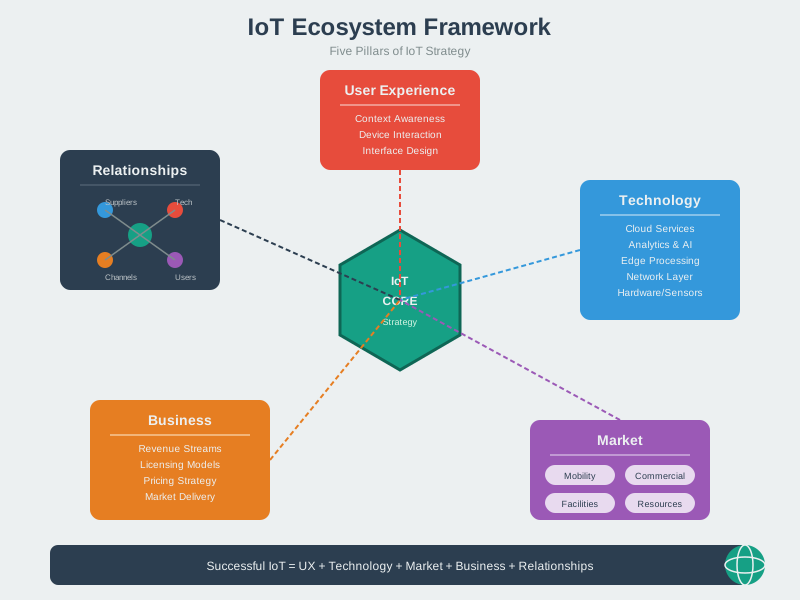
The four outer blocks of Figure 21.1 are the places a definition can begin. Read the technology block and IoT looks like connectivity, cloud services and device enablement. Read the business block and it looks like revenue models, licensing and delivery channels. The market block frames it by sector, and the user-experience block by context awareness, device type and how a person interacts. Arrows from all four meet at the core, where relationships tie them into one complete solution. That meeting point is the chapter’s answer to the definition question. None of the four corners is wrong on its own. A definition is only incomplete when it stops at one of them.
21.7 How IoT Works: The Complete Flow
Beginner-Level View: Four Simple Steps
Figure 21.2 follows one reading through the whole loop, from a measurement to something that changes.
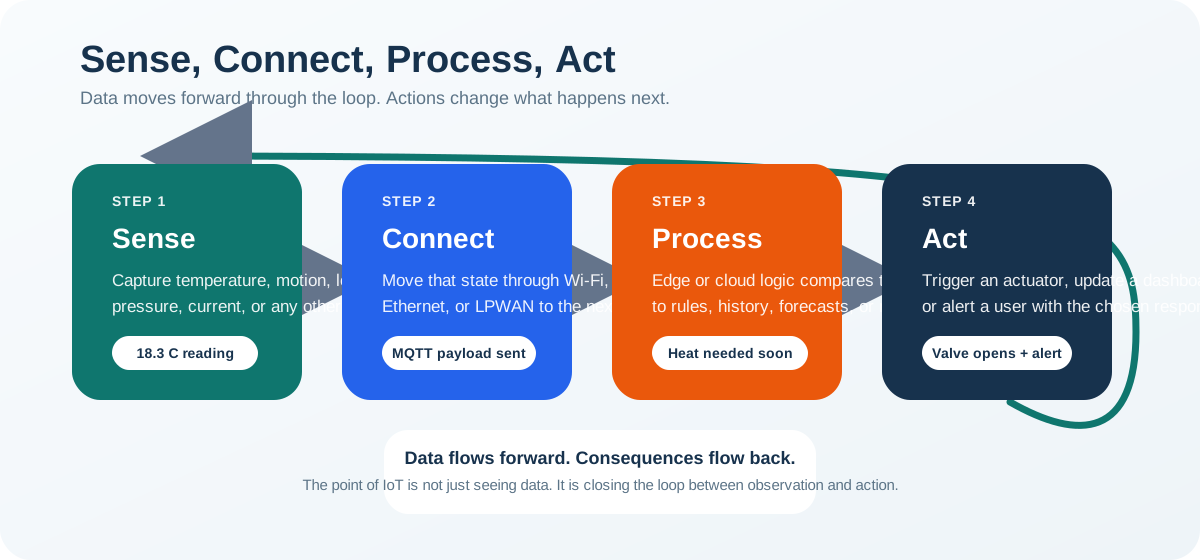
Follow the worked example along the foot of Figure 21.2. A sensor produces a reading of 18.3 degrees. The connect step puts that state on the network. The process step compares it against a rule and concludes that heat will be needed soon. The act step opens a valve and alerts a person. Two details carry the definition. The third step is where judgement happens, so a device that only reports has stopped short of the loop. The return arrow at the bottom says the action changes what the sensor measures next, which is why this is drawn as a cycle rather than a line.
Real Example - Smart Thermostat:
- Sense: Temperature sensor reads 65F (you set target to 72F)
- Connect: Thermostat sends data to cloud via Wi-Fi
- Process: Cloud compares 65F vs 72F, decides “too cold”
- Act: Cloud sends command to turn on heater + alerts your phone
This cycle repeats continuously, keeping your home comfortable automatically!
21.8 Examples of IoT Devices
Inspect Figure 21.3 to compare the physical evidence, computation, and digital workflow added to familiar objects.
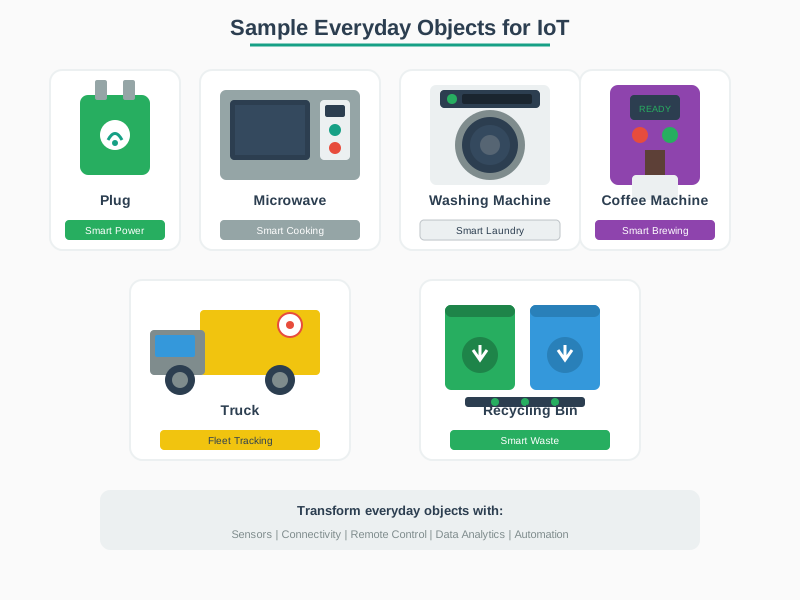
Read Figure 21.3 across domains and look for the same pattern. A smart plug adds remote switching, while a washing machine combines energy monitoring with a cycle-complete notice. A coffee machine uses schedule and control; a truck senses location, fuel efficiency, and maintenance state; a recycling bin reports fill level so routes can change. The connected capability differs because the original jobs differ. Each object needs a physical signal, local or remote computation, and a workflow that can use the result; connection without that outcome is only added cost and risk.
Inspect Figure 21.4 to see how sensing, computation, and connection change the outcome of a familiar object.
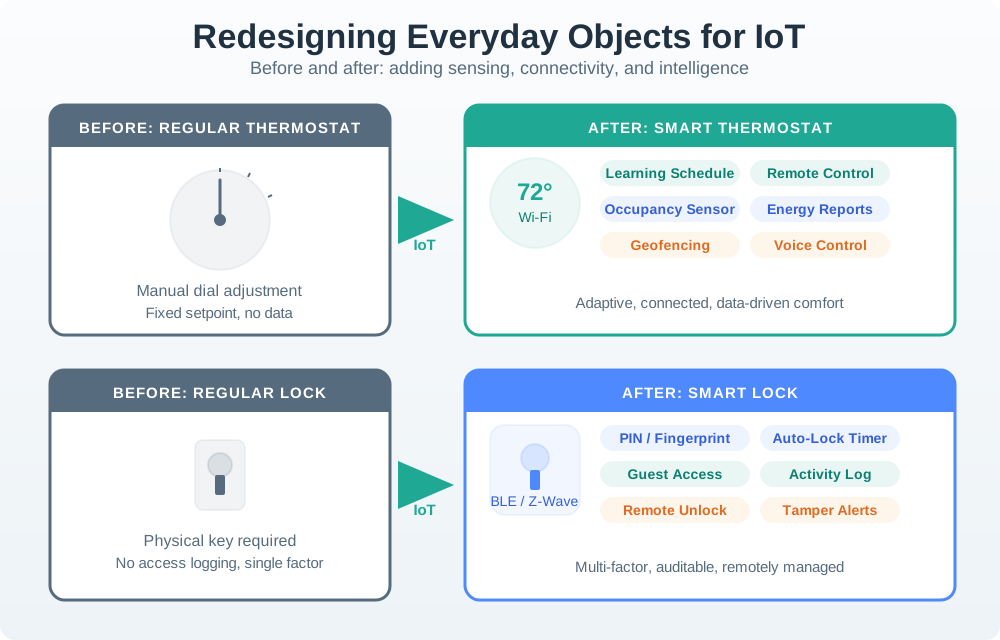
Read Figure 21.4 from the ordinary thermostat into its smart version. A 65 °F reading and 72 °F target leave a 72 − 65 = 7 °F gap; computation interprets that state, connection can supply wider context, and the system acts by heating and notifying the user. The lock follows the same pattern but seeks auditable remote access rather than comfort. In both cases, the Internet link is only the middle step. The redesign earns its place when sensed evidence and a controlled action improve the object’s original job.
Together, these examples show the same pattern repeating across domains: start with a physical object, add sensing and computation, then give it a reliable path into a larger digital workflow.
- Plug: A smart plug can be controlled remotely to turn devices on and off.
- Microwave: A connected microwave can be programmed via a smartphone.
- Washing machine: A smart washing machine monitors energy use and sends notifications when cycles are complete.
- Coffee machine: A coffee machine can be scheduled to brew automatically at specific times.
- Truck: A connected truck uses sensors to track location, fuel efficiency, and maintenance needs.
- Recycling bin: A smart bin monitors waste levels so collection routes can be optimized.
IoT has become a foundational technology in various fields, transforming how we live and work by making systems more intelligent and interconnected.
21.9 Knowledge Check: IoT Fundamentals
Question 1: A traditional coffee maker with a timer that you program by pressing buttons on the device itself is:
a) An IoT device because it has computation (timer chip) b) A connected device because it can be scheduled c) An embedded device because it lacks internet connectivity d) A smart device because it makes coffee automatically
Reveal Answer Answer: c) An embedded device because it lacks internet connectivity
Explanation: The coffee maker has a physical thing (the machine) and computation (timer chip), but it lacks internet connectivity. Without all three ingredients, it cannot be classified as IoT. It’s an embedded device - a device with built-in computing that operates independently without network connection.
Key Distinction:
- Embedded: Physical thing with local computation, but no meaningful network path
- Connected: Physical thing with computation and local-only communication
- IoT: Physical thing with computation and internet reach, directly or through a gateway
Question 2: In the IoT data flow cycle (Sense -> Connect -> Process -> Act), which step is responsible for making intelligent decisions?
a) Sense - the sensors analyze the data b) Connect - the network routes decisions c) Process - the cloud/edge analyzes data and determines actions d) Act - the actuators decide what to do
Reveal Answer Answer: c) Process - the cloud/edge analyzes data and determines actions
Explanation: In the four-step IoT cycle:
- Sense: Collects raw data (no decision-making)
- Connect: Transmits data (no decision-making)
- Process: Analyzes data, applies business logic, makes decisions
- Act: Executes the decisions made during processing
The intelligence lives in the Process layer, whether that’s in the cloud, at the edge, or a combination of both.
Question 3: A smart recycling bin with fill-level sensors that sends data to optimize collection routes is an example of IoT because:
a) It uses sensors b) It has all three ingredients: thing, computation, and internet connectivity c) It saves money on waste collection d) It’s a physical object
Reveal Answer Answer: b) It has all three ingredients: thing, computation, and internet connectivity
Explanation: The smart recycling bin qualifies as IoT because:
- Thing: The physical bin you can touch
- Computation: Microcontroller processing sensor data
- Internet: Connectivity to transmit fill levels to the cloud
While it does use sensors (a) and saves money (c), those alone don’t define IoT. Many non-IoT devices use sensors or provide benefits. The defining characteristic is having ALL THREE ingredients working together.
21.10 Complete IoT Architecture Layers
Figure 21.5 answers where each part of an IoT system does its work, and which way information travels between those parts.
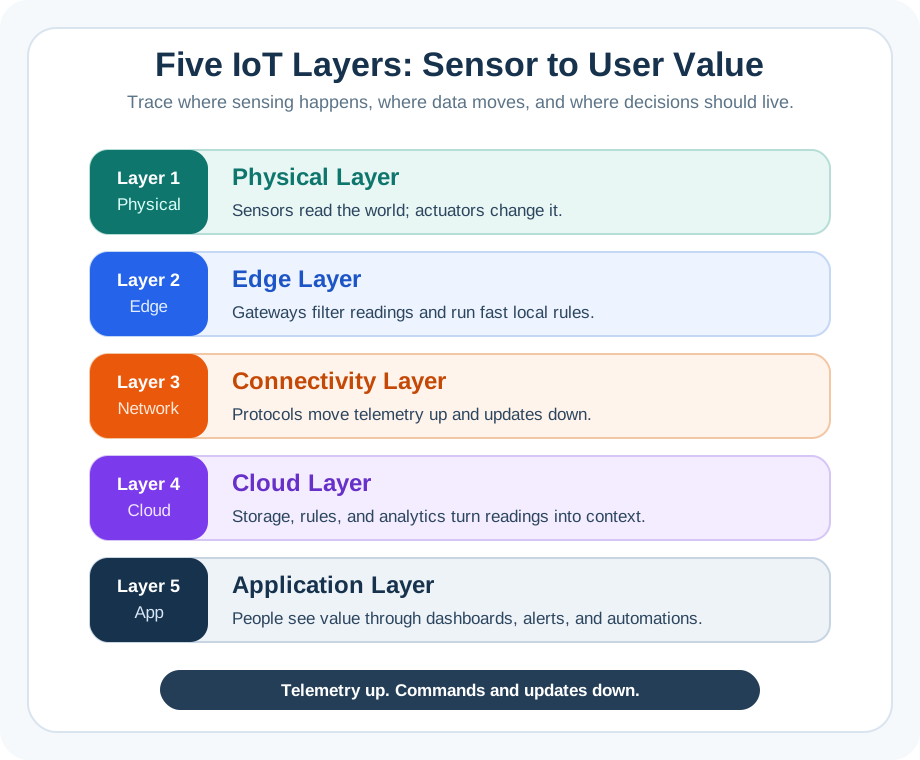
Read Figure 21.5 from the bottom, because that is the direction a reading travels. The physical layer is the only one touching the world: sensors measure it, actuators change it. The edge sits directly above and does the thinning, filtering readings and running the rules that must not wait for a network. Connectivity carries what survives, and the cloud adds storage, history, and analysis that a small device cannot hold. The top layer is where a person finally sees something useful. The line at the foot matters as much as the stack: telemetry moves up and commands move down, so a break anywhere stops both directions.
Complete IoT Ecosystem - Data Flow:
- Physical layer: Sensors, actuators, and smart objects sense the environment and act on commands. Example: a thermostat sensor reads 65F.
- Edge layer: Gateways and local processors filter data or translate protocols. Example: a gateway converts Zigbee traffic to Wi-Fi.
- Connectivity layer: Wi-Fi, Ethernet, cellular, LPWAN, Bluetooth, and Zigbee move data between systems. Example: Wi-Fi sends a reading to the cloud.
- Cloud layer: Storage, analytics, ML, business logic, and APIs turn device data into decisions. Example: an ML model learns a heating schedule.
- Application layer: Mobile apps, dashboards, automation rules, alerts, and reports deliver user value. Example: an app shows energy savings.
Data Flow: Physical -> Edge -> Network -> Cloud -> Application Command Flow: Application -> Cloud -> Network -> Edge -> Physical (actuators respond)
Figure 21.6 sorts the radios by how far they reach, then makes the point that reach and internet access are not the same thing.
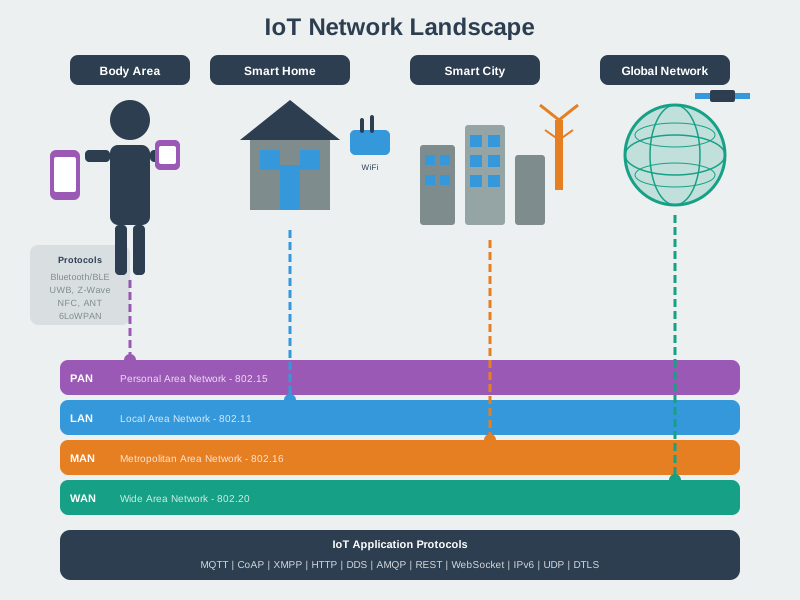
The three bands in Figure 21.6 widen from a personal-area group, through Wi-Fi on a local network, to cellular links covering a district. That ordering is by range, and it is the first filter a designer applies. The strip below is the part worth pausing on. A Zigbee sensor is wireless but cannot reach the internet on its own, so the figure sends its traffic through a gateway that converts it to Wi-Fi and onward to the cloud. This is the same gateway named in the layer list above. The closing line adds the rest of the decision: power budget, reporting rate, and the physical setting all constrain the choice too.
21.11 Minimum Requirements of IoT
To qualify as part of the Internet of Things (IoT), a physical object must meet three minimum requirements: it should start as an everyday object, be enhanced with computational intelligence, and be equipped with internet communication capability. These components ensure the object can perform smart functions and communicate effectively within an IoT ecosystem.
Everyday Thing: The starting point for any IoT device is a physical object commonly found in daily life, such as furniture, appliances, or vehicles. These objects are made “smart” by adding computational and connectivity features.
Computation: Objects must be enhanced with computational capabilities to process data, execute tasks, and enable intelligent behavior. This often involves embedding microprocessors, sensors, and actuators into the object.
Internet Connectivity: Connectivity is the defining feature of IoT devices. It enables them to communicate with other devices, users, or cloud systems via direct or indirect internet communication channels.
21.12 Device Classification Decision Tree
Use this decision tree to classify any device you encounter:
Figure 21.7 turns the three-ingredient definition into four questions you can ask about any product in front of you.
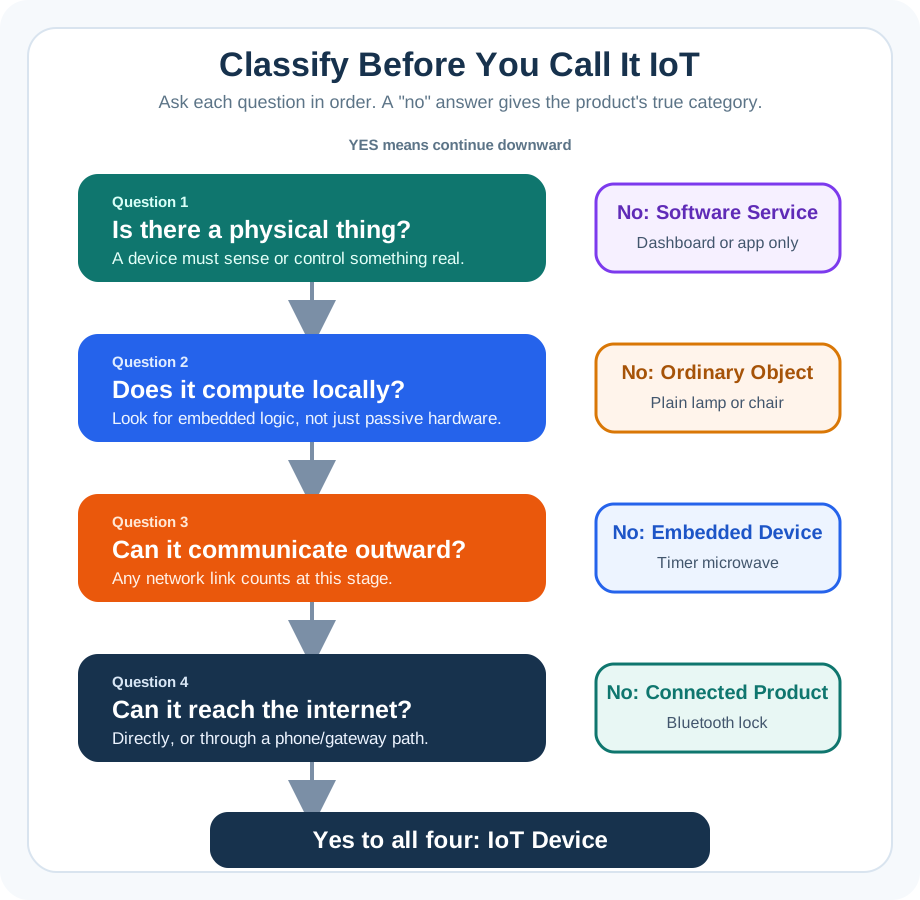
Work down Figure 21.7 one question at a time and note what happens at each no. Without a physical thing you have software. With a thing but no local computation you have an ordinary object, a plain lamp. Add computation but no outward link and you have an embedded device, the microwave with a timer. The fourth question is the one that catches the smart lock: it talks, but only to a phone beside it, so the figure calls it connected rather than IoT. Only a product that answers yes four times lands in the IoT box. Each no is a real category with a real example.
Figure 21.8 gives the shortest form of the test: three ingredients, and what you are left with when one is missing.
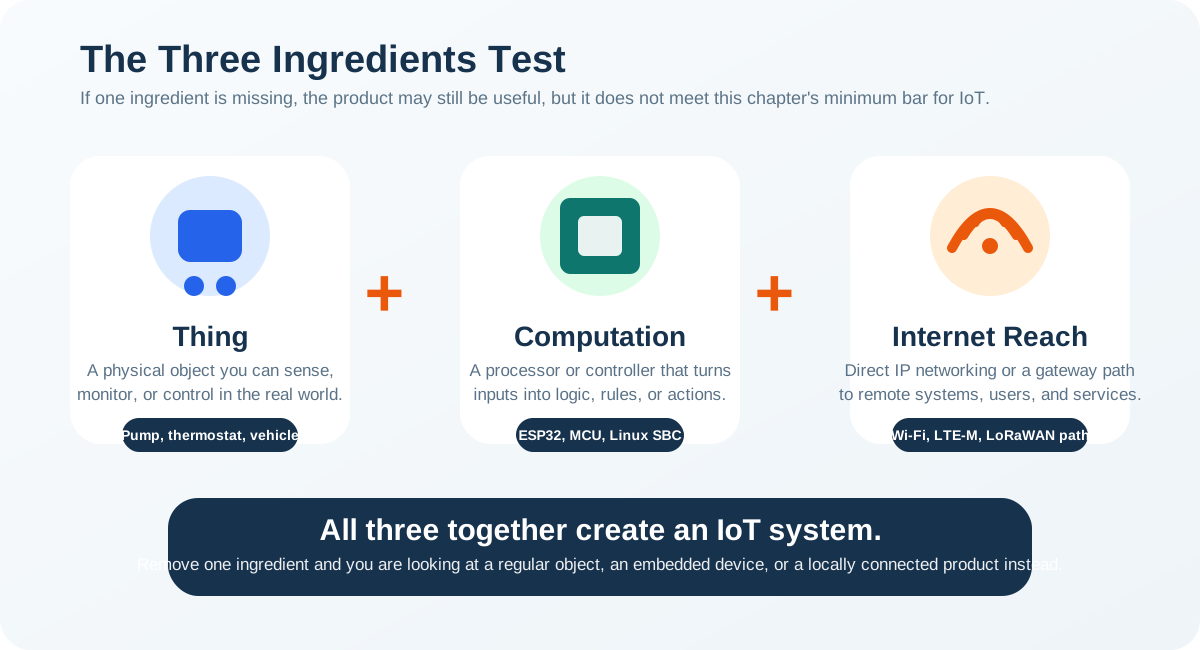
The three cards in Figure 21.8 are joined by plus signs, so the test is a sum and not a menu. The first card is a physical thing that can be sensed, monitored or controlled, such as a pump or a thermostat. The second is a controller that turns inputs into rules or actions, with parts like an ESP32 given as examples. The third is a path to remote services, either direct or through a gateway. The band underneath does the useful work. Remove any one ingredient and the figure names what is left: a regular object, an embedded device, or a locally connected product.
IoT devices transform the ordinary into extraordinary by leveraging computational intelligence and connectivity, enabling seamless integration into smart environments.
21.13 IoT Classification Check
Scenario: Your company is launching a smart lock product with annual revenue projections of $50M. The engineering team proposes a design with a physical deadbolt mechanism, a microcontroller for keypad control and motor operation, and Bluetooth connectivity to communicate with smartphones within 30 feet. Marketing wants to call it an “IoT smart lock” and price it at $299 (premium over $150 traditional locks).
Think about:
- Does Bluetooth-only connectivity truly enable “control from anywhere” marketing promises?
- What would competitors with Wi-Fi-enabled locks offer that this version cannot?
Key Insight: Understanding the difference between “connected” and “IoT” is critical for product positioning and customer expectations.
Current Design Status:
- Thing: Physical deadbolt mechanism
- Computation: Microcontroller for control logic
- Internet: Only Bluetooth (local wireless, NOT internet)
Classification: This is a Connected Product, not a full IoT device. Bluetooth provides 10-100 feet range (requires proximity), while Internet enables global access.
Real Example - August Smart Lock Evolution:
- August Smart Lock (2017): Bluetooth local control; remote access needs a Connect bridge ($149 US launch price for the lock).
- August Smart Lock Pro + Connect (2017): Bundled bridge provides Wi-Fi remote access ($279 US launch price).
- August Wi-Fi Smart Lock (released 2020): Built-in Wi-Fi needs no bridge ($199.99 US list price, checked 7 October 2026).
Business Impact:
- Connected: Unlock when standing at door, limited value proposition
- IoT: Unlock remotely for a delivery, monitor access logs, and receive cloud alerts; business value depends on adoption, pricing, and support costs.
21.14 Warehouse Tech Selection Check
Scenario: Your logistics company wants to monitor temperature and humidity in 50 warehouses (200,000+ sq ft each) across the country to protect sensitive pharmaceutical inventory worth $2.5B annually. FDA compliance requires documented temperature control. The IT team presents two competing approaches:
Approach A (Wi-Fi): $50 sensors, $10/month/warehouse, 30-second updates, requires Wi-Fi infrastructure Approach B (LoRaWAN): $80 sensors + $200 gateway, $5/month/warehouse, 10-minute updates, 10-year battery
Think about:
- What happens when temperature drifts out of range in a 200,000 sq ft warehouse with metal racking blocking signals?
- Is the $30 sensor price difference more important than 5-year operational costs and reliability?
Key Insight: IoT technology selection depends on application requirements, not “newest” or “fastest” technology.
21.15 IoT Connectivity TCO
Compare total cost of ownership for different IoT connectivity technologies:
Try adjusting:
- Number of sensors to see scaling effects
- Deployment duration to see how operational costs accumulate
- Sensor costs to reflect your vendor quotes
Critical Requirements Analysis:
Warehouse Environment Challenges:
- Large buildings (200,000+ sq ft) - Wi-Fi coverage gaps common
- Metal racking - blocks Wi-Fi signals, creates dead zones
- Power outlets scarce - sensors need battery-powered
- Temperature changes slowly - no need for 30-second updates
5-Year Total Cost of Ownership:
- Wi-Fi: $10K sensors, $15K installation for Wi-Fi and power, $500/month operations ($30K over five years), for a five-year total of $55,000.
- LoRaWAN: $16K sensors, $3K simple gateway placement, $250/month operations ($15K over five years), for a five-year total of $34,000 and roughly 38% savings.
21.16 Continue to Part 2
Continue with IoT Requirements: TCO and Design Trade-offs.
21.17 Continue Your Route
This final part closes the route from What is Internet of Things (IoT) through Continue to Part 2. Return to IoT Requirements: Classification and Connectivity or continue from the applications module index.