29 Cloud IoT Platforms
More
Depth: Practitioner
Progress saves as you read. Mark sections complete as you go; your progress appears in the sidebar.
29.1 Start With the Story
This section: Start With the Story — A cloud platform can make a prototype look operational because messages arrive, charts update, and rules fire.
A cloud platform can make a prototype look operational because messages arrive, charts update, and rules fire. The missing story is who must trust the cloud path when something goes wrong: a technician, operator, security reviewer, data engineer, or support analyst. Each person needs different evidence about identity, ingestion, routing, state, export, alerts, and recovery.
Use this chapter to test the platform as an ownership boundary. Prove the visible path, force a failure path, and record which responsibilities stay with the cloud service and which still belong to the device, edge, application, or support team.
29.2 Cloud Platforms Prove Boundaries
This section: Cloud Platforms Prove Boundaries — In Figure 29.1, Use the cloud path to test evidence that is hard to see on the bench.
A cloud IoT platform should make a boundary visible: where device identity is trusted, where messages enter, where rules route data, where state becomes stale, where data leaves the managed service, and where operators can see recovery evidence. A prototype that only proves “the device reached the cloud” has not yet answered the useful question.
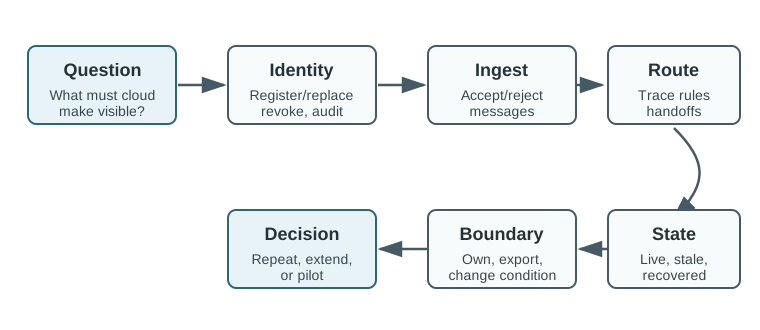
In Figure 29.1, Use the cloud path to test evidence that is hard to see on the bench. A representative device should authenticate with the intended credential form, publish a versioned payload, hit the intended topic or endpoint, route into a reviewable destination, and leave a visible state record. Then the same path should be challenged with an unknown identity, expired or revoked credential, malformed payload, duplicate message, delayed message, upstream outage, and operator acknowledgement. Those negative cases show whether the platform explains failure or merely hides it behind a successful demo.
The prototype is not choosing a permanent cloud architecture yet. It is testing whether the managed path exposes enough evidence to justify the next design decision. The result should say what was proved by managed identity, managed ingestion, routing rules, state stores, dashboards, alerts, logs, and exports. It should also say what remains local, portable, or unresolved. For example, MQTT over TLS can prove secure publish behavior, X.509 certificates can prove device identity handling, JSON Schema or Protobuf can make payload expectations reviewable, and a queue, object-store export, or time-series table can show whether downstream data is inspectable outside the dashboard.
A good cloud review ends with a boundary decision: repeat the trial, extend the device set, move safety behavior to the edge review, prepare a pilot, or reject the platform path for this use case. That decision is stronger when reviewers can point to the same trace from device identity to operator-facing state instead of relying on a screenshot of a green dashboard.
29.3 Test Operator-Owned Path
This section: Test Operator-Owned Path — Build the cloud trial around the operations questions that will matter after the bench demo.
Build the cloud trial around the operations questions that will matter after the bench demo. Start by naming the actor who must trust the result: field technician, support analyst, shift operator, security reviewer, data engineer, or product owner. Each actor needs different evidence, and a cloud service can make a path look complete while still hiding the actor’s real failure case.
- Identity proof: register, replace, revoke, and audit a test device without exposing secrets in notes or screenshots.
- Ingestion proof: send valid, malformed, delayed, duplicate, and unauthorized messages so reviewers can see accepted and rejected paths.
- Routing proof: trace one message from device to rule, storage, alert, dashboard, export, or workflow handoff.
- Recovery proof: disconnect the device or endpoint and record how stale state, retry behavior, error logs, and operator notices appear.
Keep the first run narrow. Choose one device type, one credential mechanism, one payload contract, one telemetry route, one state view, and one support path. For an MQTT prototype, record the broker endpoint, TLS mode, client identity, allowed topics, retained or shadow state behavior, quality-of-service expectation, retry policy, and rejected-topic observation. For an HTTP callback or webhook path, record the authentication method, payload schema, response-code handling, retry behavior, idempotency key, and where failed callbacks are visible. For a low-power network such as Sigfox, LoRaWAN, or NB-IoT, record the network-specific metadata separately from the cloud platform evidence so the team can see which layer created each delay or rejection.
Run a small evidence matrix rather than one polished demo. Include normal publish, unknown device, revoked device, malformed payload, stale reading, duplicate message, delayed recovery, route-rule mismatch, denied command, export failure, and alert acknowledgement. For each case, capture the input, platform observation, operator-facing state, log or trace link, and handoff note. The point is not to exhaustively test production scale; it is to reveal whether the managed path gives reviewers enough information to trust the next prototype step.
Do not let a dashboard substitute for evidence. A dashboard should show freshness, units, device identity, timestamp source, quality flag, alert status, and acknowledgement state. The supporting record should still name the schema, route rule, storage/export destination, access role, owner, and change condition. If a reviewer cannot distinguish live, stale, rejected, duplicated, and recovered state without asking the developer who built the demo, the cloud trial is not ready for pilot planning.
29.4 Managed Services Hide Ownership
This section: Managed Services Hide Ownership — Managed platforms absorb certificate handling, endpoint scaling, retry queues, state stores, metrics, dashboards, alerting, and integrations.
Managed platforms absorb certificate handling, endpoint scaling, retry queues, state stores, metrics, dashboards, alerting, and integrations. That speed is useful, but it can hide who owns schema drift, quota limits, retention, replay, alert fatigue, access changes, and support handoff. The prototype should expose those ownership boundaries before the team confuses a quick managed path with an architecture decision.
The key technical boundary is the contract between device evidence and cloud state. Device identity may be represented by an X.509 certificate, symmetric key, token, SIM identity, or gateway-assigned identity. Payloads may be JSON, CBOR, SenML, Protobuf, or another contract with units, timestamps, version fields, status flags, and error fields. Routing rules may forward data into streams, queues, object storage, time-series storage, dashboards, webhooks, alerts, or analytics jobs. Each step can change the meaning of a reading if timestamps are rewritten, stale values overwrite newer state, units are inferred, duplicates are not idempotent, or rejected messages disappear without an operator-visible trail.
A strong cloud prototype names what stays portable and what becomes platform-specific. MQTT topics, payload schemas, CloudEvents-style event fields, OpenTelemetry-style traces, exported CSV/Parquet files, and documented API contracts are easier to carry forward than private rule editors, unversioned dashboard queries, hidden device-shadow logic, or manual console steps. If the prototype depends on managed device twins, rules engines, serverless functions, proprietary dashboards, or platform-specific alert routes, the handoff record should say exactly which behaviors must be rebuilt, exported, or accepted as lock-in before the pilot.
Also separate cloud recovery from local safety. Retry queues and state stores can preserve evidence, but a cold-room alarm, door interlock, pump shutdown, or emergency alert may need to continue at the gateway or device when upstream access is lost. The cloud review should therefore record cloud-to-edge assumptions: buffering window, duplicate handling, last-known-good state, command acknowledgement, offline behavior, and who can diagnose a broken route. That record turns managed convenience into a reviewed boundary instead of an accidental dependency.
29.5 Learning Objectives
This section: Learning Objectives
By the end of this chapter, you will be able to:
- Define the evidence a cloud platform should expose for an IoT prototype.
- Review device identity, authentication, ingestion, routing, and state visibility without committing to a full production architecture.
- Separate cloud convenience from data ownership, operations, edge behavior, and support workflow.
- Build a cloud evidence trial that includes normal operation, invalid messages, disconnects, stale state, and recovery.
- Write a cloud platform handoff summary that can guide the next prototype, pilot, or architecture decision.
29.6 Cloud Platforms as Evidence Paths
This section: Cloud Platforms as Evidence Paths — Cloud platforms can accelerate an IoT prototype because they supply managed endpoints, identity stores, rules, storage handoff, monitoring, and integrations.
Cloud platforms can accelerate an IoT prototype because they supply managed endpoints, identity stores, rules, storage handoff, monitoring, and integrations. Those services are valuable only if the prototype uses them to answer a specific uncertainty.
Start with a narrow evidence question:
Can representative devices authenticate, publish, expose stale state, route events, and recover from disconnects in a way that operators and engineers can review?Then keep the cloud trial small enough to inspect:
Publishing one valid message to a cloud endpoint proves only the happy path. The review also needs invalid payloads, lost connections, duplicate messages, stale state, permission failure, and recovery notes.
29.7 Evidence Roles in the Cloud Path
This section: Evidence Roles in the Cloud Path — A cloud trial usually touches several roles.
A cloud trial usually touches several roles. Name those roles before adding services, because each role hides and exposes different evidence.
Figure 29.2 separates cloud identity, ingestion, routing, and state evidence.
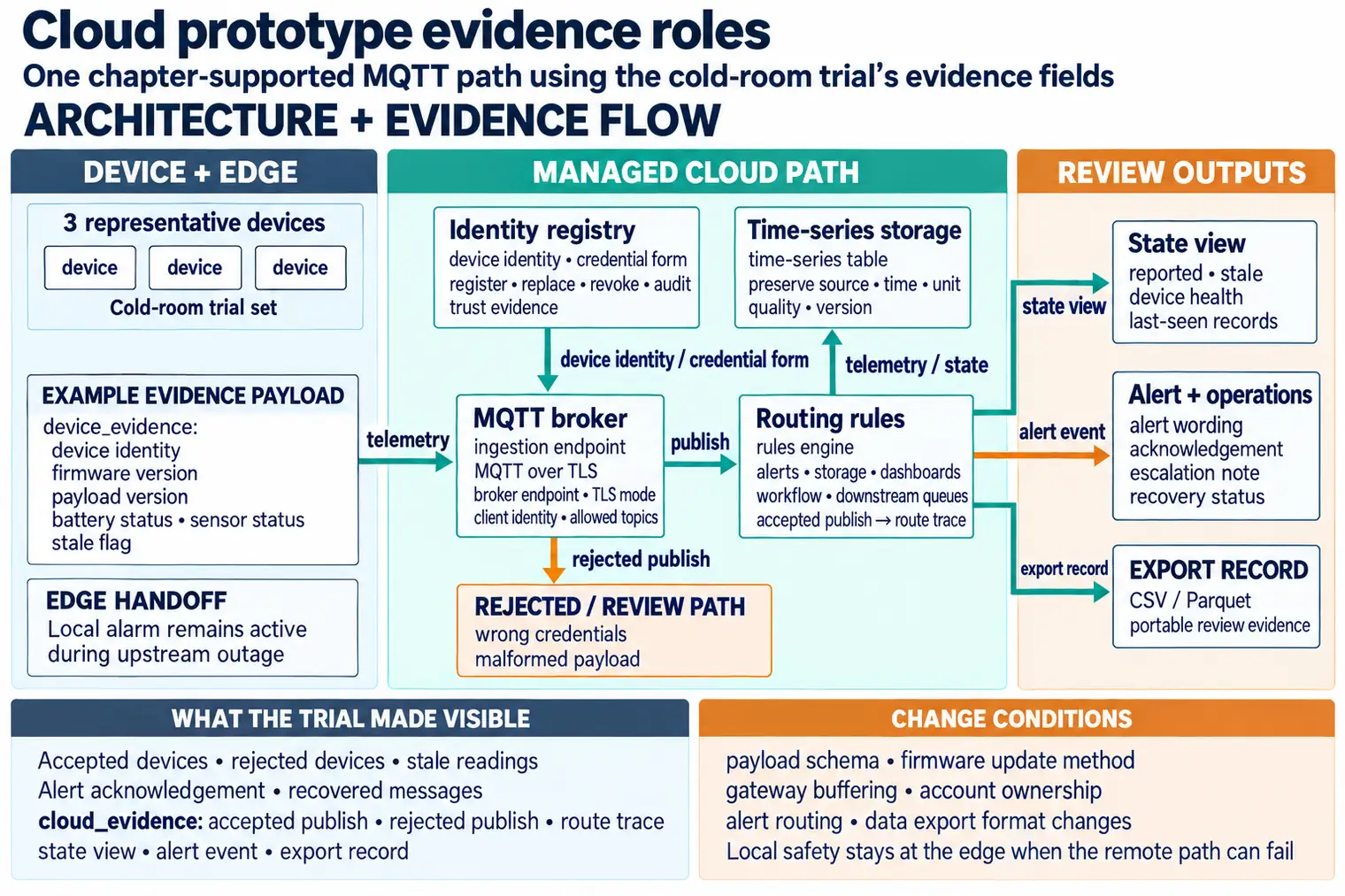
Identity records must show registration, replacement, revocation, and audit events for representative devices. Ingestion needs accepted and rejected payloads with protocol and security checks. Routing needs rule intent and alert handoffs, while the state view must distinguish live, stale, and recovered devices. These roles expose different failure modes even when they share one managed platform. Keep a log or export for each question and test a device that stops reporting, reconnects, or is revoked. A successful dashboard update cannot by itself prove that identity and exception handling work.
Use this role checklist:
Cloud services can observe, route, store, and coordinate. They should not hide safety behavior that must continue locally during network loss or service delay. Put those questions into the edge platform chapter.
29.8 Ingestion and Identity Evidence
This section: Ingestion and Identity Evidence — The first serious cloud review is identity plus ingestion.
The first serious cloud review is identity plus ingestion. A prototype should prove that devices can connect securely and that the team can explain what happens when identity or payload evidence is wrong.
Review these cases:
Record concrete evidence instead of feature names:
device_group:
identity_method:
credential_rotation_test:
allowed_topics_or_endpoints:
rejected_identity_observation:
invalid_payload_observation:
stale_state_observation:
reviewer_notes:
29.9 Routing, State, and Data Boundaries
This section: Routing, State, and Data Boundaries — In Figure 29.3, After ingestion works, the review moves to routing and state.
In Figure 29.3, After ingestion works, the review moves to routing and state. A cloud service can make these paths easy to assemble, but the prototype still needs to show where the data goes and who can explain it later.
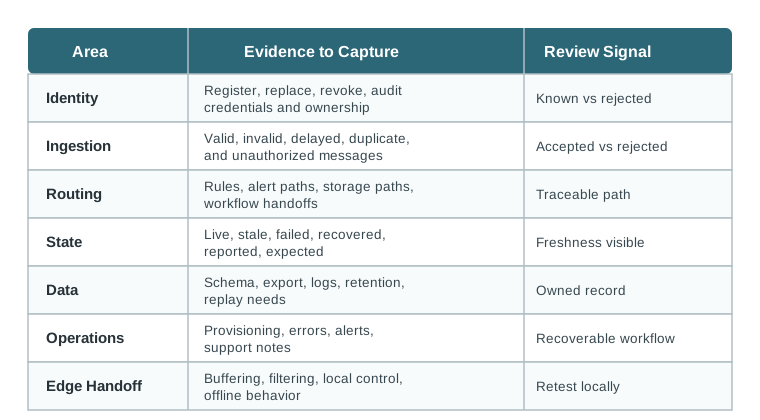
Use the matrix as a review guide:
Cloud routing should not bury the payload contract inside a rule editor or private notebook. Keep the schema, allowed fields, units, version field, and error fields in a reviewable record.
29.10 Operations and Exit Boundaries
This section: Operations and Exit Boundaries — The more a platform does for the team, the more important it is to record what remains under team control.
The more a platform does for the team, the more important it is to record what remains under team control. This is not an argument against managed services; it is a way to avoid accidental architecture decisions.
Figure 29.4 separates managed service convenience from evidence the team must own.
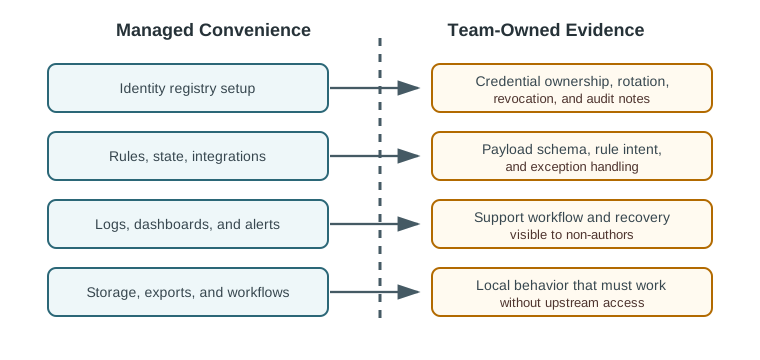
The boundary in Figure 29.4 separates services the platform provides from records the team still owns. Managed identity, rules, dashboards, storage, and exports can speed a trial. The team must still decide who rotates credentials, approves payload fields and exceptions, reviews rule changes, and supports recovery. A local control or safety path may also need to keep working when upstream access is lost. This split matters when the prototype leaves the original builder: another person should be able to find a stale device, bad credential, or failed route without private notes. Keep the owner, schema, rule intent, and exit evidence with the cloud setup.
Review these boundaries before accepting the result:
Using a common protocol helps, but portability also depends on identity, routing rules, schema, logs, data export, dashboards, operations workflow, and local fallback. Record what would actually move.
29.11 Worked Scenario: Cold-Room Cloud Trial
This section: Worked Scenario: Cold-Room Cloud Trial — A team has already proven a battery-powered cold-room sensor node.
A team has already proven a battery-powered cold-room sensor node. The next uncertainty is whether a managed cloud path can make device state, stale readings, and alert acknowledgement visible before a small pilot.
29.11.1 Stage 1: Evidence Question
question=can cold-room devices publish trusted state, expose stale readings, and route alert evidence while gateways disconnect and reconnect?
device_evidence=device identity, firmware version, payload version, battery status, sensor status, stale flag
cloud_evidence=accepted publish, rejected publish, route trace, state view, alert event, export record
operator_evidence=alert wording, acknowledgement, escalation note, recovery status
edge_handoff=local alarm remains active during upstream outage
29.11.2 Stage 2: Trial Conditions
Run three representative devices through normal operation, wrong credentials, malformed payloads, gateway outage, delayed messages, duplicate messages, and recovery. Normal operation provides a reference for comparing accepted ingestion, routing, state visibility, and alerts with the fault cases. Wrong credentials and malformed payloads test whether rejection is visible; outage, delay, and duplication test how the cloud path represents stale and recovered data.
Reviewers watch the cloud state view and operator alert path while engineers inspect route traces and logs. For each condition, record the input, platform observation, operator-facing state, and supporting trace. Connect alert status and acknowledgement evidence to the same run so the review can assess the message path and the support handoff together.
29.11.3 Stage 3: Findings
The trial accepts the cloud path for pilot evidence because the team can see accepted devices, rejected devices, stale readings, alert acknowledgement, and recovered messages. It does not accept the dashboard as the final operations tool, and it routes the local alarm behavior to the edge platform review.
29.11.4 Stage 4: Change Conditions
Rerun cloud-path checks when the payload schema, firmware update method, gateway buffering, account ownership, alert routing, or data export format changes. The accepted trial describes the tested setup, so these changes require renewed evidence before its findings guide the next decision. Schema changes affect the payload contract; buffering changes require another look at delayed, duplicate, and recovered messages. Account ownership and alert routing also require review of access and support responsibilities.
Keep the change condition with the cloud handoff record. Repeat the relevant normal and failure paths, then record state visibility, route traces, alert acknowledgement, and export evidence. Update the decision to show what remains supported and what is unresolved, including the separate review of local alarm behavior.
29.12 Cloud Handoff Summary
This section: Cloud Handoff Summary — A cloud platform handoff summary should make the decision repeatable.
A cloud platform handoff summary should make the decision repeatable. It should capture what the cloud path proved, what it hid, and what remains open.
Figure 29.5 asks which cloud behaviors a representative device set has proved.
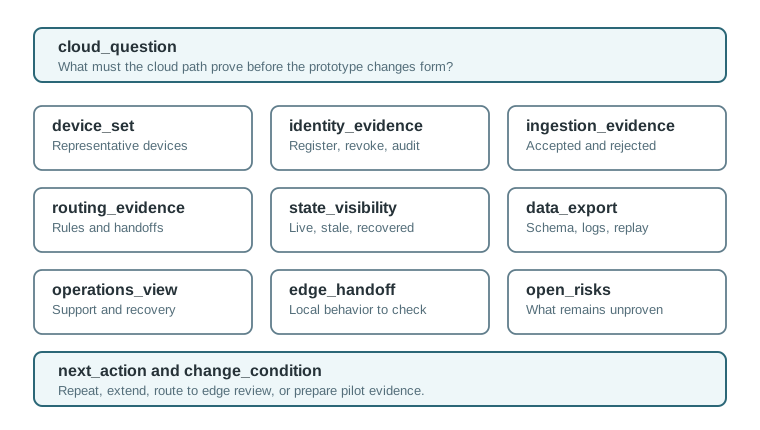
The device set and cloud question define the scope of the review. Identity evidence records registration, revocation, and audit; ingestion evidence includes accepted and rejected payloads. Routing shows which rules fired and where a notice went. The state view must make live, stale, and recovered conditions visible, and an export must preserve schema and logs for replay. Operations notes identify who handles exceptions and support. A cloud trial is ready for the next form only when these records cover the failure modes the application depends on.
Use this template:
prototype:
cloud_question:
device_set:
identity_evidence:
ingestion_evidence:
routing_evidence:
state_visibility:
data_export:
operations_view:
edge_handoff:
hidden_conveniences:
boundary_change_conditions:
open_risks:
next_action:
review_owner:
review_date:
Good records are observable:
29.13 Interaction: Cloud Evidence Fit
This section: Interaction: Cloud Evidence Fit
29.14 Common Failure Patterns
This section: Common Failure Patterns
A successful publish is necessary, but it is not enough. Include rejected identity, invalid payload, duplicate message, delayed message, stale state, and recovery behavior.
If the payload schema exists only inside a rule editor, notebook, or developer memory, the prototype cannot be reviewed reliably. Put fields, units, status flags, versioning, and error behavior in a record.
Managed services can reduce setup work, but the team still owns identity decisions, payload meaning, routing intent, alert responsibility, data handling, and support workflow.
Cloud routing is valuable for visibility and coordination, but local behavior that protects people, equipment, product, or environment must be reviewed close to the device or gateway.
29.15 Summary
This section: Summary — Cloud IoT platforms help prototypes expose managed identity, secure ingestion, routing, state visibility, data export, monitoring, and operations evidence.
Cloud IoT platforms help prototypes expose managed identity, secure ingestion, routing, state visibility, data export, monitoring, and operations evidence. Use them deliberately. Define the cloud evidence question, test normal and failure paths, trace where messages and state go, record ownership boundaries, and route local behavior into the edge platform review when upstream access cannot be assumed.
29.16 Key Takeaway
This section: Key Takeaway — Cloud platform fit depends on ingestion, identity, device management, rules, storage, analytics, cost, security, and exit options under realistic traffic.
Cloud platform fit depends on ingestion, identity, device management, rules, storage, analytics, cost, security, and exit options under realistic traffic.
29.17 See Also
This section: See Also
29.18 What’s Next
This section: What’s Next — Continue with Edge Computing Platforms when the cloud review exposes local processing, buffering, safety, gateway, or offline behavior that must be proven closer to the device.
Continue with Edge Computing Platforms when the cloud review exposes local processing, buffering, safety, gateway, or offline behavior that must be proven closer to the device.
Find help
3 reviewed answers.
Where should I start in a module?
Open the module page from the sidebar to see its chapters in order. Use the module map to return to a topic you need.
Modules and pathsReviewed
What can I try when a project does not work?
Check the symptom, then work through the diagnostic steps. Keep the error message and the smallest example that reproduces it.
When you are stuckReviewed
How do interactive examples work?
Use the interactive guide to check how examples and simulations work before changing your project.
Interactive examples guideReviewed