21 SDN Production Readiness
More
Depth: Practitioner
Progress saves as you read. Mark sections complete as you go; your progress appears in the sidebar.
21.1 Start With the Change You Must Operate
This section: Start With the Change You Must Operate — Picture a factory network where safety messages and camera uploads share the same switches.
Prove One Live Path Before Changing the Next
Picture a factory network where safety messages and camera uploads share the same switches. An operator wants to move bulk traffic away from a busy link without disturbing the safety path. The team must turn that wish into a change that can be checked, reversed, and owned.
Write the intended path in plain terms. Name the traffic, allowed sender and receiver, priority, rule owner, release window, and result that proves success. Record the policy version and the switches that should hold it. Keep a known good path ready for comparison.
Stage the change on a small slice. Send allowed and blocked examples, load the link, restart the controller, lose one switch, and restore the old policy. Compare intended rules with installed rules, counters, receiver logs, and the final path. Check that old entries are removed when the test ends.
Protect the local safety path first. A central control service can plan and observe changes, but its loss must not erase the last safe forwarding state or open a forbidden route. Make the rollback owner and trigger clear before release.
This opening does not choose a controller or prove every switch feature. Practitioner builds the staged release and handoff. Under the Hood examines rule life, state agreement, failover, access limits, observation, and clean retirement.
Check the live path. Check the old path.
Production SDN starts when a forwarding change becomes part of a live service. From that point, intent, installed rules, counters, receiver behavior, rollback, and cleanup all have to stay aligned.
Start simple: write one policy change as an operating record. If the record names the owner, release gate, observation, exception, rollback, and retirement check, programmable forwarding can be managed instead of merely installed.
21.2 Learning Objectives
This section: Learning Objectives
By the end of this chapter, you will be able to:
- Check SDN production readiness through release gates instead of product assertions.
- Define the operating model for controller changes, switch proof records, and service ownership.
- Trace a flow policy from intent through test, staged rollout, observation, rollback, and cleanup.
- Identify resilience, security, and observability proof needed before production acceptance.
- Build a concise SDN readiness record for an IoT deployment.
21.3 Which Flow Rule Matches Service?
This section: Which Flow Rule Matches Service?
21.4 Minimum Viable Understanding
This section: Minimum Viable Understanding — Production SDN is a controlled way to change forwarding behavior.
Production SDN is a controlled way to change forwarding behavior. The central question is not “Which controller is fastest?” The safer question is “Can this team operate programmable forwarding with clear owners, proof, and rollback?”
Before approving minimum viable understanding, test the depicted proposition in Figure 21.1: SDN production framework check route. Read from Service toward rollout.
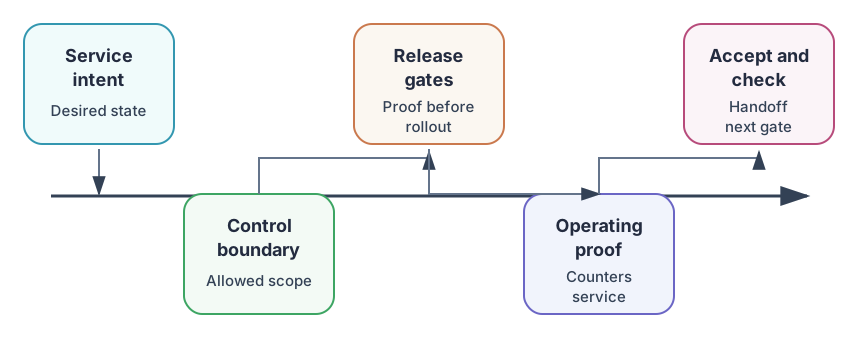
The production route in Figure 21.1 starts with the service intent and desired state, then draws a control boundary around the controller, switch, queue, or gateway allowed to change. Release gates require lab and staged proof before rollout. Operating proof joins rule counters with the receiving service, so a controller success alone cannot pass acceptance. The final handoff names the owner and the next check. This order keeps scope and recovery visible throughout a change: if the live service diverges from the intended result, the team can stop at the gate, restore the old state, and preserve the evidence for review.
Use this route:
- State the service intent: which IoT service behavior the SDN change should protect or improve.
- Define the control boundary: which controller, switch, gateway, queue, table, or policy object may change.
- Pass release gates: design check, lab proof, staged rollout, monitoring, rollback, and ownership.
- Operate with records: counters, logs, receiver results, alerts, incident records, and cleanup records.
- Check periodically: retire stale rules, repeat failure-behavior drills, and adjust policy when the service changes.
21.5 Prerequisites
This section: Prerequisites
Use these chapters as needed:
- SDN Production Best Practices: guardrails, drills, and operations proof.
- SDN Production Case Studies: transferable production patterns and baseline validation.
- SDN OpenFlow Protocol: controller-switch messages and flow-table proof.
- SDN OpenFlow Challenges: rule-state pressure, placement, capability drift, and failure boundaries.
21.6 Framework Pillars
This section: Framework Pillars — A durable framework turns SDN from a clever network technique into an auditable operating practice.
A durable framework turns SDN from a clever network technique into an auditable operating practice.
Make the framework pillars premise visible in the diagram Figure 21.2: SDN production framework pillars. Begin by distinguishing Production SDN readiness from Policy intent.
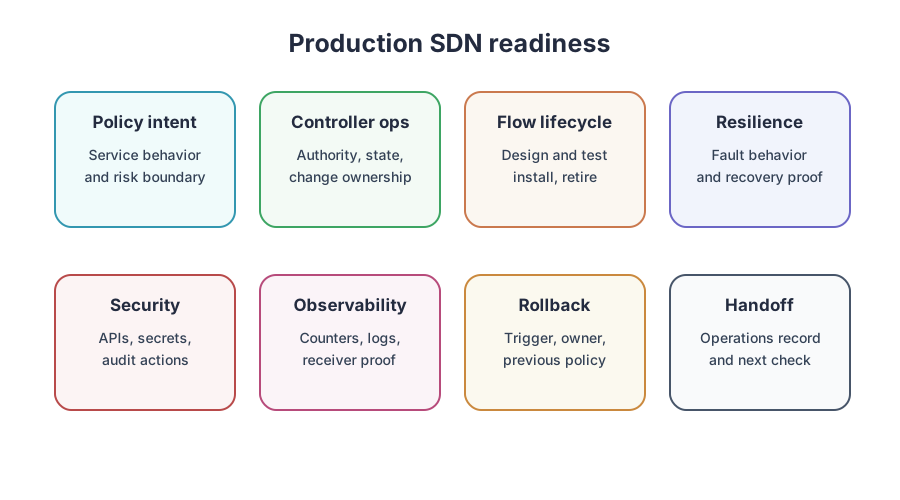
Figure 21.2 presents Policy intent and Service behavior among the pillars of production SDN readiness.
Policy intent
Names the service behavior that the forwarding policy should produce, protect, or isolate.
Controller model
Defines who can change controller applications, who approves intent, and how state is recovered.
Flow lifecycle
Tracks rules from design to test, rollout, observation, expiration, and cleanup.
Resilience
Explains what continues locally, what degrades, and which owner acts during controller or link faults.
Security boundary
Protects the control channel, northbound interface, credentials, logs, and administrative actions.
Proof loop
Connects telemetry, incidents, acceptance checks, rollback triggers, and scheduled checks.
21.7 Release Gates
This section: Release Gates — SDN changes should move through explicit gates.
SDN changes should move through explicit gates. A gate is useful only when it has proof and an owner.
Use Figure 21.3 to see how evidence limits the number of devices exposed to an unproven firmware release.
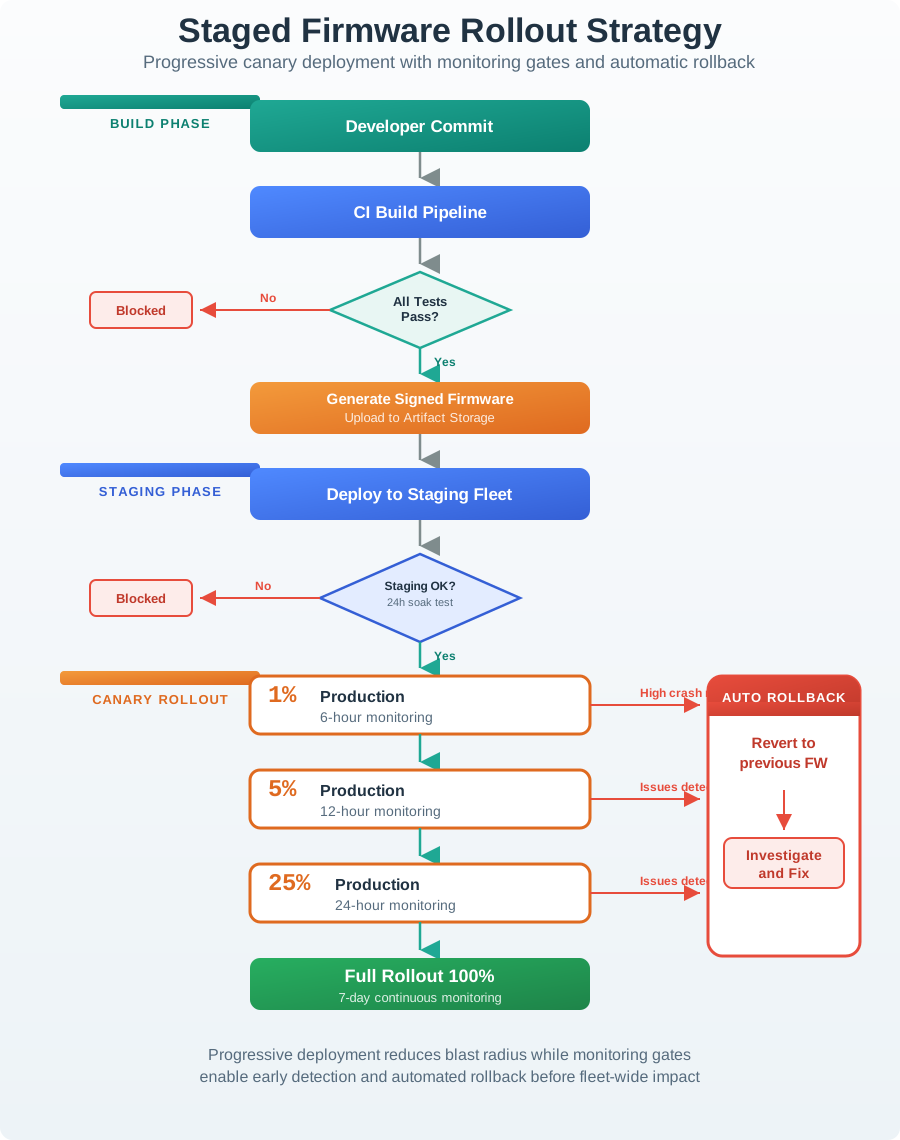
Follow Figure 21.3 from the lab fixture to an internal canary, then a pilot batch and broader rollout. Each step increases exposure only after its monitoring gate passes. A failed health, connectivity, performance, or service check leaves the release at its current boundary and triggers pause, abort, rollback, or repair. Read the return arrows as part of the release design, not as an emergency note. A canary protects the fleet only when stop rules are automatic, rollback is tested, and the final record states which evidence allowed expansion or forced retreat.
Gate check:
- Intent gate: the service owner states the desired behavior and unacceptable side effects.
- Design gate: the network owner checks affected paths, rule tables, priorities, queues, and failure mode.
- Lab gate: the team proves the policy with representative packets, counters, and negative tests.
- Staged gate: the rollout touches a bounded service, time window, or site before broader expansion.
- Operations gate: alerts, dashboards, rollback steps, cleanup owner, and next check date are recorded.
Avoid approving a change because the syntax is valid. Approve it because the service effect is understood and observable.
21.8 Controller Operating Model
This section: Controller Operating Model — The controller is production infrastructure.
The controller is production infrastructure. Treat it like a control system with ownership, change windows, backups, and incident routes.
The model in Figure 21.4 names who sets policy and who checks switch proof.
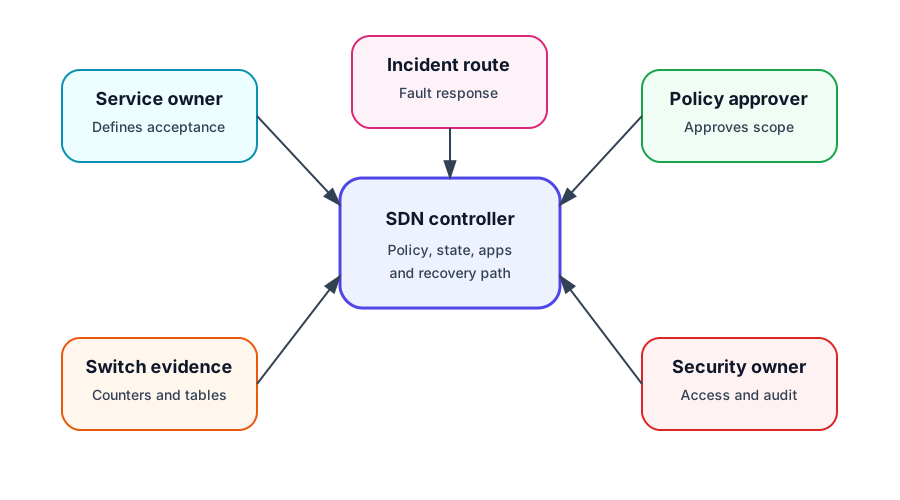
The model in Figure 21.4 assigns decisions to the service owner, policy approver, switch proof owner, security owner, and incident team. The service owner defines success through receiver behavior. The policy approver limits scope before new rules go live. Operators maintain controller state and recovery, while switch counters and tables test what the network did. Security owns access and audit. The incident route names who responds when a fault appears. Use these roles during a failed rollout: policy approval does not prove switch behavior, and the team needs a named owner to restore the affected service.
Define:
- Who may change controller applications and northbound policy.
- Which changes need service-owner approval.
- Which controller state is backed up or reconstructed after a fault.
- Which switch and gateway proof confirms the controller’s intended behavior.
- Which alerts route to network operations, security, service owners, and incident response.
The framework should also define what the switches do when the controller is unavailable. Existing installed rules may continue forwarding, but table-miss behavior, new flows, stale rules, and exception handling must be tested locally rather than assumed.
21.9 Flow-Policy Lifecycle
This section: Flow-Policy Lifecycle — A flow rule is operational state.
A flow rule is operational state. It needs a lifecycle just like application configuration.
A checklist alone cannot settle flow-policy lifecycle. Inspect Figure 21.5 for this relationship: SDN flow-policy lifecycle. Compare Flow-policy lifecycle with Test.
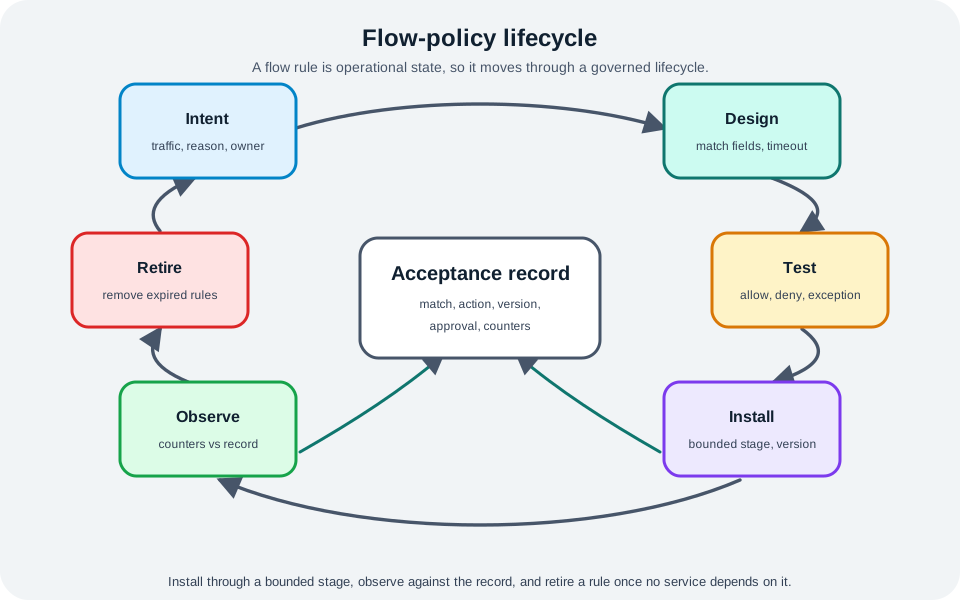
Locate Flow-policy lifecycle in the diagram Figure 21.5, then compare Test with remove expired rules. The three labels prevent a one-box flow-policy lifecycle reading. Their relevance to Test is: SDN flow-policy lifecycle.
The lifecycle starts with Intent: state which traffic is matched, why it matters, and which service owns the outcome. During Design, check match fields, priorities, actions, timeout behaviour, table order, and conflict risk. Test must cover allowed, denied, and exception traffic as well as stale-state behaviour before Install places the rule in a bounded stage with affected switches, policy version, and approval recorded.
Once installed, Observe connects counters, receiver behaviour, alerts, and service outcome to the acceptance record. Retire removes expired rules and confirms that no service still depends on them. Following those stages keeps the Flow-policy lifecycle, Test, and remove expired rules labels in Figure 21.5 tied to one auditable operating record.
21.10 Proactive, Reactive, and Hybrid Control
This section: Proactive, Reactive, and Hybrid Control — Production SDN usually mixes proactive and reactive rule placement.
Production SDN usually mixes proactive and reactive rule placement. The framework should name where each belongs.
The next proactive, reactive, and hybrid control step needs Proactive as a visual checkpoint. At Figure 21.6, Exceptions and dynamic supplies the relationship to challenge: SDN proactive reactive and hybrid control placement.
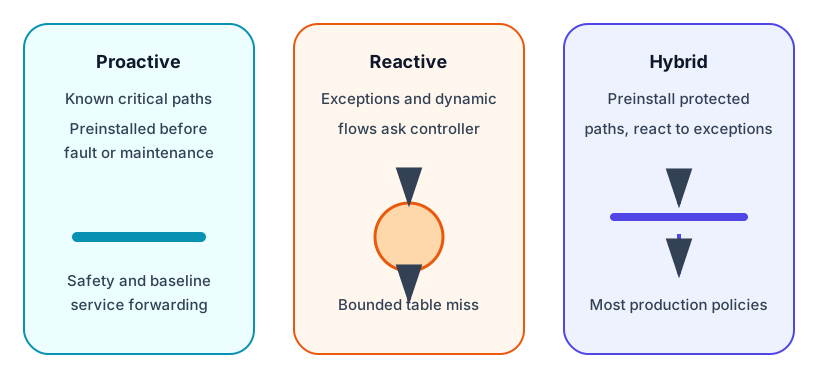
The map in Figure 21.6 sets known paths first and bounds new requests; check table misses.
Control-placement questions:
- Which critical IoT paths need preinstalled rules before a fault or maintenance window?
- Which dynamic flows are safe to handle through controller decisions?
- What is the table-miss action for unknown, malformed, or unauthorized traffic?
- Which timeout values prevent stale rules from persisting too long?
- Which counters prove the network is not overusing reactive handling?
The right mix depends on local risk. A safety alarm path, a building telemetry path, and a diagnostic path may need different placement and timeout behavior.
21.11 Resilience Checks
This section: Resilience Checks — Resilience is not a single uptime assertion.
Resilience is not a single uptime assertion. It is a set of tested behaviors under specific faults.
Treat resilience checks as a system decision around Resilience decision. The visual in Figure 21.7 places Switch fault within this relationship: SDN production resilience checks.
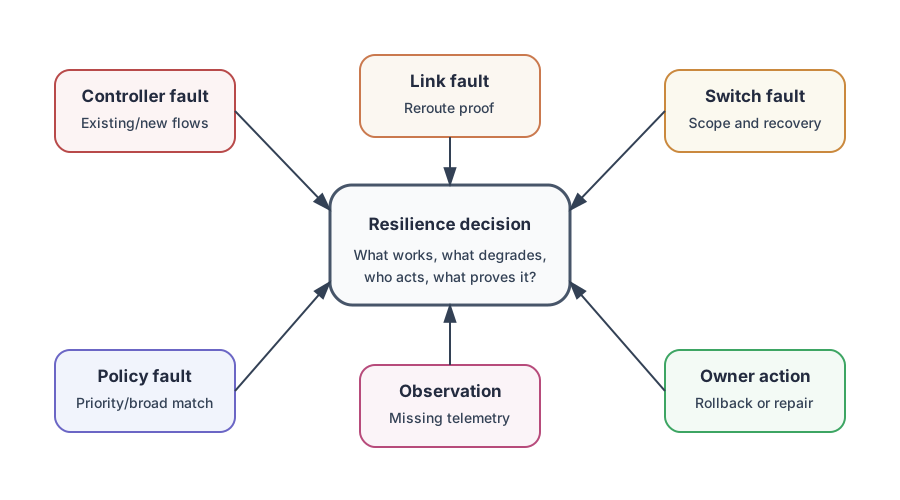
Interrogate Resilience decision first, then find Switch fault in Figure 21.7. Apply the Switch fault review question before Rollback or repair. Those answers support resilience checks; the figure states: SDN production resilience checks.
Check these fault classes:
- Controller fault: installed rules, new flows, table misses, state recovery, and alert routing.
- Link fault: reroute policy, protected paths, congestion side effects, and receiver proof.
- Switch fault: affected services, redundant path assumptions, replacement procedure, and state restoration.
- Policy fault: bad priority, broad match, stale exception, and tested rollback.
- Observation fault: missing telemetry, delayed alerts, dashboard gaps, and manual proof source.
Do not record “controller cluster exists” as proof of resilience. Record what was tested and which service behavior stayed acceptable.
21.12 Production Practice Drill Addendum
This section: Production Practice Drill Addendum — Production best practices become useful when they are rehearsed as drills, not only listed as policies.
Production best practices become useful when they are rehearsed as drills, not only listed as policies.
Drill the framework with these checks:
- Control-plane resilience: controller loss, stale state, rejected rule updates, and recovery reconciliation.
- Flow-table governance: broad-match checks, priority conflicts, temporary exceptions, and cleanup proof.
- Security boundary: northbound authorization, control-channel trust, credential rotation, and emergency-change authority.
- Observability: controller logs, rule counters, table-miss alerts, receiver checks, and incident records joined in one timeline.
- Failure drill closeout: what failed, what stayed acceptable, which owner acted, and what rule or monitor changed afterward.
21.13 Security Boundary
This section: Security Boundary — SDN concentrates authority.
SDN concentrates authority. The production framework must protect both control-plane access and policy-change workflows.
Before approving security boundary, test the depicted proposition in Figure 21.8: SDN production security boundary. Read from Privileged SDN control boundary toward Switch trust.
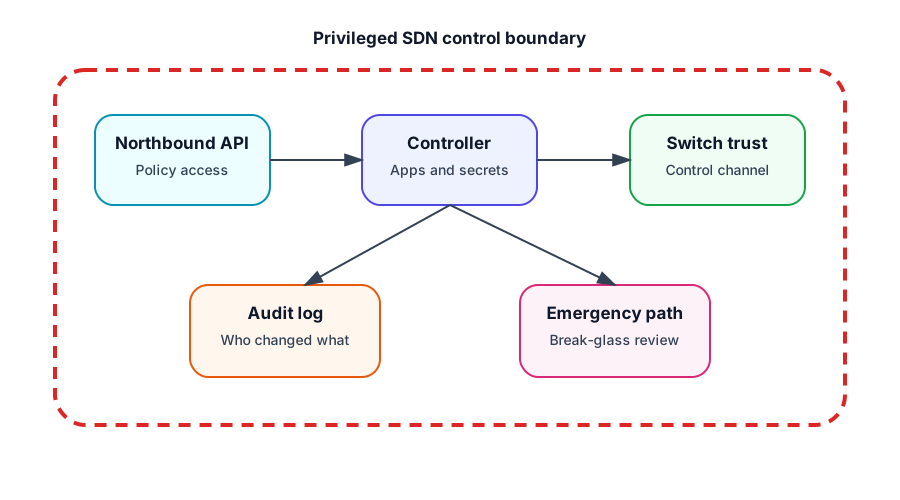
Locate Privileged SDN control boundary in the diagram Figure 21.8, then compare Switch trust with Break-glass review. The three labels prevent a one-box security boundary reading. Their relevance to Switch trust is: SDN production security boundary.
Security check:
- Authenticate administrators, automation, controller applications, and service integrations.
- Protect northbound APIs, controller-to-switch control channels, secrets, and backups.
- Separate routine policy changes from emergency changes.
- Log who changed policy, which objects changed, which approvals were used, and which devices were affected.
- Define what happens when a controller application, credential, or control channel is suspected to be compromised.
The security boundary should be visible in the same operations record as the network behavior. Otherwise, teams may prove forwarding while leaving policy authority unchecked.
21.14 Observability Proof
This section: Observability Proof — Production acceptance requires proof that operators can see the SDN system working and failing.
Production acceptance requires proof that operators can see the SDN system working and failing.
The observability loop in Figure 21.9 begins with controller policy and health logs. Flow counters and drops show whether switches matched traffic, while receiver results show the service outcome. Alerts route a mismatch or controller fault to an owner; the incident record keeps the cause and corrective action. Review then feeds a policy improvement into the next change. Each layer answers a different question: intent, forwarding, service effect, and response. A healthy controller log cannot substitute for a failed receiver test, and a recovered receiver without an incident record leaves the next rollout exposed to the same fault.
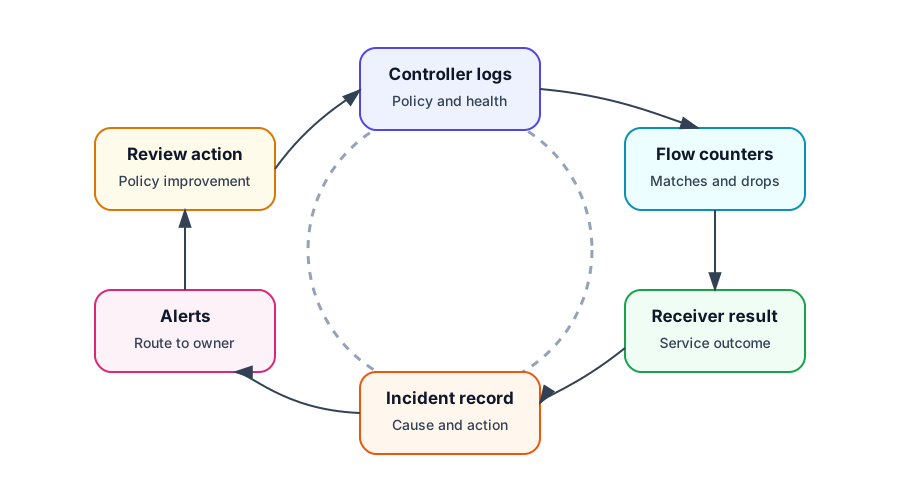
Read Figure 21.9 as a joined record of policy, forwarding, and service health.
Useful proof includes:
- Controller health, application state, policy version, and state-store health.
- Switch connection state, table occupancy, rule counters, drops, and table-miss behavior.
- Gateway or receiver proof showing whether the service actually improved.
- Alert routes for controller faults, policy faults, table pressure, and unexpected traffic.
- Incident records that connect the alert, root cause, service impact, and corrective action.
Flow counters alone are not enough. A counter proves that packets matched a rule; it does not prove that the service owner received acceptable behavior.
21.15 Capacity and Rule Budget
This section: Capacity and Rule Budget — SDN capacity checks should focus on table pressure, policy scope, and failure headroom instead of a generic “maximum flows” assertion.
SDN capacity checks should focus on table pressure, policy scope, and failure headroom instead of a generic “maximum flows” assertion.
The reason to inspect capacity and rule budget is concrete. Figure 21.10 depicts: SDN capacity and rule budget checks. Distinguish Policy scope from Cleanup.
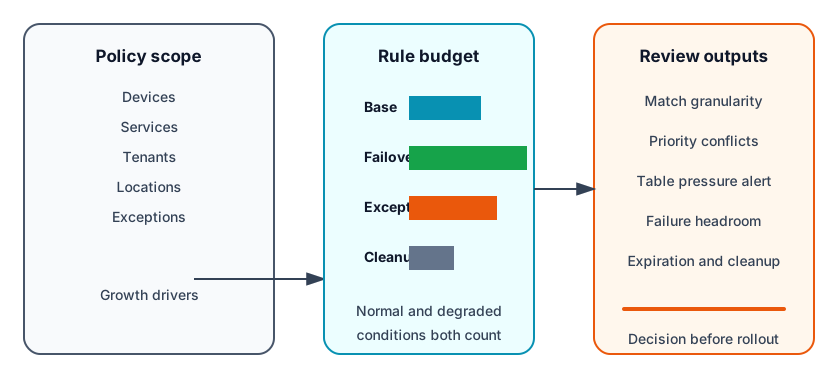
The budget in Figure 21.10 checks table space, rule order, spare room, and cleanup before rollout.
Ask:
- Are rules broad enough to avoid unnecessary table pressure but narrow enough to preserve policy intent?
- Which rule families grow with devices, services, tenants, locations, or exceptions?
- What happens to table occupancy during failover, maintenance, or degraded operation?
- Which rules expire automatically, and which require cleanup?
- Which alert warns the team before rule pressure affects the service?
The budget should include failure conditions. A policy that fits only during normal operation may fail when backup paths, temporary exceptions, or diagnostics are active.
21.16 Rollback and Operations Handoff
This section: Rollback and Operations Handoff — An SDN change is not production-ready until rollback and handoff are specific.
An SDN change is not production-ready until rollback and handoff are specific.
Inspect Figure 21.11 before judging rollback and operations handoff; it depicts: SDN rollback and operations handoff. Focus first on SDN Rollback and Operations Handoff, then on record handoff.
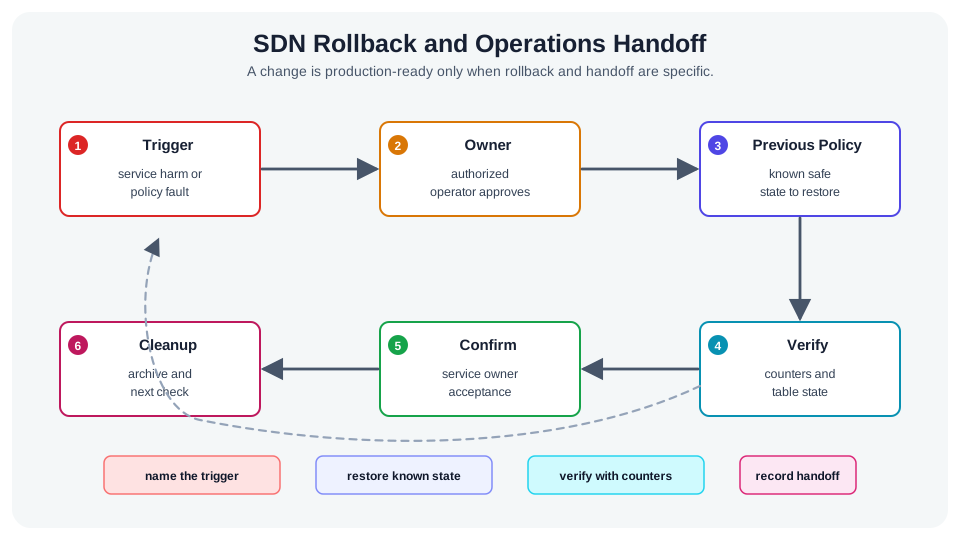
The handoff in Figure 21.11 links trigger, owner, old policy, and service proof; check cleanup.
Rollback record:
Change: service-slice policy for building automation telemetry
Owner: network operations
Approver: building automation service owner
Affected scope: named switches, gateways, and traffic classes
Acceptance proof: receiver result, rule counters, alert behavior, and negative test
Rollback trigger: protected traffic affected, unexpected table pressure, or denied service traffic
Rollback action: restore previous policy version, verify counters, confirm service receiver behavior
Cleanup: remove temporary exceptions, archive proof, schedule next check
The record should be short enough for incident use and specific enough for another operator to execute.
21.17 Walkthrough: IoT Building SDN Readiness
This section: Walkthrough: IoT Building SDN Readiness — A facilities team wants to use SDN to separate building automation, safety alarms, video diagnostics, and guest convenience traffic on shared infrastructure.
A facilities team wants to use SDN to separate building automation, safety alarms, video diagnostics, and guest convenience traffic on shared infrastructure.
Readiness check
- Intent: safety alarms must keep priority and isolation; building automation needs predictable telemetry; video diagnostics can degrade first.
- Design: service slices are represented as policy groups with explicit match fields, priorities, queue behavior, and denied cross-slice paths.
- Lab proof: tests include allowed traffic, denied traffic, spike traffic, controller-unavailable behavior, and stale-rule cleanup.
- Staged rollout: one building and one operations window are used before campus expansion.
- Proof: receiver results, switch counters, table occupancy, table-miss alerts, controller logs, and service-owner acceptance are captured.
- Handoff: network operations owns policy changes, facilities owns service acceptance, security owns credential checks, and incident response owns emergency exceptions.
Readiness record
Production decision: proceed to bounded rollout
Why: policy intent, lab proof, rollback, and owner handoff are documented
Limits: expand only after service acceptance and table-pressure checks remain clean
Watch: table misses, broad-match exceptions, denied cross-slice attempts, controller state recovery
Next check: after rollout window, after a policy fault, or when service topology changes
21.18 Production Proof Loop
This section: Production Proof Loop — A production framework is maintained through repeated proof, not a one-time launch checklist.
A production framework is maintained through repeated proof, not a one-time launch checklist.
A checklist alone cannot settle production proof loop. Inspect Figure 21.12 for this relationship: SDN production framework proof loop. Compare Policy intent with Fix weak controls.
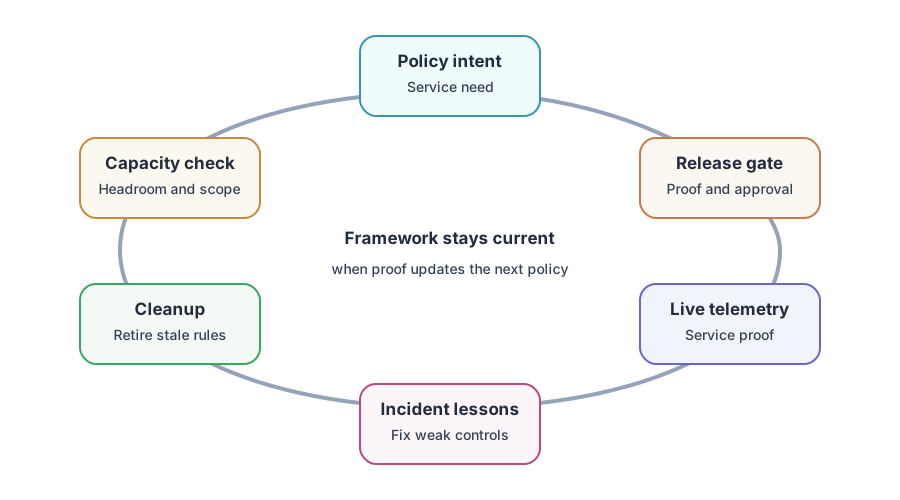
The proof loop in Figure 21.12 uses a cold-chain warehouse upgrade to test one scoped policy change. The gateway group cold-gw-west keeps MQTT alarm telemetry on a protected path while camera uploads move to a lower-priority queue; management SSH remains unchanged, and cross-slice camera traffic is denied. Compare these intents with installed switch rules, counters, and receiver results. A counter increase alone does not prove alarms arrived, and an allowed camera route must not cross into the alarm slice. The final review checks cleanup, capacity, and service outcome before updating policy. This worked case shows why rollout proof must cover permitted, protected, and denied paths together.
Close the loop:
- Start every change with service intent and affected scope.
- Compare live telemetry with receiver behavior and acceptance criteria.
- Convert incidents into policy, observability, or rollback improvements.
- Remove stale rules and temporary exceptions.
- Revisit capacity, security, and owner assumptions when the service changes.
21.19 Knowledge Check
This section: Knowledge Check
21.20 Check the Production Framework
This section: Check the Production Framework
-
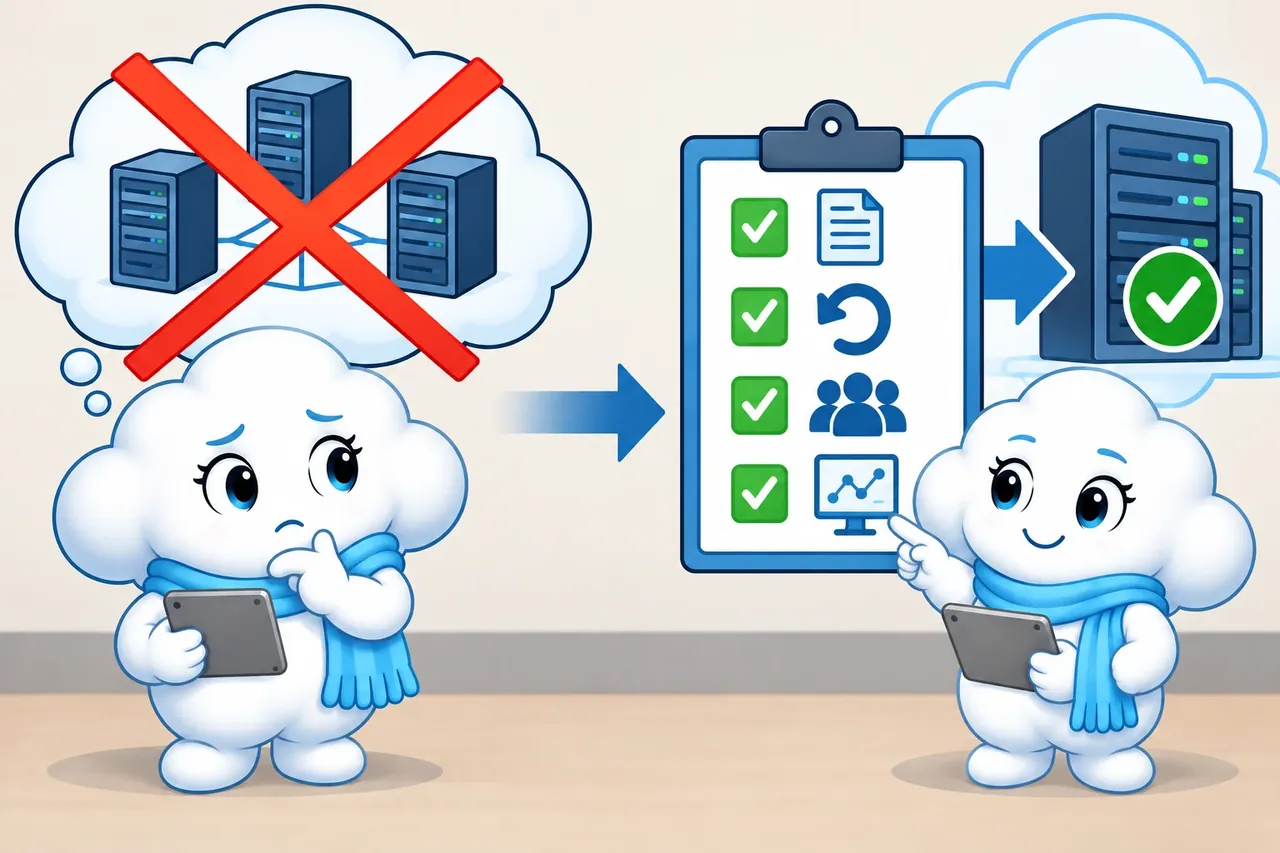
Wrong idea: a controller cluster makes a new policy safe. It fails because its behavior, rollback, owner, and monitoring still need proof.
21.21 Match Frameworks to Readiness
This section: Match Frameworks to Readiness
21.22 Order a Production SDN Readiness Check
This section: Order a Production SDN Readiness Check
21.23 Common Pitfalls
This section: Common Pitfalls
- Approving the platform instead of the change: a reliable controller does not prove that a specific policy is safe.
- Skipping negative tests: allowed traffic is only half the check; denied, malformed, unknown, and stale traffic must be checked.
- Letting temporary rules become permanent: exceptions need owners, expiration, and cleanup proof.
- Using counters without service proof: rule matches do not prove that the receiver or business workflow is healthy.
- Hiding rollback in tribal knowledge: rollback must name the trigger, owner, previous policy, verification, and cleanup step.
- Forgetting security authority: controller APIs and policy automation are privileged paths and need the same check discipline as network behavior.
21.24 Production Acceptance Contract
This section: Production Acceptance Contract — An SDN production framework is the agreement that says when programmable forwarding is allowed to affect a live IoT service.
An SDN production framework is the agreement that says when programmable forwarding is allowed to affect a live IoT service. The agreement must be visible enough that a service owner, network operator, security owner, and incident responder can all point to the same proof.
The important shift is from "the controller can do this" to "the organization can operate this." Production readiness exists only when the policy has an owner, an acceptance test, an observation path, a rollback trigger, and a cleanup rule.
For example, a cold-chain operator might use SDN to isolate camera uploads from alarm telemetry during a warehouse network upgrade. The acceptance contract should name the service intent, gateway group, allowed and denied traffic classes, controller application, affected switch tables, rollback trigger, receiver proof, and cleanup owner before the first production rule is installed.
The same contract should state what is out of scope. It should not let a dashboard policy silently change management access, door-control traffic, broker telemetry, or emergency support paths. If those protected paths need changes, they should go through their own release gate with their own service owner.
Production readiness is therefore less about trust in an SDN product and more about repeatable evidence. The team should be able to show why a rule exists, what it is allowed to match, who approved it, how it is monitored, and how it disappears when it is no longer justified.
A useful acceptance contract is specific enough to test. For a gateway group such as cold-gw-west, the record might say that MQTT alarm traffic remains on the protected path, camera uploads move to a lower-priority queue during the upgrade window, management SSH is unchanged, and unauthorized cross-slice traffic is denied. Those statements give the lab test, staged rollout, receiver check, and rollback trigger something concrete to measure.
The overview decision is simple: production SDN is ready only when the team can explain the intended service behavior, the forbidden side effects, the bounded control surface, and the evidence that will be trusted after rollout. Without those details, programmable forwarding becomes a hidden dependency rather than an architecture decision.
21.25 Track Drift After Release
This section: Track Drift After Release — After release, the framework should watch for drift between intended policy, installed switch state, service behavior, and ownership.
After release, the framework should watch for drift between intended policy, installed switch state, service behavior, and ownership. A policy can pass launch gates and still become risky when traffic classes, gateways, firmware, controller apps, or operational teams change.
| Drift Check | Evidence To Compare | Action If It Changed |
|---|---|---|
| Policy drift | Approved intent, controller policy version, installed rule set, and exception list. | Re-approve, narrow, expire, or remove rules that no longer match the approved intent. |
| Service drift | Receiver proof, protected-path checks, traffic class mix, and service-owner acceptance. | Repeat gates when service behavior, device groups, or traffic patterns change. |
| Capacity drift | Table occupancy, reactive miss rate, temporary exceptions, and failover headroom. | Reduce rule families, aggregate safely, or add capacity before pressure affects service. |
| Ownership drift | Approver, operator, security contact, incident route, rollback owner, and cleanup owner. | Refresh handoff records before a real incident depends on stale responsibility. |
A practical drift review might compare a Git-tracked policy definition, the controller policy version, ovs-ofctl dump-flows output from target switches, broker receiver logs, and the operations ticket that names rollback ownership. The point is not to prefer one tool. The point is to keep service intent, controller state, switch state, receiver behavior, and owner records in the same review.
Schedule the drift review after the rollout window, after a service topology change, after a controller recovery, and after any incident involving protected paths. If the review finds stale exceptions, missing owners, unexplained counter movement, or receiver behavior outside acceptance criteria, the rule should be narrowed, re-approved, or removed.
Use thresholds rather than vague concern. A temporary exception older than 30 days should need re-approval. Table occupancy above the agreed headroom should block new service-slice expansion. A mismatch between the controller policy version and the switch table should open a reconciliation task. A rule without a named service owner should expire unless a current owner accepts it.
Practitioners should also preserve negative evidence. If a denied camera-to-alarm path correctly produces drops and receiver silence, that result belongs beside the successful telemetry path. Negative tests prevent later reviewers from treating broad wildcard matches as harmless just because the primary service still works.
21.26 Reconcile Intent and State
This section: Reconcile Intent and State — Production SDN has at least three truths that can diverge: the approved policy intent, the controller's model of the network, and the switch tables that are actually forwarding packets.
Production SDN has at least three truths that can diverge: the approved policy intent, the controller's model of the network, and the switch tables that are actually forwarding packets. Faults, manual changes, stale exceptions, rejected flow updates, and controller recovery can separate those truths.
Reconciliation is the under-the-hood production task. The operator compares approved policy, controller state, switch table state, counters, receiver proof, and incident records. Rules that no longer have an owner or current reason should not be left active just because they have not broken anything yet.
The production framework is healthy when it can prove not only that the right rule was installed, but also that expired rules were retired, controller recovery did not recreate unsafe state, and service acceptance still matches the current network.
Under the hood, reconciliation should read switch tables as ordered behavior, not as a flat inventory. Priority, table order, wildcard breadth, timeout, group behavior, and meter behavior all affect which packets actually move. A controller policy can be correct in intent while an older high-priority rule still wins first in the switch pipeline.
Controller recovery is another source of drift. After a failover or restart, the controller may rebuild its model from saved policy, switch discovery, and event replay. The production framework should require a post-recovery comparison against installed rules, counters, receiver behavior, and protected-path alarms before declaring the service normal.
Timeouts deserve explicit review. Idle timeouts can remove rules that are still part of a low-frequency sensor workflow, while hard timeouts can remove temporary exceptions too late if the maintenance window closes early. A production framework should define which rule families use idle timeout, hard timeout, manual retirement, or policy-version replacement, then verify that cleanup occurred on the switches rather than only in the controller database.
Failover checks should also guard against replaying stale intent. If the controller restores an old exception after a restart, the switch may keep forwarding traffic that no current service owner accepts. The safer recovery path compares saved intent, current approval records, installed tables, receiver evidence, and incident notes before replaying policy into production switches.
21.27 Summary
This section: Summary — An SDN production framework is the system of gates, proof, and ownership that makes programmable forwarding safe to operate.
An SDN production framework is the system of gates, proof, and ownership that makes programmable forwarding safe to operate. It connects service intent to controller authority, flow-rule lifecycle, resilience tests, security boundaries, observability, rollback, and handoff. The result is not a one-time deployment checklist; it is a repeatable operating loop that keeps SDN policy aligned with the IoT service it supports.
21.28 Key Takeaway
This section: Key Takeaway — A production SDN framework should make governance, telemetry, change control, resilience, and incident response part of the architecture.
A production SDN framework should make governance, telemetry, change control, resilience, and incident response part of the architecture.
21.29 See Also
This section: See Also
- SDN Production Best Practices: guardrails, operations proof, and failure drills.
- SDN Production Case Studies: how to transfer external lessons without copying brittle assertions.
- SDN OpenFlow Protocol: flow-table and controller-message proof.
- SDN OpenFlow Challenges: placement, scaling, capability drift, and failure boundaries.
- SDN Analytics and Implementations: using observations to improve SDN operations.
21.30 What’s Next
This section: What’s Next — Continue to SDN Production Readiness Checks to connect this framework to a broader production-readiness workflow.
Continue to SDN Production Readiness Checks to connect this framework to a broader production-readiness workflow.
Find help
3 reviewed answers.
Where should I start in a module?
Open the module page from the sidebar to see its chapters in order. Use the module map to return to a topic you need.
Modules and pathsReviewed
What can I try when a project does not work?
Check the symptom, then work through the diagnostic steps. Keep the error message and the smallest example that reproduces it.
When you are stuckReviewed
How do interactive examples work?
Use the interactive guide to check how examples and simulations work before changing your project.
Interactive examples guideReviewed