16 Sigfox Technology Overview

More
Depth: Practitioner
Progress saves as you read. Mark sections complete as you go; your progress appears in the sidebar.
16.1 Start With the Story
This section: Start With the Story — Sigfox starts with a very small message and a managed network boundary.
Sigfox starts with a very small message and a managed network boundary. The device speaks briefly, the backend receives callbacks, and the team accepts tight limits in exchange for simple low-power reporting.
-
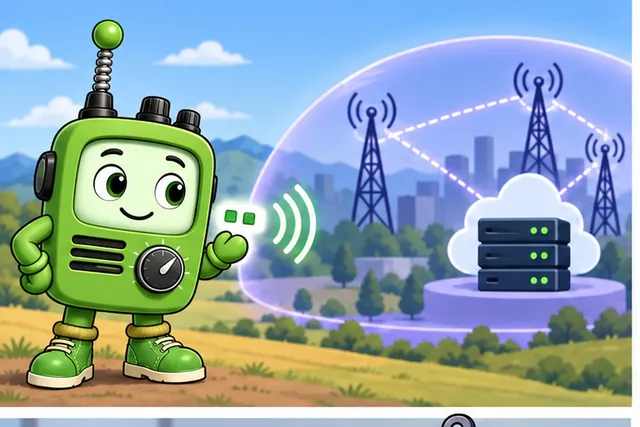
A small sensor sends brief reports through a managed network.
-
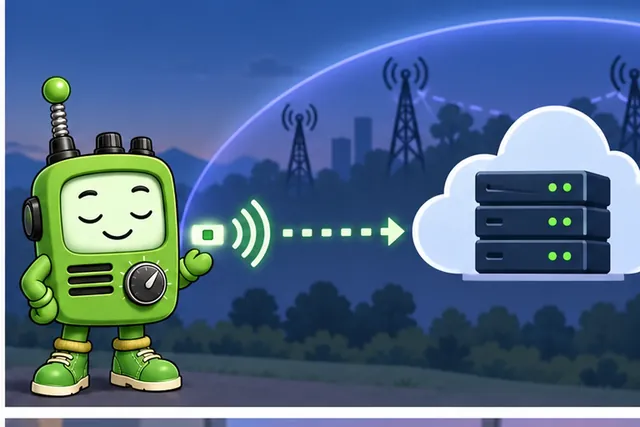
Tight message and downlink limits may block the job.
-
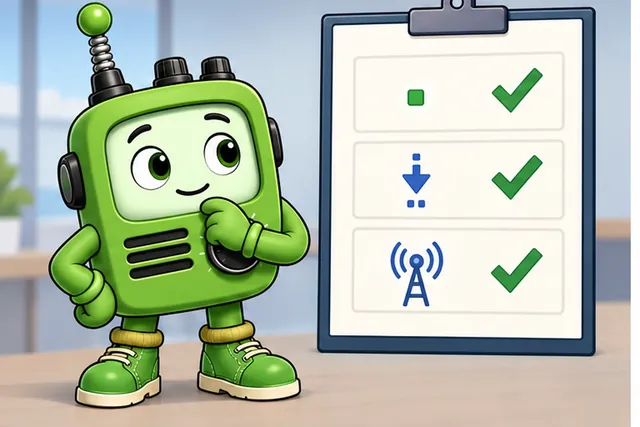
Compare each report and reply with the service limits.
-
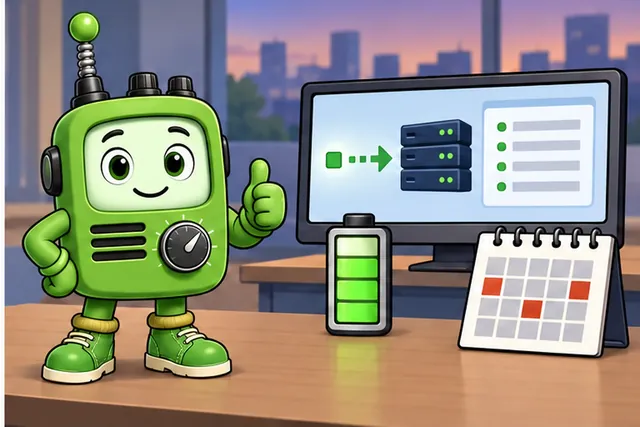
Use Sigfox only when the full message story fits.
Start simple: use Sigfox when compact uplinks, sparse downlinks, and service availability match the application story.
16.2 What This Chapter Covers
This section: What This Chapter Covers — Start by the big-picture Sigfox architecture without public-status or availability shortcuts.
Start by the big-picture Sigfox architecture without public-status or availability shortcuts. Then how the managed-service boundary changes ownership and evidence needs. Next why compact uplinks and rare downlink responses shape application fit. After that how the backend callback turns a received record into an application record. Continue by how Sigfox compares with other LPWAN choices at a decision level. Finally what to record before a Sigfox design is approved for scale.
16.3 Learning Objectives
This section: Learning Objectives
By the end of this chapter, you will be able to:
- Describe the Sigfox path from device record to application callback.
- Explain the managed-service boundary and the evidence it requires.
- Identify applications that fit compact uplinks and restrained downlink behavior.
- Separate physical-link ideas from backend, monitoring, and release concerns.
- Build a release decision based on service evidence, data ownership, diagnostics, and exit planning.
16.4 Overview: Treat Sigfox as a Managed Path
If you only need the intuition, this layer is enough: Sigfox is not only a radio choice. It is a managed path from compact device record to service reception, backend decode, callback delivery, and application acceptance.
The overview decision should therefore start with the product promise, not with the radio label. Ask what the device must report, what must stay safe when the backend is quiet, who owns the managed-service boundary, and what evidence proves the application received useful data. That framing keeps the learner from treating a received service record as if it automatically proves the user-facing product.
The route also explains why Sigfox can be attractive and risky at the same time. A team may avoid building gateway infrastructure, but it still needs a compact payload contract, representative service evidence, callback proof, freshness monitoring, owner response, and a trigger for reviewing the decision later.
In other words, the overview is a fit review before it is a technology endorsement.
Start Figure 16.1 at the application promise, then cross the Managed boundary into compact uplink, restrained response, and backend callback stages. Monitoring and the release decision sit after those service-owned hops. This route keeps the chapter’s claim honest: device transmission is only the first record in a managed path whose receipt, decode, callback, and freshness need separate proof.
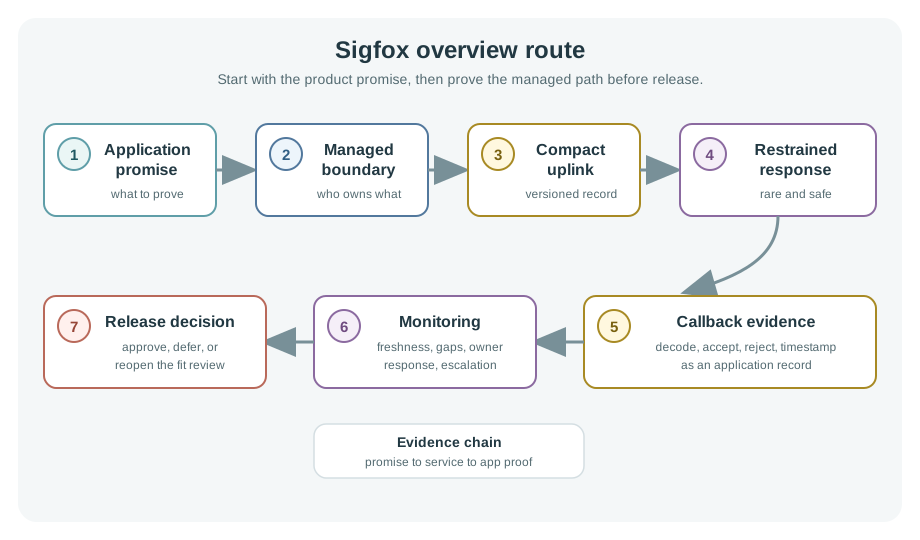
Follow Figure 16.1 from left to right: it starts from the application’s promise, crosses the managed boundary into the compact uplink and the restrained response, then collects callback evidence and monitoring before the release decision. The overview point is that Sigfox is a managed path: each stage has to be proven with its own evidence before the next one is trusted.
Device
16.4.1 Compact record
The device sends a small, versioned uplink and keeps safe local behavior when no response arrives.
Service
16.4.2 Managed reception
The shared service receives, deduplicates, timestamps, and routes records that the product team must observe.
Application
16.4.3 Callback evidence
The backend and application prove decode, acceptance, freshness, owner action, and rejection handling.
Use the cards as a first-pass checklist. If the device cannot summarize the event compactly, the design is not ready. If the service record cannot be tied to the right site and device build, the evidence is incomplete. If the callback and application record are missing, the product value has not been proven. If no one owns stale data, the release decision is still weak.
16.5 Practitioner: Build the Release Record
A Sigfox release decision should name what the team controls directly and what it can only validate through service evidence. That distinction is the practical difference between a managed LPWAN path and a private gateway network.
Build the release record as a chain of claims. The device claim says which local event, state, or alarm becomes a compact payload. The service claim says which representative conditions produced reception evidence. The backend claim says the decoder and callback path accepted the record. The operations claim says what happens when expected records are late, missing, malformed, duplicated, or stale.
For practitioners, the key habit is to separate convenience from approval. Managed reception may reduce network operations work, but it does not remove payload design, commissioning proof, callback resilience, monitoring rules, or continuity planning. Each approval should state where the evidence applies and which future changes reopen review.
That makes the release record a working artifact, not a slide. It should help the next reviewer repeat the decision, challenge weak assumptions, and see why another LPWAN or cellular path was not selected for this promise.
Payload
16.5.1 Meaning and cadence
Define normal, alarm, commissioning, and recovery records with limits on size, rate, and interpretation.
Downlink
16.5.2 Restrained response
Record what cannot depend on frequent cloud commands and what must remain local or use another path.
Evidence
16.5.3 Service-to-app proof
Keep service reception, decoder output, callback response, application acceptance, and stale-data checks together.
Exit
16.5.4 Reopen conditions
Name the coverage, ownership, continuity, data-access, or product-control trigger that forces a different design.
A strong record is short enough to maintain but specific enough to stop bad scale. It should include examples for normal state, alarm state, recovery state, missing state, decoder output, callback response, freshness rule, support owner, and exit trigger. When any field changes, the release record should show whether the change is inside the approved boundary or needs another pilot gate.
16.6 Under the Hood: Why Fit Can Fail Late
Late Sigfox surprises usually come from treating a managed-service success as if it were end-to-end product proof. A received message is useful, but release readiness depends on whether the right owner can explain every handoff after the device transmits.
The failure mode is subtle because each layer can appear healthy in isolation. A device can transmit a compact record that the application cannot interpret. A managed service can receive a record that never becomes a useful application state. A callback can succeed once while stale-data monitoring remains absent. A release review can approve a pilot without naming who acts when the pattern changes.
Under the hood, Sigfox fit is a systems question. The radio model, payload size, response restraint, backend callback, and service ownership all shape the same product promise. If the product needs rich transfer, frequent command loops, private placement control, or guaranteed application freshness without an owner and monitor, the overview should push the team toward redesign or a different path.
The same rule applies after launch: any change to payload meaning, enclosure behavior, callback handling, support ownership, or evidence quality can turn a once-good fit into a weak one.
- Payload mismatch: a compact uplink can be too small, too infrequent, or too ambiguous for the application promise.
- Response mismatch: designs that need frequent commands or tight control loops do not fit restrained downlink behavior.
- Evidence gap: service reception without decode, callback, storage, freshness, and owner response does not prove release readiness.
- Continuity risk: managed coverage, service terms, data access, and exit planning must be part of the product record.
That is why the overview asks for evidence before enthusiasm. The strongest answer is not "Sigfox works" or "Sigfox does not work"; it is a bounded decision that says what promise was tested, what evidence supports it, what remains outside the boundary, and what change would reopen the choice.
16.7 Prerequisites
This section: Prerequisites
You will get more from this chapter if you have already reviewed:
- LPWAN Fundamentals: why low-power wide-area systems trade throughput for reach and battery discipline.
- LoRaWAN Architecture: how a user-deployable gateway model differs from a managed-service model.
- Sigfox Message Flow: how compact records move through service reception, decode, callback, monitoring, and owner action.
16.8 Overview Route Map
This section: Overview Route Map — Use the route map in the depth panel to keep the chapter organized.
Use the route map in the depth panel to keep the chapter organized. Sigfox selection is not only a radio decision; it is a service, payload, callback, monitoring, and ownership decision.
Read the overview through six questions:
- What is the application promise? Define what the product must report or prove.
- Who owns each part of the path? Separate device, service, backend, application, and operations ownership.
- What can the uplink carry? Keep messages compact, versioned, and meaningful.
- What must not depend on downlink? Keep safety and frequent control local or on another path.
- What evidence proves success? Collect service records, decoder output, callback acceptance, and freshness monitoring.
- What reopens the decision? Write release limits, owner action, and exit triggers.
16.9 Introduction And Message Fit
This section: Introduction And Message Fit — Use Sigfox when the product promise can be expressed as small, sparse records rather than conversational network behavior.
Use Sigfox when the product promise can be expressed as small, sparse records rather than conversational network behavior. A good introductory review records what each message means, how often it is expected, which missing-message interval matters, and what the device should do locally when the backend is unavailable.
The fit test should be written before hardware approval:
- The normal report, alarm report, commissioning report, and recovery report each have a compact encoded meaning.
- The application can tolerate delayed or missing uplinks without expecting frequent cloud commands.
- The device has local fallback behavior for safety, timing, and state transitions.
- The release record names the data owner, monitoring owner, and recheck trigger.
16.10 Ultra-Narrowband And Diversity Evidence
This section: Ultra-Narrowband And Diversity Evidence — Sigfox uses an ultra-narrowband uplink style with repeated transmissions and network-side diversity.
Sigfox uses an ultra-narrowband uplink style with repeated transmissions and network-side diversity. The design review should connect that technical model to evidence instead of treating it as a coverage guarantee.
In the course summary, Sigfox is framed as an ultra-narrowband ISM-band LPWAN for very small records. Typical introductory figures are tens of kilometres in rural conditions, lower single-digit to ten-kilometre urban reach, data rates around tens to hundreds of bit/s, and tight daily-message limits such as 140 uplinks per device in common service profiles. Treat those figures as planning prompts, not release evidence: the accepted record still needs region, service profile, antenna, installation, payload, cadence, and callback proof.
Record the evidence in practical terms:
- Which device build, antenna, enclosure, mounting position, and firmware generated the sample messages.
- Which service records show reception under representative site conditions.
- Which backend records show decode, callback delivery, and application acceptance.
- Which locations, materials, or operating modes remain unproven.
16.11 Message Flow And Diagnostics
This section: Message Flow And Diagnostics — A Sigfox message is release evidence only when the full path is visible.
A Sigfox message is release evidence only when the full path is visible. Trace a sample from device record to service reception, backend decode, callback delivery, application storage, freshness monitoring, and owner response.
Use this diagnostic split when something fails:
- Device evidence: firmware version, payload version, battery state, retry behavior, and local event.
- Service evidence: received records, timestamps, duplicate copies, and missing-message windows.
- Backend evidence: decoder output, callback response, authentication, and retry status.
- Application evidence: accepted record, rejected record, stale dashboard, alert, or owner action.
16.12 Managed-Service Boundary
This section: Managed-Service Boundary — Sigfox moves much of the receiving and routing path into a managed service.
Sigfox moves much of the receiving and routing path into a managed service. Inspect Figure 16.2 to separate the parts the product team controls from the service behavior it must observe, because convenience does not transfer accountability for the application promise.
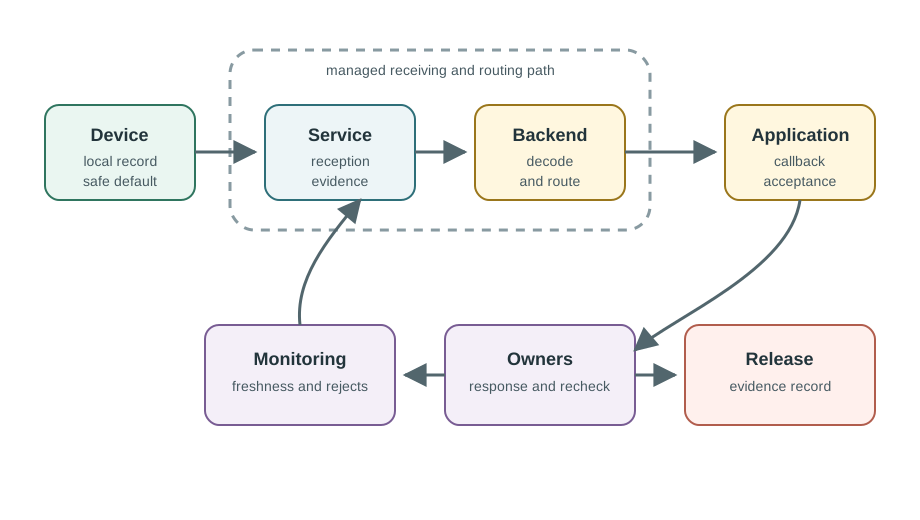
Read Figure 16.2 from the device estate into shared reception, then through backend decode and routing to the application’s callback. Continue to monitoring, named owners, and the release record. Each transition needs its own observable evidence; a message visible in a service portal does not prove decoding, callback acceptance, freshness monitoring, or owner response. That boundary map organizes the layer-by-layer review below.
Review the boundary in layers:
Device
16.12.1 Local behavior
The device creates compact records and keeps safe defaults when no response arrives.
Service
16.12.2 Reception evidence
The managed path should produce usable records from representative sites and installation conditions.
Backend
16.12.3 Decode and route
Payload versions, callback schemas, retry behavior, and authentication must be proven together.
Owners
16.12.4 Response model
Each weak point needs a named responder and a recheck trigger.
The boundary is acceptable when the team can show:
Start by representative service evidence for the intended installation pattern. Then a compact payload contract with normal, alert, recovery, and missing-state examples. Next callback acceptance records, not only service dashboard records. After that freshness monitoring that distinguishes quiet state from missing state. Finally owners for device, service, backend, application, and release decisions.
16.13 Compact Uplinks and Restrained Responses
This section: Compact Uplinks and Restrained Responses — Inspect Figure 16.3 to test whether local state can become a compact, self-describing, low-cadence record while the product remains safe during rare or absent responses.
Inspect Figure 16.3 to test whether local state can become a compact, self-describing, low-cadence record while the product remains safe during rare or absent responses.
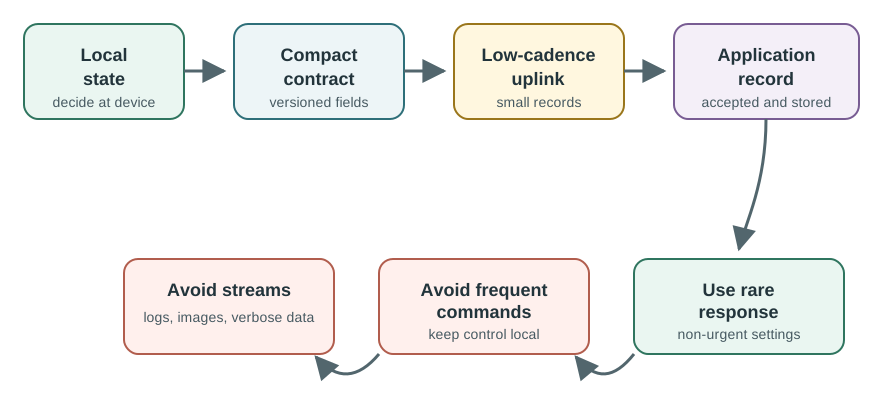
Start with the message need. Test it against network limits. Read Figure 16.3 from local state to the compact payload contract, then follow the low-cadence uplink into the application record. Treat the restrained response branch separately: commands are occasional and constrained, so local fallback must preserve safe behavior during silence. This path explains the fit lists below. Periodic summaries and locally decided alerts align with it; streams, verbose diagnostics, firmware delivery, or cloud-dependent safety actions do not.
Good fit patterns include:
- Periodic status records where each record is small and meaningful.
- Alert records where the device can decide locally when a state matters.
- Metering or state summaries where the application can tolerate quiet periods.
- Monitoring flows where missing records are detected by freshness rules.
- Devices that do not need rich remote commands to stay safe.
Poor fit patterns include:
- Frequent command-and-response behavior.
- Rich configuration transfer through the main communication path.
- Firmware delivery through the same restrained response path.
- Streams, logs, images, audio, or verbose diagnostics.
- Safety behavior that depends on a cloud command arriving.
16.14 Physical Layer, Backend, and Product Layers
This section: Physical Layer, Backend, and Product Layers — The physical layer is only one part of a Sigfox decision.
The physical layer is only one part of a Sigfox decision. Ultra-narrowband operation is relevant because it supports a compact, low-power radio path, but release readiness also depends on payload meaning, backend routing, callback behavior, monitoring, and ownership.
Radio
16.14.1 Narrow signal path
Useful for compact low-cadence records, but not a reason to skip service evidence.
Payload
16.14.2 Meaning contract
Fields, units, missing markers, version, and acceptance tests should be documented.
Callback
16.14.3 Application proof
The application record must be accepted, stored, monitored, and owned.
Release
16.14.4 Decision record
Approval should list evidence, limits, owner response, and recheck triggers.
Keep layer boundaries clear:
Start by a radio event is not the same as a decoded application record. Then a payload that fits once is not the same as a versioned payload contract. Next a successful callback test is not the same as ongoing monitoring. Finally a release approval is not permanent if payload, enclosure, mounting class, callback schema, or owner model changes.
16.15 Technology Selection View
This section: Technology Selection View — Communication requirements and responsibility for the network lead to different LPWAN choices in Figure 16.4.
-

Start with the record and who must control the service.
-

Follow another path if local control or movement matters.
-

Require a real pilot and a release gate.
Communication requirements and responsibility for the network lead to different LPWAN choices in Figure 16.4.
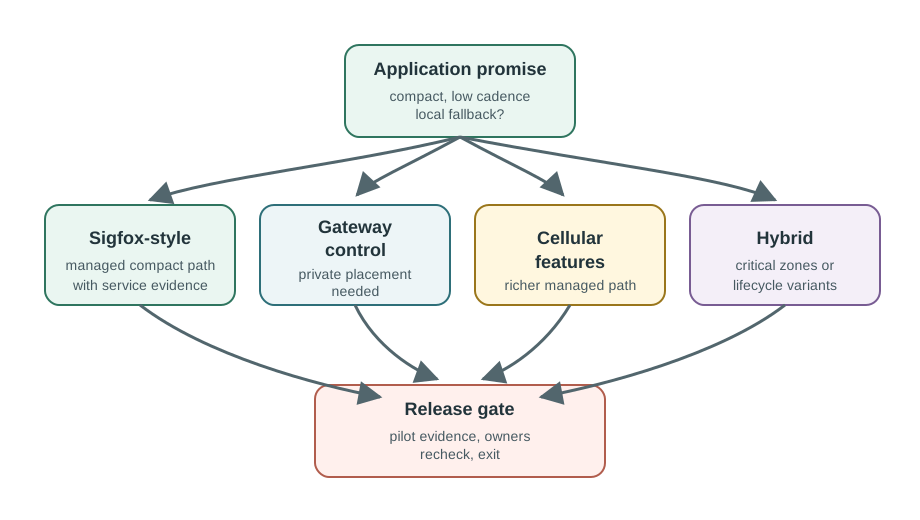
Read Figure 16.4 from small, rare records to the managed service path. A need for local gateway control points to another branch. So does a need for cell handover or frequent downlinks. Do not force those cases onto the Sigfox-style route. Every option must pass a field pilot and a release gate. The choice record keeps the service model, downlink need, site proof, owner, and exit path beside radio coverage. That makes the early radio choice clear to the team that must support it.
Use this decision view:
Sigfox-style
16.15.1 Compact service path
Best when the application needs small, low-cadence records and accepts managed-service dependency.
LoRaWAN-style
16.15.2 Gateway control
Best when the team needs private gateway placement, network-control options, and flexible class behavior.
Cellular LPWAN
16.15.3 Carrier feature set
Best when the application needs cellular integration, richer managed features, or different mobility assumptions.
Hybrid
16.15.4 Mixed evidence
Best when critical zones, lifecycle plans, or product variants need more than one communication path.
16.16 Release Evidence for the Overview Decision
This section: Release Evidence for the Overview Decision — Before selecting Sigfox for a product lane, the release record should be concrete enough that another reviewer can repeat the decision.
Before selecting Sigfox for a product lane, the release record should be concrete enough that another reviewer can repeat the decision.
Promise
16.16.1 Fit statement
State why compact low-cadence records support the product outcome.
Evidence
16.16.2 Pilot packet
Keep service records, decoded examples, callback acceptance, freshness rules, and failed-path examples.
Limits
16.16.3 Response rules
Document what never depends on downlink and what the device does locally during silence.
Recheck
16.16.4 Change triggers
Reopen review for payload, callback, enclosure, mounting, service evidence, owner, or exit-plan changes.
The review cards name individual limits; inspect Figure 16.5 to reconnect them into one release path. Inspect it before closing the overview so device promises, managed-service evidence, downstream acceptance, and recheck authority remain part of the same decision.
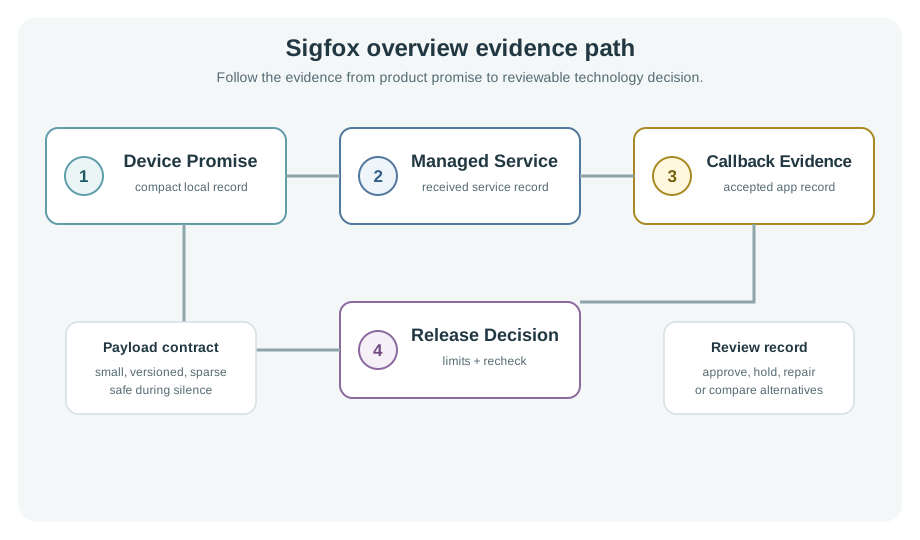
Read Figure 16.5 from the device promise into service reception and callback evidence, then finish at the release checkpoint. At each boundary, ask what record proves forward progress and who can respond when it fails. The recheck path matters as much as initial approval: payload, enclosure, mounting, callback, service, ownership, or exit-plan changes invalidate earlier assumptions and reopen the evidence review.
16.17 Practice: Match Review Items
This section: Practice: Match Review Items — The quantitative envelope in Figure 16.6 makes the fit decision visible before a long-range claim becomes an architecture promise.
The quantitative envelope in Figure 16.6 makes the fit decision visible before a long-range claim becomes an architecture promise.

In Figure 16.6, Long reach must be read with Tiny, sparse frames and Short transmit bursts. That combination supports Meter and alarm telemetry, but Video and closed-loop control violates the throughput, downlink, and deterministic-latency boundaries that buy the long unattended lifetime.
For contrast, Figure 16.7 shows that a cellular narrowband option introduces a spectrum-placement decision absent from the Sigfox endpoint model.

Compare Refarmed carrier, LTE edge resource, and Inside LTE carrier in Figure 16.7. Unlike the Long reach envelope above, these modes expose spectrum and LTE-coexistence obligations; the comparison prevents “LPWAN” from collapsing distinct operator, capacity, and lifecycle boundaries.
16.18 Summary
This section: Summary — Sigfox is a managed-service LPWAN path for compact, low-cadence records and restrained response behavior.
Sigfox is a managed-service LPWAN path for compact, low-cadence records and restrained response behavior. A strong overview review does not stop at the radio idea. It proves the application promise, service evidence, payload contract, backend callback, monitoring, owner response, release limits, and exit triggers. Choose it when that evidence fits the product; compare alternatives when the product needs private network control, richer transfer, frequent commands, or a different lifecycle model.
16.19 Common Pitfalls
This section: Common Pitfalls
Managed reception can reduce infrastructure work, but release still needs representative evidence, callback proof, monitoring, and owner response.
Payload meaning should be designed early. If normal, alert, recovery, and missing states do not fit compactly, the technology-fit decision should be reopened.
Downlink should be rare and non-urgent. Devices need local fallback behavior for safety, timing, and recovery.
16.20 What’s Next
This section: What’s Next — Continue with Sigfox Operator Risks to test continuity assumptions, or use Message Flow And Diagnostics to trace the service path from device record to application acceptance.
Continue with Sigfox Operator Risks to test continuity assumptions, or use Message Flow And Diagnostics to trace the service path from device record to application acceptance.
16.21 Key Takeaway
This section: Key Takeaway — A Sigfox overview should leave one practical question: does the application fit very small, sparse, operator-network telemetry with limited downlink and strict backend integration?
A Sigfox overview should leave one practical question: does the application fit very small, sparse, operator-network telemetry with limited downlink and strict backend integration?
Find help
3 reviewed answers.
Where should I start in a module?
Open the module page from the sidebar to see its chapters in order. Use the module map to return to a topic you need.
Modules and pathsReviewed
What can I try when a project does not work?
Check the symptom, then work through the diagnostic steps. Keep the error message and the smallest example that reproduces it.
When you are stuckReviewed
How do interactive examples work?
Use the interactive guide to check how examples and simulations work before changing your project.
Interactive examples guideReviewed