Time: ~15 min | Level: Intermediate | Unit: P03.C03.U05
Key Concepts
Clinical-Grade Accuracy: Device measurement error below 2% as required by FDA and clinical standards, distinguishing medical-grade from consumer wellness devices.
Alert Fatigue: Clinician desensitisation caused by excessive false-positive alarms, increasing the risk that genuine critical alerts are ignored.
FDA 510(k) Clearance: US regulatory pathway for medical devices demonstrating substantial equivalence to a legally marketed predicate device.
HIPAA: US law requiring administrative, physical, and technical safeguards for Protected Health Information transmitted by healthcare IoT.
EHR Integration: Direct data flow from IoT monitoring devices into the Electronic Health Record, eliminating manual transcription errors.
Wearable Patch Sensor: Adhesive multi-sensor device placed on skin to continuously monitor ECG, respiration, and temperature without tethering the patient.
Early Warning Score (EWS): Composite algorithm aggregating vital sign trends into a single deterioration risk score for triage prioritisation.
Minimum Viable Understanding
Healthcare IoT uses three latency tiers: Life-critical alerts (arrhythmia, falls) require less than 1 second end-to-end via edge processing; clinical monitoring (vital signs trending, medication alerts) needs less than 5 minutes via cloud real-time; and wellness tracking (weight, sleep, activity) tolerates hourly batch uploads. Mixing tiers wastes infrastructure or endangers patients.
Sensor fusion and alert escalation prevent alarm fatigue: Over 85% of hospital alarms are non-actionable. Combining multiple sensors (accelerometer + gyroscope + pressure mat for fall detection) with 15-30 second trend confirmation windows suppresses false positives. Graduated alerts (device to caregiver to provider to emergency) ensure critical events reach the right responder without overwhelming everyone.
Design with explicit latency budgets: Allocate 500ms for edge processing, 200ms for network transmission, and 300ms for cloud alerting to meet the 1-second critical alert threshold. Fall detection systems achieving less than 30-second alert times reduce serious injury rates by 26% compared to 5+ minute delays (CDC study). Use separate data paths for each tier rather than one-size-fits-all architecture.
Putting Numbers to It
Healthcare IoT latency budgets work backward from clinical requirements. For post-surgical ward monitoring with 5-minute detection requirement:
healthcareLatencyInsight = meetsRequirement?"Your system has enough buffer for alert escalation if the primary nurse doesn't respond immediately.":"Your system latency exceeds the clinical window. Consider edge processing for critical alerts or reducing trend confirmation time, but balance that change against false positives."html`<p><strong>Key Insight:</strong> ${healthcareLatencyInsight}</p>`
30.2 Learning Objectives
By the end of this section, you will be able to:
Evaluate the healthcare IoT market opportunity by quantifying costs of falls, medication non-adherence, and chronic disease monitoring
Classify healthcare data streams into appropriate latency tiers (sub-second edge, minute-scale cloud, hourly batch) based on clinical urgency
Design a three-tier healthcare IoT architecture incorporating edge processing, gateway aggregation, and cloud analytics with explicit latency budgets
Apply cross-cutting design patterns including sensor fusion, privacy-by-design, and alert escalation cascades to reduce false positives and alarm fatigue
Select appropriate device categories (FDA-cleared medical vs. consumer wearable) by matching accuracy requirements to clinical use cases
Calculate end-to-end latency budgets for healthcare monitoring systems and verify they meet clinical response time requirements
For Kids: Meet the Sensor Squad!
Healthcare IoT is like having a team of tiny guardian angels that watch over people’s health day and night!
30.2.1 The Sensor Squad Adventure: Grandma’s Health Heroes
Grandma Rose just came home from the hospital after a small surgery. Her family was worried - how could they make sure she was okay when they couldn’t be there all the time? That’s when the Sensor Squad moved in to help!
Sammy the Temperature Sensor lived in a small patch stuck gently on Grandma’s arm. “I check her body temperature every few minutes,” Sammy explained. “If she starts getting a fever - which could mean an infection - I’ll send an alert right away!” One night at 2 AM, Sammy noticed Grandma’s temperature rising. The alert went to Mom’s phone, and they called the doctor first thing in the morning - catching the infection before it got serious!
Motio the Motion Detector was placed in the hallway and bathroom. “I watch for two important things,” said Motio. “First, I make sure Grandma is moving around during the day - that’s healthy! But I also watch for falls. If someone falls and doesn’t get up, I send an emergency alert in less than 30 seconds!” Motio even learned Grandma’s normal walking pattern, so if she started walking differently (which might mean she was feeling dizzy), Motio would let the family know.
Pressi the Pressure Sensor lived in a special mat under Grandma’s mattress. “I can feel when Grandma gets in and out of bed, and I count how many times she wakes up at night,” Pressi said proudly. “Good sleep helps people heal faster! I also check her breathing and heartbeat just by feeling the tiny movements her body makes.”
The star of the team was the Smart Pill Bottle - a special container that knew when Grandma opened it to take her medicine. “Grandma needs to take her pills at 8 AM and 8 PM,” it reminded everyone. If she forgot, it would glow, beep, and even send a message to her grandson’s phone: “Hey, can you remind Grandma about her medicine?”
After three weeks, the doctor looked at all the data the Sensor Squad had collected. “Amazing! I can see that Grandma’s sleep is improving, she’s walking more each day, and she hasn’t missed a single dose of medicine. She’s healing perfectly!”
“We’re like a health team that never sleeps,” said Signal Sam the Communication Expert. “We watch over people we care about, catch problems early, and help doctors make better decisions - all without Grandma having to do anything special!”
30.2.2 Key Words for Kids
Word
What It Means
Health Monitor
A device that watches important body signals like temperature, heart rate, and movement to make sure someone is healthy
Fall Detection
A sensor that can tell if someone has fallen down and sends an alert so help can come quickly
Medication Reminder
A smart device that helps people remember to take their medicine at the right time
Vital Signs
The important body measurements that show if you’re healthy - like temperature, heartbeat, and breathing
Remote Monitoring
When doctors or family can check on someone’s health from far away using sensor data
30.2.3 Try This at Home!
Be a Health Detective for a Day!
You can track your own “vital signs” just like the Sensor Squad does:
Morning Check: Right when you wake up, count how many breaths you take in one minute (just breathe normally!)
Activity Tracker: Make tally marks every time you walk up stairs, run, or do something active
Evening Check: Count your breaths again before bed
Keep a simple health log:
Time
Breaths/Minute
Activity Level (1-5)
How I Feel
Morning
___
___
___________
Afternoon
___
___
___________
Evening
___
___
___________
What you’ll discover:
Your breathing rate is probably higher after running than after sitting still
On days you’re more active, you might sleep better
Tracking data helps you notice patterns in your own body!
Real healthcare sensors do this automatically, 24/7 - they collect data so doctors can spot problems even before you feel sick. That’s the superpower of healthcare IoT!
For Beginners: What Is Healthcare IoT?
Healthcare IoT means connecting medical sensors and devices to the internet so they can automatically collect health data, send alerts, and help doctors make better decisions – all without the patient needing to do anything special.
Think of it like a smoke detector for your body. A smoke detector sits quietly on your ceiling, constantly checking the air. When it detects smoke, it sounds an alarm immediately. Healthcare IoT works the same way: sensors quietly monitor vital signs like heart rate, temperature, and blood oxygen. If something looks wrong, the system alerts a nurse, family member, or even calls emergency services.
Three things make healthcare IoT different from regular medical checkups:
Continuous monitoring – Instead of checking your blood pressure once at the doctor’s office, a wearable sensor checks it hundreds of times per day, catching problems that a single snapshot would miss.
Automatic alerts – The system decides what is normal and what is not. A small rise in temperature at 3 AM gets flagged without anyone needing to be awake to notice it.
Tiered urgency – Not every reading is an emergency. The system sorts data into categories: life-threatening events get instant alerts (seconds), clinical concerns get flagged within minutes, and wellness trends are reviewed daily or weekly.
Why does this matter? A patient who falls at home and is not found for hours faces far worse outcomes than one whose fall sensor triggers an alert within 30 seconds. Healthcare IoT closes that gap between something going wrong and someone responding.
30.3 The Healthcare IoT Opportunity: By the Numbers
Healthcare represents one of IoT’s most impactful application domains, where sensor-driven interventions directly save lives, reduce costs, and improve quality of care.
Why Healthcare IoT Matters: The $350 Billion Opportunity
Healthcare IoT addresses three massive societal challenges with quantifiable impact:
Challenge
Annual US Cost
IoT Solution
Measured Impact
Elderly Falls
$50 billion
Fall detection wearables + ambient sensors
Early detection: seconds vs. hours
Medication Non-Adherence
$100-300 billion
Smart pill bottles + ingestible sensors
40% improvement in adherence
UTI in Infants/Elderly
$7 billion+ hospital visits
Self-powered smart diapers
Early detection before symptoms
Chronic Disease Monitoring
84% of total healthcare spending
Continuous wearable monitoring
24/7 data vs. monthly checkups
The Common Pattern: All four use cases demonstrate IoT’s core value proposition - continuous passive monitoring replacing periodic human observation, enabling early intervention before conditions become acute and expensive.
Key Data Points Across Healthcare IoT Applications:
Metric
Value
Clinical Impact
Elderly Falls (65+ years)
1 in 4 fall annually
$50B/year medical costs
Fall Detection Accuracy
95%+ with ML
<30 sec response time
UTI Hospital Visits
7M/year (USA)
$500-1,000 saved per avoided ER visit
Early UTI Detection
24-48 hours before symptoms
Prevents hospitalizations
Medication Non-Adherence
50% of patients
$100-300B/year preventable costs
Adherence Improvement
30-40% with IoT reminders
Reduces hospital readmissions
Remote Patient Monitoring
30-50% reduction in readmissions
Real-time vital signs trending
30.4 Healthcare IoT Ecosystem Architecture
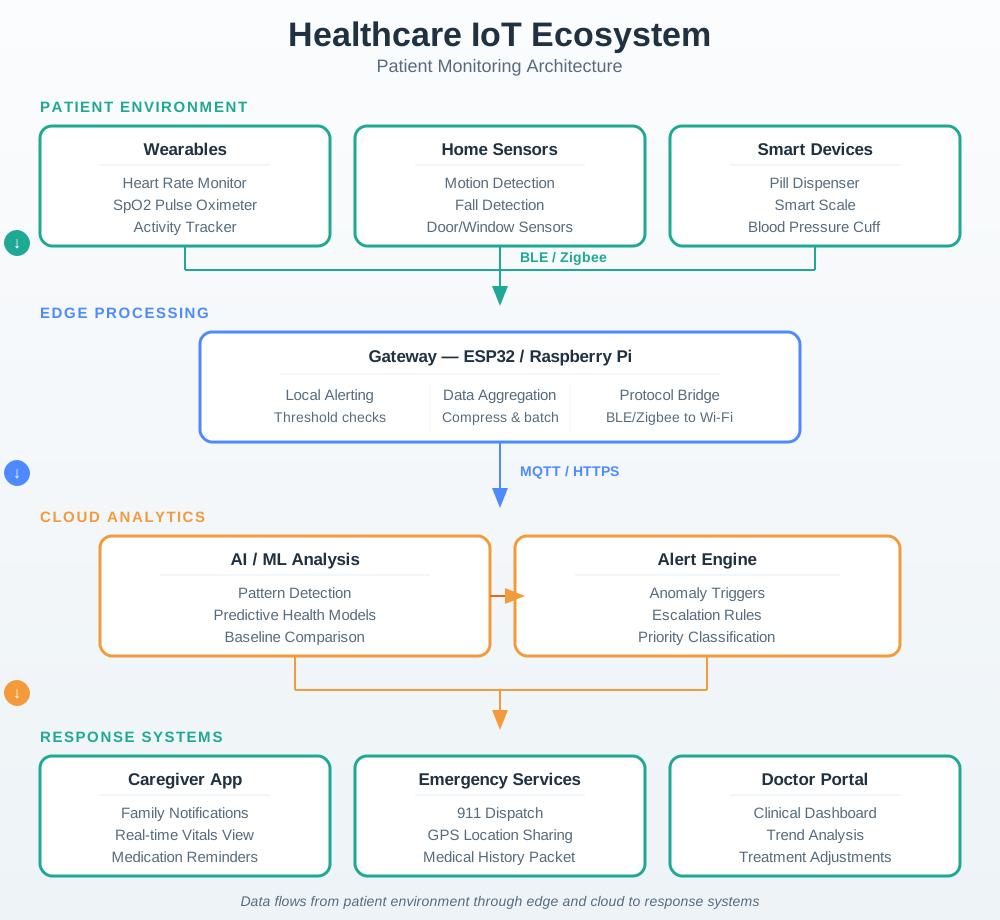
The diagram below illustrates how patient sensors, edge processing, cloud analytics, and response systems work together to deliver real-time healthcare monitoring and intervention:
Flowchart diagram
Figure 30.1: Healthcare IoT ecosystem architecture showing patient environment with wearables (heart rate, SpO2), home sensors (motion, fall detection), and smart devices connected through edge gateways to cloud analytics and clinical response systems.
30.5 Healthcare IoT System Architecture Gallery
The following figures illustrate the breadth of healthcare IoT implementations, from wearable monitors to hospital-wide asset tracking systems.
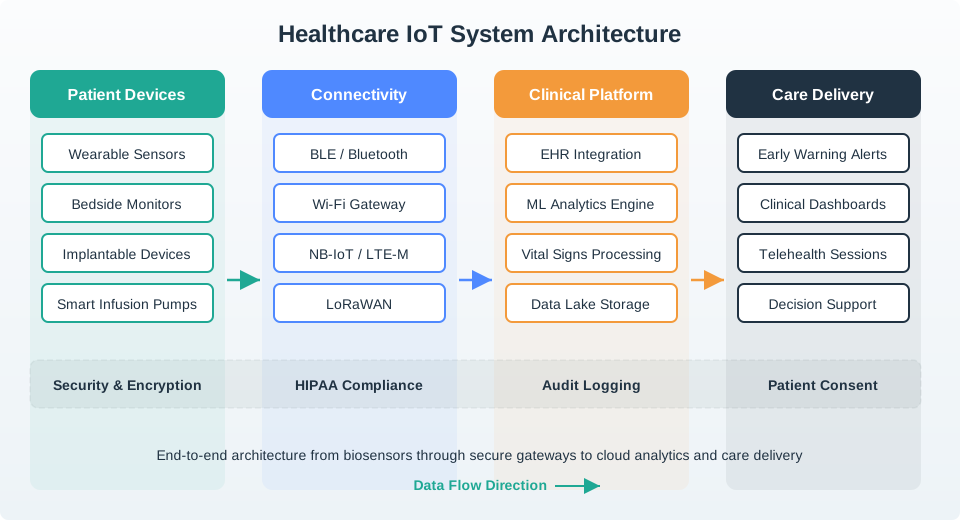
Healthcare IoT System Architecture
Figure 30.2: A healthcare IoT system integrates wearable biosensors, ambient monitoring devices, secure wireless connectivity, and cloud analytics to enable continuous patient monitoring, early warning alerts, and data-driven clinical decision support across hospital and home care settings.
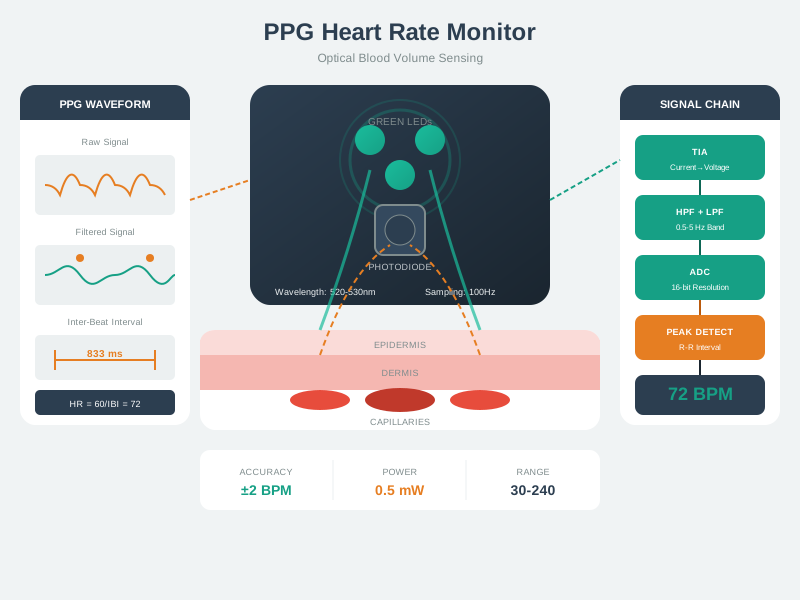
Heart Rate Monitor Device
Figure 30.3: Continuous heart rate monitoring devices use optical and electrical sensors to track cardiac health around the clock, enabling early detection of arrhythmias and providing valuable data for both fitness tracking and clinical cardiac monitoring applications.
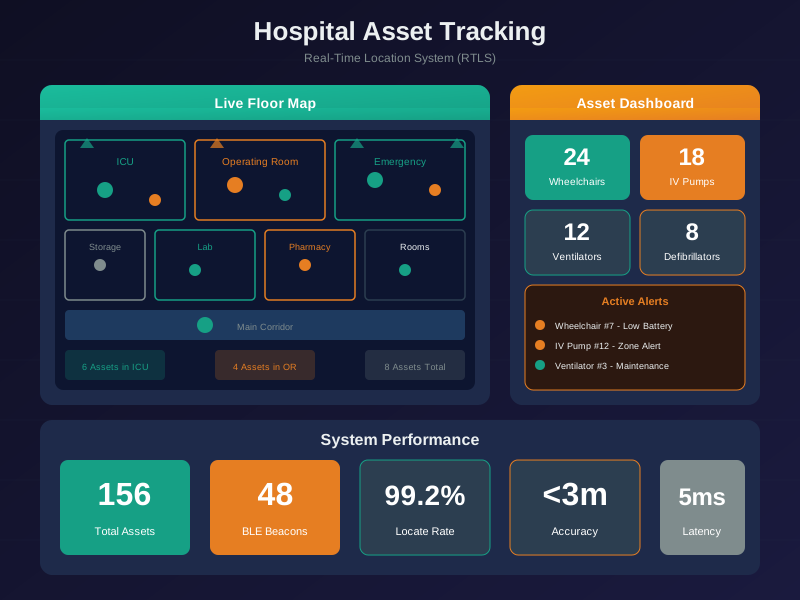
Hospital Asset Tracking System
Figure 30.4: Real-time asset tracking in hospitals reduces equipment search time from 30 minutes to under 30 seconds, improves utilization rates by 15-20%, and enables predictive maintenance scheduling to reduce equipment downtime and extend asset lifespan.
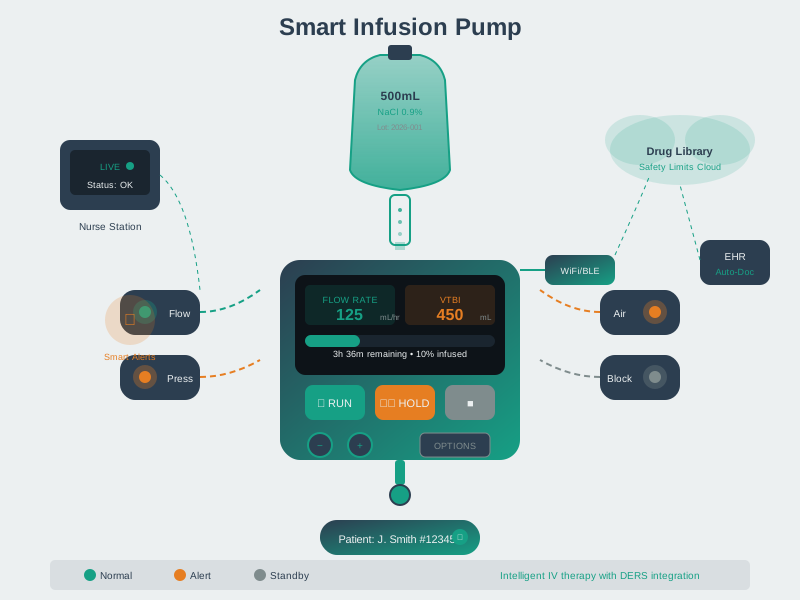
Connected Infusion Pump
Figure 30.5: Connected infusion pumps integrate with hospital pharmacy systems to reduce medication errors by up to 85%, automatically verify drug-dose-patient matching, and provide nurses with real-time alerts when IV lines require attention.
30.6 Healthcare Data Flow Architecture
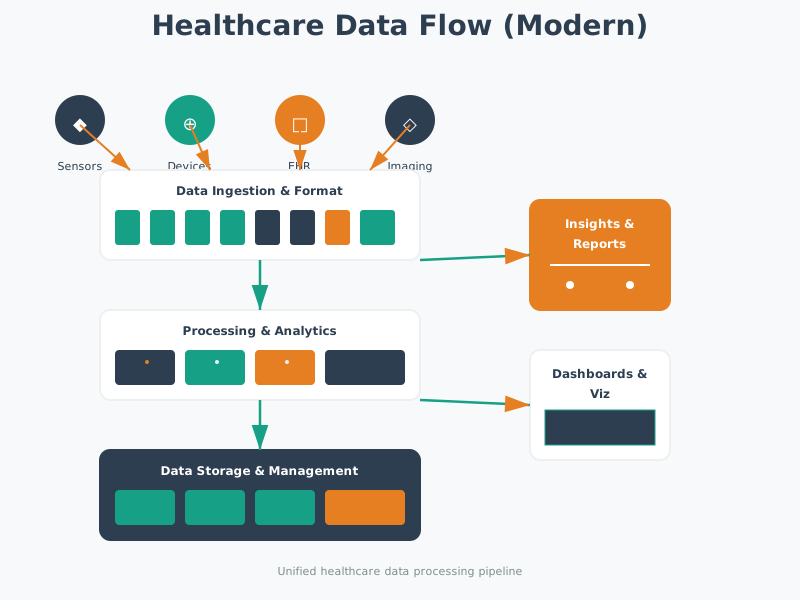
The following diagram illustrates how health data flows from patient sensors through processing tiers to clinical decision support:
Health Data Flow Architecture
Figure 30.6: Healthcare data flow architecture: Patient biosensors generate continuous vital signs, edge devices filter noise and detect critical events, cloud platforms aggregate multi-patient data for population health analytics, and clinical dashboards present actionable insights to healthcare providers.
30.7 Healthcare IoT Latency Tiers Decision Tree
Healthcare IoT latency tier decision tree showing how to route data by clinical urgency so life-critical events stay on the edge while less urgent monitoring uses cloud and batch analytics.
30.8 Healthcare IoT Stakeholder Communication Flow
Healthcare IoT communication flow between stakeholders: patient devices generate alerts, caregivers receive the first escalation, providers coordinate clinical follow-up, and emergency services activate only for life-threatening events.
30.9 Healthcare IoT Deployment Tradeoffs
Tradeoff: Edge Processing vs. Cloud Analytics
Option A: Process health data at the edge (on-device or gateway) - Enables sub-second response times for critical alerts, works without internet connectivity, and minimizes HIPAA exposure by keeping sensitive data local. Option B: Send all data to cloud for analysis - Enables sophisticated ML models, cross-patient population insights, and easier algorithm updates without device recalls. Decision factors: Response time requirements (fall detection needs <2 seconds), regulatory constraints (HIPAA requires encryption in transit), connectivity reliability (rural elderly monitoring may lose internet), and the sophistication of analytics needed (simple threshold alerts vs. complex pattern recognition).
Tradeoff: Medical-Grade vs. Consumer Wearables
Option A: FDA-cleared medical devices - Clinically validated accuracy (e.g., +/-0.1 degrees C temperature), EHR integration, liability protection, and insurance reimbursement eligibility. Typical cost: $500-2,000 per device. Option B: Consumer wearables (Fitbit, Apple Watch) - Lower cost ($50-400), higher user adoption, continuous wear compliance, and faster innovation cycles. Accuracy varies but improving rapidly. Decision factors: Clinical use case (screening vs. diagnosis vs. treatment monitoring), liability exposure (who is responsible for missed detections?), reimbursement requirements (Medicare RPM codes require FDA-cleared devices), and patient population (tech-savvy vs. elderly with limited digital literacy).
Tradeoff: Proprietary Health Ecosystem vs. Open Interoperability
Option A: Proprietary ecosystem (e.g., Apple Health, Fitbit Premium) - Seamless user experience within ecosystem, consistent data quality and validation, single vendor accountability, and integrated privacy controls. Option B: Open standards approach (FHIR, HL7, Bluetooth Health Device Profile) - Patient data portability, broad device compatibility, clinician access through standard EHR integrations, and reduced vendor dependency. Decision factors: Patient population (tech-savvy users prefer seamless ecosystems; multi-provider care requires interoperability), clinical use case (wellness tracking tolerates fragmentation; chronic disease management needs EHR integration), and regulatory requirements (21st Century Cures Act mandates patient data access).
Pattern 1: Sensor Fusion for Reliability All healthcare use cases combine multiple sensors to reduce false positives: - Fall detection: Accelerometer + gyroscope + pressure mat - Baby monitoring: Position + breathing + SpO2 + temperature - Medication adherence: Weight + RFID + timestamp correlation
Pattern 3: Privacy-by-Design Sensitive health data requires: - Local processing first: Edge analytics reduce cloud transmission - Encryption in transit: TLS 1.3 for all communications - Anonymization: Remove PII before analytics where possible - User control: Opt-in sharing with family/providers
In 60 Seconds
Healthcare IoT connects clinical-grade wearables and monitoring devices to care workflows, enabling continuous patient observation and early detection of deterioration while navigating strict FDA accuracy and HIPAA privacy requirements.
Pattern 4: Alert Escalation Cascades Critical health events use graduated response: 1. Local alert (device beeps, phone notification) 2. Family caregiver notification (30-60 min delay) 3. Healthcare provider intervention (pattern-based) 4. Emergency services (life-threatening events only)
This prevents alarm fatigue while ensuring no critical event is missed.
Common Pitfalls in Healthcare IoT
Pitfall 1: Treating all health data with the same urgency. Sending daily weight measurements through the same real-time pipeline as cardiac arrhythmia alerts wastes infrastructure budget and creates noise that masks genuinely critical events. Design separate data paths for each latency tier from the start.
Pitfall 2: Ignoring alarm fatigue. Systems that alert on every minor threshold crossing quickly get silenced by overwhelmed nurses and caregivers. Studies show that over 85% of hospital alarms are non-actionable. Use multi-sensor fusion and trend confirmation windows (typically 15-30 seconds) to suppress false positives before they reach human responders.
Pitfall 3: Assuming consumer wearables are medical devices. A consumer smartwatch SpO2 reading of 94% might actually be anywhere from 90-98% due to motion artifacts and skin tone variability. If clinical decisions depend on the reading, FDA-cleared devices with validated accuracy specifications are required – not optional.
Pitfall 4: Neglecting connectivity gaps. Elderly patients in rural areas may have intermittent internet. A fall detection system that depends on cloud processing will fail silently when the connection drops. Critical alerts must be processed at the edge with local notification capability (audible alarm, gateway SMS) as a fallback.
Pitfall 5: Underestimating HIPAA and data sovereignty requirements. Streaming raw vital signs to a cloud analytics platform without encryption, access controls, and audit logging is a regulatory violation. Healthcare IoT architectures must include encryption in transit (TLS 1.3), at rest (AES-256), and role-based access controls from day one – retrofitting security is far more expensive.
30.11 Worked Example: Healthcare IoT Latency Budget Design
Scenario: A hospital is deploying continuous vital signs monitoring for post-surgical patients on a general ward. The system must detect patient deterioration and alert nurses within clinically acceptable timeframes to prevent code blue events.
Given:
Clinical requirement: Detect deterioration within 5 minutes of vital sign changes (NEWS-2 early warning score)
Patient population: 40 beds on the ward, 1 nurse per 8 patients
This exceeds the 2-3 minute typical response time with margin for escalation.
Result: The architecture meets clinical requirements with 1.9+ minutes buffer for alert escalation to charge nurse if primary nurse doesn’t acknowledge within 90 seconds.
Key Design Insight: The 30-second trend confirmation window is the largest contributor to latency but is essential - without it, the system would generate 5-10x more false alarms from patient movement, leading to alarm fatigue and ignored alerts.
Worked Example: Comparing FDA-Cleared vs Consumer Wearables
Scenario: A hospital discharge program provides remote monitoring for congestive heart failure (CHF) patients. They must choose between FDA-cleared medical-grade pulse oximeters or consumer smartwatches with SpO2 sensors.
Option A: FDA-Cleared Medical Device (e.g., Nonin 3150):
Accuracy: +/-2% SpO2 (FDA 510(k) validated against arterial blood gas)
Cost: $800 per device
Medicare reimbursement: Eligible for RPM codes (CPT 99453-99458) = $120-150/month per patient
Liability: Device bears regulatory burden; hospital has liability protection
Battery life: 5-7 days continuous monitoring
Patient compliance: 65% (lower due to separate charging device)
Option B: Consumer Smartwatch (e.g., Apple Watch Series 8):
Accuracy: +/-3% typical, but affected by skin tone, motion, temperature (not FDA-validated)
Cost: $400 per device
Medicare reimbursement: Not eligible (non-FDA device)
Liability: Hospital assumes full liability for treatment decisions based on data
Battery life: 18 hours (daily charging required)
Patient compliance: 85% (higher because patients already wear it)
Step 1 - Calculate 6-month program economics per patient:
Option A Economics:
Device cost (amortized over 2-year program life): $800 / 4 cohorts = $200 per patient
Medicare reimbursement: $135/month x 6 = $810 per patient
Net revenue: $810 - $200 = $610 per patient
Option B Economics:
Device cost (amortized): $400 / 4 = $100 per patient
Medicare reimbursement: $0 (ineligible)
Net revenue: -$100 per patient (loss)
Step 2 - Factor in compliance and clinical outcomes:
Option A: 65% compliance → 35% of patients don’t wear device → miss early warning events - Expected readmissions: 18% of 100 patients = 18 readmissions - Hospital penalty: 18 x $10,000 = $180,000
Option B: 85% compliance → 15% miss early warnings - Expected readmissions: 12% of 100 patients = 12 readmissions - Hospital penalty: 12 x $10,000 = $120,000 - But: device liability risk when making treatment decisions on non-validated data
Step 3 - Decision Matrix:
Factor
FDA-Cleared (A)
Consumer (B)
Winner
Revenue per patient
$610
-$100
A
Compliance rate
65%
85%
B
Readmission reduction
$180K penalties
$120K penalties
B
Liability exposure
Low (FDA cleared)
High (non-medical)
A
Net program value
$610 x 100 - $180K = -$119K
-$100 x 100 - $120K = -$130K
A (less bad)
Key Insight: Neither option is economically attractive at face value, BUT Option A’s Medicare reimbursement makes it viable. The compliance difference favors Option B, but the lack of reimbursement and liability exposure makes it unsustainable. The correct strategy: Use FDA-cleared devices for reimbursement eligibility, and invest in patient engagement tools (mobile app, text reminders) to improve compliance from 65% to 75%+, which would reduce readmissions to $105K penalties and deliver net positive program value.
Real-World Outcome: Hospitals using FDA-cleared RPM achieve 25-40% reductions in CHF readmissions (JAMA 2019 study). Consumer devices show similar clinical outcomes in research trials but cannot be reimbursed, making them financially unviable for scaled programs.
Interactive: FDA-Cleared vs Consumer Device ROI Calculator
Compare the economics of medical-grade vs consumer wearables for remote patient monitoring.
fdaDevicePerPatient = fdaDeviceCost /4// Amortized over 2-year life, 4 cohortsfdaReimbursementPerPatient = monthlyReimbursement * programMonthsfdaNetRevenue = fdaReimbursementPerPatient - fdaDevicePerPatientfdaReadmissionRate =0.18* (1- fdaCompliance)fdaReadmissions =Math.round(numPatients * fdaReadmissionRate)fdaPenalties = fdaReadmissions * readmissionCostfdaTotalValue = (fdaNetRevenue * numPatients) - fdaPenalties// Calculate for Consumer devicesconsumerDevicePerPatient = consumerDeviceCost /4consumerReimbursementPerPatient =0// Not eligibleconsumerNetRevenue = consumerReimbursementPerPatient - consumerDevicePerPatientconsumerReadmissionRate =0.12* (1- consumerCompliance)consumerReadmissions =Math.round(numPatients * consumerReadmissionRate)consumerPenalties = consumerReadmissions * readmissionCostconsumerTotalValue = (consumerNetRevenue * numPatients) - consumerPenalties// Determine winnerfdaBetter = fdaTotalValue > consumerTotalValuedifference =Math.abs(fdaTotalValue - consumerTotalValue)html`<div style="display: grid; grid-template-columns: repeat(2, 1fr); gap: 20px; margin: 20px 0;"> <div style="background: ${fdaBetter ?'#16A085':'#7F8C8D'}; color: white; padding: 20px; border-radius: 8px;"> <h3 style="margin: 0 0 15px 0; color: white;">FDA-Cleared Devices ${fdaBetter ?'✓ WINNER':''}</h3> <div style="font-size: 14px; line-height: 1.8;"> <div><strong>Device Cost/Patient:</strong> $${fdaDevicePerPatient.toFixed(0)}</div> <div><strong>Reimbursement/Patient:</strong> $${fdaReimbursementPerPatient.toFixed(0)}</div> <div><strong>Net Revenue/Patient:</strong> $${fdaNetRevenue.toFixed(0)}</div> <div style="margin-top: 10px; padding-top: 10px; border-top: 1px solid rgba(255,255,255,0.3);"> <strong>Compliance Rate:</strong> ${(fdaCompliance *100).toFixed(0)}% </div> <div><strong>Readmissions:</strong> ${fdaReadmissions} patients</div> <div><strong>Penalties:</strong> -$${fdaPenalties.toLocaleString()}</div> <div style="margin-top: 10px; padding-top: 10px; border-top: 1px solid rgba(255,255,255,0.3); font-size: 16px;"> <strong>Total Program Value:</strong><br/> <span style="font-size: 24px;">${fdaTotalValue >=0?'+':''}$${fdaTotalValue.toLocaleString()}</span> </div> </div> </div> <div style="background: ${!fdaBetter ?'#16A085':'#7F8C8D'}; color: white; padding: 20px; border-radius: 8px;"> <h3 style="margin: 0 0 15px 0; color: white;">Consumer Wearables ${!fdaBetter ?'✓ WINNER':''}</h3> <div style="font-size: 14px; line-height: 1.8;"> <div><strong>Device Cost/Patient:</strong> $${consumerDevicePerPatient.toFixed(0)}</div> <div><strong>Reimbursement/Patient:</strong> $${consumerReimbursementPerPatient.toFixed(0)}</div> <div><strong>Net Revenue/Patient:</strong> $${consumerNetRevenue.toFixed(0)}</div> <div style="margin-top: 10px; padding-top: 10px; border-top: 1px solid rgba(255,255,255,0.3);"> <strong>Compliance Rate:</strong> ${(consumerCompliance *100).toFixed(0)}% </div> <div><strong>Readmissions:</strong> ${consumerReadmissions} patients</div> <div><strong>Penalties:</strong> -$${consumerPenalties.toLocaleString()}</div> <div style="margin-top: 10px; padding-top: 10px; border-top: 1px solid rgba(255,255,255,0.3); font-size: 16px;"> <strong>Total Program Value:</strong><br/> <span style="font-size: 24px;">${consumerTotalValue >=0?'+':''}$${consumerTotalValue.toLocaleString()}</span> </div> </div> </div></div><div style="background: #2C3E50; color: white; padding: 15px; border-radius: 8px; margin-top: 10px;"> <strong>Key Insight:</strong> ${fdaBetter ?`FDA-cleared devices deliver $${difference.toLocaleString()} more value despite higher upfront cost, primarily due to Medicare reimbursement eligibility. The compliance gap (${((consumerCompliance - fdaCompliance) *100).toFixed(0)}% higher for consumer devices) is offset by the lack of reimbursement.`:`Consumer devices deliver $${difference.toLocaleString()} more value due to ${((consumerCompliance - fdaCompliance) *100).toFixed(0)}% higher compliance reducing readmissions more than the lost reimbursement. However, this assumes no liability exposure from using non-FDA devices for clinical decisions.`}</div>`
Warning: This calculator models economics only. It does NOT account for liability exposure from using non-FDA devices for clinical decisions, which can result in $500K-2M legal costs per lawsuit.
Common Mistake: Choosing Consumer Devices for Lower Upfront Cost
The Mistake: Selecting $400 smartwatches instead of $800 medical-grade pulse oximeters because “they measure the same thing and cost half as much.”
Why It’s Wrong:
No reimbursement: Medicare/Medicaid require FDA clearance (21 CFR 870.2700 for pulse ox)
Liability exposure: Treatment decisions based on non-validated data create malpractice risk
Accuracy variation: Consumer devices are +/-3-5% in ideal conditions, worse with motion/dark skin tones
Regulatory risk: Using consumer devices for medical decisions violates off-label use provisions
The Hidden Cost: A single lawsuit from a missed SpO2 desaturation event costs $500K-2M in legal fees and settlement. The $400 savings per device becomes a $2M liability.
Correct Approach: Use FDA-cleared devices for any data informing treatment decisions (diagnosis, medication titration, emergency response). Consumer wearables are appropriate for wellness tracking and population screening where false positives are acceptable.
Three-tier (edge-gateway-cloud) with sensor fusion reduces false positives while enabling sophisticated analytics
Privacy-by-Design
HIPAA compliance requires local processing first, TLS 1.3 encryption, anonymization, and user-controlled sharing
Alert Escalation
Graduated response (device -> caregiver -> provider -> emergency) prevents alarm fatigue while ensuring critical events get rapid response
Device Selection
Clinical use case (screening vs. diagnosis vs. treatment) determines whether consumer wearables or FDA-cleared medical devices are appropriate
Key Insight: The most successful healthcare IoT deployments match their architecture to clinical requirements - using edge processing for life-threatening events, cloud analytics for trend detection, and batch processing for population health insights.