Calculate ROI and LTV: Apply financial metrics using the interactive pricing calculator
Diagnose Common Monetization Pitfalls: Identify pricing traps that undermine IoT product profitability and apply corrective strategies
Minimum Viable Understanding
Before diving into the details, here are the three things you must understand about direct IoT monetization:
Recurring beats one-time: The most successful IoT businesses earn the majority of their revenue after the initial hardware sale – through subscriptions ($5-20/month), outcome-based contracts (30% of verified savings), or feature unlocks. A $250 device with a $10/month subscription generates $610 over 3 years versus $250 from hardware alone.
LTV:CAC ratio is your north-star metric: Lifetime Value divided by Customer Acquisition Cost must exceed 3:1 for a sustainable business. Calculate churn-adjusted LTV using LTV = ARPU / Monthly Churn Rate (e.g., $10/month at 5% churn = $200 LTV, not the naive $360 from assuming 36 months of retention).
Match strategy to your value source: If your value is in the hardware, use premium pricing (40-60% markup) or subsidized-plus-subscription. If your value is in data or services, use outcome-based pricing (shared savings, pay-per-use) or tiered subscriptions with 5-12% freemium conversion targets.
For Beginners: How Do You Actually Make Money with IoT?
Selling a smart device is just the beginning—the real money comes after.
This chapter is about the practical “how” of IoT revenue. While business models describe the structure, monetization is about the actual dollars and cents.
Three main ways to monetize IoT:
Strategy
How It Works
Example
Hardware Sales
Sell the device
Smart thermostat for $250
Subscriptions
Monthly/annual fees
$10/month for cloud storage
Outcome-Based
Pay for results
30% of energy savings achieved
The math that matters:
Key Formula:  LTV > 3 × CAC

LTV = Lifetime Value (total money from one customer)
CAC = Customer Acquisition Cost (marketing + sales to get them)

Example:
- You spend $50 to acquire a customer (ads, sales)
- They pay $10/month for 3 years = $360 LTV
- LTV:CAC ratio = 360:50 = 7.2:1 ✅ Healthy business!
Key insight: The most successful IoT companies think beyond the initial sale. They design products that create ongoing value (and revenue) through services, analytics, and ecosystem integration.
Sensor Squad: How Smart Gadgets Make Money
Hey Sensor Squad! Ever wonder how companies that make smart gadgets actually earn money?
The Sensor Squad decided to open a lemonade stand, and each member had a different idea for making money:
Sammy the Sensor said: “Let’s sell fancy cups for $5 each! Every cup has a built-in thermometer that tells you if your drink is the perfect temperature.” That is like premium hardware – you charge extra because your product does something special.
Lila the Light Sensor had a different plan: “Let’s sell the cups for just $1, but charge 50 cents every time someone wants a refill with our secret recipe. Over the whole summer, we will earn way more!” That is a subscription – a small payment that keeps coming back again and again.
Max the Motion Detector thought even bigger: “What about the school cafeteria? We could tell them: use our lemonade machine, and pay us 30% of the money you save by not buying from the expensive juice company.” That is outcome-based pricing – you only get paid when you actually help someone save money or get better results.
Bella the Barometer added the smart twist: “What if the cup is free, but if you want the special flavor of the day, you pay $2 to unlock it?” That is feature unlocking – the gadget already has the capability built in, and you pay to turn it on.
Real example: Think about a video game console. The company might sell the console at a loss (cheap!), but they make money every time you buy a game or pay for online play. Smart gadgets work the same way!
Sammy says: “The smartest businesses don’t just sell me once – they keep helping people with my data, and that’s where the real treasure is!”
47.2 Direct Monetization Landscape
Before diving into each strategy, it helps to see how the three approaches relate to each other and when each is most appropriate.
Monetization Landscape Map
Hardware revenue works best when the device itself carries the value: premium pricing rewards clear ROI, bundled solutions reduce price sensitivity, and subsidized hardware accelerates adoption when recurring revenue is strong.
Software and service revenue becomes the core profit engine when cloud features, analytics, and feature unlocks keep generating margin after the sale.
Outcome-based pricing fits measurable B2B improvements such as energy savings, uptime gains, or usage-based billing where IoT data can verify the result.
Key decision rule: choose the branch that matches where the customer experiences value first and where your business captures margin over time.
47.2.1 Strategy Comparison at a Glance
Dimension
Hardware Revenue
Software/Service
Outcome-Based
Revenue timing
Upfront (one-time)
Recurring (monthly/annual)
Variable (tied to results)
Cash flow predictability
High initial, low ongoing
Steady and predictable
Volatile but aligned
Customer risk
All on customer
Shared (can cancel)
Mostly on vendor
Scaling economics
Linear (sell more units)
Non-linear (marginal cost drops)
Non-linear (better results = more pay)
Typical gross margin
30-60%
60-80%
20-40% of savings
Best for
Commodity IoT, clear ROI
Platform/ecosystem plays
B2B with measurable outcomes
Example
Nest Thermostat
Ring Protect Plan
Rolls-Royce Power-by-the-Hour
Mobile Guide: Strategy Comparison
Hardware revenue: one-time upfront payment, best when the device itself justifies the price, with typical gross margin around 30-60%.
Software/service revenue: predictable recurring income, best for platforms and ecosystems, with typical gross margin around 60-80%.
Outcome-based pricing: revenue tied to measured results, best for B2B deployments with auditable savings, often capturing 20-40% of the value created.
47.3 How It Works: Subsidized Hardware Economics
How It Works: Amazon Echo’s Loss-Leader Strategy
The big picture: Companies sell IoT hardware below cost, betting that recurring revenue from subscriptions, services, or ecosystem lock-in will more than recoup the upfront loss over the customer lifetime.
Step-by-step breakdown:
Below-cost hardware sale: Amazon Echo manufacturing cost is ~$40-50; retail price is often $25-40 during promotions, losing $10-25 per unit. Real example: 100 million Echo devices sold at $10 average loss = $1 billion hardware investment.
Ecosystem lock-in: Echo drives Amazon Prime subscriptions ($139/year), voice shopping (10-15% of Echo owners buy via voice monthly), and smart home device sales (30% commission on third-party devices). Real example: Echo owners spend $1,700/year on Amazon vs $1,300 for non-Echo Prime members.
Multi-year payback: Incremental revenue from Prime retention, voice commerce, and device ecosystem generates estimated $400-600 per Echo household over 3-5 years, far exceeding the $10-25 hardware loss. Real example: LTV:CAC ratio exceeds 15:1 when ecosystem effects are included.
Why this matters: Subsidized hardware only works with strong ecosystem lock-in. If customers can buy your device, use it standalone for a month, and switch to competitors, you lose money on every sale. Amazon’s strategy succeeds because Alexa becomes the household voice interface, creating massive switching costs.
Putting Numbers to It: Subsidized Hardware Payback
Scale impact: 100M Echo devices × $10 avg loss = $1B investment generating estimated $40B+ ecosystem value over 5 years.
47.4 Hardware Revenue
⏱️ ~10 min | ⭐⭐ Intermediate | 📋 P03.C05.U01
Key Concepts
IoT Architecture: Layered model comprising perception, network, and application tiers defining how sensors, gateways, and cloud services interact.
Edge Computing: Processing data close to the sensor source to reduce latency, bandwidth costs, and cloud dependency.
Telemetry: Time-stamped sensor readings transmitted from a device to a cloud or edge platform for storage, analysis, and visualisation.
Protocol Stack: Set of communication protocols layered from physical radio to application message format that devices must implement to interoperate.
Device Lifecycle: Stages from manufacture through provisioning, operation, maintenance, and decommissioning that IoT management platforms must support.
Security Hardening: Process of reducing attack surface by disabling unused services, applying least-privilege access, and enabling encrypted communications.
Scalability: System property ensuring performance and cost remain acceptable as the number of connected devices grows from prototype to mass deployment.
Direct monetization involves generating revenue directly from IoT products and services sold to customers. The choice of hardware pricing strategy shapes everything downstream – from customer acquisition to long-term retention.
Video: Smart Shopping and Retail IoT
Discover how retailers use IoT to create new revenue streams and improve customer experiences.
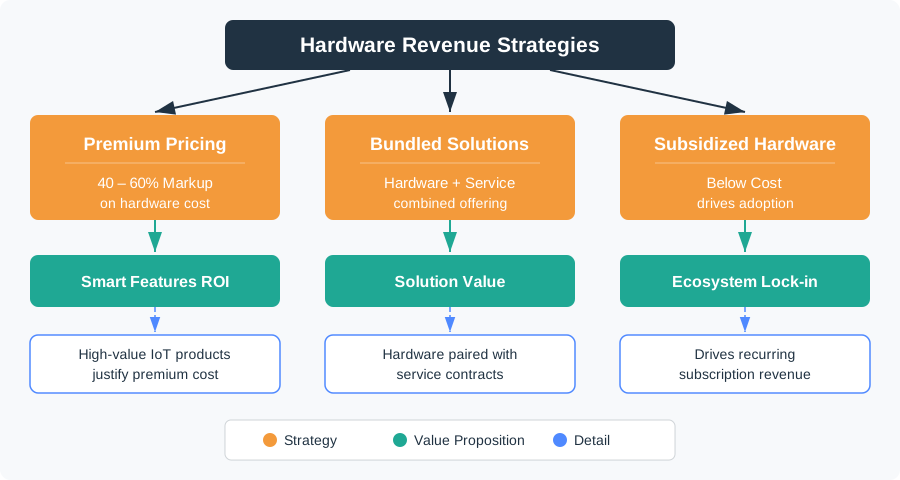
Hardware revenue strategies flowchart showing three approaches: premium pricing with 40-60% markup for high-value IoT products, bundled solutions pairing hardware with service contracts, and subsidized hardware sold below cost to drive recurring subscription revenue.
Figure 47.1
Mobile Guide: Hardware Revenue Strategies
Premium pricing: charge 40-60% more when the product has clear ROI, differentiated capability, or compliance value.
Bundled solutions: combine hardware with monitoring, support, or installation so the buyer evaluates the total solution rather than the device alone.
Subsidized hardware: lower the upfront price when subscriptions, cloud services, or ecosystem lock-in create larger downstream revenue.
Alternative View:
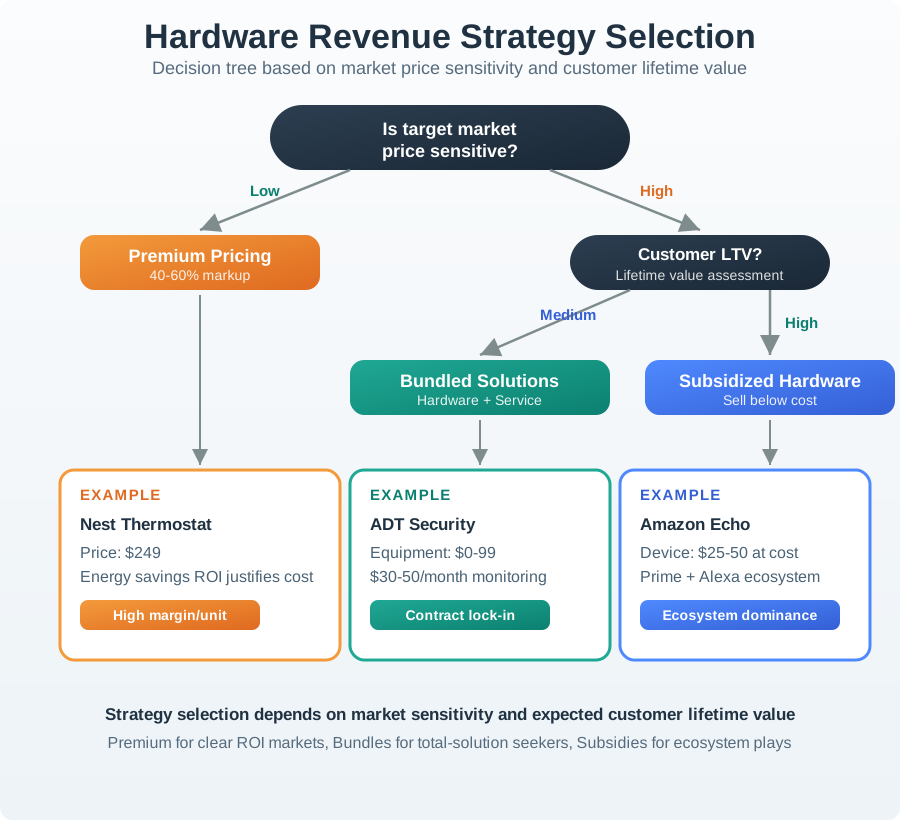
Decision tree flowchart for selecting IoT hardware revenue strategy. Starting question asks about target market price sensitivity. Low sensitivity path leads to Premium Pricing (40-60% markup) with examples like Nest Thermostat. High sensitivity path asks about long-term customer value. High LTV leads to Subsidized Hardware (sell below cost) with examples like Amazon Echo. Medium LTV leads to Bundled Solutions (Hardware plus Service) with examples like ADT Security. Each path shows business outcomes: Premium yields high margin per unit, Bundle yields contract lock-in, Subsidy yields ecosystem dominance.
Figure 47.2: Decision tree for selecting hardware revenue strategy based on market price sensitivity and customer lifetime value. Premium pricing suits low price sensitivity markets with clear ROI justification. Bundled solutions work for medium LTV customers seeking total solutions. Subsidized hardware enables ecosystem lock-in for high LTV recurring customers.
Mobile Guide: Choosing a Hardware Strategy
Start with price sensitivity: low sensitivity supports premium pricing; high sensitivity pushes you toward bundles or subsidy.
Then ask about long-term customer value: if lifetime value is high, subsidized hardware can work because the service pays back the device loss.
Use bundled solutions when customers want a complete service package but recurring revenue is not strong enough to justify deep hardware subsidy.
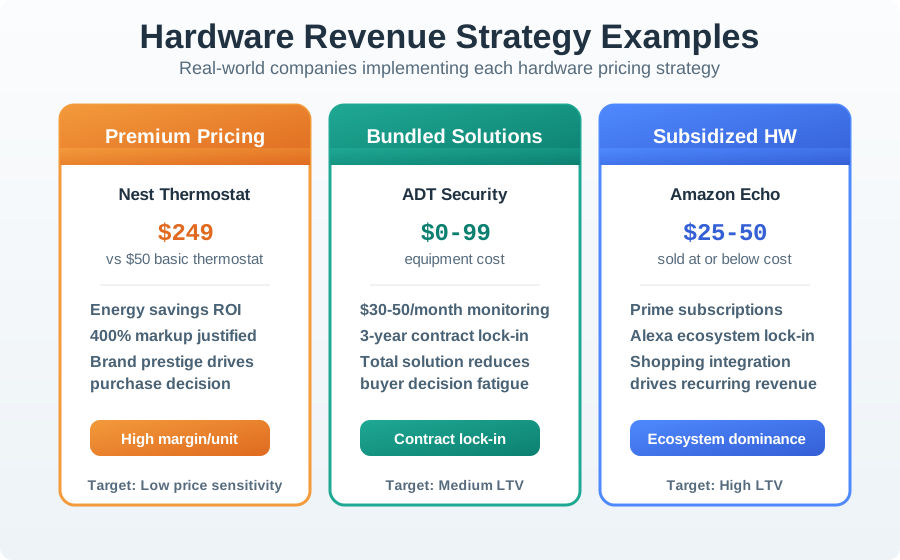
Three real-world hardware revenue strategy examples. Premium Pricing example (orange, Nest Thermostat): $249 vs $50 basic, Energy savings ROI, 400% markup justified. Bundle example (teal, ADT Security): $0-99 equipment, $30-50/month monitoring, 3-year contract lock-in. Subsidy example (navy, Amazon Echo): $25-50 device at cost, Prime subs plus shopping, Alexa ecosystem lock-in.
Figure 47.3: Alternative view: Real Company Examples - This diagram shows concrete companies implementing each hardware strategy. Premium pricing: Nest Thermostat at $249 vs $50 basic thermostats - 400% markup justified by energy savings ROI. Bundled solutions: ADT Security offers $0-99 equipment with $30-50/month monitoring under 3-year contracts. Subsidized hardware: Amazon Echo sold at cost ($25-50) to drive Prime subscriptions and Alexa ecosystem adoption. Students can map strategies to familiar products.
Mobile Guide: Real Company Examples
Nest Thermostat: premium hardware at about $249 because energy savings and convenience justify a large markup.
ADT Security: bundled hardware plus monitoring, often with low upfront equipment cost and a recurring contract.
Amazon Echo: aggressive hardware pricing to expand the Alexa ecosystem and drive Prime, shopping, and smart-home attach revenue.
Premium Pricing: Charge higher prices for advanced IoT capabilities. Smart features justify price premiums over traditional products (e.g., smart refrigerators priced 40-60% higher than conventional models). The value proposition must clearly demonstrate ROI.
Bundled Solutions: Package hardware with services, reducing price sensitivity by focusing on total solution value (e.g., security systems bundled with 24/7 monitoring). This creates switching costs and customer lock-in.
Subsidized Hardware: Reduce upfront costs to increase adoption. Hardware sold at cost or below cost, with revenue recouped through service subscriptions (e.g., Amazon Echo devices priced aggressively to drive Alexa ecosystem adoption).
47.5 Software and Service Revenue
⏱️ ~10 min | ⭐⭐ Intermediate | 📋 P03.C05.U02
Software and service revenue is where IoT companies build recurring, scalable income streams. Unlike hardware – which has per-unit manufacturing costs – software revenue has high initial development cost but near-zero marginal cost per additional customer, creating powerful unit economics as the customer base grows.
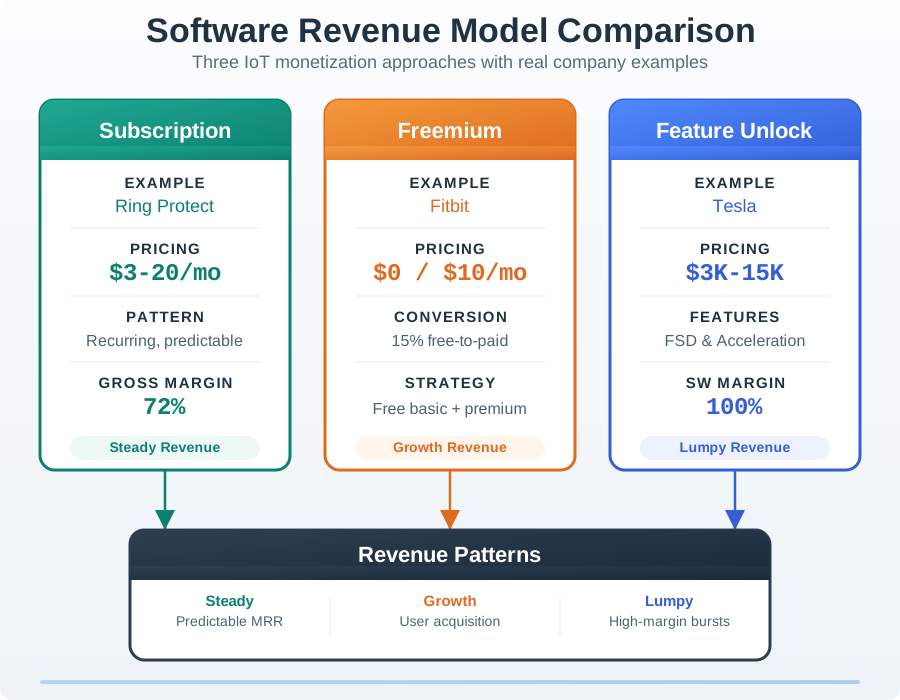
Software and service revenue model flowchart showing subscription, freemium, and feature unlocking approaches for IoT products. Subscriptions provide predictable monthly recurring revenue, freemium maximizes user acquisition with 5-12 percent conversion rates, and feature unlocking enables one-time premium purchases.
Figure 47.4
Mobile Guide: Software Revenue Models
Subscriptions create predictable monthly recurring revenue and are the default model when the product depends on cloud features or ongoing analytics.
Freemium trades lower immediate revenue for faster acquisition, then converts roughly 5-12% of free users into paid plans.
Feature unlocking works when the capability is already in the hardware and software can turn it on later with near-zero marginal cost.
Three software revenue model comparison showing real company examples and revenue patterns. Subscription (Ring Protect, teal): $3-20/month, Recurring predictable, 72% gross margin, creates Steady revenue. Freemium (Fitbit, orange): Free basic tracking, $10/month premium, 15% conversion rate, creates Growth revenue. Feature Unlock (Tesla, navy): $3K-15K one-time, FSD and Acceleration, 100% software margin, creates Lumpy revenue. All three flow to central Revenue Patterns node.
Figure 47.5: Alternative view: Revenue Pattern Comparison - This diagram contrasts three software monetization approaches with real metrics. Subscription (Ring Protect): $3-20/month with 72% gross margin provides steady, predictable revenue. Freemium (Fitbit): Free basic tier with $10/month premium and 15% conversion enables growth-focused acquisition. Feature unlock (Tesla): $3K-15K one-time payments for FSD/Acceleration with 100% software margin produces lumpy but high-profit revenue. Each creates different financial characteristics.
Mobile Guide: Revenue Pattern Comparison
Ring Protect shows the subscription pattern: modest monthly fee, steady recurring income, and high gross margin.
Fitbit Premium shows freemium: large free user base, lower conversion, but strong top-of-funnel growth.
Tesla feature unlocks show lumpy one-time software revenue with very high margin once the hardware is already installed.
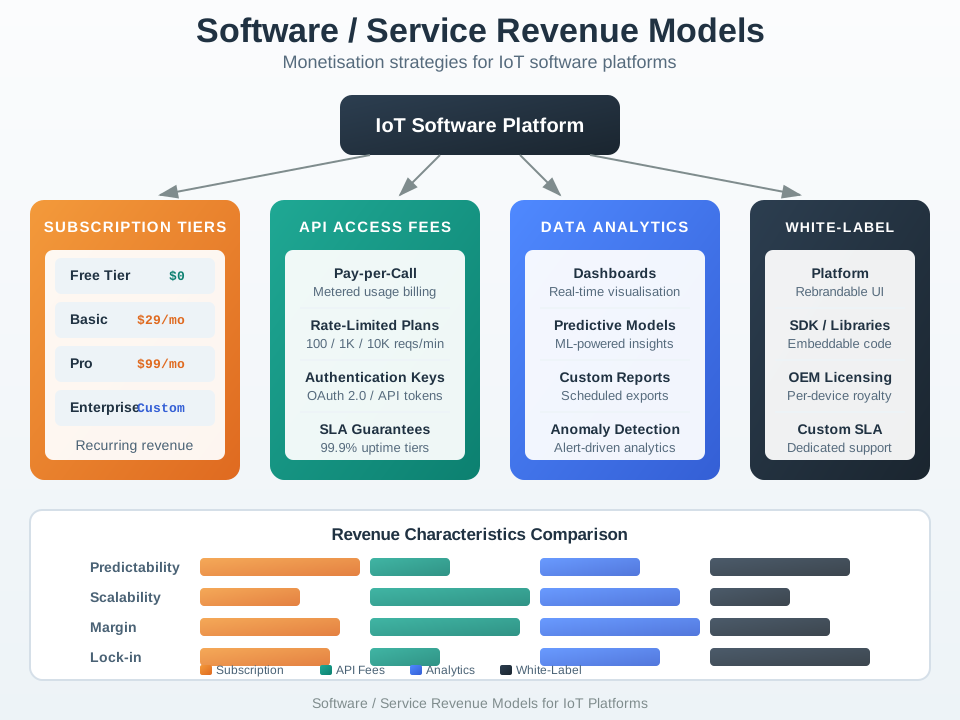
Subscription Models: Recurring monthly or annual fees with tiered pricing based on features, usage, or capacity. This provides predictable revenue streams for financial planning. The key metric is MRR (Monthly Recurring Revenue) and its annualized form ARR.
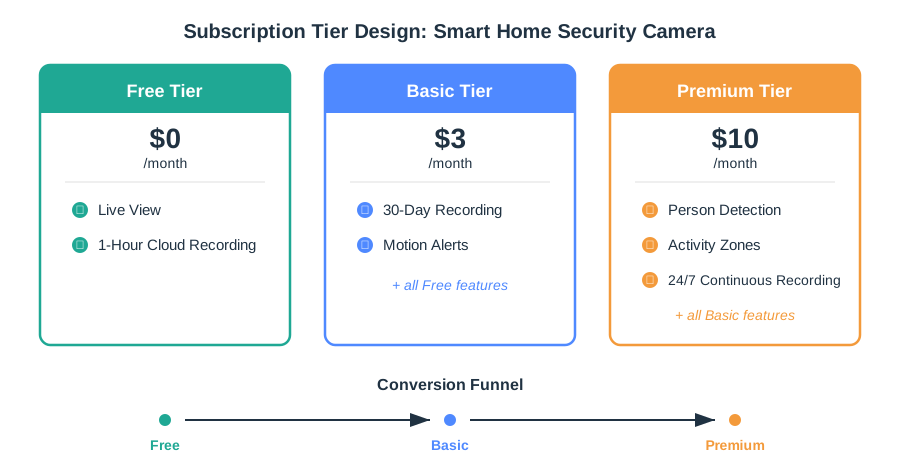
Subscription tier design for a smart home security camera
Mobile Guide: Example Subscription Tiers
Free: live view and short recording window so the user can experience the product.
Basic at $3/month: longer history and alerts for customers who want practical everyday monitoring.
Premium at $10/month: advanced detection, activity zones, and continuous recording for users with higher security needs.
Freemium Approach: Basic features free, premium features paid. This maximizes user acquisition and converts a percentage of free users to paid subscribers. The critical design decision is where to draw the line between free and paid – too generous and nobody upgrades; too restrictive and nobody adopts.
Feature Unlocking: One-time payments to enable capabilities. Hardware ships with latent features that users pay to activate (e.g., Tesla’s acceleration boost or full self-driving capability unlocks). This model works when the hardware already contains the capability and the software enables it – the marginal cost to the vendor is essentially zero.
Common Pitfall: The “Everything Free” Trap
Many IoT startups give away too much in the free tier, hoping scale will drive conversions. But if the free tier solves the core problem completely, conversion rates collapse below 2%. Design the free tier to demonstrate value, not deliver it completely. Ring’s free tier shows you someone is at the door; you pay to record and review the footage later.
47.6 Outcome-Based Pricing
⏱️ ~12 min | ⭐⭐⭐ Advanced | 📋 P03.C05.U03
Outcome-based pricing is the most sophisticated monetization strategy and the one most uniquely suited to IoT. Because connected devices generate continuous measurement data, vendors can credibly prove the value they deliver – and charge accordingly. This approach fundamentally shifts risk from the customer to the vendor, which accelerates sales cycles but demands operational excellence.
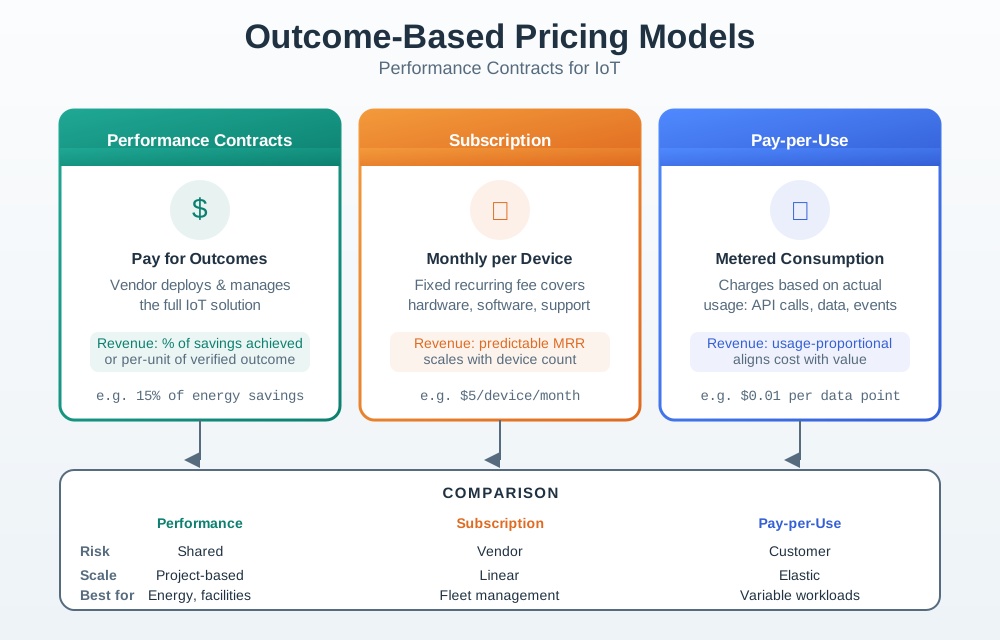
Outcome-based pricing models for performance contracts, pay-per-use, and shared savings
Mobile Guide: Outcome-Based Models
Performance contracts tie payment to verified results such as reduced downtime or lower energy cost.
Pay-per-use charges for measured usage such as hours operated, units produced, or monitored assets.
Shared savings splits the value created, often around 70% to the customer and 30% to the vendor.
Performance Contracts: Payment tied to measurable results, aligning vendor and customer incentives (e.g., energy management systems paid based on verified energy savings). The IoT system’s continuous data stream serves as the impartial judge of performance.
Pay-Per-Use Models: Charge based on actual consumption, providing fair pricing that scales with value delivered (e.g., industrial equipment charged per hour of operation or per unit produced). Rolls-Royce pioneered this approach with “Power-by-the-Hour” for jet engines – airlines pay per flight hour rather than purchasing engines outright.
Shared Savings: Revenue split based on value created, particularly effective in B2B contexts (e.g., predictive maintenance systems sharing percentage of downtime costs avoided). The typical split is 70% customer / 30% vendor, though this varies by industry and the vendor’s contribution to the savings.
Worked Example: Outcome-Based Pricing for Smart Building Energy
Scenario: An IoT company offers a smart HVAC optimization system to a commercial building owner.
Baseline: The building spends $200,000/year on energy. The IoT vendor claims their system can reduce energy costs by 25%.
Contract structure (Shared Savings):
Item
Value
Annual energy baseline
$200,000
Predicted savings
25% = $50,000/year
Vendor share
30% of verified savings
Vendor annual revenue
$15,000
Customer net savings
$35,000/year
Contract term
5 years
Total vendor revenue
$75,000
Total customer savings
$175,000
Why the customer signs: Zero upfront cost, guaranteed savings (vendor bears risk), and $35,000/year net benefit.
Why the vendor signs: $75,000 total revenue from one building, replicable across hundreds of similar buildings, and the data improves their algorithms for future deployments.
The IoT advantage: Smart meters provide continuous, auditable energy consumption data that both parties trust for calculating savings.
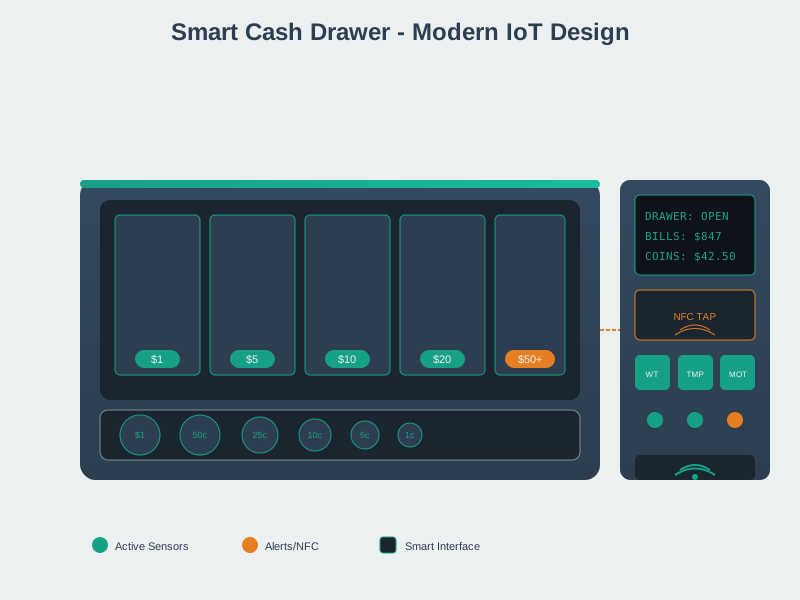
Cash drawer with IoT integration
Mobile Example: Smart Cash Drawer
Tracks cash levels and reconciliation events in real time.
Flags variance patterns for shrinkage detection and staff coaching.
Creates monetizable value through labor savings, auditability, and loss prevention.
Smart cash management systems reduce shrinkage and improve operational efficiency in retail environments. Real-time monitoring and automatic reconciliation save labor costs while providing the visibility needed for loss prevention programs.
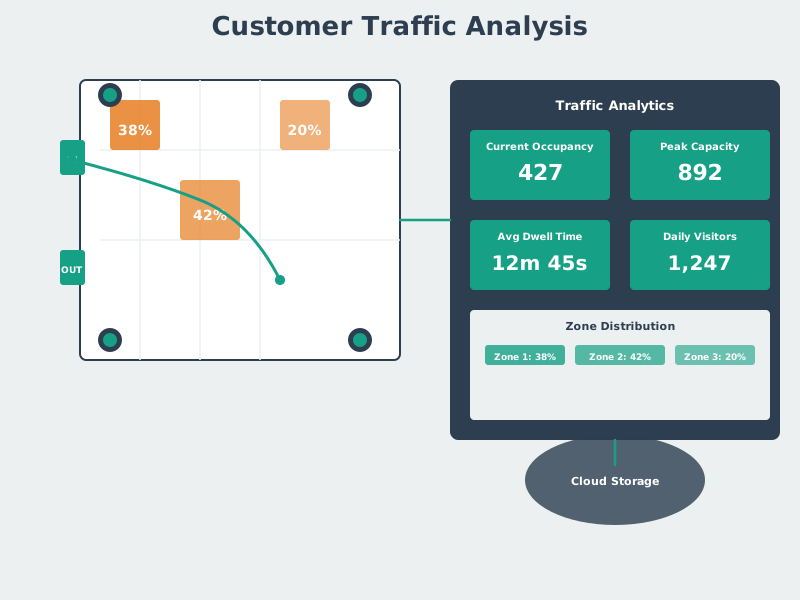
Customer traffic analytics at store entrance
Mobile Example: Customer Traffic Analytics
Measures footfall accurately enough to calculate conversion rates.
Improves staffing plans by showing hourly and seasonal traffic patterns.
Turns store operations data into a chargeable analytics service for retailers.
Customer traffic analytics enable retailers to calculate true conversion rates and optimize staffing schedules. Understanding hourly, daily, and seasonal traffic patterns drives data-informed decisions about marketing campaigns and store operations.
47.6.1 Retail and Hospitality IoT Monetization
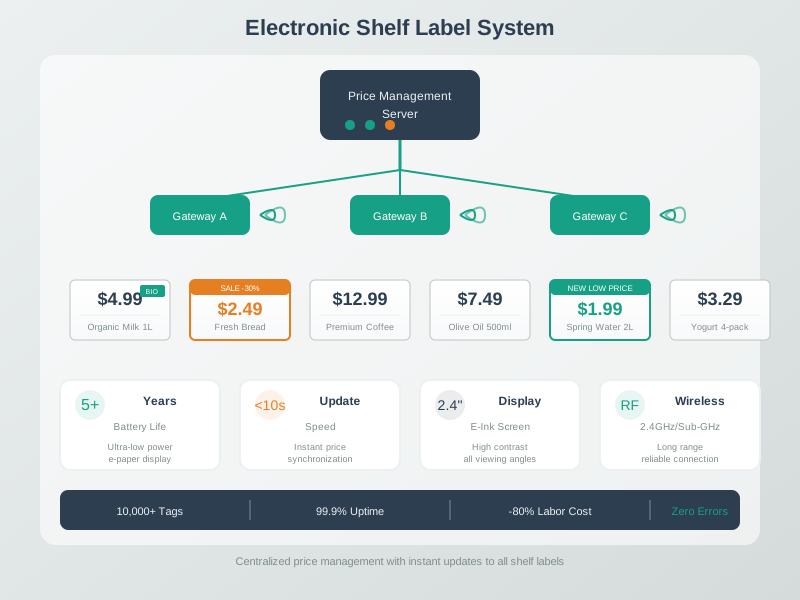
Electronic price tag display system
Mobile Example: Electronic Shelf Labels
Enable real-time price updates without sending staff to replace labels manually.
Support dynamic pricing, markdowns, and omnichannel consistency.
Monetize through labor savings plus higher pricing agility.
Electronic shelf labels transform retail pricing from a labor-intensive manual process to a dynamic, real-time capability. Beyond labor savings, these systems enable surge pricing during peak demand, markdown optimization for expiring products, and seamless omnichannel price consistency.
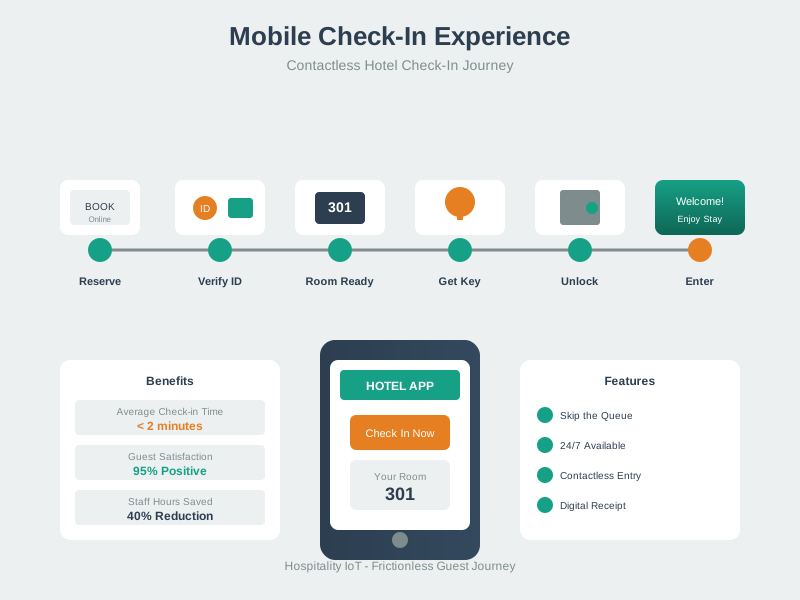
Hotel guest check-in kiosk
Mobile Example: Guest Check-In Kiosk
Reduces front-desk workload with self-service identity checks and room assignment.
Creates direct monetization through operational savings and premium guest services.
Self-service hospitality kiosks reduce labor costs while improving guest experience through faster check-in processes. IoT connectivity enables real-time room assignment optimization and integration with loyalty programs.
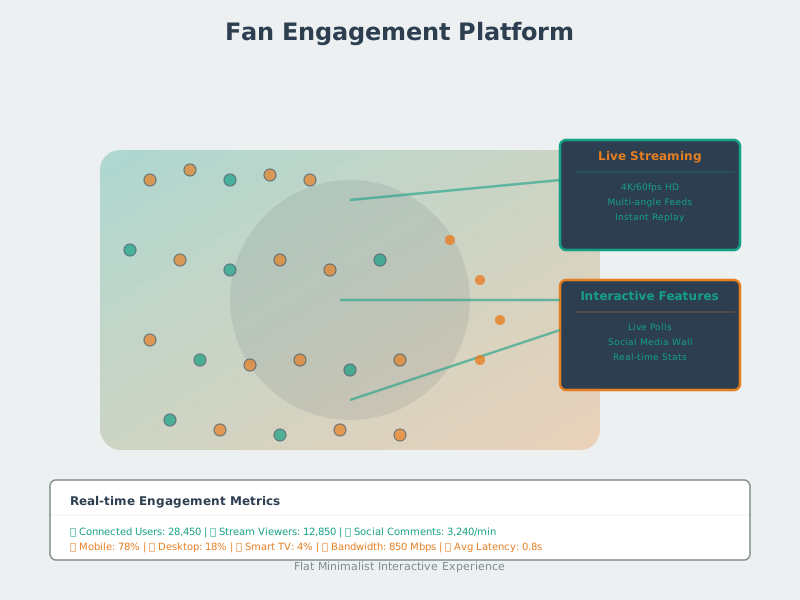
Sports venue fan engagement system
Mobile Example: Fan Engagement Platform
Connects mobile ordering, navigation, and in-seat services in one venue platform.
Creates revenue through concessions, merchandise, and premium digital content.
Uses location-aware interactions to increase spend per visitor.
Fan engagement platforms transform stadiums into connected environments that enhance the spectator experience while creating new revenue streams through mobile ordering, location-based offers, and premium content delivery.
Example application: A smart industrial sensor with 18-month energy payback, 2 competitors, proprietary AI analytics, and 35% expected subscription conversion scores: +2 (ROI) +2 (few competitors) +2 (high conversion) +2 (proprietary) = 8 points → Premium pricing at 55% margin justified.
47.7 Common Monetization Pitfalls
Understanding what not to do is as important as knowing the right strategies. These are the most frequent mistakes IoT companies make when monetizing their products.
Pitfall Cards: Five Fatal Monetization Mistakes
1. Hardware-Only Thinking Selling devices without a recurring revenue plan. Manufacturing margins alone (15-30%) cannot sustain R&D, cloud infrastructure, and customer support. Companies that rely solely on hardware sales face a “treadmill” – they must constantly sell more units just to maintain revenue.
2. Premature Freemium Launching a free tier before understanding your cost structure. Every free user costs you cloud hosting, bandwidth, and support resources. If your unit economics are negative (cost per free user > $0), a growing user base accelerates your losses.
3. Misaligned Outcome Metrics Choosing outcome metrics the customer cannot influence. If an energy savings contract is based on weather-normalized consumption but the customer adds a new wing to their building, the baseline is invalidated. Always define clear measurement boundaries and adjustment mechanisms.
4. Ignoring Churn in LTV Calculations Projecting 36-month lifetime value when monthly churn is 5% (meaning only 17% of customers remain after 36 months). Realistic LTV must account for the survival curve: LTV = ARPU / Monthly Churn Rate At $10/month ARPU and 5% churn: LTV = $10 / 0.05 = $200 (not $360).
5. Subsidy Without Lock-In Selling hardware below cost without creating switching costs. If customers can buy your $50 subsidized device, use it for a month, cancel the subscription, and switch to a competitor, you lose money on every customer. Subsidized models require ecosystem lock-in (proprietary protocols, cloud dependency, or network effects).
47.8 Revenue Through the Customer Lifecycle
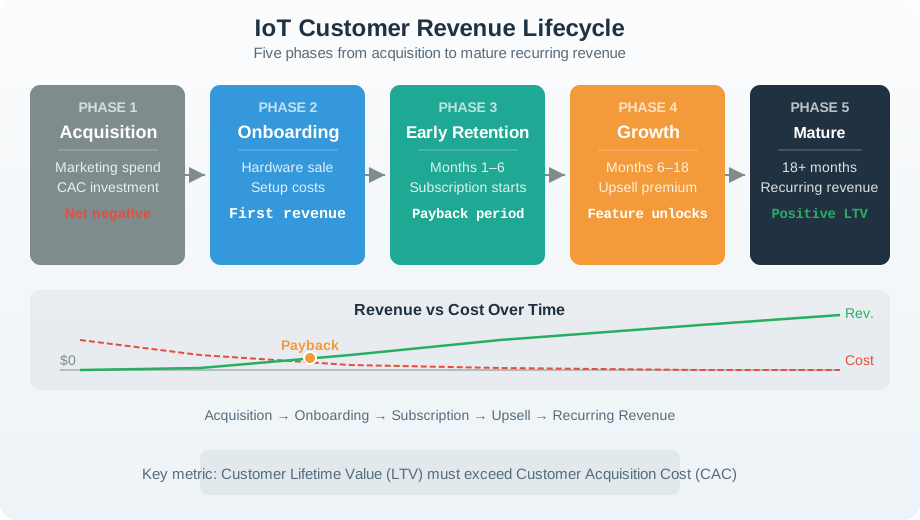
Understanding when revenue arrives – and when costs are incurred – is critical for cash flow planning. The diagram below traces a single IoT customer from acquisition through long-term retention, showing how different monetization strategies layer together over time.
IoT customer revenue lifecycle from acquisition to mature retention
Mobile Guide: Revenue Lifecycle
Acquisition is usually cash-flow negative because CAC and hardware cost land before recurring revenue ramps.
Months 4-12 are the critical payback window where subscription margin should recover CAC.
Months 6-18 are the best upsell period for premium tiers and feature unlocks.
After 18 months the focus shifts from acquisition to retention, expansion, and outcome-based contracts.
Key lifecycle insights:
Months 0-3 are typically cash-flow negative (CAC + hardware cost > initial revenue). This is why subsidized hardware strategies require patient capital.
The payback point (where cumulative margin exceeds CAC) usually occurs between months 4-12 for subscription models. If payback exceeds 18 months, revisit your unit economics.
Months 6-18 are the highest-leverage period for upselling premium tiers and feature unlocks. Customers who have not upgraded by month 18 rarely do.
After 18 months, focus shifts to retention and outcome-based expansion. Customers who remain beyond this point have high switching costs and are candidates for performance contracts.
47.9 Interactive: IoT Pricing and ROI Calculator
Use this calculator to explore how hardware pricing, subscriptions, costs, and customer-acquisition spend combine into lifetime value (LTV), CAC, and payback period for a typical IoT product.
Show code
viewof model = Inputs.select( ["device_plus_subscription","subscription_only"], {label:"Monetization pattern",value:"device_plus_subscription",format: d => d ==="device_plus_subscription"?"Device + Subscription":"Subscription Only (no upfront device revenue)" })viewof hardware_price = Inputs.number({value:200,label:"Hardware price per device ($)",step:10,min:0})viewof hardware_cost = Inputs.number({value:120,label:"Hardware cost per device ($)",step:10,min:0})viewof subscription_price = Inputs.number({value:10,label:"Subscription price per month ($)",step:1,min:0})viewof service_cost = Inputs.number({value:3,label:"Service cost per subscriber per month ($)",step:0.5,min:0})viewof lifetime_months = Inputs.number({value:36,label:"Average paid lifetime (months)",step:1,min:1})viewof cac = Inputs.number({value:50,label:"Customer acquisition cost (CAC, $)",step:5,min:0})
Lifetime revenue combines any one-off device sale with subscription income.
Lifetime gross margin (LTV) subtracts hardware and service delivery costs; this is what you have available to cover CAC, overheads, and profit.
LTV:CAC shows how efficiently you turn marketing spend into long-term value—IoT SaaS businesses typically target 3:1 or higher.
Payback period estimates how many months it takes to recover CAC after the initial sale and subscription margin; investors usually look for < 18 months.
Color indicators:
●Teal = Healthy metrics meeting industry benchmarks
●Orange = Warning - approaching threshold
●Red = Poor - requires improvement
Try comparing: - Pure hardware sales (set subscription price to $0) versus hardware + subscription. - High-CAC consumer plays versus lower-CAC industrial deployments.
Hands-On: Explore Business Scenarios
Use the calculator to plug in numbers from your own IoT concept (device price, subscription tiers, CAC).
You can also launch this tool from the Simulation Playground under IoT Business ROI Calculator to keep it alongside the technical calculators.
Security Fundamentals - Subscription models require robust security for customer data
In 60 Seconds
This chapter covers direct monetization strategies, explaining the core concepts, practical design decisions, and common pitfalls that IoT practitioners need to build effective, reliable connected systems.
Interactive Quiz: Match Concepts
Interactive Quiz: Sequence the Steps
Label the Diagram
💻 Code Challenge
47.13 Summary
This chapter covered the three primary direct monetization strategies for IoT products and the financial metrics used to evaluate them:
47.13.1 Key Takeaways
Hardware Revenue Models: Premium pricing (40-60% markup) for clear ROI products, bundled solutions for total value positioning, and subsidized hardware for ecosystem-focused strategies. The choice depends on market price sensitivity and expected customer lifetime value.
Software/Service Revenue: Subscription models providing predictable recurring revenue (target: 60-80% gross margin), freemium approaches achieving 5-12% conversion rates, and feature unlocking for one-time capability purchases. Design free tiers to demonstrate value without fully solving the customer’s problem.
Outcome-Based Pricing: Performance contracts aligning vendor-customer incentives, pay-per-use for consumption-based fairness, and shared savings (typically 70% customer / 30% vendor split). This model is uniquely enabled by IoT’s continuous data streams.
Financial Metrics: LTV:CAC ratio targeting >3:1, payback periods <18 months, and churn-adjusted LTV calculations. The formula LTV = ARPU / Monthly Churn Rate prevents dangerous over-estimation.
Common Pitfalls: Hardware-only thinking, premature freemium launches, misaligned outcome metrics, ignoring churn, and subsidizing without lock-in are the five most common monetization failures.
47.13.2 Connecting the Dots
The monetization strategy you choose directly affects your IoT system’s architecture requirements – subscription models need robust cloud infrastructure, outcome-based models need reliable edge processing for real-time measurement, and hardware-centric models need cost-optimized sensor selection. Your pricing approach also shapes security requirements since subscription and outcome models handle sensitive customer data continuously.
Decision Shortcut
If the value is in the device, start by asking whether the market will tolerate a premium; if not, move toward bundles or subsidy.
If the value is in ongoing insight or service, default toward subscriptions, feature unlocks, or freemium conversion.
If the customer can measure the business result clearly, consider outcome-based pricing because the IoT data can verify the gain.
Recheck the choice against LTV:CAC, payback period, and churn risk before committing to the model.