
Weightless-W
A TV white-space review path. Keep it only when regional rules, coordination method, protected-service avoidance, and fallback are clear.
Progress saves as you read. Mark sections complete as you go; your progress appears in the sidebar.
An estate team finds an old Weightless meter demonstration and plans to reuse its battery-life claim. The new job also requires remote changes to the reporting interval. Evidence for a one-way reading does not establish that return path.
This section: Start Simple — LoRaWAN is one common low-power system for long-range radio messages.
LoRaWAN is one common low-power system for long-range radio messages. Telemetry is data sent from a remote device for watching or review. Picture an estate team that finds an old claim that a Weightless radio can read every meter on site.
Ask which Weightless branch the claim means. Then name the radio rules, message direction, device supply, base station owner, and support path. If those facts are missing, the choice is not ready for comparison.
Check age and place. A past trial may use rules, products, or services that no longer exist. A one-way link can save power but may not support control or repair needs. Private gear also creates an owner duty.
This meter story cannot prove that Weightless is good or bad in every case. It does not settle local radio permission, current supply, security, coverage, or long-term support. Those need fresh evidence.
Use the Practitioner sections to build the branch and owner record. Use Under the Hood to compare radio forms, timing, and service limits. The deeper review may remove a branch, but it keeps the same evidence-first rule.
Walk the old meter claim. Find its date. Find its country. Find its branch name. Find its radio band. Find its message direction. Find its device maker. Find its base station. Find its back-end service. Find its support owner. Mark every missing fact.
Now check the present. Can the device be bought? Can a spare be bought? Can the radio be used here? Can the base be run here? Can keys be issued? Can keys be removed? Can a reply be sent? Can the field team read faults? Can data reach the chosen app?
Build a small trial. Send one normal reading. Send one alarm. Lose the base link. Restore it. Turn off one device. Replace it. Change one key. Remove the old key. Move to a weak site. Try the return path. Check time. Check battery cost. Keep the full record.
Compare one current option. Use the same message. Use the same site. Use the same antenna rule. Use the same power aim. Use the same service period. Count the base cost. Count the device cost. Count the care work. Count the outside fees. Count the missing features.
Then state the result plainly. The branch may fit. The branch may fail. The proof may be too old. Supply may be too weak. Local rules may block it. One-way service may be enough. It may also be a hard limit. Do not force a winner when evidence is absent.
Treat Weightless as a family name that needs unpacking before comparison. The first step is to ask which branch is being discussed, who would operate it, what spectrum or service assumption it depends on, and what current field evidence exists. That simple split prevents old examples, one-way telemetry claims, and private-network proposals from being mixed into one unsupported alternative.
Weightless is best introduced as a family of LPWAN branches, not as one interchangeable radio option. A useful first review separates Weightless-W, Weightless-N, and Weightless-P style private LPWAN before comparing the family with LoRaWAN, cellular LPWAN, or other narrowband choices.
The overview question is simple: which branch is being considered, what operating model does it imply, and what evidence would keep it on the shortlist? Without that boundary, learners can mix historical one-way telemetry, TV white-space assumptions, and current private-network claims into a single unsupported decision.
For example, a regional estates team may ask whether Weightless could serve meter rooms, open-yard tank levels, and remote gate sensors under one "LPWAN alternative" line item. The first pass should split those requests. A TV white-space idea needs a local rule and coordination path, a one-way telemetry idea needs current device and support evidence, and a private bidirectional idea needs a base-station owner, backend owner, and field-support route.
The branch split also prevents an old success story from becoming a current design shortcut. If the team cannot name the branch, supply chain, identity model, and field validation plan, the record should say "not shortlisted yet" rather than forcing a comparison with LoRaWAN or cellular LPWAN.
Keep Weightless in scope only when the branch, spectrum path, device evidence, base-station ownership, backend support, security boundary, and field-validation plan are explicit.
Inspect Figure 6.1 to keep Weightless variants and cellular generations from collapsing into two vague family labels.

Read Figure 6.1 by comparing Weightless N, which is one-way, with Weightless P, which is two-way, while Weightless W uses TV white space. The CELLULAR DATA TRACK adds licensed-spectrum generations, but SELECTION EVIDENCE requires payload, link budget, power, lifecycle, latency, and field measurements instead of a winner badge.
Before carrying Each Weightless branch starts with a different review question, so a single comparison row is not enough into the “Weightless-W” design record, view Figure 6.2. It makes “Weightless-W” and “Can the rule path be proven?” separate, inspectable parts of the “weightless-w”–“can the rule path be proven?” decision.
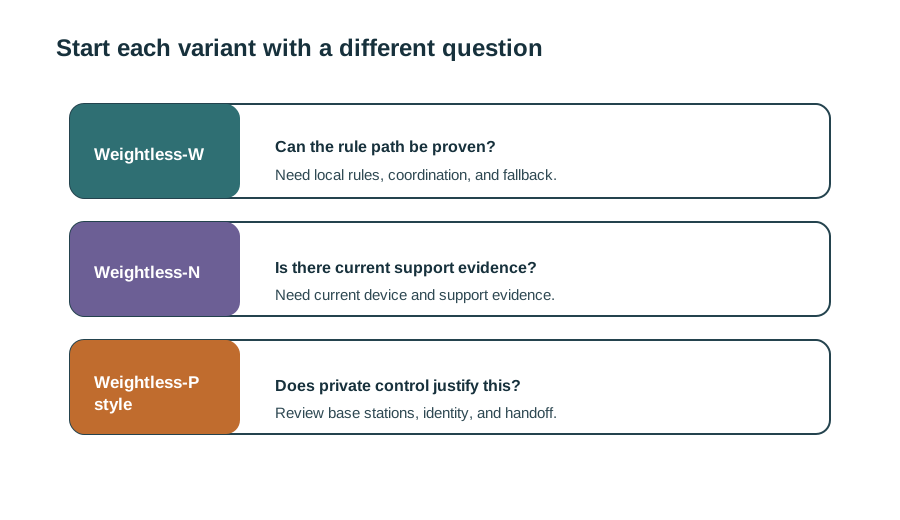
In Figure 6.2, notice how “Weightless-W” establishes the initial state; “Can the rule path be proven?” supplies the next check. The move through “Need local rules, coordination, and fallback” reaches “Weightless-N”, making Each Weightless branch starts with a different review question, so a single comparison row is not enough observable. Return to the “weightless-w”–“can the rule path be proven?” decision with “Weightless-N”, and keep “Weightless-W” in the release record.
The three branches in Figure 6.3 require separate checks before a Weightless-style radio choice can be accepted.
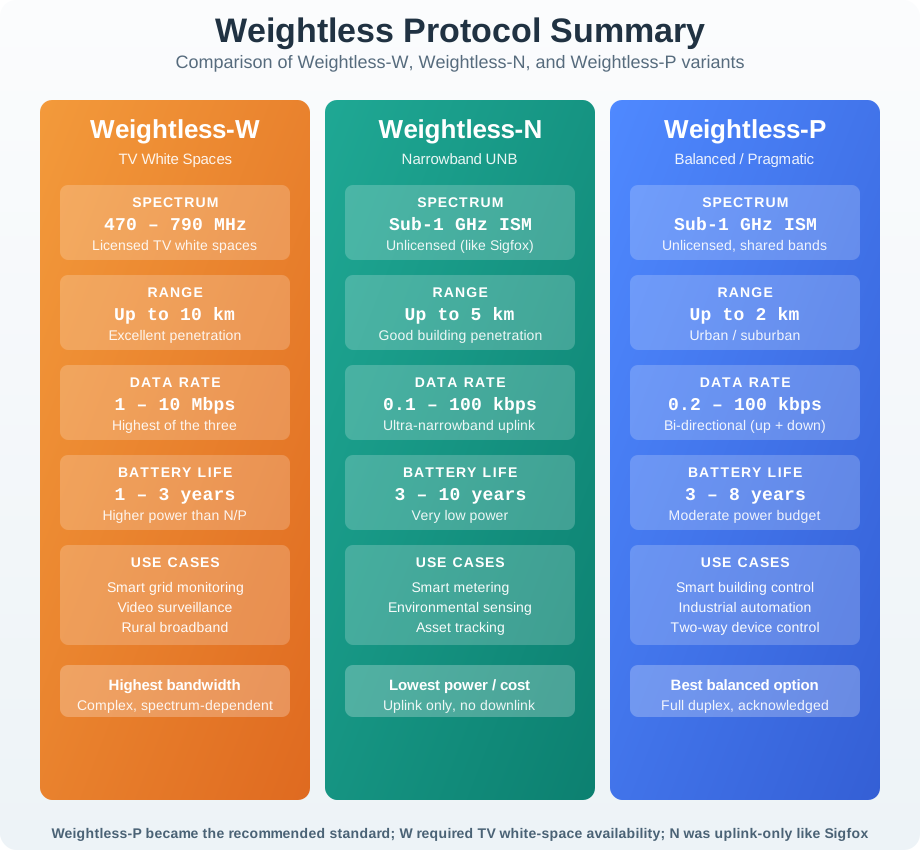
In Figure 6.3, start with the TV white-space branch. It needs proof of local rules, location, channel control, protected services, and fallback. The one-way branch asks if an uplink-only service fits the job. It also needs current proof for hardware, firmware, and support. The private two-way branch adds confirmed traffic. In return, its operator owns the base station, backend, schedule, identity, and field support. Compare the radio traits only after those gates are clear. One family name does not remove the gaps in rules, downlink use, available products, or the burden of running the network.
A TV white-space review path. Keep it only when regional rules, coordination method, protected-service avoidance, and fallback are clear.
A one-way telemetry branch that is mainly useful as historical context unless current hardware, firmware, and support evidence exists.
A narrowband private LPWAN review path for acknowledged bidirectional traffic, scheduling, identity, and owned infrastructure.
Compare only after the workload, branch, operating owner, spectrum path, security evidence, and field-measurement plan are recorded.
A Weightless candidate belongs on a shortlist only when the team can explain the operating model. Private base-station ownership, network-service responsibilities, identity and security handling, application handoff, and field-support evidence all affect whether the branch is practical.
Do not let a headline range, low-power label, or "open standard" phrase replace the record. Start with the workload and site, then decide whether Weightless remains a serious candidate or should be rejected before deeper comparison.
A practical shortlist row might come from a cold-storage operator with door-contact sensors, freezer-temperature probes, and loading-bay asset tags. The row should state payload size, heartbeat interval, alarm burst behavior, downlink need, power source, and maintenance access before it names a branch. Door contacts that send compact exception events are a different fit from asset tags that move between buildings and need frequent acknowledgements.
The record should also assign operations work. If the proposal uses private base stations, someone must own placement surveys, backhaul, admission control, monitoring, firmware updates, spares, and incident response. If a managed or historical ecosystem is proposed, someone must prove current devices, maintainers, backend integration, and an exit plan. Those duties decide whether the shortlist is real or only a radio preference.
Inspect Figure 6.4 with one question from the “end devices”–“payloads, identity” decision: how does “End devices” constrain “Payloads, identity”? The answer supports A private LPWAN review is about roles and evidence, not only the radio interface.
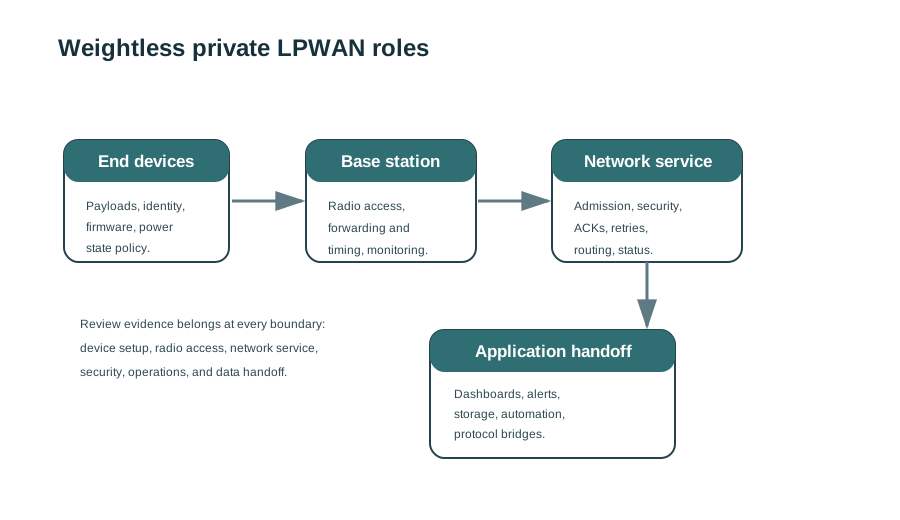
Figure 6.4 places end devices alongside payloads, identity, firmware, power, and state policy in a private LPWAN review.
The hardest Weightless review questions sit below the family label. Weightless-W depends on a local TV white-space permission and coordination path. Weightless-N style one-way telemetry can leave receiver behavior and maintenance assumptions under-specified. Weightless-P style private LPWAN shifts more control to the operator, but also shifts more responsibility for infrastructure, admission, scheduling, security, and troubleshooting.
That is why the record should state what the evidence does not prove. A successful lab packet does not prove regional spectrum permission, field coverage, long-term supply, secure identity handling, or operational continuity. Those claims require their own artifacts and retest triggers.
For a TV white-space branch, the technical record should name the rule source, location method, channel-availability check, protected-service avoidance, database or coordination dependency, and fallback when a channel is no longer available. A site move from a rural tank farm to an urban depot can change that evidence even if the sensor payload and application stay the same.
Continuity risk needs the same discipline. A pilot may work with one base station, one firmware image, and one gateway maintainer, but production needs replacement hardware, update ownership, credential recovery, alerting, and a way to leave the branch if support disappears. The retest trigger should be written before expansion: new region, new enclosure, new antenna, new downlink pattern, new supplier, or a rule change sends the design back to review.
Inspect Figure 6.5 to see which coordination and protection records must exist before judging a TV white-space radio fit.
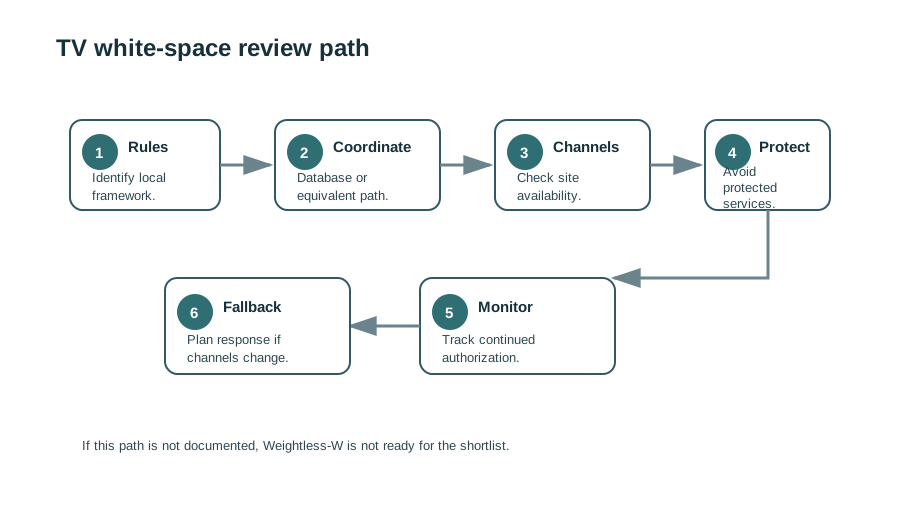
Read Figure 6.5 from the local rule source and location method. Those facts feed the database or other channel service. The service says which channels may be used. The site record must also show how protected users are spared and how channel status is checked. Ongoing checks come next because access can change after setup. The final fallback says what happens when a channel is lost. A new region or rule change sends the plan through the same path again. Thus, channel control, proof, checks, and recovery are part of the radio choice from the start.
Name the regional framework, channel-availability method, protected services, device-location requirements, and operating fallback.
Record supplier path, device lifecycle, firmware ownership, backend maintainability, and exit plan if the branch stops fitting.
Separate radio fit from identity, authentication, encryption, admission control, replay handling, and application authorization.
Reopen the decision when site, spectrum rule, device supply, firmware, gateway placement, workload, or downlink policy changes.
Start the evidence review for the “what the reviewer needs”–“variant” decision: inspect Figure 6.6. Two labels deserve attention—“What the reviewer needs” and “Variant”—because they bound The final record should make every assumption inspectable before the branch moves into detailed design.
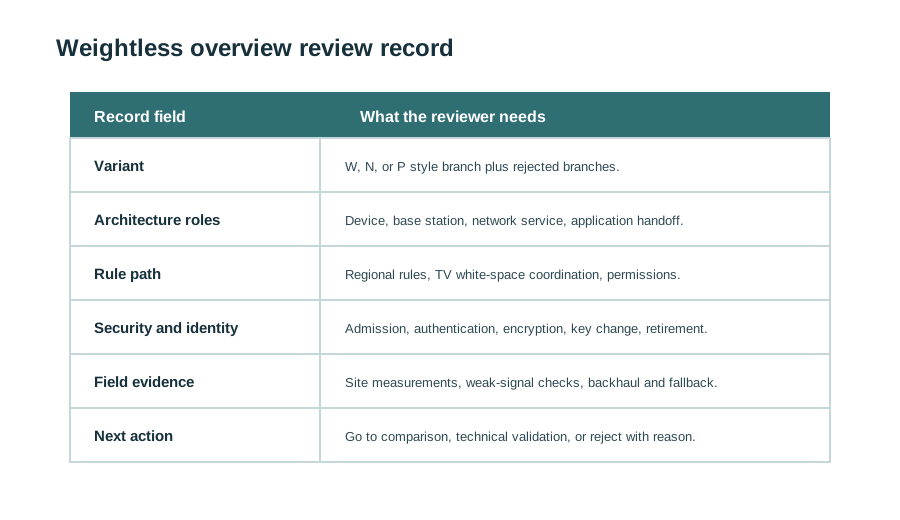
Trace the review path across Figure 6.6 from “What the reviewer needs” to “Variant”. From “W, N, or P style branch plus rejected branches”, it arrives at “Architecture roles”. That path is evidence for The final record should make every assumption inspectable before the branch moves into detailed design; retain it when revisiting the “what the reviewer needs”–“variant” decision.
This section: Test the Direction of the Maintenance Message — Start the selection with a named branch and a dated device record.
Start the selection with a named branch and a dated device record. Weightless-W, Weightless-N and a Weightless-P style private system raise different questions in this chapter. Do not transfer a base-station capability, spectrum assumption or message direction from one branch into another row. Missing evidence should remain visible rather than becoming a guessed feature.
Use an illustrative workload of 50 meters, each sending 10 bytes every hour. The useful uplink total is 50 × 10 × 24 = 12,000 bytes per day. A weekly 8-byte configuration command for each meter adds only 400 useful bytes per week, but its direction can still decide the selection. Low volume does not make an unsupported downlink possible.
Read Figure 6.2 as separate evidence lanes. The W branch begins with the local rule and coordination path; the N branch raises the one-way telemetry boundary; the P-style branch needs proof of the proposed private infrastructure and acknowledged service. The figure is a guide to questions, not evidence that a currently purchasable product passes them.
Predict what the old demonstration establishes if it contains only received meter readings. It shows that those uplinks worked under the recorded conditions. It cannot establish present supply, maintenance commands or support for a replacement unit. Next, disconnect the proposed base station and restore it. The selection needs to show which records survive and how the service distinguishes delayed data from current state.
A private system also needs an evidence trail for keys, software updates, spares and retirement. An installer who can replace a radio but cannot provision its identity has not completed the maintenance workflow. Compare a cellular or other supported alternative using the same message and outage tests so the tradeoff remains about service.
This Weightless review matters because family names and historical trials can outlive the products and operating arrangements behind them. The numerical workload is only a test case. No present availability or spectrum permission is assumed here; the branch-specific evidence must be current before a real deployment can use the result.
This section: Summary — Weightless should be reviewed as a family of LPWAN branches.
Weightless should be reviewed as a family of LPWAN branches. Weightless-W raises TV white-space rule and coordination questions. Weightless-N is mainly historical one-way telemetry context unless current support evidence is available. Weightless-P style private LPWAN is the branch to review when direct infrastructure control, acknowledged traffic, scheduling, identity, and backend ownership are part of the design.
The safest record names the branch, workload, architecture roles, spectrum path, support evidence, field measurements, security boundary, fallback plan, and retest trigger before the learner compares it with LoRaWAN or cellular LPWAN.
This section: Key Takeaway
Do not compare “Weightless” as a single row. Compare a named branch with explicit operating, spectrum, support, security, and field evidence.
This section: See Also
Set the workload and evidence vocabulary before reviewing any LPWAN branch.
Use hard gates, pilot evidence, and operating-model comparisons to decide whether Weightless remains in scope.
Compare Weightless with LoRaWAN and other LPWAN families using the same evidence record.
Connect device, gateway, network-service, and application boundaries across LPWAN operating models.
Open printable teacher run sheet
3 reviewed answers.
Open the module page from the sidebar to see its chapters in order. Use the module map to return to a topic you need.
Modules and pathsReviewed
Check the symptom, then work through the diagnostic steps. Keep the error message and the smallest example that reproduces it.
When you are stuckReviewed
Use the interactive guide to check how examples and simulations work before changing your project.
Interactive examples guideReviewed