5 Mine Safety Case Study
More
Depth: Practitioner
Progress saves as you read. Mark sections complete as you go; your progress appears in the sidebar.
5.1 Start With the Alarm No One Can Ignore
This section: Start With the Alarm No One Can Ignore — Picture a worker underground when a gas reading crosses a danger limit.
Keep the Safe Action Clear When the Link Fails
Picture a worker underground when a gas reading crosses a danger limit. The safe action cannot wait for a distant service or a perfect map. The worker needs a clear local warning and a known route to safety.
Follow the mine gas warning from the danger limit to the worker’s safe action.
-
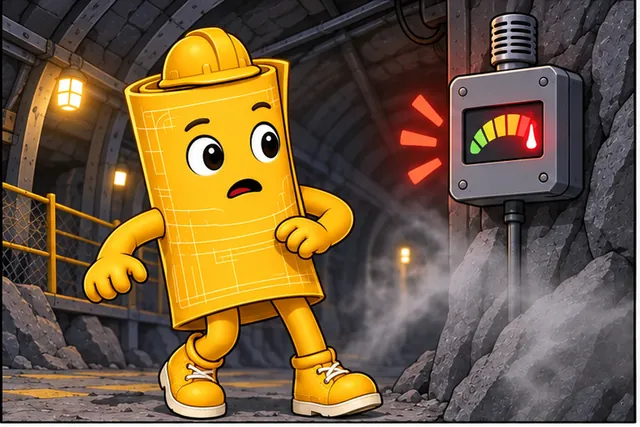
A mine gas reading crosses a danger limit near a worker.
-
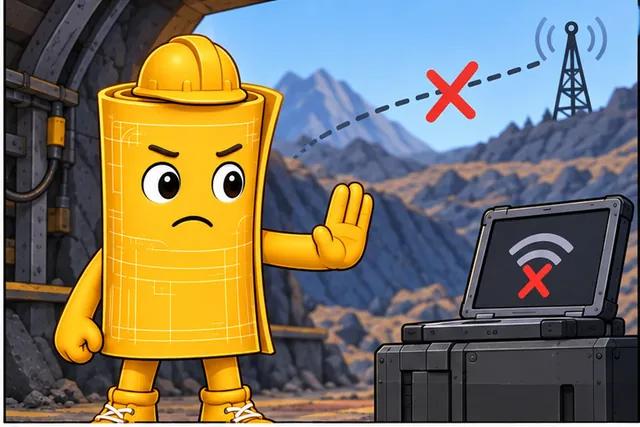
The safe action cannot wait for a distant service or working link.
-
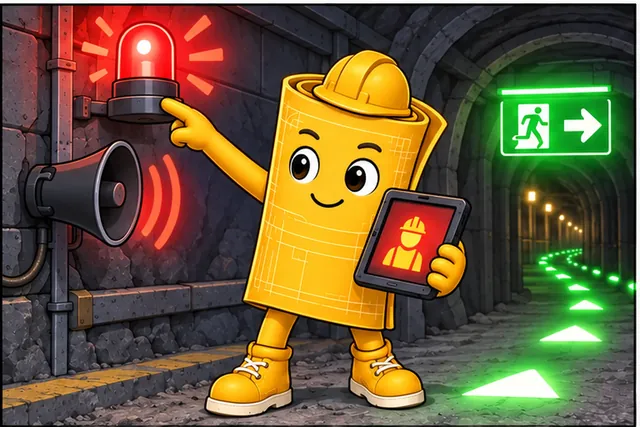
Trigger the local light, sound, worker message, and route to safety first.
-
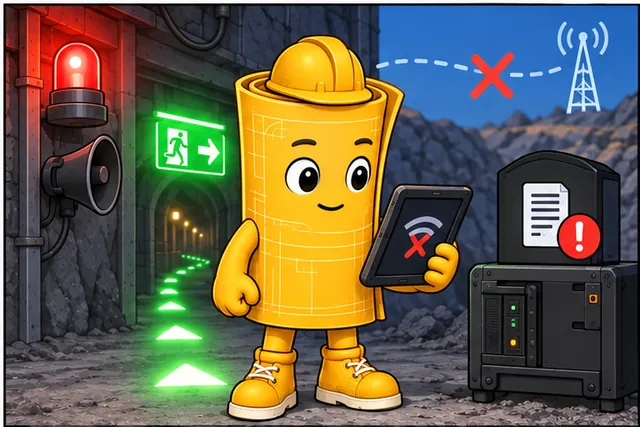
A broken link keeps local action clear and marks lost contact for review.
Begin with the hazard and the action. State what is measured, where it is measured, how fresh it must be, and which limit starts the warning. Keep the first safe response near the worker or machine. Send records outward for wider warning, rescue support, and later review.
Treat missing data as a condition, not as a normal reading. A broken sensor, low battery, blocked path, stale value, or unknown location must create its own visible state. Test each one. Make sure workers can tell the difference between danger, device fault, and loss of contact.
Run the drill in plain steps. Raise the test value. Check the local light. Check the local sound. Check the worker message. Check the control room. Break the link. Check the safe action. Restore the link. Check old records. Mark the result.
The simple path has limits. A sensor cannot prove that every pocket of air is safe. Position, flow, calibration, dust, heat, and movement affect the result.
Use Practitioner to design warnings, records, and drills. Use Under the Hood for coverage, trust, timing, route, and physical limits.
In a mine-safety setting, a sensor behavior decision is not abstract. A missing reading, gas warning, ventilation change, or contradictory source can affect whether people keep working, evacuate, or inspect equipment.
Read the case study from that pressure point. The useful architecture is the one that preserves enough evidence to explain the hazard claim, the response, the uncertainty, and the retest needed before normal operation resumes.
5.2 In 60 Seconds
This section: In 60 Seconds — Mine-safety monitoring is a useful sensor-behavior case study because the system must treat every reading as evidence for a decision, not as a standalone truth.
Mine-safety monitoring is a useful sensor-behavior case study because the system must treat every reading as evidence for a decision, not as a standalone truth. A temperature reading, gas reading, air-flow reading, worker-status signal, or vibration signal can be useful, stale, missing, contradictory, or out of scope for the current decision.
The review question is not “which sensor is best?” The review question is “what evidence supports the safety decision, what evidence is missing, and what action is safe while uncertainty remains?”
5.3 Learning Objectives
This section: Learning Objectives
By the end of this chapter, you will be able to:
- Map a mine-safety decision to the sensor evidence it depends on.
- Distinguish a hazard signal from node-behavior evidence.
- Review multi-sensor agreement without inventing unsupported thresholds.
- Handle missing, stale, or contradictory readings in a safety-monitoring record.
- Define retest triggers after a sensor, route, rule, or context change.
5.4 First Step: Keep The Safety Claim Reviewable
This section: First Step: Keep The Safety Claim Reviewable
-
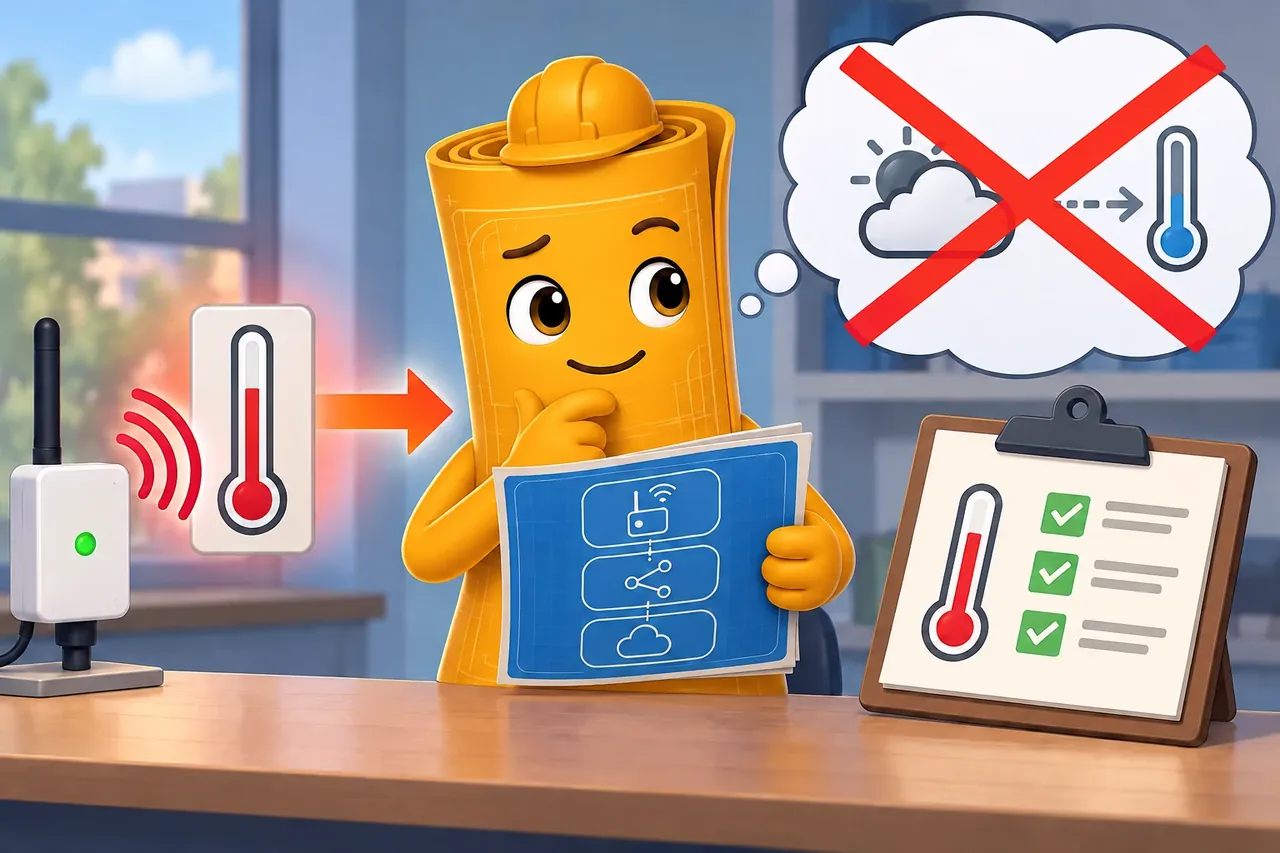
Wrong idea: ignore the gas and airflow warning until the stale feed returns. It fails because missing proof adds doubt but does not erase current signs of danger.
5.5 Minimum Viable Understanding
This section: Minimum Viable Understanding — A mine-safety sensor reading is useful only when its freshness, source, and validity are known.
A mine-safety sensor reading is useful only when its freshness, source, and validity are known. Agreement between independent sensors can reduce reliance on one reading, but it does not remove the need to review node behaviour. Missing evidence remains visible rather than being hidden by an old value. A response record names evidence used and excluded, the action, residual concern, and retest trigger. This chapter applies that discipline as a review case study; it does not replace site-specific safety design or approval.
5.6 Prerequisites
This section: Prerequisites
- Sensor Node Behaviors: Taxonomy: behavior labels used in this case study.
- Sensor Node Behavior Classification: evidence-first classification method.
- Dumb Nodes & Recovery: missing-data and stored-data handling for simple nodes.
5.7 Case Boundary
This section: Case Boundary — This case study uses an underground mine as the context because sensor behavior matters when decisions have high consequence.
This case study uses an underground mine as the context because sensor behavior matters when decisions have high consequence. The chapter does not prescribe mine equipment, alarm thresholds, route rules, staffing procedures, or approval interpretations. Those belong to qualified site engineering and safety processes.
Here, the learner reviews evidence flow:
- What is the decision being supported?
- Which sensor sources are expected?
- Are the readings fresh and valid?
- Do related sources agree or contradict each other?
- Which nodes are healthy, silent, suspect, misleading, or unknown?
- What action protects the decision while uncertainty remains?
- What change should trigger review again?
5.8 Evidence Flow
This section: Evidence Flow — A reviewable safety-monitoring path connects local observations to a decision record.
A reviewable safety-monitoring path connects local observations to a decision record. Before interpreting an unusual or missing reading, follow Figure 5.1 to separate measurement quality, agreement, and node behaviour from the response decision.
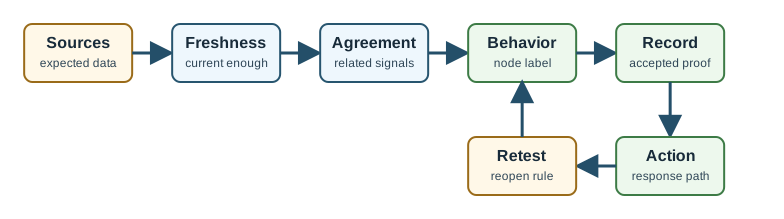
Read Figure 5.1 from sources through freshness, first confirming which readings or status messages were expected and whether they are current enough for the decision. Compare related sensor types next, then assign healthy, silent, suspect, misleading, or unknown only as far as the evidence supports. The record preserves which inputs were accepted, rejected, or missing before the response action is chosen, and the retest trigger states what reopens it. This order keeps a hazard signal distinct from a node-behaviour signal: an unusual reading may support hazard review while a missing or contradictory input separately supports behaviour review.
5.9 Sensor Behavior In A Mine-Safety Review
This section: Sensor Behavior In A Mine-Safety Review — Different node behaviors change how the evidence should be used.
Different node behaviors change how the evidence should be used.
Healthy
The node sends expected messages, the reading is fresh, and related evidence does not contradict it. The record can use the reading with its timestamp and source identity.
Silent
Expected messages are absent. The response record should mark the source unavailable and state how the affected decision handles missing evidence.
Suspect
The reading is present but weak, late, noisy, missing metadata, or not supported by related evidence. The record should limit reliance until another check resolves it.
Misleading
The reading is active but unsafe for the current decision because it repeatedly contradicts related evidence or fails validity checks. The record should reject it for the affected decision while preserving it for review.
Unknown
The monitor lacks enough evidence to classify the node. Unknown is a valid review state when the next action is to request another observation, compare a related source, or inspect configuration.
5.10 Multi-Sensor Agreement
This section: Multi-Sensor Agreement — Mine-safety decisions often depend on several sensor types.
Mine-safety decisions often depend on several sensor types. Agreement can make a decision stronger, but only if the agreement is reviewed carefully.
Ask:
- Are the readings from independent sources or from the same failure path?
- Are their observation times close enough for the same decision?
- Did any expected source fail to report?
- Do the readings support the same interpretation or only look similar?
- Is one source stale, suspect, or outside its valid context?
- Does the action record show which evidence was accepted?
Avoid turning a local example into a universal threshold. A classroom rule such as “two sensor types must agree” is useful for reasoning, but a real safety rule depends on the approved context and evidence record.
5.11 Review Record
This section: Review Record — The review record keeps the decision auditable without becoming a procedure manual.
The review record keeps the decision auditable without becoming a procedure manual. Inspect Figure 5.2 to connect the supported decision to expected sources, accepted and missing evidence, and the reason for acting under uncertainty.
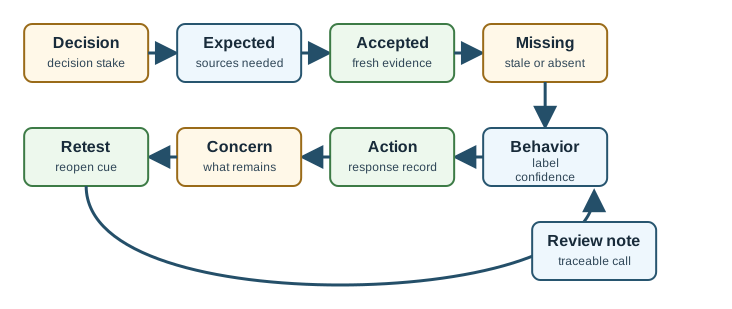
Read Figure 5.2 from the decision and expected sources to accepted evidence and timestamps. Then inspect missing, stale, or rejected inputs before interpreting the node-behaviour labels and their confidence. The response action follows those fields, while residual concern and the retest trigger preserve what remains unresolved. The sequence lets a later reviewer distinguish an action based on current measurements from one based on fallback evidence or a conservative response to missing evidence.
5.12 Worked Review: Possible Hazard Signal
This section: Worked Review: Possible Hazard Signal — Scenario: a monitoring view receives an unusual reading from one section of a mine.
Scenario: a monitoring view receives an unusual reading from one section of a mine. Related sources are expected before the system treats the event as confirmed.
Concrete example: one gas sensor reports an unusual local condition, a nearby airflow source shows a compatible change, and an expected status node from the same section has not reported recently. The review should keep the possible hazard evidence and the missing-node evidence visible as separate facts.
Observation
One source reports an unusual condition. A second related source reports a compatible change. A third expected source has not reported recently.
Evidence review
The first two readings are current and source-identified. The missing source is marked unavailable, not silently ignored. The review separates the possible hazard from the missing-node issue.
Node behavior
The reporting nodes are healthy for this decision. The missing node is classified as silent until new evidence arrives.
Action
The decision record uses the accepted evidence, applies the local response rule, and records the missing source as residual concern.
Retest trigger
Retest when the silent node returns, when a related reading contradicts the event, when the response rule changes, or when the source configuration changes.
5.13 Worked Review: Conflicting Evidence
This section: Worked Review: Conflicting Evidence — Scenario: one node reports a condition that would change the response, but related sources stay stable and the node recently had repeated metadata gaps.
Scenario: one node reports a condition that would change the response, but related sources stay stable and the node recently had repeated metadata gaps.
Observation
The reading is present, but its recent record is incomplete and related sources do not support the same interpretation.
Evidence review
The reviewer accepts that the reading exists but does not accept it as decision evidence until a reference check, repeated sample, or related source supports it.
Node behavior
The node is suspect for the affected decision. It is not labeled malicious or failed from this evidence alone.
Action
The decision record routes the reading to review, keeps the current decision tied to accepted evidence, and records what would change the classification.
Retest trigger
Retest after a complete message, a repeated consistent reading, a configuration check, or a contradiction from another trusted source.
5.14 Common Mistakes
This section: Common Mistakes — A single unusual reading is not a complete decision record, and a stale value must not hide missing evidence.
A single unusual reading is not a complete decision record, and a stale value must not hide missing evidence. Silence alone does not prove that a node failed. Apparent multi-sensor agreement also needs freshness and source-independence checks, otherwise a shared failure path may look like corroboration. Keep causal claims within the evidence, and pair every response action with its residual concern and the trigger that reopens review.
- Mixing safety procedure, equipment selection, and evidence review into one unsupported claim.
5.15 Knowledge Check
This section: Knowledge Check
5.16 Matching Quiz
This section: Matching Quiz
5.17 Ordering Quiz
This section: Ordering Quiz
5.18 Sensor Behavior Apps Quiz
This section: Sensor Behavior Apps Quiz
5.18.1 Start With the Scenario, Not the Answer
Picture a learner reading that a node missed one message. The quiz should not let one loaded word decide what the node meant to do.
First, show the role, the facts that were seen, and the facts that are still missing. Then ask for the safest label or next action.
A neat answer can still teach the wrong habit when the scene lacks context. A vague answer can also leave the learner with no rule to reuse.
Judge each mine-safety sensor item against its worked case and review record before trusting the combined alert.
Use the Practitioner sections to write and check each item. Use the Under the Hood material to test hard cases, weak proof, and claims about intent.
Plain check
- State what the node did. State what is missing. Avoid hidden intent. Ask one clear choice.
- Make each answer plausible. Explain each wrong path. Name the safe action. Add a new test.
- Try the item aloud. Remove clue words. Check the deeper rule. Keep the facts reviewable.
A useful quiz item should make the learner inspect evidence before choosing a node behavior label or review action. If the scenario can be answered from a keyword alone, it is not really testing specialized architecture reasoning.
Use this chapter as a quality check for practice questions. The story of each item should show the observation, the possible interpretations, the safest action, and the feedback that corrects the misconception.
5.18.2 In 60 Seconds
Sensor-behavior assessment questions should test evidence review, not memorized labels. A useful scenario gives the learner enough context to decide what was observed, which behavior label is supported, what action is safe, and what new evidence should reopen the decision.
This chapter shows how to read and build quiz-style review items for sensor behavior applications. The goal is to keep assessment content aligned with the taxonomy, classification, mine-safety, and trust-management chapters without drifting into unsupported thresholds, product claims, generic programming exercises, or unrelated quiz-bank material.
5.18.3 Learning Objectives
By the end of this chapter, you will be able to:
- Identify the evidence a sensor-behavior scenario actually provides.
- Choose a conservative behavior label from observable evidence.
- Select a bounded action that fits the supported label.
- Write feedback that explains the evidence instead of only naming the correct answer.
- Detect quiz items that add unsupported claims, stale figures, unrelated code, or mobile-hostile structure.
5.18.4 First Step: Keep The Scenario Reviewable
5.18.5 Minimum Viable Understanding
A good assessment item starts with observable evidence rather than a hidden cause, and its correct answer is the safest label or action supported by the scenario. Distractors represent common misconceptions instead of random wrong choices. Feedback names the evidence that makes each option right or wrong, while a retest trigger prevents the answer from pretending that node behaviour is permanent.
5.18.6 Prerequisites
- Sensor Node Behaviors: Taxonomy: behavior labels used in the assessment scenarios.
- Sensor Node Behavior Classification: how message presence, plausibility, consistency, role behavior, and recovery evidence support a label.
- Sensing as a Service: how shared sensor evidence is reviewed before a consumer decision uses it.
5.18.7 Assessment Scope
Keep the review focused on behavior evidence and learner reasoning. This chapter should not become a general quiz hub, a safety-design procedure, a trust-algorithm benchmark, or a programming exercise page.
Each item identifies the source, role, or decision under review and states which messages, readings, metadata, or related evidence are present. It also exposes evidence that is missing, stale, contradictory, or outside scope. From that record, the learner chooses the behaviour label supported now and an action safe under the remaining uncertainty. The item ends by naming the observation, configuration change, or related check that would trigger retest. If those questions cannot be answered, revise the item before using it.
5.18.8 Evidence Path
Assessment items should move from scenario evidence to an explicit review decision. Inspect Figure 5.3 before approving an item so the expected role, observable facts, answer, feedback, and condition for changing the answer form one coherent path.
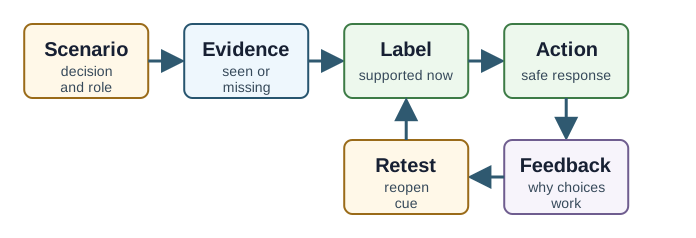
Read Figure 5.3 from scenario context to observable evidence, checking that the application decision and expected role are clear before the prompt introduces what was seen, missing, stale, or contradictory. The supported label must not assume a cause beyond those facts, and the bounded action must protect only the affected decision. Feedback then explains the evidence behind every option rather than merely marking it correct or incorrect. The retest trigger finishes the path by stating what would change the review state, which keeps assessment reasoning aligned with the chapter’s evidence discipline.
5.18.9 Question Patterns
Use a small set of repeatable patterns so learners can transfer the method across applications.
Behavior label questions
Ask which label is best supported by the current evidence. These questions should distinguish silent, suspect, misleading, selfish, malicious, dumb, and unknown states without treating a label as permanent identity.
Action questions
Ask what the system should do with the affected decision. Strong answers usually mark a source unavailable, down-weight suspect evidence, request corroboration, reject a misleading reading for the affected decision, or preserve a conservative state until new evidence arrives.
Feedback questions
Ask why an answer is safe or unsafe. The feedback should mention evidence such as missing messages, stale timestamps, related-source disagreement, role asymmetry, or absent permission rather than broad claims about the whole deployment.
Retest questions
Ask which change should reopen the review. Good triggers include a new current message, a repeated consistent reading, a related-source contradiction, a configuration change, a route-role change, or a service-permission change.
5.18.10 Review Record For Quiz Items
Each quiz item should leave enough trace that another reviewer can tell whether the question is aligned with the chapter. Use Figure 5.4 to review the learning target and scenario before judging the answer choices.
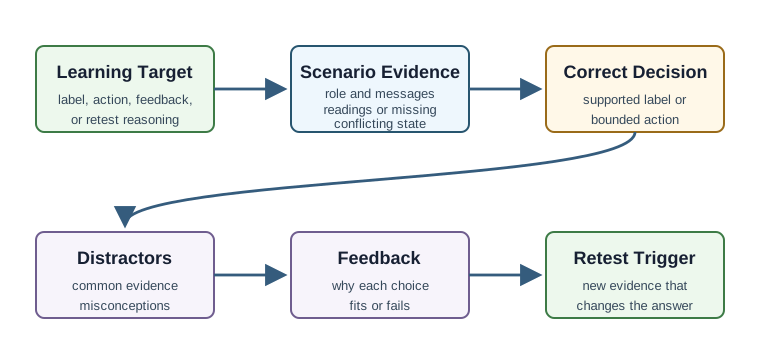
Read Figure 5.4 from the learning target through scenario and expected role, then check that observed, missing, stale, or contradictory evidence actually supports the correct label or action. Continue through each distractor’s misconception and option-specific feedback, and finish with the condition that would change the answer. This record prevents generic questions from slipping into the chapter: if a prompt could move to any IoT page without changing its reasoning, it is too generic for this sequence.
5.18.11 Worked Review: Missing And Contradictory Evidence
Scenario: an application expects a node to report a current condition reading and to include source metadata. The latest message arrives with complete metadata, but the value repeatedly conflicts with two related sources.
Concrete example: a cold-chain quiz item might say that one temperature source reports an acceptable value while two nearby sources and a door-open event suggest recent warming. The correct answer should focus on contradictory evidence for the affected decision, not on guessing that the sensor is broken.
Evidence reading
The node is not silent because messages are present. The value is not automatically safe because related evidence contradicts it. The scenario does not prove intent, hardware cause, or permanent failure.
Best supported label
Suspect or misleading for the affected decision, depending on whether the contradiction is repeated enough for the local review rule. A malicious label would need stronger evidence of active harm.
Safe action
Do not use the reading as accepted decision evidence. Preserve it in the record, request a related check or repeated sample, and keep the current decision tied to evidence that remains valid.
Retest trigger
Retest after a repeated consistent message, a reference check, a configuration review, or a new contradiction from a trusted related source.
5.18.12 Worked Review: Item Quality
Scenario: a quiz asks, “A node misses one message. What happened?” and marks “the node is malicious” as the correct answer.
Problem
The prompt gives only missing-message evidence. It does not state the expected schedule, last accepted message, related-node state, role behavior, or any active disruption. The answer invents a cause.
Revision
Ask which label is supported first. The best answer is silent or unknown, depending on whether a message was expected. The feedback should explain that stronger labels require more evidence.
Better retest trigger
The item should name what would change the answer: the node sends a current message, related nodes also go silent, the schedule shows no message was due, or route evidence shows the node avoids shared duties while keeping its own traffic.
5.18.13 Common Mistakes
-

Wrong: One missing message proves bad behavior. Check schedule, routes, nearby nodes, and fresh evidence.
Do not reward dramatic labels from thin evidence or treat one missing message as proof of failure, selfishness, or malice. Unsupported thresholds and performance claims do not make an item precise, and unrelated coding, service-health, or generic data-flow questions do not test this chapter. Feedback must expose stale data, missing metadata, and low confidence. Any reused visual must match the scenario and remain a standalone numbered figure when that is sufficient. Distractors should represent realistic misconceptions, not arbitrary wrong answers.
5.18.14 Knowledge Check
5.18.15 Matching Quiz
5.18.16 Ordering Quiz
5.18.17 Summary
Sensor-behavior assessment should teach cautious review. The best quiz items give enough scenario evidence for learners to choose a supported label, a bounded action, useful feedback, and a retest trigger. They should not reward invented causes, unsupported numbers, unrelated coding exercises, or generic quiz-bank content.
Use the same evidence discipline here that the rest of the node-behavior sequence uses: observe first, label conservatively, act narrowly, and reopen the review when new evidence arrives.
5.18.18 Key Takeaway
Sensor-behavior application work should connect behavior categories to decisions, alerts, trust scores, and operational responses.
5.18.19 Concept Relationships
Sensor Node Behaviors: Taxonomy provides the label vocabulary that assessment items use conservatively, while Sensor Node Behavior Classification supplies message, plausibility, consistency, role, confidence, action, and retest checks. Mine Safety Case Study applies the same reasoning in a high-consequence context. Sensor Behavior Trust Implementation then carries behaviour evidence into implementation-oriented review.
5.18.20 What’s Next
Next, continue with Mine Safety Case Study to apply sensor-behavior review to safety-monitoring evidence.
5.19 Summary
This section: Summary — Mine-safety monitoring shows why sensor behavior must be reviewed as evidence.
Mine-safety monitoring shows why sensor behavior must be reviewed as evidence. The decision record should state what was expected, what was received, which readings were accepted, which evidence was missing or rejected, how nodes were classified, what action was taken, and what should trigger review again.
Multi-sensor agreement can strengthen a decision, but only when readings are fresh, source-identified, and valid for the same context. Missing or contradictory evidence should remain visible instead of being hidden behind stale values or unsupported assumptions.
5.20 Key Takeaway
This section: Key Takeaway — Mine-safety sensing requires conservative assumptions about failures, coverage, latency, trust, maintenance, and emergency response.
Mine-safety sensing requires conservative assumptions about failures, coverage, latency, trust, maintenance, and emergency response.
5.21 Concept Relationships
This section: Concept Relationships — Sensor Behavior Applications: Quiz Review introduces the broader practice method, and Sensor Node Behavior Classification supplies the labels used in this case study.
Sensor Behavior Applications: Quiz Review introduces the broader practice method, and Sensor Node Behavior Classification supplies the labels used in this case study. Dumb Nodes & Recovery explains missing and recovered readings before Trust Management extends the evidence to cooperation and routing trust. Sensor Behaviors Production and Review then carries the same record into a production decision.
5.22 What’s Next
This section: What’s Next — Previous: Sensor Behavior Applications: Quiz Review for the practice context that leads into this case study.
Previous: Sensor Behavior Applications: Quiz Review for the practice context that leads into this case study.
Next: Trust Management for behavior evidence that affects cooperation and routing decisions.
Find help
3 reviewed answers.
Where should I start in a module?
Open the module page from the sidebar to see its chapters in order. Use the module map to return to a topic you need.
Modules and pathsReviewed
What can I try when a project does not work?
Check the symptom, then work through the diagnostic steps. Keep the error message and the smallest example that reproduces it.
When you are stuckReviewed
How do interactive examples work?
Use the interactive guide to check how examples and simulations work before changing your project.
Interactive examples guideReviewed