2 Dumb Nodes & Recovery
More
Depth: Practitioner
Progress saves as you read. Mark sections complete as you go; your progress appears in the sidebar.
Begin With Silence, Not a Verdict
This section: Begin With Silence, Not a Verdict — Picture a simple room sensor that misses its usual report.
Picture a simple room sensor that misses its usual report. It may be asleep, cut off, empty, stuck, or storing data for later. The first choice is not a permanent name for the node. It is the safe action to take while the cause is still unclear.
Write the expected send time, last good value, last contact, nearby node state, and any stored data. Try a known wake, a new path, a power check, or a local visit. When the node returns, check time, order, gaps, repeats, and the state of each stored record. Do not mix old data with fresh data without a clear mark.
Fast reset may restore service, but it can erase the clue or repeat a fault. Waiting may keep the clue, but it can leave the app blind. Accepting all stored data can fill gaps, but stale values may drive a bad act. This first pass does not prove the cause. For node recovery, choose bounded recovery and review returned records; check weak self-report, buffer state, linked faults, and retest rules before accepting the result.
Start With the Quiet Simple Node
This section: Start With the Quiet Simple Node — A dumb node is often a small device doing less than the architecture hoped: missing a wake window, losing context, buffering readings, or returning after a simple failure.
A dumb node is often a small device doing less than the architecture hoped: missing a wake window, losing context, buffering readings, or returning after a simple failure. The danger is treating that simple behavior as harmless without checking what evidence disappeared while the node was quiet.
Treat the simple node’s missing evidence as part of its recovery story.
-

A simple node misses a wake time and returns with lost context.
-
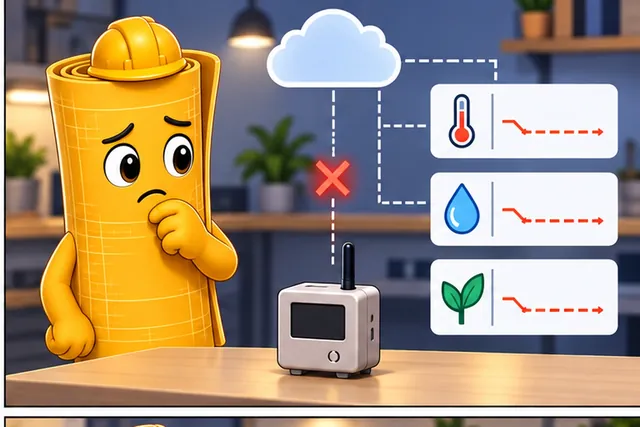
Its quiet failure may hide readings that the wider design expected.
-
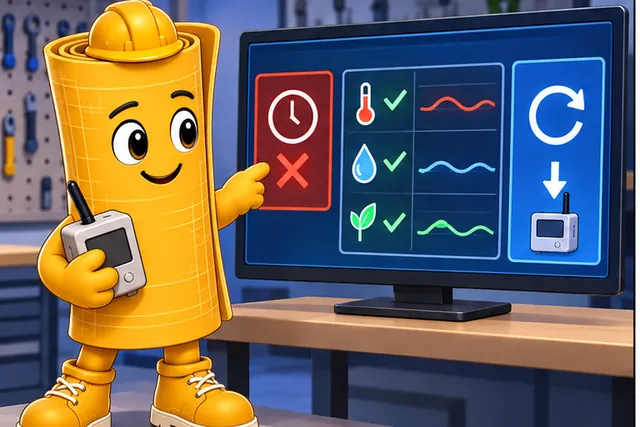
Name what failed, which data remains sound, and a bounded recovery action.
-
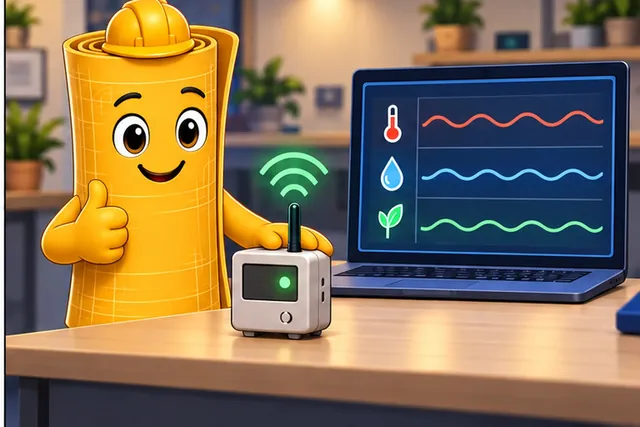
A repeat test proves when the node can be trusted again.
Read this chapter as a recovery story. First decide what the node failed to do, then decide what data can still be trusted, what recovery action is bounded, and what retest proves the node is safe to rely on again.
In 60 Seconds
This section: In 60 Seconds — In this module, a “dumb” node is a simple sensor node that cannot explain much about its own state.
In this module, a “dumb” node is a simple sensor node that cannot explain much about its own state. It may be healthy but temporarily silent, it may be unable to reach the next hop, or it may be unable to expose enough diagnostics for an automatic root-cause decision.
The recovery task is not to guess why the node is silent. The recovery task is to preserve the decision evidence: expected message schedule, last accepted observation, context around the silence, related-node evidence, buffered-data state, recovery action, and the condition that should reopen the review.
Learning Objectives
This section: Learning Objectives
By the end of this chapter, you will be able to:
- Describe dumb-node behavior as limited diagnostic evidence rather than a permanent identity.
- Distinguish temporary silence from confirmed failure using review evidence.
- Identify what a recovery record should preserve before data is accepted or rejected.
- Choose a bounded recovery action for a simple or silent node.
- Define retest triggers that prevent stale recovery assumptions from persisting.
First Evidence Review
This section: First Evidence Review
Minimum Viable Understanding
This section: Minimum Viable Understanding — A dumb-node label means that the system has limited evidence, not proof of a specific cause.
A dumb-node label means that the system has limited evidence, not proof of a specific cause. Silence must be compared with the expected message schedule and last accepted observation, because one silent node, a group of related silent nodes, and a node returning after a restart support different actions. Buffered data must not be merged silently; it needs freshness, ordering, and validity checks. Recovery is complete only when the chosen action, remaining uncertainty, and retest trigger are recorded.
Prerequisites
This section: Prerequisites
- Sensor Node Behaviors: Taxonomy: the behavior vocabulary used across the node-behavior sequence.
- Sensor Node Behavior Classification: the evidence checks used before assigning behavior labels.
- Selfish & Malicious Nodes: how intentional behavior differs from limited diagnostic evidence.
What A Dumb Node Means
This section: What A Dumb Node Means — “Dumb” is a useful label only when it stays evidence-bound.
“Dumb” is a useful label only when it stays evidence-bound. It does not mean the node is defective, harmless, or permanently isolated. It means the node cannot provide enough current information for the system to classify the condition with confidence.
Typical observations are missing expected messages, a last accepted reading that is now too old, or a node returning with stored readings after an outage. A simple node may expose only a small status code or no local status, so related nodes help distinguish an isolated gap from a shared condition. The review must therefore separate what the system expected to receive, what evidence actually arrived, and which action protects the downstream decision while uncertainty remains.
Environmental Causes Of Dumb Behavior
This section: Environmental Causes Of Dumb Behavior — Not every dumb-node case starts with a device fault.
Not every dumb-node case starts with a device fault. Adverse environmental conditions — high temperature, rainfall, or fog — can shrink a node’s effective communication range even though its sensing circuit still works. The node keeps observing its surroundings but cannot get the reading out, which looks identical to silence from the review side until the context is checked.
This distinction matters for the review record. Environmentally caused dumb behavior is temporary by nature: it tracks the condition that caused it and should clear when that condition improves, rather than persisting the way a hardware failure does. The recovery record should note whether an environmental explanation was checked before a stronger action is chosen.
Diagnosis Path
This section: Diagnosis Path — A recovery review begins with the observable symptom and moves toward a bounded action.
A recovery review begins with the observable symptom and moves toward a bounded action. Follow Figure 1 before assigning a cause so that timing, context, peer evidence, and stored data constrain the response.
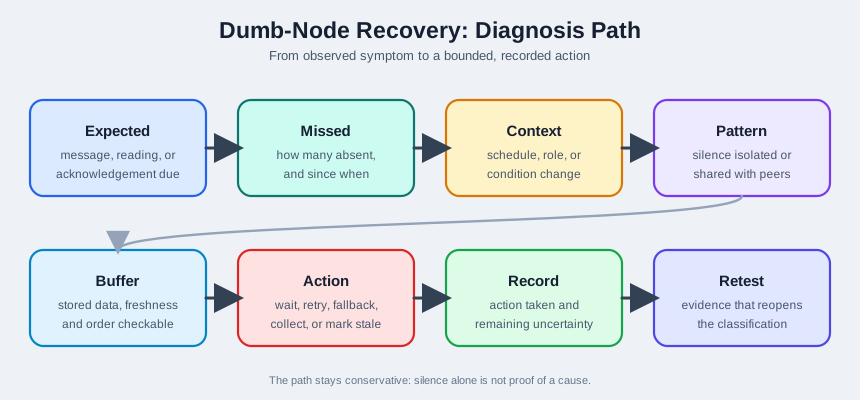
Read Figure 1 from expected to missed: establish which message or acknowledgement was due, how many are absent, and since when. Continue through context and pattern to check schedule or role changes and whether related nodes share the silence. The buffer stage asks whether stored records can be ordered and checked for freshness before the action stage chooses to wait, retry, use fallback evidence, collect data, or mark the source unavailable. End with the evidence that will trigger retest. This conservative order connects the symptom to a reversible recovery decision without claiming a cause merely because the node is silent.
Recovery Evidence
This section: Recovery Evidence — The most useful recovery record is short and repeatable.
The most useful recovery record is short and repeatable. Inspect Figure 2 when a node disappears or returns so that identity, timing, context, and the treatment of stored records remain visible to the next reviewer.
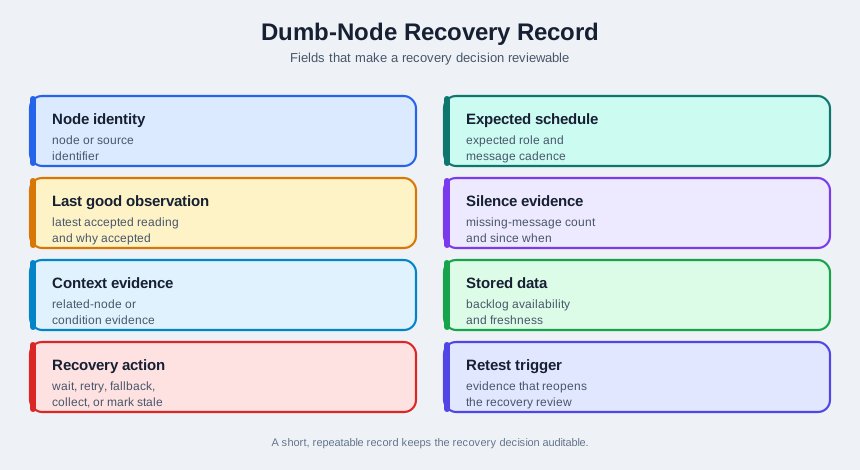
Read Figure 2 from the source identifier and expected schedule to the latest accepted observation, because these establish which silence is abnormal and when the current evidence expired. Next inspect missing-message and related-node context before judging stored-data availability and freshness. The chosen action follows that evidence, while residual uncertainty and the retest trigger prevent the temporary classification from becoming permanent. If the node returns later, this order lets the reviewer determine whether recovered records are fresh, whether their sequence is complete, and whether the earlier recovery decision still applies.
Recovery Actions
This section: Recovery Actions — Recovery actions should be bounded to the evidence available.
Recovery actions should be bounded to the evidence available.
Wait and recheck
Use this when the missing interval is still within the expected recovery window and the downstream decision can tolerate unavailable data.
Retry or request status
Use this when the network path or node status can be checked without changing the decision. The retry result should be recorded, including no-response outcomes.
Use fallback evidence
Use this when another source can support the decision and the missing node is not the only evidence path. Mark the original source unavailable rather than hiding the substitution.
Collect stored data
Use this when the node later returns with buffered readings or when an assisted collection path is available. Validate order, freshness, duplicate handling, and missing intervals before accepting the data.
Mark unavailable and escalate review
Use this when the missing state outlasts the review rule, when recovered data cannot be validated, or when related evidence suggests the node should no longer affect the decision.
Named Recovery Schemes
This section: Named Recovery Schemes — Naming a scheme does not replace the review record.
Detecting a dumb node and re-establishing connectivity with it are separate steps, and the literature treats them as two schemes worth naming: CoRD and CoRAD are two established approaches for re-establishing connectivity with dumb nodes once they have been detected. Both assume the same order of operations this chapter uses — confirm the dumb state first, then apply a bounded reconnection action — rather than reconnecting on a guess.
Naming a scheme does not replace the review record. Whatever detection or reconnection approach a system uses, it should still produce the fields this chapter asks for: expected schedule, missing-message evidence, context check, chosen action, and retest trigger.
Buffered Data Handling
This section: Buffered Data Handling — Stored readings can be valuable, but they can also confuse the current decision if they are merged without review.
Stored readings can be valuable, but they can also confuse the current decision if they are merged without review.
Start by comparing each record’s observation time with its receive time, then determine whether the sequence is ordered or needs reconstruction. Account for duplicates created by retries and separate old records that may update history from fresh records permitted to update current state. Missing intervals must remain explicit, and the recovery action may change the confidence assigned to later readings. The key rule is simple: recovered data enters the system with a validity state, never as though it arrived normally.
Worked Review: Silent Simple Node
This section: Worked Review: Silent Simple Node — Scenario: a simple condition node sends periodic readings to a gateway.
Scenario: a simple condition node sends periodic readings to a gateway. The gateway stops receiving messages.
Concrete example: a bin-fill node has no rich diagnostics; it normally sends a fill-level record and battery flag to a gateway. When the record stops arriving, the recovery review should preserve the last accepted reading and show the current source as unavailable until a complete new record or validated stored record arrives.
Observation
The current reading is missing. The last accepted reading is no longer fresh enough for the application decision.
Evidence check
The monitor confirms the expected schedule, records the last accepted observation, and checks related sources. Related sources remain available, so the silence appears isolated.
Recovery action
The dashboard marks this source unavailable and uses a fallback evidence path for the affected decision. It does not reuse the stale reading as if it were current.
Retest trigger
Retest when the node sends a new complete reading, returns with buffered records, changes role, changes schedule, or remains silent past the review rule.
Worked Review: Returned With Stored Records
This section: Worked Review: Returned With Stored Records — Scenario: a simple node returns after a silent interval and sends stored readings.
Scenario: a simple node returns after a silent interval and sends stored readings.
Observation
The node is communicating again, but the records cover an interval when the gateway had no live messages.
Evidence check
The reviewer checks observation time, receive time, sequence order, duplicate handling, and missing intervals.
Recovery action
Fresh records may update the current decision. Older records update the history only if their validity checks pass. Missing intervals remain marked as missing.
Retest trigger
Retest if the node returns late again, if sequence gaps repeat, if duplicate handling changes, or if the recovered data conflicts with related evidence.
Common Mistakes
This section: Common Mistakes — Do not call a silent node failed before checking context and related evidence, or let a dumb-node label become a permanent identity.
Do not call a silent node failed before checking context and related evidence, or let a dumb-node label become a permanent identity. Reusing the last reading without a stale state and accepting buffered records without checking observation time and order both hide uncertainty. Fallback evidence must not conceal the missing source, and an isolated decision-path problem should not automatically escalate the whole system. Every recovery action also needs the retest trigger that will clear or change the temporary label.
Knowledge Check
This section: Knowledge Check
Matching Quiz
This section: Matching Quiz
Ordering Quiz
This section: Ordering Quiz
Sensor Node Behaviors: Taxonomy
This section: Sensor Node Behaviors: Taxonomy
-

Is the quiet node faulty, blocked, or refusing to help?
Start With One Unclear Node
Picture one sensor node that stops forwarding its share of messages. It may be broken. Its battery may be low. Its path may be weak. It may be saving power by design. It may also be acting against the system. The same symptom has many causes.
A taxonomy is a set of careful labels. It helps a team describe behavior in a shared way. Begin with what was observed. Record what the node sensed, sent, passed on, delayed, or rejected. Mark the time and conditions. Keep the claim smaller than the evidence.
Separate state from intent. A quiet node is not always selfish. A wrong value is not always an attack. A late report may come from a busy path. Use a label to choose the next test, not to declare guilt. Change the label when new evidence arrives.
Compare the node with its own past and with nearby peers. Check power, links, load, and role. Repeat the observation. Test recovery. Keep unknown as a valid class when the record is weak.
This first view uses one node and one symptom. Real groups can influence one another and faults can spread. The Practitioner layer builds the evidence and response record. Under the Hood examines trust scores, coordinated behavior, and the limits of drawing intent from outward signs alone.
Imagine one sensor node has stopped matching what the system expects. It may be quiet, late, weak, selfish, malicious, or simply outside the evidence you collected, but the label is not useful until it changes the next review action.
Use the taxonomy as a cautious naming step. First list what the node sensed, sent, forwarded, missed, or contradicted, then choose the behavior label that the evidence can actually support.
In 60 Seconds
Sensor-node behavior labels are useful only when they describe what the system can observe. A node may be healthy, silent, suspect, selfish, malicious, dumb, or unknown, but those labels should come from evidence such as message presence, expected role, data plausibility, related-node observations, and retest results.
This taxonomy is not a motive detector. It is a review vocabulary that helps learners choose the next evidence check without turning a missing message, stale reading, or unusual route claim into an unsupported conclusion.
Learning Objectives
By the end of this chapter, you will be able to:
- Use behavior labels as evidence states rather than permanent identities.
- Separate absence, contradiction, limited diagnostics, non-cooperation, and active disruption.
- Choose the next review step for each behavior label.
- Record confidence, residual uncertainty, and retest triggers for node behavior decisions.
- Connect the taxonomy to the classification, recovery, selfish/malicious, and duty-cycling chapters.
First Evidence Review
Minimum Viable Understanding
A behaviour label summarises current evidence; it does not prove a hidden cause. Healthy, silent, suspect, selfish, malicious, dumb, and unknown answer different review questions, and the same symptom may support different labels when context or related evidence changes. A useful taxonomy tells reviewers what to check next and what action is safe while uncertainty remains. Every label must therefore stay paired with confidence, a bounded action, and a retest trigger.
Prerequisites
- Specialized Architectures Route Map: the module-level route through node behavior, duty cycling, and sensing-service boundaries.
- Sensor Node Behavior Classification: the evidence checks used after this taxonomy introduces the labels.
- Duty-Cycling and Topology Management: why sleep schedules and topology roles affect what counts as missing.
Taxonomy Scope
The taxonomy groups observations by the decision they support. It should not become a broad security catalog, a hardware failure manual, or a deployment economics model. Keep each label tied to the current review record:
- what the node was expected to do;
- what was observed or missing;
- whether related nodes support the same pattern;
- whether ordinary explanations have been checked;
- what downstream decision is affected;
- what new evidence would confirm, change, or clear the label.
If the record cannot support a specific label, the honest label is unknown or suspect, not a stronger category.
Behavior Map
The behaviour map starts with observable evidence and ends with a cautious label. Inspect Figure 3 before choosing a response so the expected role, corroborating checks, and confidence constrain both the label and the action.
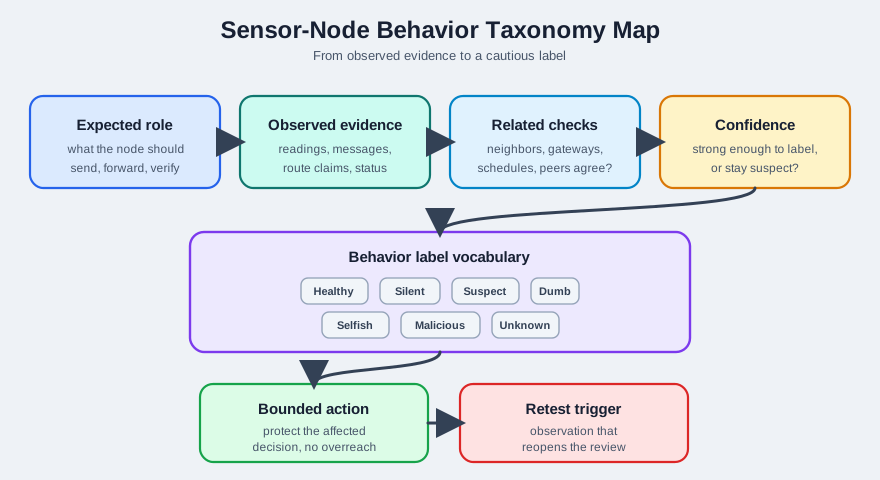
Read Figure 3 from expected role to observed evidence: establish what the node should send, forward, acknowledge, or validate before interpreting the readings, messages, route claims, or status cues that arrived. Next compare neighbours, gateways, schedules, and peer readings, then set confidence low enough to retain suspect or unknown when corroboration is weak. Only then choose the current behaviour label and a bounded action for the affected decision. The final retest trigger names the observation that reopens the label, keeping the response reversible as the evidence changes.
Core Behavior Labels
Use these labels as review states.
Healthy
The node meets its expected role with current, plausible, and consistent evidence. Healthy does not mean permanently trusted; it means the current review record found no reason to downgrade the node for the decision being made.
Silent
Expected messages or acknowledgements are missing. Silence alone does not prove failure, selfishness, or malicious behavior. Review the expected schedule, topology role, last accepted observation, and related-node evidence before escalating.
Suspect
The record contains a warning pattern, but the evidence is incomplete. Suspect is often the right label when values are unusual, forwarding is inconsistent, or related evidence disagrees but benign explanations are not yet resolved.
Selfish
The node appears to preserve its own traffic while avoiding shared work such as forwarding, route participation, or cooperative sensing. This label needs evidence of asymmetry, not just one missing relay.
Malicious
The node appears to introduce active harm such as false claims, identity conflict, route manipulation, selective distortion, or data tampering that is not explained by ordinary limits. This label requires corroboration and careful confidence language.
Dumb
The node has limited diagnostic evidence. It may be simple, temporarily silent, or unable to explain its local state. The right action is usually recovery review, stale-data protection, and a clear retest trigger.
Unknown
The system does not have enough evidence for a useful label. Unknown is not a failure of the taxonomy; it prevents overconfident action when the record is thin.
Review Flow
The review flow keeps labels conservative and repeatable. Use Figure 4 when applying the vocabulary to a real node so that message presence, plausibility, cooperation, and conflict evidence are tested in a stable order.
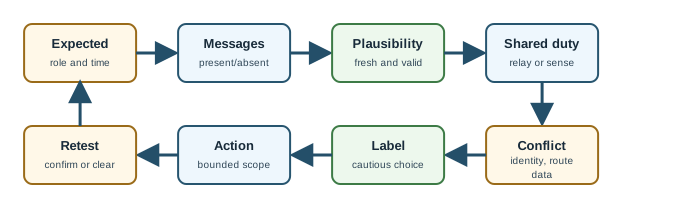
Follow Figure 4 from the expected role and schedule to the presence of current messages or acknowledgements. If evidence is present, inspect its plausibility, freshness, and consistency before comparing the node’s own traffic with shared duties such as forwarding. Identity, route, or value conflicts come next because they may justify stronger review but not automatic intent claims. Finish by choosing the most cautious supported label, then record the bounded action and retest trigger. This sequence turns the taxonomy into a repeatable decision method rather than a set of permanent identities.
Label-To-Action Guide
The action should match the evidence, not the most dramatic possible explanation.
Healthy action
Use the node for the current decision, but keep normal monitoring and retest rules in place.
Silent action
Mark the current source unavailable or stale for affected decisions. Check schedule, role, related nodes, and recovery evidence before assigning a cause.
Suspect action
Reduce confidence, request corroboration, or route the decision through additional evidence. Keep the label reversible.
Selfish action
Avoid relying on the node for shared work while collecting more relay or cooperation evidence. Do not treat it as malicious unless the record supports active harm.
Malicious action
Protect the affected route, identity, or data path. Use narrow quarantine, corroboration, or exclusion only for the decision path supported by the evidence record.
Dumb action
Preserve last-good evidence, handle buffered data carefully, and name the condition that would reopen or clear the recovery review.
Unknown action
Hold a conservative state, collect missing evidence, and avoid irreversible labels.
Worked Review: Mixed Evidence
Scenario: a gateway notices that one node’s readings are missing from the current decision. The node’s previous reading was accepted, but the expected message did not arrive.
Concrete example: a storage-room humidity node reported normally during the last review window, but the current dashboard refresh has no new message while neighboring temperature and door-state nodes are still reporting. The taxonomy should first preserve the missing-message state before assigning a stronger label.
First pass
The node is not immediately failed, selfish, or malicious. The first supported label is silent because the expected message is absent.
Context check
The reviewer checks schedule, topology role, related nodes, and whether the node recently changed duty-cycle behavior. If nearby nodes are also missing, the label may stay silent or move toward dumb-node recovery. If only shared relay traffic is missing while the node’s own readings continue, selfish behavior may become a hypothesis.
Action
The current decision should not reuse the stale value as current. The review record marks the source unavailable for that decision, preserves the last accepted observation, and records what new message, related-node observation, or recovered data would reopen the label.
Common Mistakes
Treat labels as current evidence states, never permanent identities. Silence alone does not prove failure or malice, while a dumb-node label does not prove harmlessness. Review the expected schedule and topology role before interpreting missing messages, and keep the taxonomy focused on decisions rather than expanding it into an attack catalogue or product checklist. A healthy label must not hide stale data, and every label needs recorded confidence plus the trigger that will reopen it.
Knowledge Check
Matching Quiz
Ordering Quiz
Summary
Sensor-node behavior taxonomy is a disciplined vocabulary for current evidence. It separates healthy, silent, suspect, selfish, malicious, dumb, and unknown states without pretending that a single symptom proves a hidden cause. The taxonomy should help reviewers choose the next evidence check, protect the affected decision, and keep labels reversible when confidence is limited.
The strongest review records state the expected role, observed evidence, related checks, label, confidence, bounded action, residual uncertainty, and retest trigger.
Key Takeaway
Node-behavior classification helps separate normal, degraded, selfish, malicious, and recovering nodes so the architecture can respond appropriately.
Concept Relationships
Sensor Node Behavior Classification turns this vocabulary into detailed evidence checks, while Selfish & Malicious Nodes separates non-cooperation from active harm without overclaiming motive. Dumb Nodes & Recovery handles limited diagnostics, stale data, and recovered records. Duty-Cycling and Topology Management completes the model by showing how sleep schedules and topology roles change the meaning of missing evidence.
What’s Next
Next, apply this vocabulary in Sensor Node Behavior Classification, where each label is tied to message presence, plausibility, consistency, confidence, action, and retest evidence.
Summary
This section: Summary — Dumb-node recovery is an evidence discipline for simple or temporarily silent nodes.
Dumb-node recovery is an evidence discipline for simple or temporarily silent nodes. The label should not claim more than the system knows. A strong recovery review records the expected schedule, last accepted observation, missing-message evidence, related context, stored-data handling, action, residual uncertainty, and retest trigger.
Recovered data should be accepted only with freshness, order, duplicate, and gap checks. When evidence is incomplete, the safer action is to make unavailable or fallback states visible instead of hiding them behind stale readings.
Key Takeaway
This section: Key Takeaway — Dumb-node recovery plans should assume limited local intelligence and define safe defaults, watchdogs, reset behavior, and observable recovery evidence.
Dumb-node recovery plans should assume limited local intelligence and define safe defaults, watchdogs, reset behavior, and observable recovery evidence.
Concept Relationships
This section: Concept Relationships — Sensor Node Behaviors: Taxonomy places dumb-node behaviour within the larger vocabulary, while Sensor Node Behavior Classification supplies the evidence-first method used before recovery.
Sensor Node Behaviors: Taxonomy places dumb-node behaviour within the larger vocabulary, while Sensor Node Behavior Classification supplies the evidence-first method used before recovery. Selfish & Malicious Nodes separates limited evidence from intentional withholding or abuse. Duty-Cycling and Topology Management completes the connection by showing why expected schedules and topology roles change the meaning of a missing message.
What’s Next
This section: What’s Next — Previous: Selfish & Malicious Nodes for behavior that may involve intent or incentives.
Previous: Selfish & Malicious Nodes for behavior that may involve intent or incentives.
Next: Duty-Cycling and Topology Management for schedules and topology choices that change what “missing” means.
Find help
3 reviewed answers.
Where should I start in a module?
Open the module page from the sidebar to see its chapters in order. Use the module map to return to a topic you need.
Modules and pathsReviewed
What can I try when a project does not work?
Check the symptom, then work through the diagnostic steps. Keep the error message and the smallest example that reproduces it.
When you are stuckReviewed
How do interactive examples work?
Use the interactive guide to check how examples and simulations work before changing your project.
Interactive examples guideReviewed