Information Model
The server exposes Objects, Variables, Methods, Types, References, namespaces, and data types in an address space that clients can browse.
Progress saves as you read. Mark sections complete as you go; your progress appears in the sidebar.

Can we trust this motor reading?
This section: Start With the Tag Someone Must Trust — Picture a control screen that says a motor is too hot.
Picture a control screen that says a motor is too hot. The number matters only if the operator knows which motor sent it and whether the reading is good. Open Platform Communications Unified Architecture (OPC UA) gives industrial data a shared model and a protected service path.
Start with one value and the action it may trigger. Name the machine, unit, time, quality state, and person allowed to use it. Then test a stale value, a broken link, and a client with the wrong role. The screen should show uncertainty instead of making a bad value look safe.
Use a small trust record for each important value. Give it a clear name. Link it to one machine. State the unit. Keep its time and quality. Show whether it is fresh. Limit who may read it. Limit who may change related settings. Give each client its own identity. Reject an unknown client. Record a failed session. Plan how trust is renewed. Test what the operator sees during a broken link.
A good model makes the safe action easier. It should stop two similar tags from being confused. It should also make poor evidence visible before a control decision.
This short story does not cover every object, service, or certificate rule. A large plant needs a consistent model and careful trust choices across many systems. The Practitioner section follows the model and service evidence. Under the Hood explains sessions, certificates, and access rules.
Imagine an operator screen showing a motor temperature that will decide whether a line keeps running. A flat tag value is not enough. The reviewer needs to know which machine object owns the value, which unit and quality state came with it, which certificate protected the session, and which role was allowed to read or change related nodes.
OPC UA is useful when that trust story matters. Start with the value someone must act on, then make the model, service path, session, and authorization evidence visible before the integration becomes a pile of NodeIds.
This section: Overview: OPC UA Is a Model, Service, and Trust Architecture — OPC UA is not just a replacement wire format for industrial tags.
OPC UA is not just a replacement wire format for industrial tags. Its core value is that an industrial system can expose a typed address space, let clients discover that model through services, and protect access through certificates, secure channels, sessions, user identity, and authorization.
For example, a packaging line can publish a flat temperature value through many protocols, but OPC UA can also show where that value lives in the equipment model, which unit and engineering range it uses, which machine object owns it, which method can reset an alarm, and which role may call that method. A useful review therefore asks more than "Can the client read the number?" It asks whether the Browse path, namespace record, DataValue quality, timestamp source, endpoint policy, server certificate, user identity, and authorization rule all support the same operational story.
That is why OPC UA is often chosen when semantic interoperability matters. It costs more design effort than a simple register map, but it can reduce fragile custom mapping if the team treats the address space and trust configuration as release artifacts rather than as default server output. The same record also gives operations a stable checklist when a server certificate, namespace, companion model, or gateway mapping changes later.
Inspect Figure 4.1 to see how client actions reach a typed information model through services protected by an explicit trust boundary.
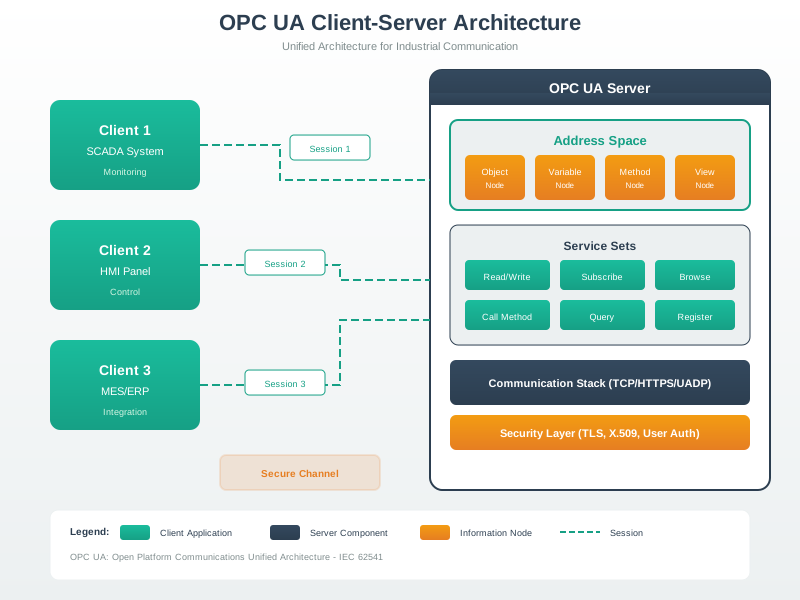
In Figure 4.1, begin with operational clients such as SCADA, HMI, MES, or ERP and the actions they request: browse, read, write, call, and subscribe. Those actions enter the server through service sets, not by reaching storage directly. Next inspect the address space, where objects, variables, methods, types, and references give device values a shared model. The trust band beneath the path is equally important. Certificates and a secure channel protect the connection, while the session, user identity, and authorization decide what that client may do. OPC UA interoperability therefore needs both semantic nodes and access evidence; a successful connection alone proves neither correct meaning nor permission.
The server exposes Objects, Variables, Methods, Types, References, namespaces, and data types in an address space that clients can browse.
Clients use services such as Browse, Read, Write, Method, Subscription, MonitoredItem, Event, and Pub/Sub according to the workload.
Production readiness depends on endpoint policy, certificates, trust lists, user authentication, authorization, and renewal ownership.
To ground the “root”–“objects” decision through “Types” in visible evidence about “Root”, inspect Figure 4.2. Its named elements “Root” and “Objects” frame the claim that The address space is where OPC UA carries industrial meaning, not just values.
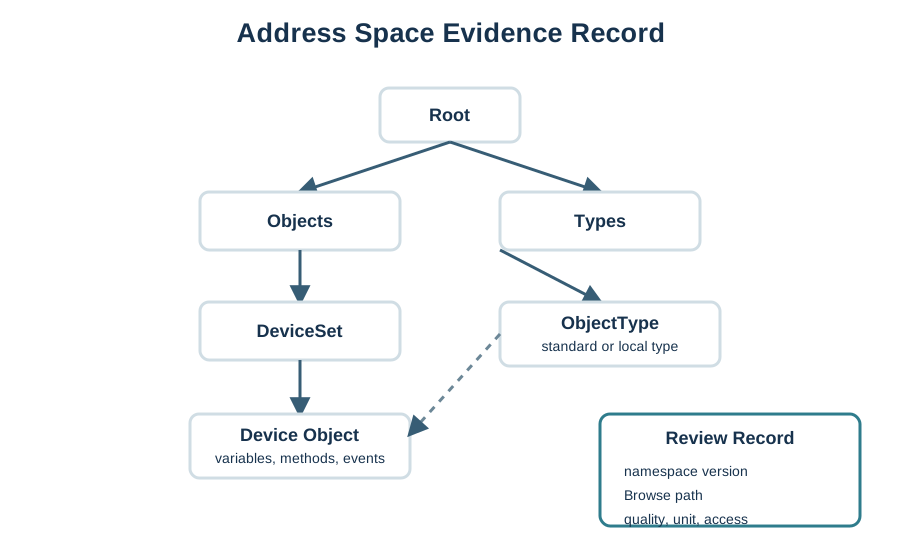
In Figure 4.2, notice how “Root” establishes the initial state; “Objects” supplies the next check. The move through “Types” reaches “DeviceSet”, making The address space is where OPC UA carries industrial meaning, not just values observable. Return to the “root”–“objects” decision with “DeviceSet”, and keep “Root” in the release record.
This section: Practitioner: Record the Session Path Before Release — A normal OPC UA client-server path includes endpoint discovery, secure-channel setup, session creation, session activation, and application services.
A normal OPC UA client-server path includes endpoint discovery, secure-channel setup, session creation, session activation, and application services. Each stage can fail for a different reason, so the release record should name the stage and the evidence captured there.
A practical acceptance test should walk the whole path with the identity that production will use. Record the endpoint selected from discovery, the chosen security mode and policy, the server certificate that was trusted, the client certificate or user credential presented, the Browse paths used to find nodes, and a small set of Read, Write, Method, Subscription, and Event operations. Include at least one denied operation on purpose. That failed call is valuable because it proves the session is not simply connected; it is constrained by the intended role and node permissions. The same packet should name who renews certificates and who approves model changes.
Start the evidence review for the “discover”–“endpoints” decision: inspect Figure 4.3. Two labels deserve attention—“Discover” and “endpoints”—because they bound The OPC UA service path is a workflow, not a single socket connection.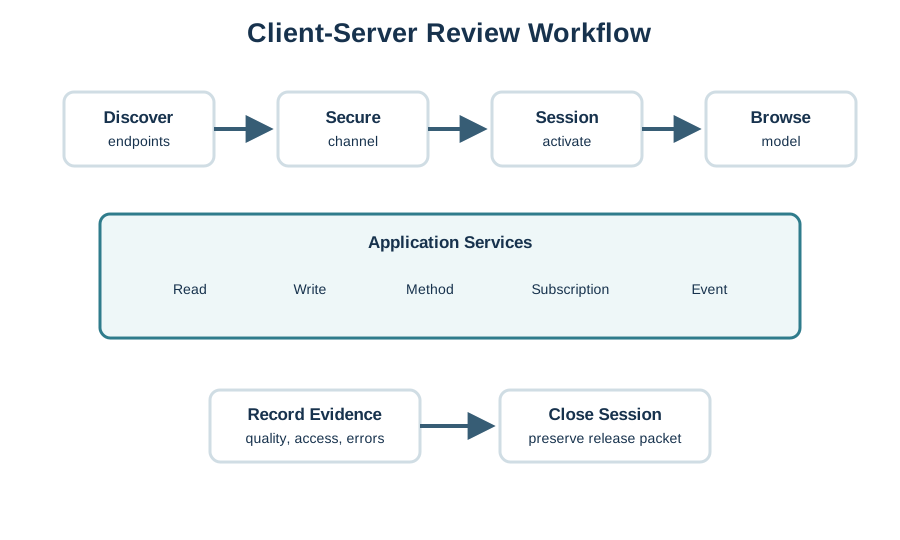
Begin Figure 4.3 at “Discover”, but do not stop there. Compare “endpoints”, then follow “Secure” until “channel”. The resulting chain supports The OPC UA service path is a workflow, not a single socket connection; it also gives the “discover”–“endpoints” decision a specific retest boundary.
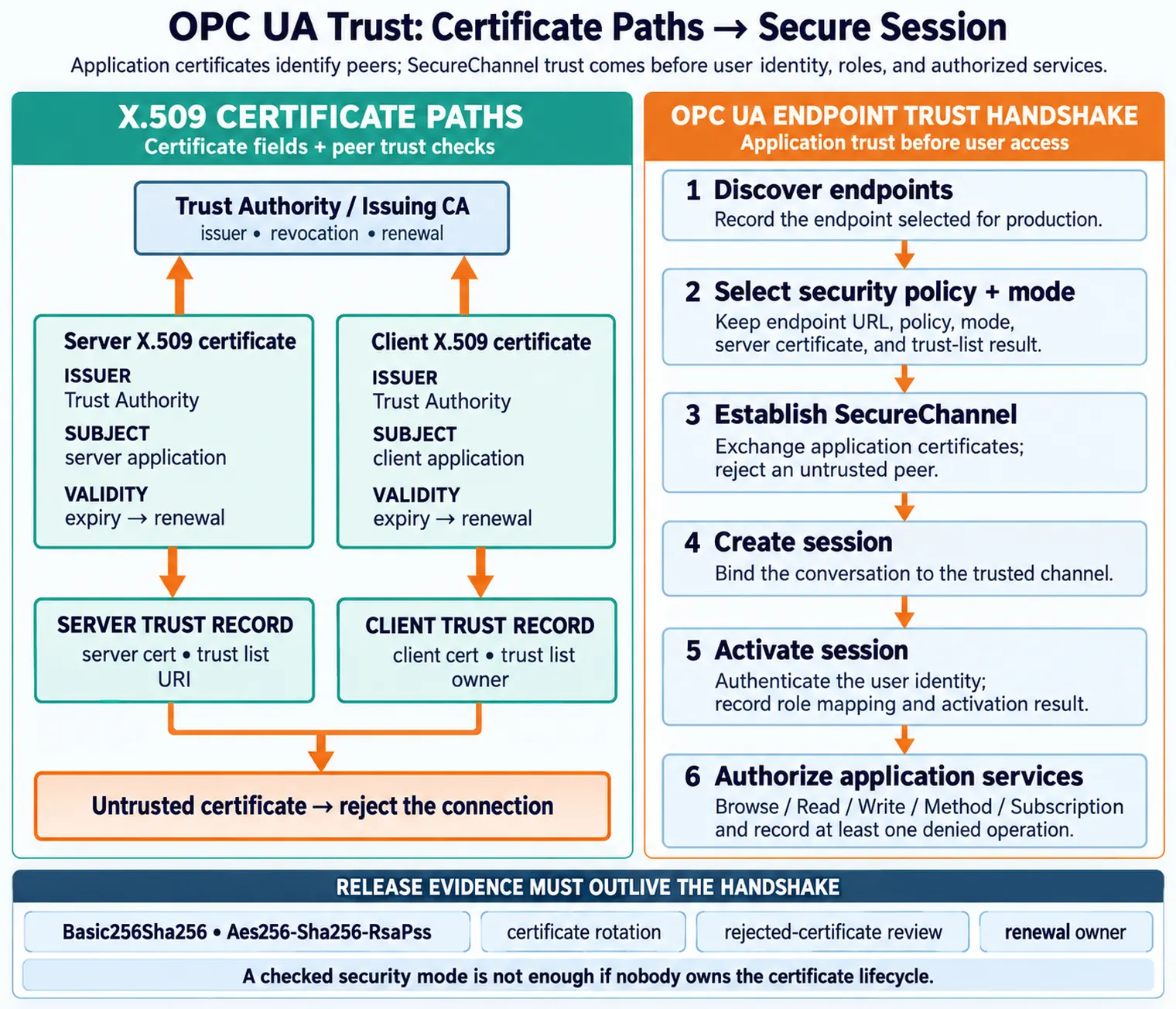
On Figure 4.4, inspect “Trust Authority” before “issuer, revocation, renewal”. The subsequent hand-off from “Server Trust” to “server cert, trust list, URI” explains A security mode without a trust-list and lifecycle record is incomplete production evidence. Carry that sequence into the “trust authority”–“issuer, revocation, renewal” decision so “Trust Authority” evidence, “issuer, revocation, renewal” decision, and “server cert, trust list, URI” recheck remain distinguishable.
Gate before production: unsecured or lab-only endpoints need explicit exception records and compensating controls. Network placement alone is not a security design.
This section: Under the Hood: Pub/Sub, Gateways, and Companion Models Preserve or Lose Semantics — OPC UA can expose client-server services, Pub/Sub datasets, and gateway translations into MQTT, AMQP, HTTP, storage APIs, or analytics systems.
OPC UA can expose client-server services, Pub/Sub datasets, and gateway translations into MQTT, AMQP, HTTP, storage APIs, or analytics systems. Those boundaries are useful only when the integration records what semantic context survives the transfer.
Suppose a gateway republishes OPC UA machine state into a broker topic for analytics. The downstream message may carry the numeric value, but lose the node's namespace, Browse path, engineering unit, status code, source timestamp, role restriction, or companion-model type unless the mapping records them deliberately. A boundary review should therefore name the exported nodes, dataset fields, schema owner, quality mapping, timestamp choice, command path, and interruption behavior. It should also say what is intentionally not exported, such as write methods or maintenance-only events, so subscribers do not infer controls that the gateway never preserved. This matters during audits and incident response: teams need to know whether a surprising value is stale, translated, denied, disconnected, or genuinely measured at the machine. Without that evidence, a clean broker message can hide a broken source model just as easily as a failed sensor. The record should be reviewed with both OT owners and downstream data owners.
Pause before applying the “opc ua”–“publisher” decision, then inspect Figure 4.5. It places “OPC UA” against “publisher”, exposing the evidence behind this claim: Gateway and Pub/Sub boundaries need explicit records for exported nodes, datasets, status, timestamps, units, and command behavior.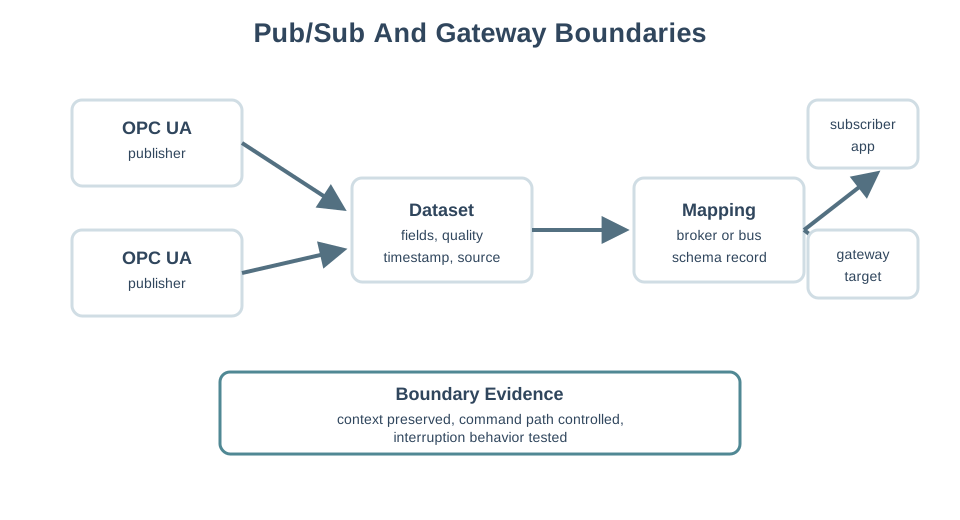
Use “OPC UA” as the entry point to Figure 4.5. Read “publisher” next, with “Dataset” as the bridge to “fields, quality”. This route gives practical meaning to Gateway and Pub/Sub boundaries need explicit records for exported nodes, datasets, status, timestamps, units, and command behavior and supplies the review sequence for the “opc ua”–“publisher” decision.
Record datasets, message mapping, publisher identity, subscriber expectations, and interruption behavior.
When translating into another protocol, preserve quality, timestamps, units, source identity, and schema ownership deliberately.
Companion specifications and local extensions define domain semantics beyond the base OPC UA modeling framework.
Pause before applying the “base opc ua”–“node model” decision, then inspect Figure 4.6. It places “Base OPC UA” against “node model”, exposing the evidence behind this claim: Base OPC UA gives the modeling framework; companion models and local rules give domain meaning.
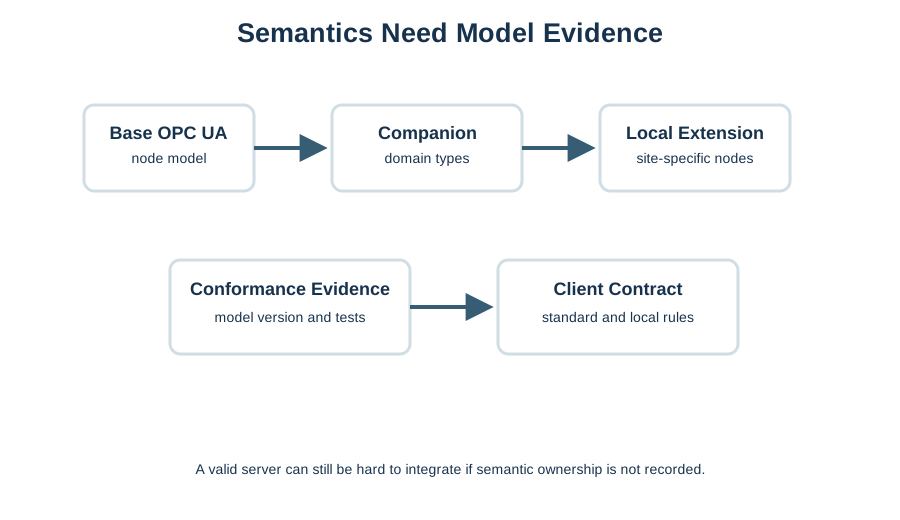
Trace the review path across Figure 4.6 from “Base OPC UA” to “node model”. From “Companion”, it arrives at “domain types”. That path is evidence for Base OPC UA gives the modeling framework; companion models and local rules give domain meaning; retain it when revisiting the “base opc ua”–“node model” decision. Pause before applying the “tag list only”–“record model structure and semantics” decision, then inspect Figure 4.7. It places “Tag list only” against “Record model structure and semantics”, exposing the evidence behind this claim: The common failure mode is treating OPC UA as proof of interoperability while skipping the evidence that makes it durable.
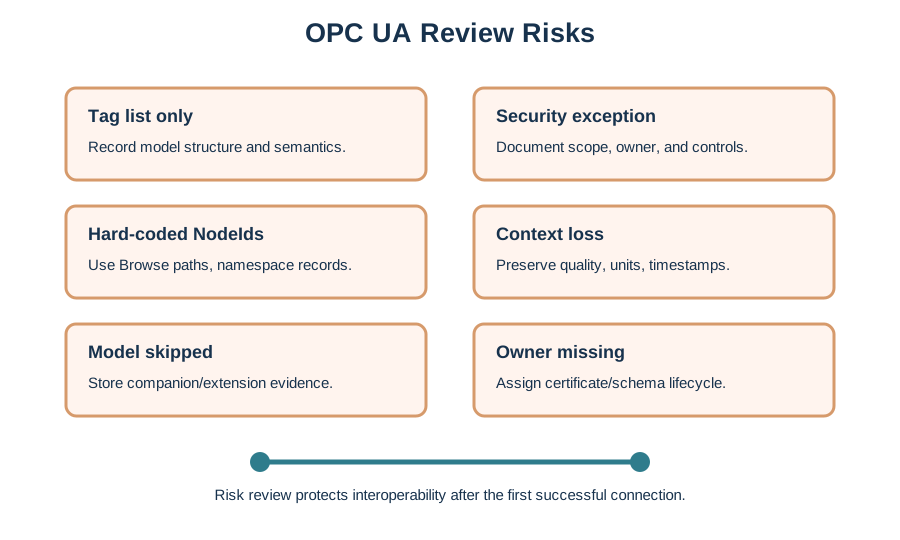
Read Figure 4.7 from “Tag list only” to “Record model structure and semantics”. Next, trace “Security exception” into “Document scope, owner, and controls”. This ordering shows why The common failure mode is treating OPC UA as proof of interoperability while skipping the evidence that makes it durable. For the “tag list only”–“record model structure and semantics” decision, record “Tag list only” as the starting condition and reopen “Document scope, owner, and controls” if “Security exception” changes.
This section: Summary — OPC UA is strongest when the design treats it as a model, service, and trust architecture.
OPC UA is strongest when the design treats it as a model, service, and trust architecture. The review should prove the address-space structure, service-set use, secure-channel and session setup, certificate and authorization operations, Pub/Sub or gateway boundary behavior, companion-model semantics, and lifecycle evidence.
If those records are missing, the integration may still move values, but it has not yet proven durable industrial interoperability.
This section: Key Takeaway
OPC UA integration should preserve industrial meaning, not just move bytes. Production evidence must connect the address space, service path, trust record, gateway boundary, and lifecycle owner.
This section: See Also
Industrial Protocols Overview: place OPC UA among OT protocol families and gateway patterns.
Modbus Protocol: compare register-oriented brownfield integration with model-oriented OPC UA integration.
PROFINET and Industrial Ethernet: connect OPC UA integration paths to industrial Ethernet and time-sensitive network design.
IoT Protocol Selection Guide: decide when the model, trust, and operational evidence justify OPC UA over simpler protocol paths.
3 reviewed answers.
Open the module page from the sidebar to see its chapters in order. Use the module map to return to a topic you need.
Modules and pathsReviewed
Check the symptom, then work through the diagnostic steps. Keep the error message and the smallest example that reproduces it.
When you are stuckReviewed
Use the interactive guide to check how examples and simulations work before changing your project.
Interactive examples guideReviewed