← Back to the chapter · Previous detail · Next detail →

Technical detail · IoT Interoperability Challenges

Register a native sensor

The plug-in sequence in Figure 7 is the registration proof that must occur before an application is allowed to use that namespace.

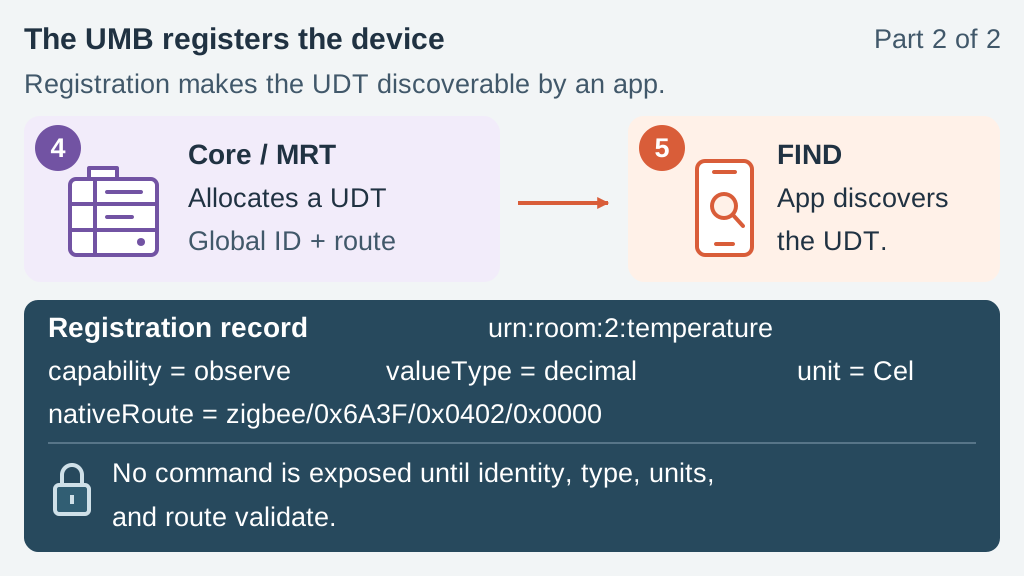
A joining Zigbee sensor provides native metadata that a UMB adaptor normalizes into a temperature description in degrees Celsius. Discovery creates the shared description that becomes the contract for later traffic.
UMB registration allocates a Universal Device Template, global identifier and native route so an application can discover the temperature sensor. Identity, type, units and route must validate before any command is exposed; the example record declares an observe capability.

Follow Sensor joins to Native metadata, then inspect the adaptor and Core / MRT. The adaptor checks the native type, units, and capability before the core registers a global ID and route. Only then can the app discover the normalized record. If a device changes or leaves, the owner must update or withdraw that record. Hearing a radio announcement is only the start; it does not prove that an app can safely use the data.

← Back to the chapter · Previous detail · Next detail →