Review Platform Fit
Review Platform Fit
Platform Fit Matrix
A platform shortlist should be reviewed against constraints that can be measured or inspected. Use the matrix to record what each candidate can prove and where it may hide risk.
Figure 1 compares platform choices by the proof they can retain.
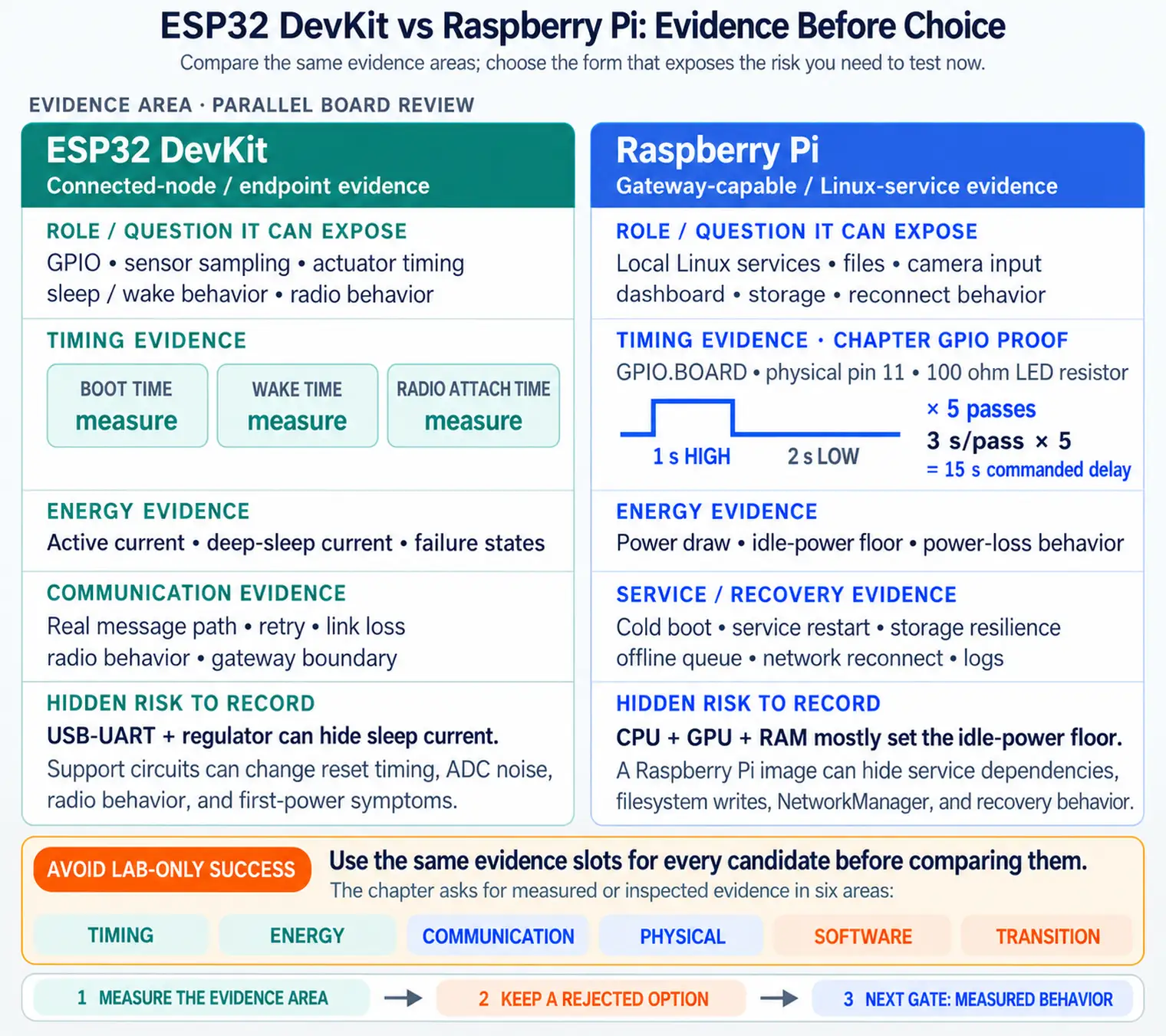
Compare the parallel ESP32 DevKit and Raspberry Pi panels by role, timing, energy, and communication or service recovery. The ESP32 panel asks for boot, wake, and radio-attach measurements. The Pi GPIO example commands one second high and two seconds low for five passes: 15 seconds of commanded delay, not a measured timing guarantee. Energy and recovery entries distinguish endpoint sleep and link loss from gateway idle power, storage, and restart behavior. Hidden risks differ too: USB-UART and regulator circuits can mask ESP32 sleep current, while Pi hardware and its software image affect idle power and recovery. The lower strips name six evidence areas, then require measurement, a rejected option, and a next gate.
Review these evidence areas:
Keep at least one rejected option in the review record. A good platform decision explains why the chosen form fits now and why a plausible alternative was not selected.