Energy-Neutral Sizing Calculation Audit
Energy-Neutral Sizing Calculation Audit
Ada checks hourly load, storage reserve, and winter harvest against the same rounded inputs
 ADA · CALCULATION AUDIT
Energy-Neutral Sizing Calculation Audit
The chapter sizes an outdoor harvesting node: a daily load of about 2.02 mAh (6.7 mWh), a storage reserve of about 26 mAh for seven low-harvest days, and a panel that must deliver at least 4.2 mW in a winter window. The radio event alone is 72.7% of the daily charge. This audit works the energy-neutral sizing to show the load, reserve, and panel must all be checked in the same units.
Companion to the chapter Energy Harvesting Design — every number here comes from that chapter.
The outdoor sensor closes only if the hourly load, storage reserve, and winter harvest window are all checked with the same units. The chapter rounds the daily load energy to 6.7 mWh before the storage and panel sizing steps, so the audit names that rounding point.
See the relationship before changing it
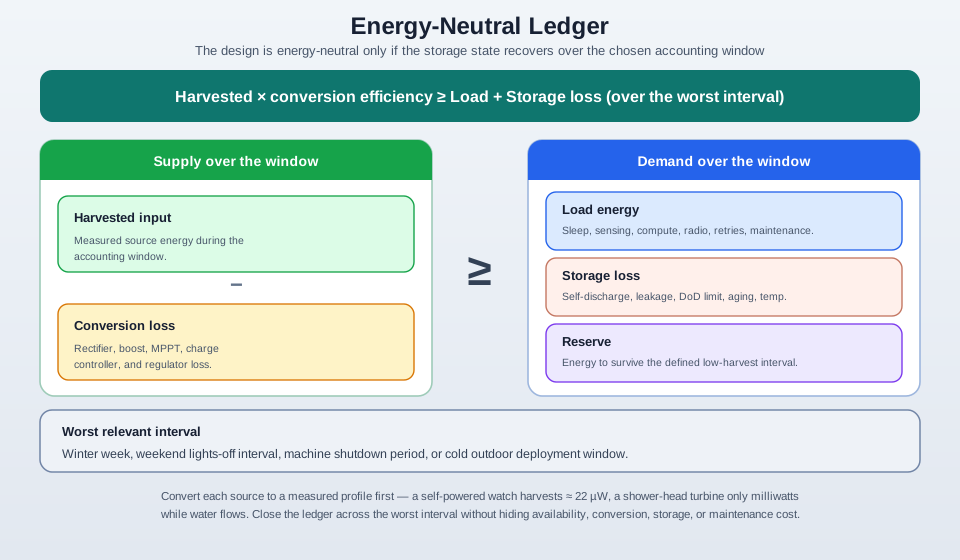
The chapter figure below shows: Energy-neutral ledger: harvested energy times conversion efficiency must be at least the load energy plus storage loss over the worst interval, with a reserve to survive the low-harvest window.
Derive the baseline in four named moves
- 1
Name the input. The chapter baseline is 2 h/day.
- 2
Name the relationship. power = 6.7 mWh / (hours x 0.8)
- 3
Substitute with units. 6.7 / (2 x 0.8) = 4.19 mW
- 4
Read the result. Keep the unit beside the value. Use it only inside the technical boundary on this page.
Predict, then change useful harvest window
Try Predict the direction of power = 6.7 mWh / (hours x 0.8). Test another useful harvest window, then compare required panel power.
Observe A shorter winter window demands more panel power for the same daily load. Reset useful harvest window to 2 and compare required panel power.
Explain The panel must collect the same daily energy through fixed conversion losses, so fewer useful harvesting hours require inversely greater panel power.
Check yourself
What should you do before trusting a moved-control result?
What does this small model leave out?
Load, reserve, panel power, and rounded inputs
| Quantity | Arithmetic shown | Audit result |
| Sleep charge | 0.018 mA x 24 h | 0.432 mAh/day. |
| Sensing charge | 6 mA x 3 s x 24 / 3600 | 0.120 mAh/day. |
| Radio charge | 110 mA x 2 s x 24 / 3600 | 1.4667 mAh/day. |
| Daily load | 0.432 + 0.120 + 1.4667 | 2.0187 mAh/day, reported as about 2.02 mAh/day. |
| Daily energy | 2.0187 mAh x 3.3 V | 6.6616 mWh/day, rounded in the chapter to 6.7 mWh/day. |
| Seven-day load | 6.7 mWh/day x 7 | 46.9 mWh after the stated daily-energy rounding. |
| Storage reserve | 46.9 / 0.8 / 0.7 | 83.75 mWh, rounded to 83.8 mWh. |
| Storage capacity | 83.75 mWh / 3.2 V | 26.17 mAh, so about 26 mAh before temperature and aging margin. |
| Panel power | 6.7 mWh / (2 h x 0.8) | 4.1875 mW, rounded to 4.2 mW during useful winter harvest hours. |
Engineering consequence: the radio event contributes 1.4667 / 2.0187 = 72.7% of the daily charge. If the field panel misses the 4.2 mW winter target, lowering radio time or transmit retries helps the ledger more than shaving a small sensing interval.
The energy-neutral sizing deliberately does not simulate weather distributions, shading, converter and MPPT efficiency curves, battery aging, leakage, or harvest timing within the day; it balances stated daily load against a fixed winter window.
Work the audit first, then check the displayed derivation.
Every number above is taken from this chapter's own worked example and re-derived step by step.