Technical detail · OPC UA: Models, Services, and Trust
Review the motor browse branch
The motor reading can remain accessible while its model contract breaks. Trace the motor browse branch in Figure 9 to connect each modeling risk to evidence needed before release.
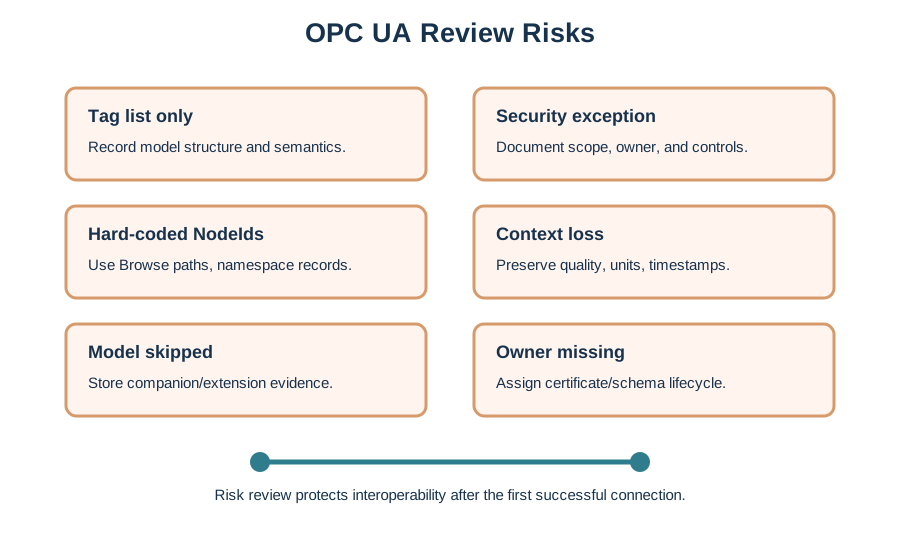
Follow the motor browse branch in Figure 9. Check A asks whether the review has only a tag list; record the model structure and semantics needed by the client. Check B asks whether engineering units are modeled, so values such as speed or temperature retain their meaning. Check C flags hard-coded NodeIds, which can break clients when a server’s namespace or model changes; use browse paths and keep namespace records. Together, the checks turn a successful connection into a reviewable information model. Record what the motor exposes and how clients find it, then repeat the review when the model or server configuration changes.