Application Protocols · Study deck
XMPP: Messaging Foundations
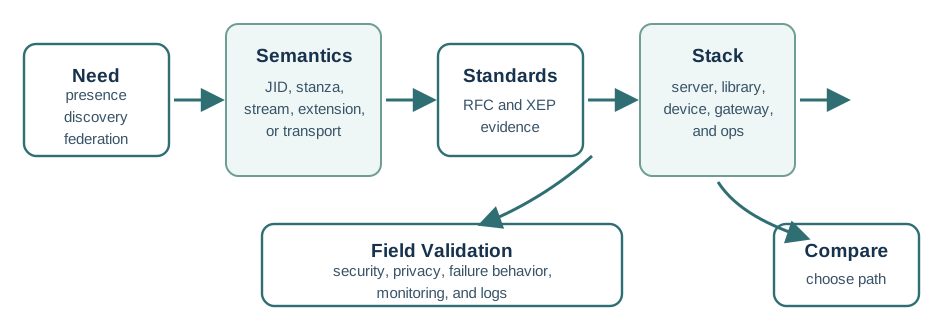
XMPP is useful when an IoT system needs addressed conversations, presence, discovery, or federation rather than just another telemetry pipe.
Broker Bex is your guide for this deck.

After studying this chapter
Learning objectives
You will be able to:
- Explain the core XMPP roles: client, server, stream, stanza, JID, and federation.
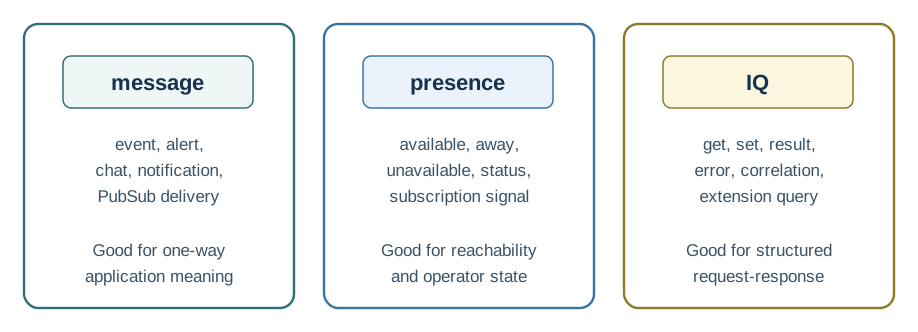
- Distinguish message, presence, and IQ stanzas by their system role.
- Describe how service discovery and PubSub extensions fit into an IoT architecture.
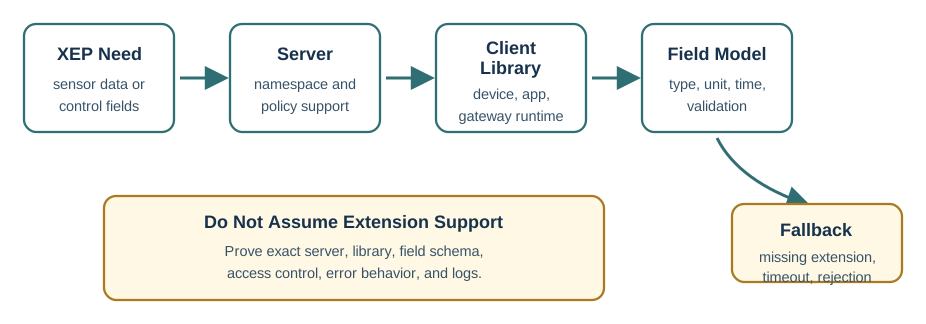
- Identify what evidence is needed before using XMPP IoT extensions in a real design.
Major section
In 60 Seconds
Under the Hood examines session state, message extensions, trust between services, and the cases where a chat-shaped exchange is a poor fit for device work.
- Presence may help one service.
- Group exchange may help another.
- Extra rules add support work.
- Recheck after server, policy, or message changes.
Major section
In 60 Seconds (continued)
These features are useful only when both ends agree on their meaning and security duties.
- The worker may be offline.
- The message may cross company boundaries.
- The service also needs a clear rule for delayed or repeated delivery.
- The exchange uses named identities and structured messages.
Major section
In 60 Seconds (continued)
XMPP is a standards-based XML messaging protocol built around persistent streams, global addresses called JIDs, three core stanza types, and optional federation between domains.
- A long-lived session can carry a series of small exchanges.
- Extra rules can add group chat, presence, or device control.
- A device may lose its path.
- A service may restart.
Major section
Architecture Roles
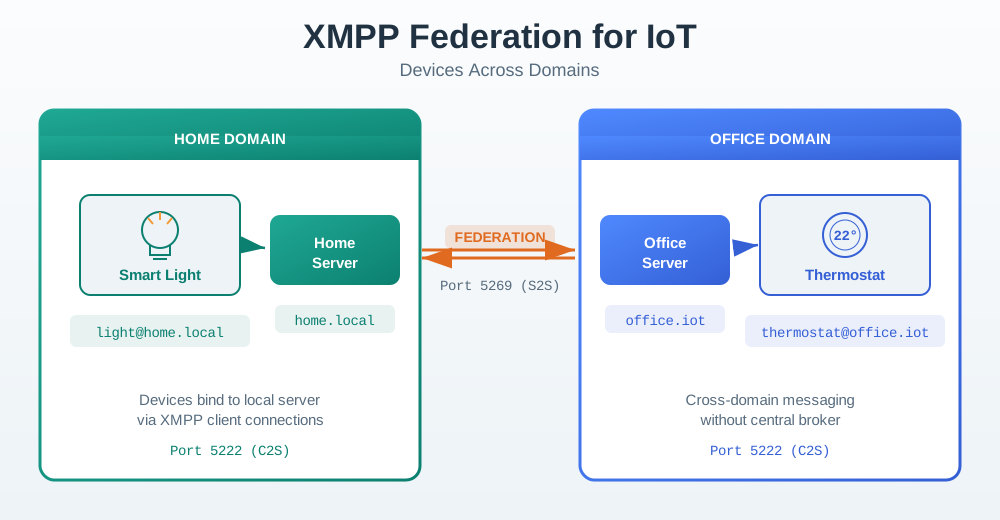
XMPP architecture separates local clients, local servers, optional server-to-server federation, and extension services.
- The local server authenticates the entity, binds its resource, and routes local stanzas.
- This architecture explains why XMPP can federate and why the operating surface grows with that choice.
Major section
Authentication and Channel Security
SASL and TLS are named in the Architecture Roles federation checklist above, but "we use TLS" is not evidence by itself.
- SASL password exposure: Plain SASL mechanisms commonly encode credentials with Base64, which is an encoding, not encryption, and carries no confidentiality check of its own.
- A Base64-encoded password is trivially decodable, so the exchange stays exposed to man-in-the-middle, address-spoofing, and unauthorized-access attacks unless the surrounding channel is protected end to end.
- Multipath stream gaps: XML stanzas can travel across multiple stream paths and federation hops.
Major section
Stanza Roles
XMPP traffic is built around three core stanza families.
- Keeping those roles distinct makes the examples below design evidence rather than three interchangeable XML envelopes.
- A message is not the same as a correlated request-response transaction.
- Service discovery, roster operations, many extension queries, and device control patterns use IQ-like get, set, result, and error flows.
Major section
Addressing and Discovery
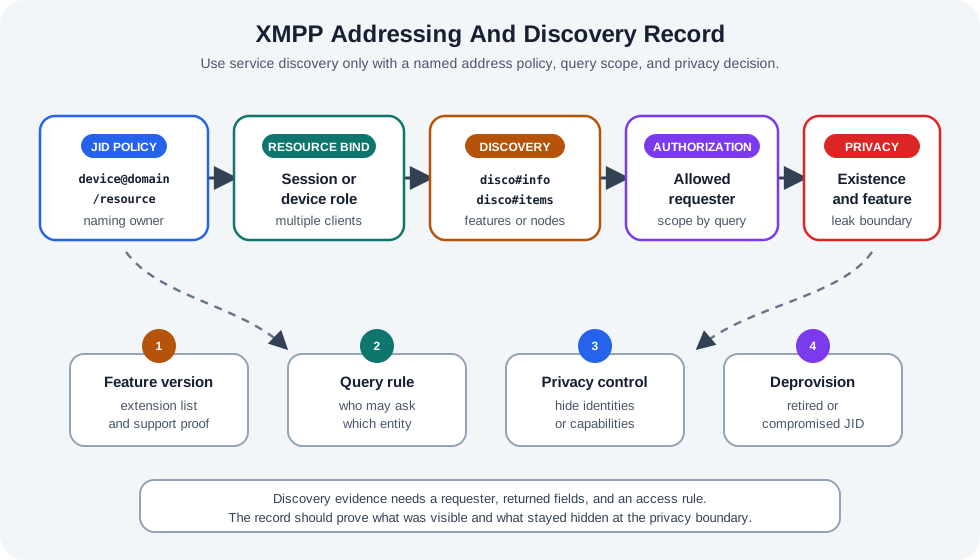
Service discovery lets a requester ask what an entity is and which features or items it exposes.
- That combination is useful for device capability review, but it can also leak information if access control is weak.
- Finish at version evidence and deprovisioning: a retired or compromised resource must stop advertising and accepting work.
Major section
Presence and PubSub
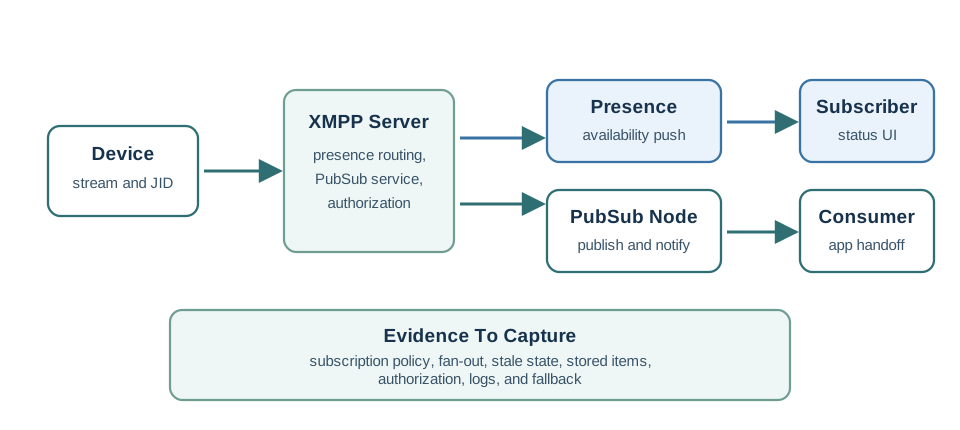
Presence and PubSub are the most common reasons to consider XMPP in an IoT workflow.
- They should be reviewed as application semantics, not as a shortcut around telemetry architecture.
- Presence answers whether an entity is reachable or in a named state; PubSub distributes items under node policy and may retain them.
Deck summary
Key takeaways
Under the Hood examines session state, message extensions, trust between services, and the cases where a chat-shaped exchange is a poor fit for device work.
- These features are useful only when both ends agree on their meaning and security duties.
- XMPP is a standards-based XML messaging protocol built around persistent streams, global addresses called JIDs, three core stanza types, and optional federation between domains.
- XMPP architecture separates local clients, local servers, optional server-to-server federation, and extension services.
- SASL and TLS are named in the Architecture Roles federation checklist above, but "we use TLS" is not evidence by itself.
Retrieval practice
Recall check

Broker Bex says: answer from memory, then check your reasoning.
Q1Per this chapter's Architecture Roles section, what must be reviewed for the optional federation path between XMPP servers?
Show answer
Answer: A The Architecture Roles section lists the federation path's review checklist explicitly: DNS, TLS, trust, policy, abuse controls, and monitoring -- distinct from the client entity, local server, and extension service roles listed alongside it.
Print reference
Answers
Answer key.
- A · The Architecture Roles section lists the federation path's review checklist explicitly: DNS, TLS, trust, policy, abuse controls, and monitoring -- distinct from the client entity, local server, and extension service roles listed alongside it.