WiFi & Mobile Networks · Study deck
Wi-Fi Bands: Fit and Site Evidence
A stairwell sensor and a lobby camera may need different Wi-Fi bands.
Radio Remi is your guide for this deck.

After studying this chapter
Learning objectives
You will be able to:
- compare 2.4 GHz, 5 GHz, and 6 GHz as deployment evidence choices
- explain why channel width and channel reuse can matter more than peak data rate
- identify when DFS, local rules, coexistence, or client support changes the answer
- separate range, capacity, latency, power, and operations evidence
Major section
Start With the Wireless Story
Both use Wi-Fi, yet they do not need the same reach, data rate, channel width, or power pattern.
- The installer must choose from site evidence rather than a claim that one band is always faster or better.
- An access point is the nearby network box that serves Wi-Fi devices.
- Its place, settings, load, and path to the wider service are part of the field proof.
- Choosing a Wi-Fi band is a site decision.
Major section
In 60 Seconds
Wi-Fi band and channel selection is an evidence decision.
- A good answer does not say that one band is always best.
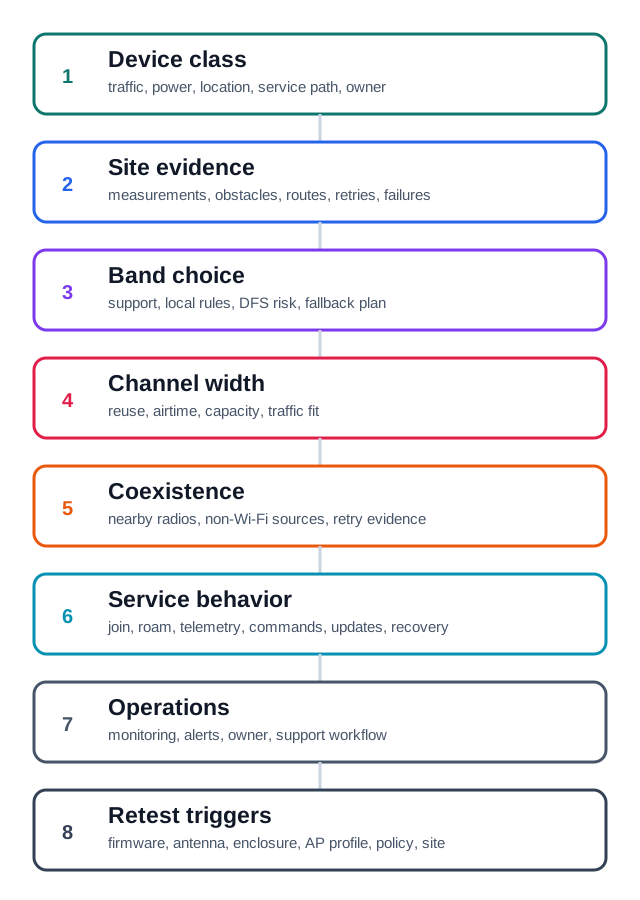
- It explains why a specific band, channel width, and channel plan fit the device class, site, access point profile, local rules, coexistence environment, power behavior, service path, and operating owner.
- The review must prove the fit.
Major section
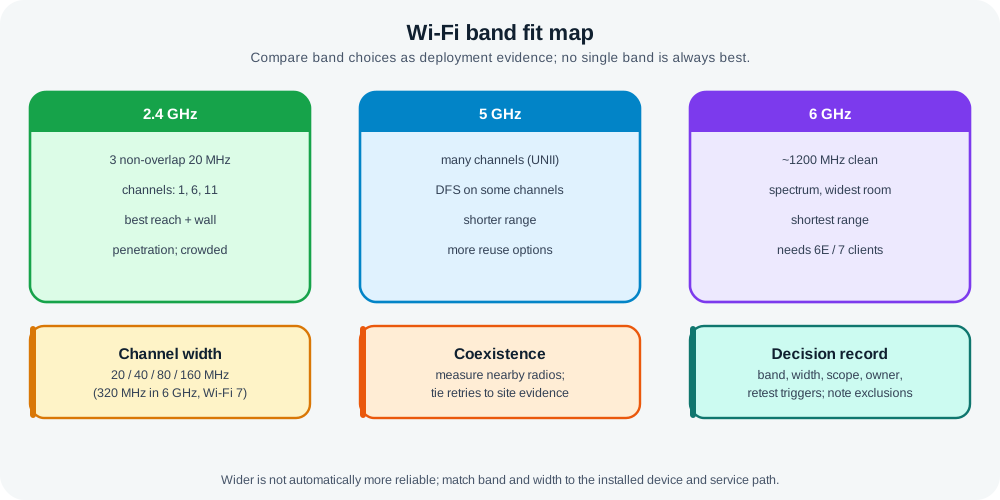
Band Fit Map
The comparison connects band physics and channel availability to evidence, not novelty.
- The right choice is the one that matches the installed device and service path, not the newest band name.
Major section
Channel Review Record
This prevents a configuration value from being detached from site and client conditions.
- That sequence connects channel selection to an auditable deployment decision rather than a preference for one frequency band.
Deck summary
Key takeaways
Both use Wi-Fi, yet they do not need the same reach, data rate, channel width, or power pattern.
- Wi-Fi band and channel selection is an evidence decision.
- The comparison connects band physics and channel availability to evidence, not novelty.
- This prevents a configuration value from being detached from site and client conditions.
Retrieval practice
Recall check 1 of 3

Radio Remi says: answer from memory, then check your reasoning.
Q1According to this chapter, which statement about choosing a Wi-Fi band is correct?
Show answer
Answer: A Wi-Fi band choice is a fit decision for device class, site, and coexistence, with no single band always best.
Retrieval practice
Recall check 2 of 3

Radio Remi says: answer from memory, then check your reasoning.
Q2A small battery sensor works in a lab on 5 GHz but fails after installation inside a metal cabinet. What is the strongest review response?
Show answer
Answer: A Band choice should follow installed evidence rather than a lab-only result.
Retrieval practice
Recall check 3 of 3

Radio Remi says: answer from memory, then check your reasoning.
Q3A critical tool loses service when its access point changes channel after a DFS event. What should the channel review do?
Show answer
Answer: B DFS risk belongs in the evidence record when service continuity matters.
Print reference
Answers
Answer key.
- A · Wi-Fi band choice is a fit decision for device class, site, and coexistence, with no single band always best.
- A · Band choice should follow installed evidence rather than a lab-only result.
- B · DFS risk belongs in the evidence record when service continuity matters.