Applications & Use Cases · Study deck
Wearable IoT: Privacy and Power Constraints
Body data can expose health or routine long after a wearer removes the device.
Blueprint Bina is your guide for this deck.

After studying this chapter
Learning objectives
You will be able to:
- Explain: The strongest wearable design can trace a metric from body signal through firmware, phone app, model, uncertainty label, user action, and support or clinical workflow without pretending that a convenient sensor is automatically a clinical instrument.
- Explain: A dance-sensing garment or body-area network node has to prove placement, motion artifact handling, short-range relay behavior, and whether the phone or tablet receives enough quality metadata to interpret the movement.
- Explain: Cloud services can support longitudinal analytics, population-level model improvement, clinician portals, and research exports, but they increase privacy, security, availability, and consent obligations.
Major section
Body Data Needs Strong Boundaries
The architecture should keep raw sensor data, derived metrics, coaching messages, emergency alerts, and clinical claims separate.
- A step trend, stress score, arrhythmia notification, glucose alarm, and workplace fatigue alert need different validation and governance.
- The signal pipeline should preserve enough context to explain every metric.
- Respiratory wearables show why validation evidence must name the reference signal.
Major section
Body Data Needs Strong Boundaries (continued)
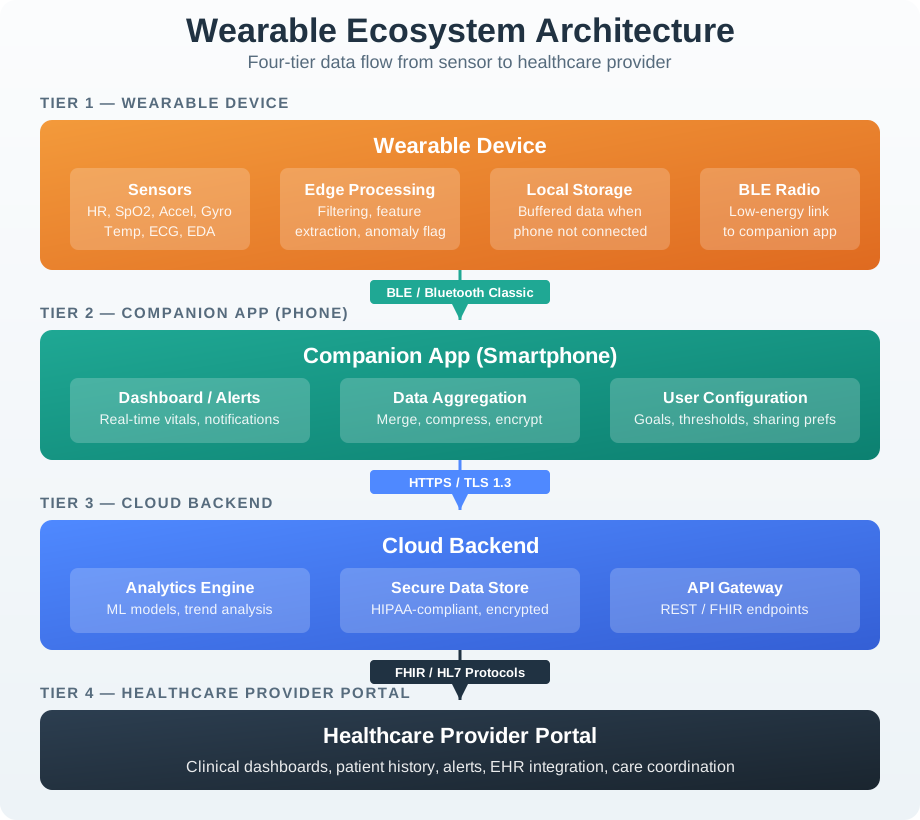
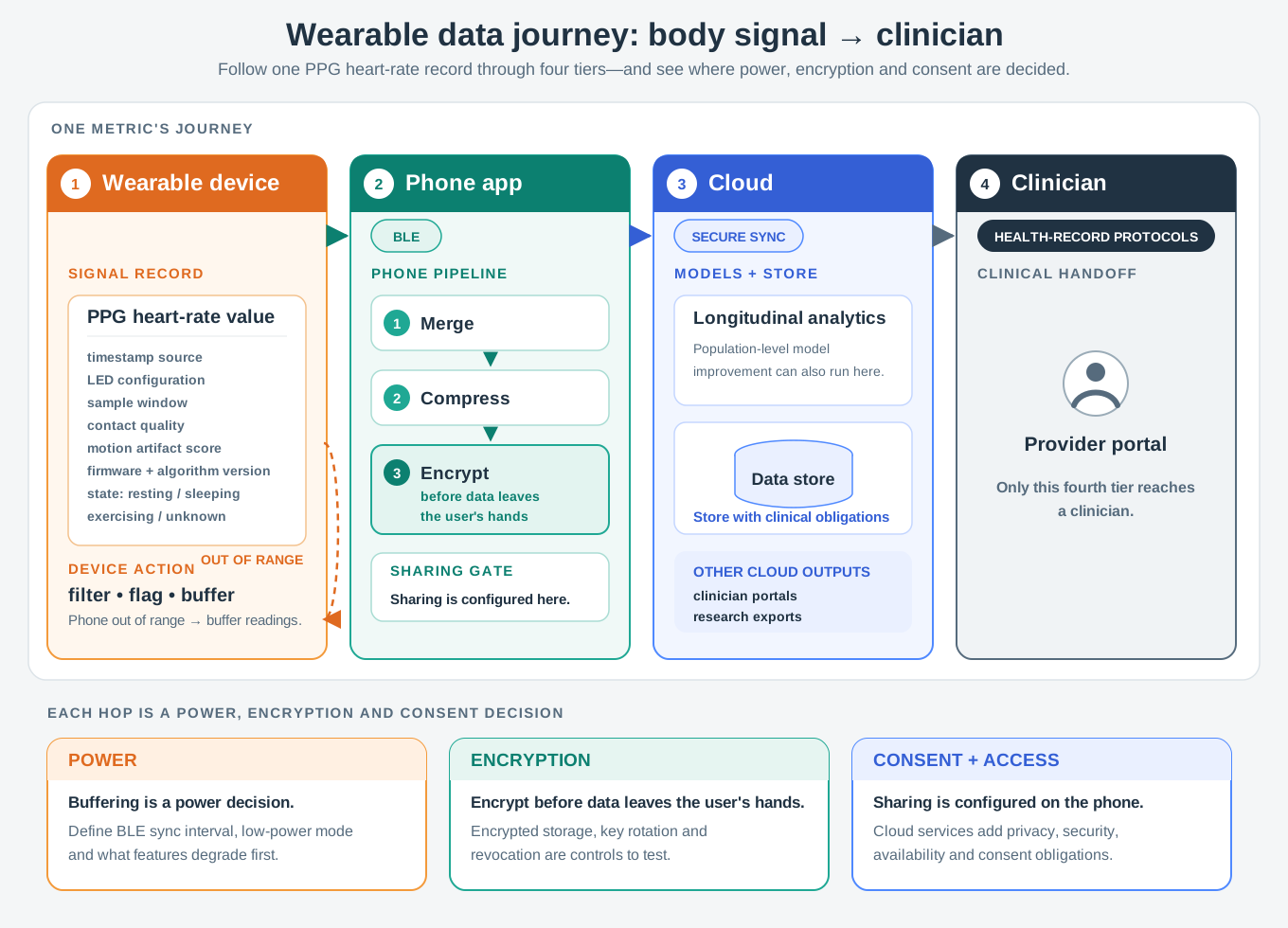
On-device processing protects latency and privacy for simple classification, artifact detection, and immediate alerts, but it is limited by battery, compute, memory, and thermal budget.
- An IMU event may need sampling rate, placement, orientation, activity class, fall-detection confidence, and whether a confirmation prompt was answered.
- A glucose event may need sensor age, calibration status, trend arrow, alarm state, and delivery path.
- A phone can handle richer user interaction, buffering, secure sync, and local notifications.
Major section
Body Data Needs Strong Boundaries (continued)
Cloud services can support longitudinal analytics, population-level model improvement, clinician portals, and research exports, but they increase privacy, security, availability, and consent obligations.
- The strongest wearable design can trace a metric from body signal through firmware, phone app, model, uncertainty label, user action, and support or clinical workflow without pretending that a convenient sensor is automatically a clinical instrument.
- A dance-sensing garment or body-area network node has to prove placement, motion artifact handling, short-range relay behavior, and whether the phone or tablet receives enough quality metadata to interpret the movement.
- A fall alert needs conservative escalation and cancellation behavior.
Major section
Body Data Needs Strong Boundaries (continued)
The review should keep raw vital signs, filtered features, decision rules, alert routing, and remote-access permissions separate so a monitoring system does not confuse a local wellness display with clinical escalation.
- The useful evidence is not just "breathing detected"; it is placement, sample rate, filtering, correlation window, motion artifact state, and the conditions where the respiratory-rate estimate is withheld.
- The architecture should show which layer owns each decision and what happens when BLE, cellular, or cloud access is unavailable.
- Workplace wearables need a BYOW or BYOD policy before the pilot scales.
Major section
Body Data Needs Strong Boundaries (continued)
Keeping those paths separate lets one wearable platform support multiple features without overclaiming what the body signal can prove.
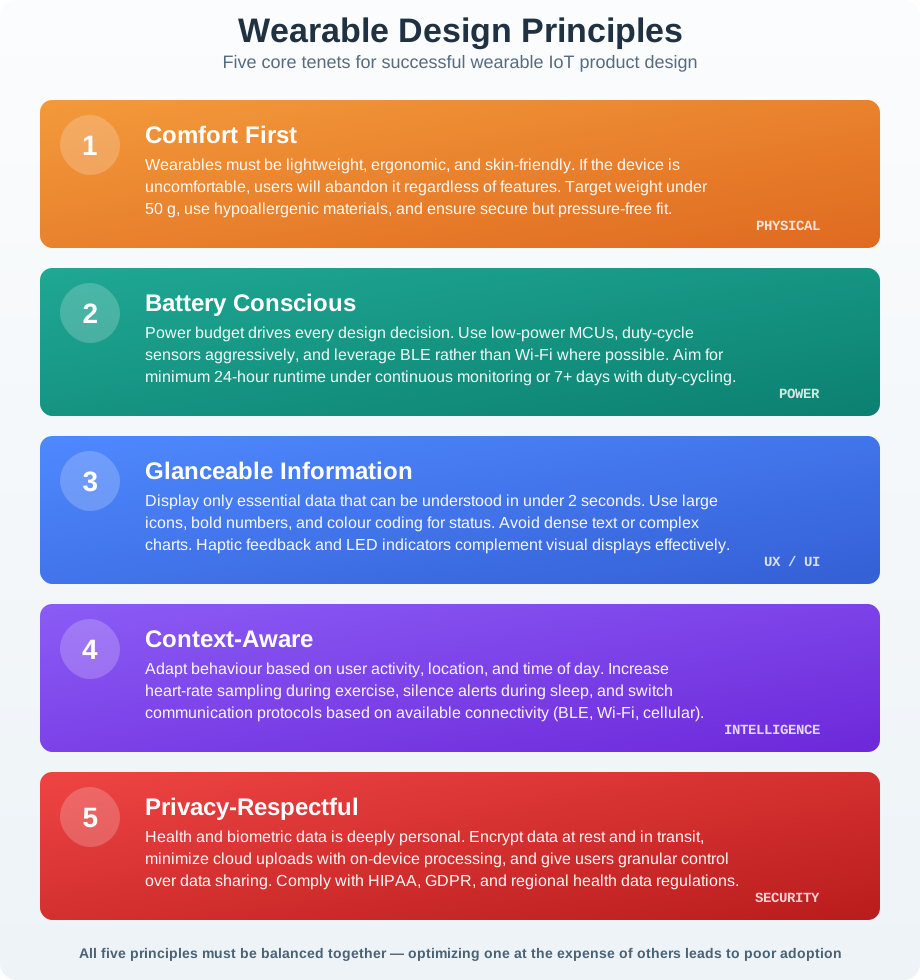
- Pairing, account recovery, firmware signing, secure boot where available, encrypted storage, key rotation, and revocation must be tested against lost phones, second-hand device resale, caregiver access, and shared household devices.
- The engineering discipline is to keep wellness, safety, and clinical paths from blurring.
- A wellness score can tolerate uncertainty if the app communicates trends and confidence.
Major section
Wearable Computing History
2020s -- Medical-grade wearables: FDA-approved ECG, SpO2, and CGM features reach consumer devices.
- Carry: Wearable Ecosystem Architecture into wearable computing history; use: TIER 1 — WEARABLE DEVICE as its limiting condition.
Major section
Why Pebble Succeeded
For why pebble succeeded, the useful result is the reasoning chain: observed condition, governing constraint, calculation or classification, and operational consequence.
- Where the panel supplies several choices, reject each distractor against the chapter's named mechanism instead of relying on wording cues.
- This turns why pebble succeeded into evidence that can be reviewed, recalculated, and connected to the running design narrative.
- Result: Pebble sold 2 million devices via Kickstarter before being acquired by Fitbit.
Deck summary
Key takeaways
The architecture should keep raw sensor data, derived metrics, coaching messages, emergency alerts, and clinical claims separate.
- On-device processing protects latency and privacy for simple classification, artifact detection, and immediate alerts, but it is limited by battery, compute, memory, and thermal budget.
- Cloud services can support longitudinal analytics, population-level model improvement, clinician portals, and research exports, but they increase privacy, security, availability, and consent obligations.
- The review should keep raw vital signs, filtered features, decision rules, alert routing, and remote-access permissions separate so a monitoring system does not confuse a local wellness display with clinical escalation.
Retrieval practice
Recall check 1 of 2

Blueprint Bina says: answer from memory, then check your reasoning.
Q1A wearable uploads a heart-rate metric after exercise. What context helps explain whether it is trustworthy?
Show answer
Answer: A The chapter preserves these details along with timestamp and activity state.
Retrieval practice
Recall check 2 of 2

Blueprint Bina says: answer from memory, then check your reasoning.
Q2A team chooses a wrist PPG device for intense activity. Which issue should it test before strengthening its claim?
Show answer
Answer: D The section describes wrist PPG as vulnerable to motion and fit effects.
Print reference
Answers
Answer key.
- A · The chapter preserves these details along with timestamp and activity state.
- D · The section describes wrist PPG as vulnerable to motion and fit effects.