Emerging Paradigms · Study deck
UAV Network Topologies
A group of aircraft maps the edge of a wildfire.
Blueprint Bina is your guide for this deck.

After studying this chapter
Learning objectives
You will be able to:
- Compare star, mesh, hierarchical, relay-chain, and store-carry-forward UAV topology patterns.
- Separate physical topology from logical routing behavior.
- Choose a topology using mission role, traffic class, link freshness, gateway reachability, energy reserve, and payload behavior.
- Identify when a topology has hidden single points of failure.
Major section
Start Simple
No single shape is best for every flight or traffic type.
- The lead operator needs urgent status now, while large images can wait.
- One aircraft can speak directly to the ground station, another needs a relay, and a third may carry data until it returns.
- The proof is limited to the tested mission, motion, and equipment.
Major section
Start Simple (continued)
Calling the group a mesh does not prove that each mission need has a safe path.
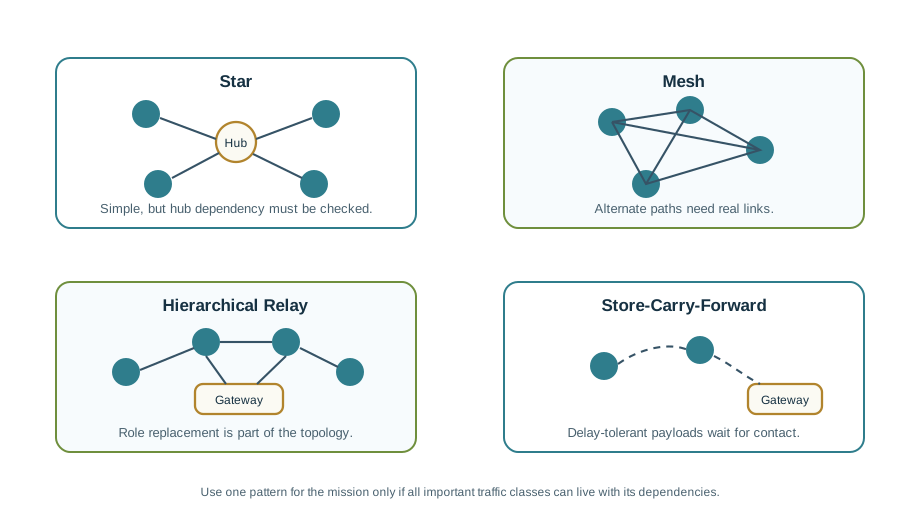
- The deeper sections compare star, mesh, layered, relay-chain, and carry-later patterns, then connect route freshness, roles, energy, and failure evidence.
- Reopen the choice when the formation, ground station, terrain, or traffic mix changes.
- In UAV Network Topologies, the practical question is what the aircraft must sense, relay, decide, and prove before the flight or network role is safe enough to trust.
Major section
How This Chapter Fits
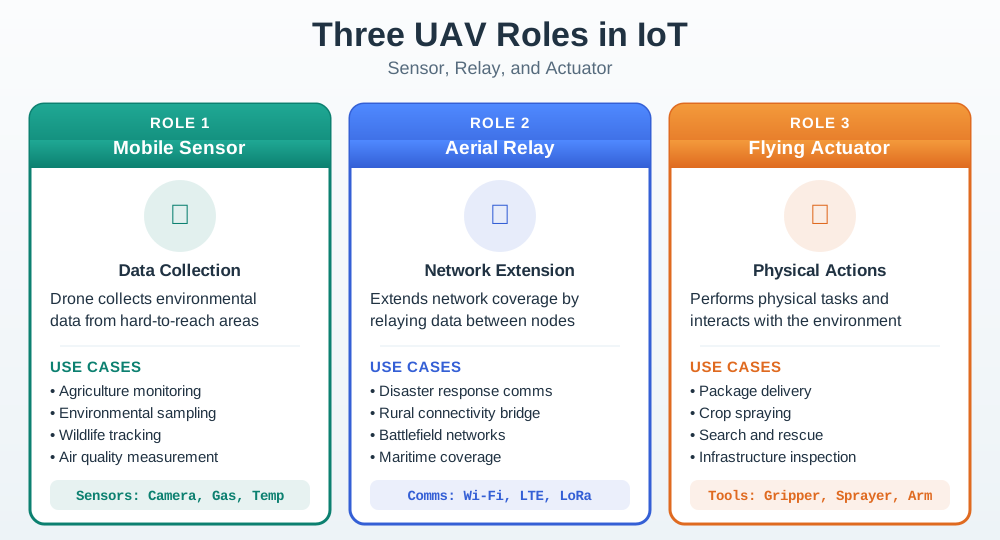
The introduction and features chapters explain why UAV networks are useful.
- This chapter focuses on the communication shape that lets those roles work together.
- Later FANET, gateway, coordination, and production chapters use this topology vocabulary when they evaluate routes, gateway exits, and fallback behavior.
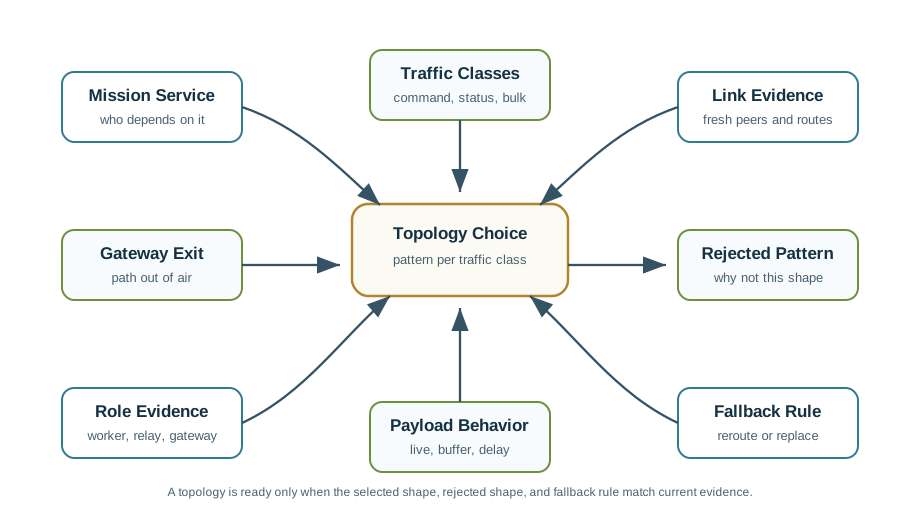
- The overview depth layer shows the topology decision map that anchors mission service, traffic classes, link records, gateway exit, role records, payload behavior, rejected pattern, and fallback rule.
Major section
Topology Patterns
Aircraft exchange state with peers and can route through more than one path.
- Best fit: missions where individual UAVs may lose contact but nearby peers can still help.
- Best fit: missions where sensing, relaying, gateway exit, and supervision should not all sit on the same aircraft.
- Best fit: long or narrow mission areas where direct ground contact is unreliable.
Major section
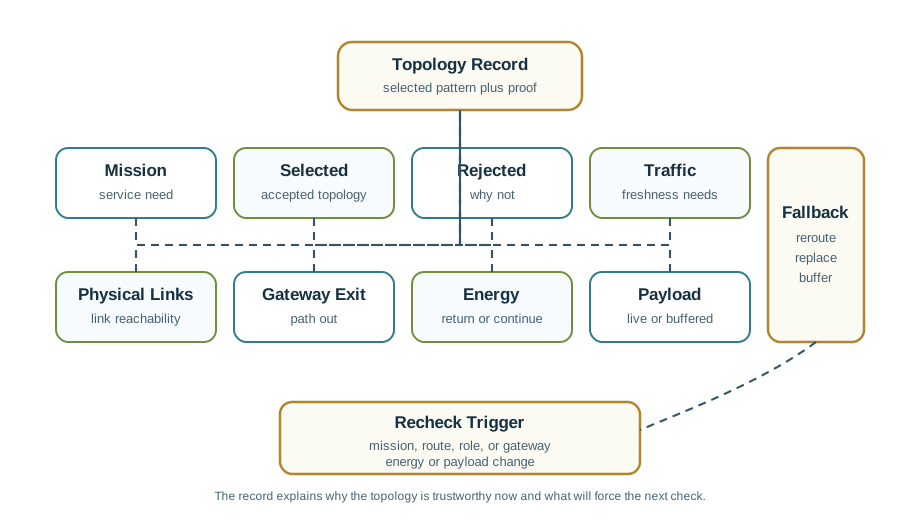
Topology Decision Record
The decision record should be short enough to keep current during a mission.
- It should still be detailed enough that another teammate can see why one topology was accepted and another was rejected.
Major section
Utility Corridor Inspection
Scenario: A field crew wants UAV support for a utility corridor after a storm.
- The mission needs current status notes for crews and can tolerate delayed upload for high-resolution imagery.
- Every UAV reports directly to the ground station.
- The result is not "mesh is better than star." The result is a documented topology split: current status gets a relay path; bulk imagery gets store-carry-forward; supervision stays centralized.
Major section
UAV Networks for IoT
Its camera sees one blocked drain, and the ground team must decide whether to send a person there.
- The first question is not how modern the aircraft looks.
- A gateway means a device or service that joins two message paths.
- A payload means the useful reading, image, or command carried inside a message.
Major section
UAV Networks for IoT (continued)
Fly beyond one link, delay a reading, repeat it, restart the ground receiver, and reject an old position as current.
- This runway does not prove airworthiness, radio coverage, or mission safety.
- The deeper sections explain aircraft roles, moving links, energy limits, network patterns, and the evidence needed for a real flight decision.
- A UAV can collect observations, provide temporary access, relay traffic, or bridge a mission area to a ground gateway.
Deck summary
Key takeaways
No single shape is best for every flight or traffic type.
- Calling the group a mesh does not prove that each mission need has a safe path.
- The introduction and features chapters explain why UAV networks are useful.
- Aircraft exchange state with peers and can route through more than one path.
- The decision record should be short enough to keep current during a mission.
Retrieval practice
Recall check 1 of 6

Blueprint Bina says: answer from memory, then check your reasoning.
Q1A corridor mission uses a relay UAV for urgent status and buffers high-resolution imagery. The relay's battery reserve falls below the return threshold while gateway freshness is also stale. Which topology action is most defensible?
Show answer
Answer: A The topology record separates fresh traffic from delay-tolerant payloads and names the fallback when relay and gateway records degrade; affected imagery segments are marked as pending until a fresh gateway path exists.
Retrieval practice
Recall check 2 of 6

Blueprint Bina says: answer from memory, then check your reasoning.
Q2A corridor inspection mission needs urgent status messages during flight and high-resolution imagery after contact improves. Which first topology record keeps the choice traceable?
Show answer
Answer: A A traceable UAV topology decision separates traffic classes, selected and rejected topology patterns, physical link evidence, gateway exit, energy and payload constraints, fallback behavior, ownership, and recheck triggers before the mission depends on the path.
Retrieval practice
Recall check 3 of 6

Blueprint Bina says: answer from memory, then check your reasoning.
Q3A UAV route covers a long corridor. The routing software supports mesh, but each aircraft can currently hear only the aircraft immediately before and after it. What should the topology check conclude?
Show answer
Answer: A Topology checks should distinguish logical routing support from physical reachability.
Retrieval practice
Recall check 4 of 6

Blueprint Bina says: answer from memory, then check your reasoning.
Q4Why might a UAV mission use star supervision for commands but store-carry-forward for imagery?
Show answer
Answer: A A good topology design separates traffic classes.
Retrieval practice
Recall check 5 of 6

Blueprint Bina says: answer from memory, then check your reasoning.
Q5A UAV can collect road-inspection images but loses the live gateway link near the far end of the route. Which readiness record is most useful?
Show answer
Answer: A A mission readiness record distinguishes traffic urgency and fallback paths before topology or fleet sizing.
Retrieval practice
Recall check 6 of 6

Blueprint Bina says: answer from memory, then check your reasoning.
Q6Why is a stale FANET route dangerous for urgent UAV mission traffic?
Show answer
Answer: A FANET design depends on link freshness, traffic class, and gateway evidence, not just a topology diagram.
Print reference
Answers 1 of 2
Answer key.
- A · The topology record separates fresh traffic from delay-tolerant payloads and names the fallback when relay and gateway records degrade; affected imagery segments are marked as pending until a fresh gateway path exists.
- A · A traceable UAV topology decision separates traffic classes, selected and rejected topology patterns, physical link evidence, gateway exit, energy and payload constraints, fallback behavior, ownership, and recheck triggers before the mission depends on the path.
- A · Topology checks should distinguish logical routing support from physical reachability.
Print reference
Answers 2 of 2
Answer key.
- A · A good topology design separates traffic classes.
- A · A mission readiness record distinguishes traffic urgency and fallback paths before topology or fleet sizing.
- A · FANET design depends on link freshness, traffic class, and gateway evidence, not just a topology diagram.