Emerging Paradigms · Study deck
UAV Capabilities and Constraints
Picture a survey aircraft leaving local radio range while a ground screen still shows its last position.
Blueprint Bina is your guide for this deck.

After studying this chapter
Learning objectives
You will be able to:
- Explain: That order turns a feature list into an operating decision: a stale link or inadequate reserve must change the route or mission state before it becomes a loss of control or data.
- Explain: A useful readiness check asks: what feature is being used, which traffic depends on it, how long it must remain available, and what records prove it is still available.
- Explain: Adding a better sensor can improve mission value, but it may shorten flight time or produce more data than the link can move during flight.
- Explain: UAV features are trade-offs, not free advantages.
Major section
Start Simple
The system must preserve age and quality instead of turning an old point into a current flight claim.
- An access point is the local radio station that devices join.
- A gateway is the device or service that joins two system paths.
- A payload is the useful content carried inside a message.
Major section
Minimum Viable Understanding
UAV features are trade-offs, not free advantages.
- Height improves visibility but can increase exposure, path length, and gateway planning needs.
- Mobility helps reach the mission area but makes links time-dependent.
- Payloads improve sensing or communication but consume power, weight, attention, and operating checks.
Major section
How This Chapter Fits
This chapter asks what that role costs.
- Later UAV chapters make detailed topology, routing, gateway, trajectory, and production decisions.
- The goal here is to build the feature-and-challenge checklist that keeps those later decisions honest.
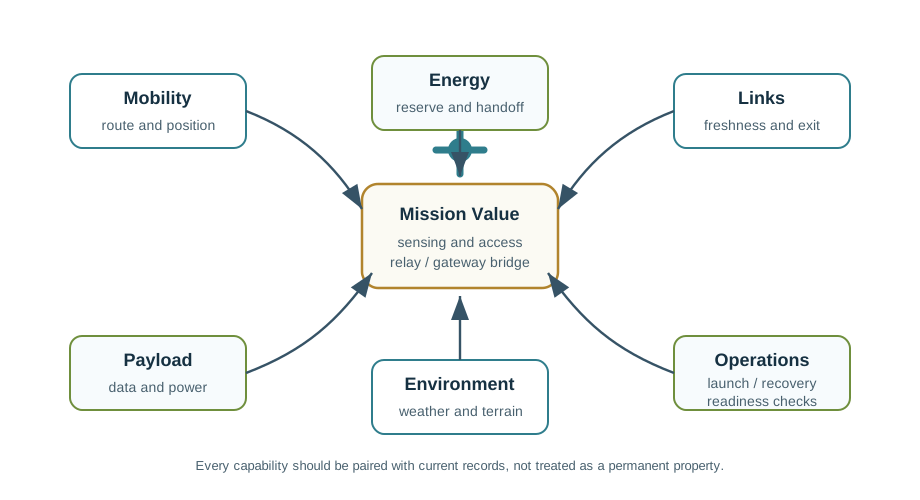
- The overview depth layer shows the feature pressure map that anchors mobility, energy, link, payload, environment, and operations records.
Major section
Core Capabilities
UAV networks can add capabilities that are difficult or slow to achieve with fixed ground infrastructure.
- Each capability is useful only when the design also records its limits.
- The network node can move toward an incident, route, field area, or temporary user group.
- A UAV can bridge two nodes that cannot hold a direct ground-to-ground path.
Major section
Core Capabilities (continued)
A UAV can provide short-lived connectivity where a fixed access point is absent, damaged, or badly positioned.
- The same airframe family can carry different sensors, radios, storage, compute modules, or inspection tools.
- The system can change the observation angle, handoff point, or relay location as the mission evolves.
- A useful readiness check asks: what feature is being used, which traffic depends on it, how long it must remain available, and what records prove it is still available.
Major section
Challenge Areas
Most UAV network failures come from treating a feature as permanent when it is actually temporary.
- The following challenge areas should appear in every serious readiness check.
- UAVs change position, heading, altitude, and attitude.
- Link records must have a timestamp and route context.
- Air-to-air and air-to-ground paths depend on distance, orientation, obstruction, interference, and gateway reachability.
Major section
Feature Trade-Off Loop
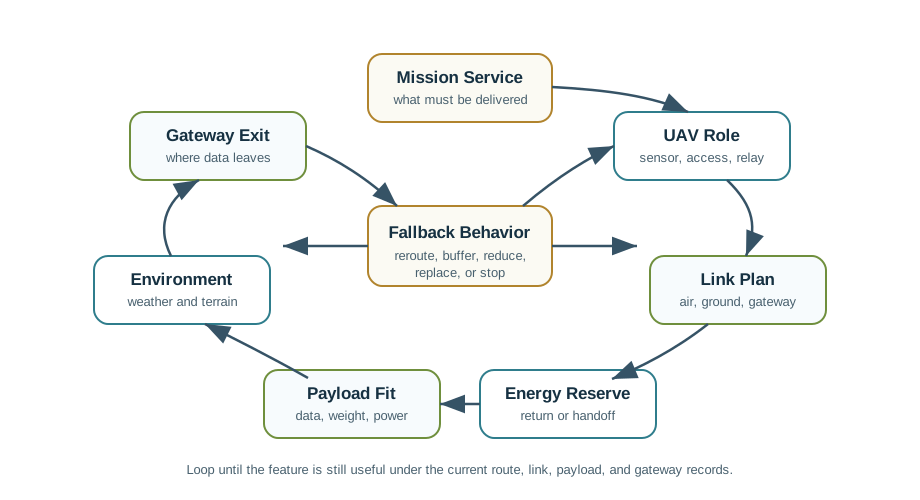
Raising altitude can improve visibility, but it may change wind exposure, slant range, gateway reachability, and reserve energy.
- Adding a better sensor can improve mission value, but it may shorten flight time or produce more data than the link can move during flight.
Major section
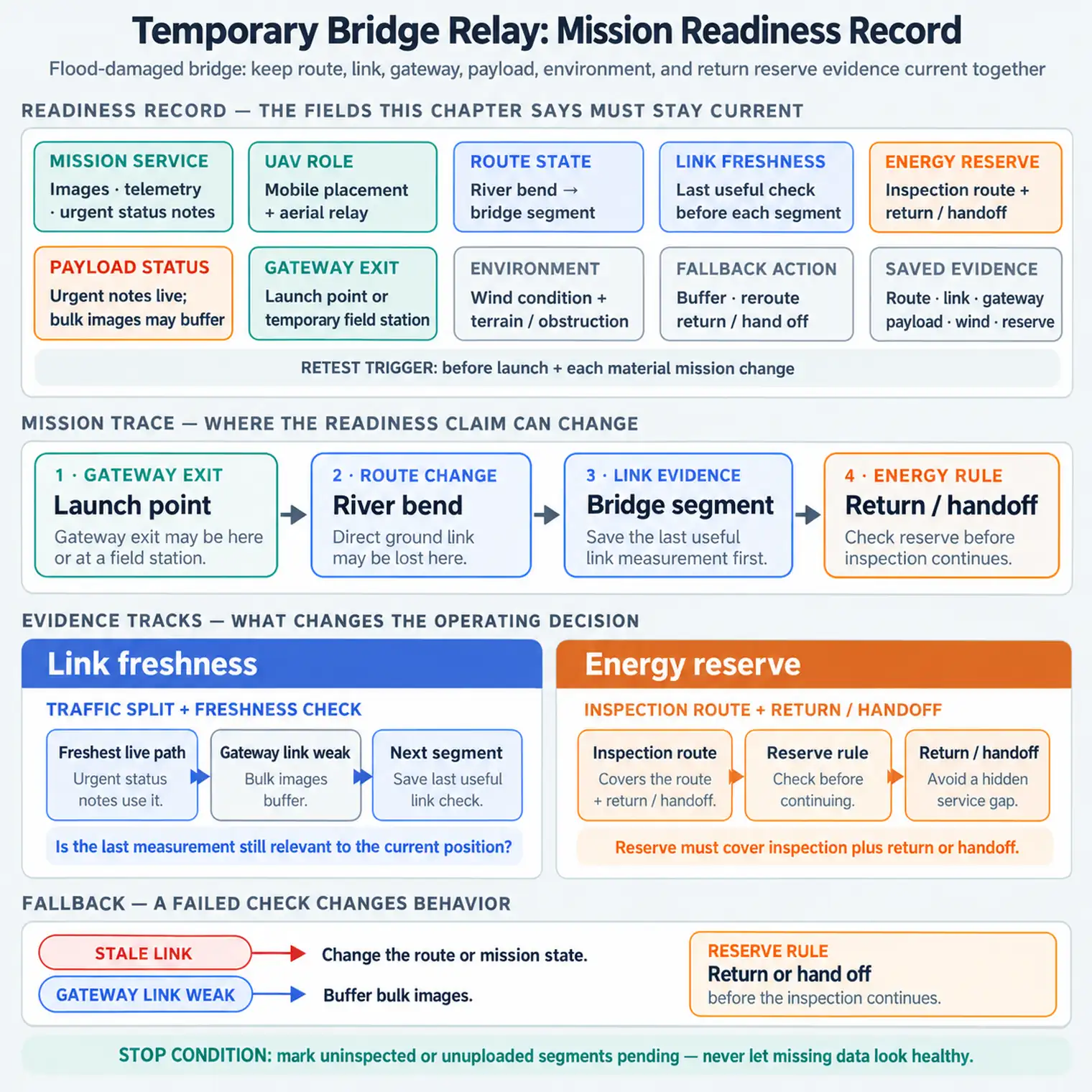
Feature Readiness Record
The design should include a compact readiness record.
- That order turns a feature list into an operating decision: a stale link or inadequate reserve must change the route or mission state before it becomes a loss of control or data.
Major section
Temporary Inspection Relay
Scenario: A maintenance team must inspect a remote bridge after a flood.
- Ground access is slow.
- The team needs recent images, operator telemetry, and a way to send urgent status notes back to the command post.
- The design does not need exact fleet-size math at this stage.
Deck summary
Key takeaways
The system must preserve age and quality instead of turning an old point into a current flight claim.
- UAV features are trade-offs, not free advantages.
- This chapter asks what that role costs.
- UAV networks can add capabilities that are difficult or slow to achieve with fixed ground infrastructure.
- A UAV can provide short-lived connectivity where a fixed access point is absent, damaged, or badly positioned.
Retrieval practice
Recall check 1 of 4

Blueprint Bina says: answer from memory, then check your reasoning.
Q1A UAV relay still has a high-quality camera, but the gateway link is stale, wind has shortened the return window, and bulk images are filling the payload queue. Which record best keeps the feature decision honest?
Show answer
Answer: A Mission-ready capability depends on current role, link, energy, payload, gateway, and fallback records, not the advertised sensor feature alone; the record then buffers or reduces image transfer and marks any segment as pending when upload is not proven.
Retrieval practice
Recall check 2 of 4

Blueprint Bina says: answer from memory, then check your reasoning.
Q2A field team wants a UAV to act as a short-lived aerial relay while carrying an inspection camera over a partially blocked site. Which first record keeps the feature choice traceable?
Show answer
Answer: A A traceable UAV feature decision connects the selected role to route context, link freshness, energy, payload, gateway exit, environmental limits, fallback behavior, ownership, and retest triggers before the mission depends on it.
Retrieval practice
Recall check 3 of 4

Blueprint Bina says: answer from memory, then check your reasoning.
Q3Place each uav network features concept where it lives so you can decide whether mobility, endurance, and an infrastructure path still support the mission.
Show answer
Answer: A The three regions separate know motion, protect endurance, reach infrastructure so you can decide whether mobility, endurance, and an infrastructure path still support the mission.
Retrieval practice
Recall check 4 of 4

Blueprint Bina says: answer from memory, then check your reasoning.
Q4A UAV is acting as an aerial relay. The last link check to the ground gateway was successful, but the UAV has since moved behind a ridge. What should the network record before trusting the relay path?
Show answer
Answer: A UAV relay decisions should be tied to current records: route state, link freshness, energy reserve, gateway reachability, and fallback behavior.
Print reference
Answers 1 of 2
Answer key.
- A · Mission-ready capability depends on current role, link, energy, payload, gateway, and fallback records, not the advertised sensor feature alone; the record then buffers or reduces image transfer and marks any segment as pending when upload is not proven.
- A · A traceable UAV feature decision connects the selected role to route context, link freshness, energy, payload, gateway exit, environmental limits, fallback behavior, ownership, and retest triggers before the mission depends on it.
Print reference
Answers 2 of 2
Answer key.
- A · The three regions separate know motion, protect endurance, reach infrastructure so you can decide whether mobility, endurance, and an infrastructure path still support the mission.
- A · UAV relay decisions should be tied to current records: route state, link freshness, energy reserve, gateway reachability, and fallback behavior.