Emerging Paradigms · Study deck
FANET-VANET Integration
After a flood, an aircraft spots a blocked road and meets a rescue vehicle moving toward the area.
Blueprint Bina is your guide for this deck.

After studying this chapter
Learning objectives
You will be able to:
- Explain how UAV FANETs can support vehicle networks without treating vehicles and UAVs as the same mobility problem.
- Identify the main air-to-ground link roles: vehicle contact, roadside contact, aerial relay, and gateway exit.
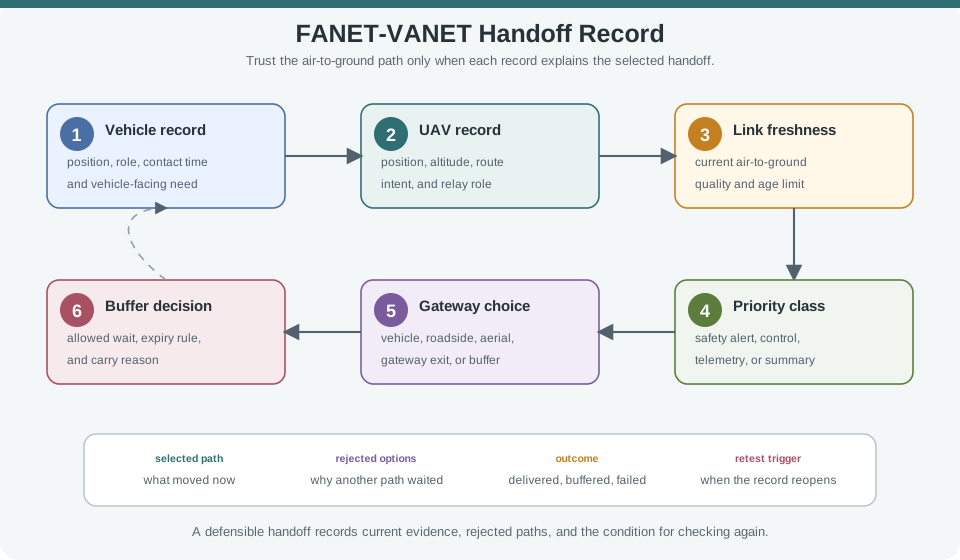
- Build an integration record that includes position freshness, link quality, message priority, gateway state, and buffer state.
- Choose when to forward immediately, hand off to a roadside path, relay through the aerial network, or store-carry-forward.
Major section
Start Simple
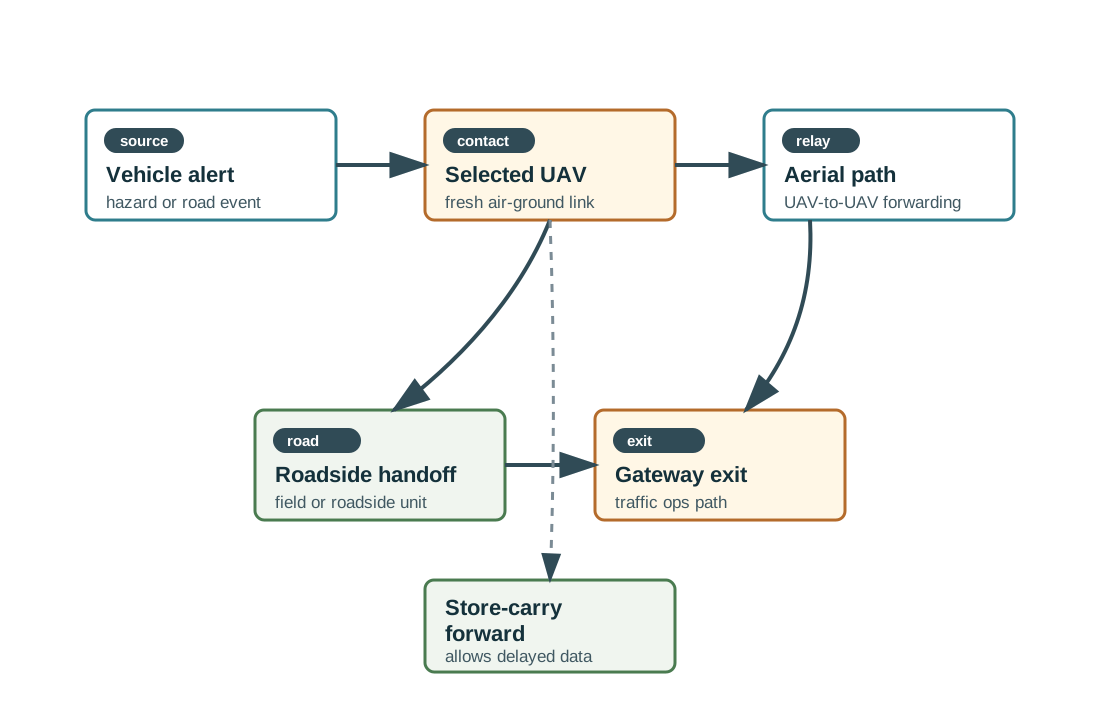
The warning may go straight to that vehicle, through a roadside unit, by another aircraft, or later when a useful contact appears.
- The mission owner must decide which path fits the warning's age and consequence.
- Fast movement makes a recent path stale quickly.
- This run does not prove one route for every speed, height, or fleet size.
Major section
What Integration Means
FANET-VANET integration is a bridge between two moving networks.
- The vehicle side may include cars, trucks, buses, roadside equipment, and traffic-control systems.
- The aerial side may include observation UAVs, relay UAVs, and gateway UAVs.
- The integration point is the set of air-to-ground contacts and handoff decisions that move information between these layers.
Major section
What Integration Means (continued)
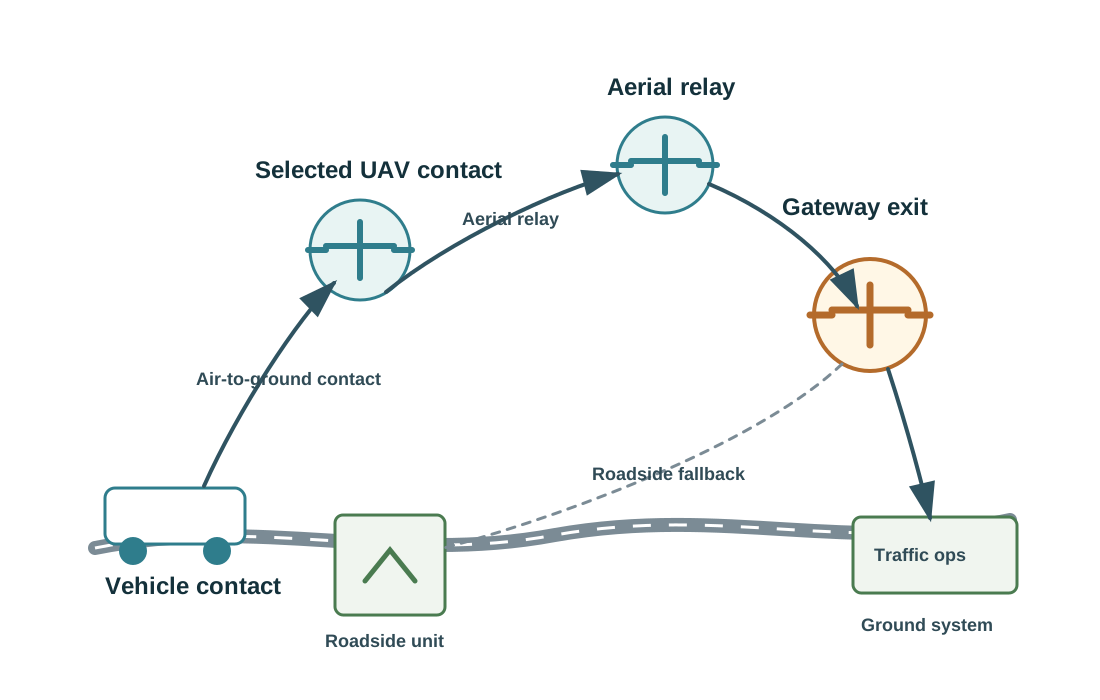
A UAV may exchange alerts, map updates, or sensor summaries with vehicles in its current contact area.
- A UAV may hand data to a roadside unit, field gateway, or temporary command post when that path is fresher than vehicle relay.
- A UAV may forward vehicle-originated data through other UAVs when the nearest ground exit is not directly reachable.
- The overview depth layer shows the integration map that anchors vehicle, roadside, aerial relay, gateway, and traffic-operations paths.
Major section
Message Flow Patterns
The same mission can use several message paths.
- The design should state which path is preferred for each traffic class and what fallback is used when the preferred path is unavailable.
- Prefer the path that can reach affected vehicles or responders soonest.
- Buffer if the observation remains useful after a short delay.
- This protects link capacity for urgent messages.
Major section
Worked Example: Rural Road Incident
Scenario: A vehicle reports a road obstruction in a sparse area.
- A UAV has a current air-to-ground contact with the reporting vehicle.
- Another UAV has a fresher path to a roadside unit.
- A gateway UAV can forward to traffic operations, but the direct path is temporarily weak.
- The message is small and priority is high.
Major section
Worked Example: Rural Road Incident (continued)
The obstruction alert is forwarded immediately from the reporting vehicle to the nearest UAV, then to the UAV with the fresher roadside path.
- Nearby vehicles receive the warning from the UAV while the contact is fresh.
- The gateway path is weak, so the UAV stores a compact operations summary and forwards it when the gateway path improves.
- The log records that the gateway path was rejected for the immediate alert but used later for the operations summary.
- Result: The urgent vehicle-facing alert moves immediately through the best current contact, while lower-priority operations records wait for a more trustworthy gateway path.
Major section
Concept Relationships
FANET adds aerial relays, observation, and gateway paths.
- Air-to-ground contact connects one vehicle-side path to one aerial-side path.
- Gateway state determines how the message leaves the local contact area.
- Buffer state protects data during temporary partitions.
- Handoff record explains selected paths, rejected alternatives, and outcomes.
Deck summary
Key takeaways
The warning may go straight to that vehicle, through a roadside unit, by another aircraft, or later when a useful contact appears.
- FANET-VANET integration is a bridge between two moving networks.
- A UAV may exchange alerts, map updates, or sensor summaries with vehicles in its current contact area.
- The same mission can use several message paths.
- Scenario: A vehicle reports a road obstruction in a sparse area.
Retrieval practice
Recall check 1 of 5

Blueprint Bina says: answer from memory, then check your reasoning.
Q1A UAV has a fresh contact with a vehicle reporting a road hazard, but the gateway path to traffic operations is currently weak. What should the design do?
Show answer
Answer: A Route the urgent hazard warning through the fresh vehicle contact now, and buffer the low-priority summary for a better gateway path.
Retrieval practice
Recall check 2 of 5

Blueprint Bina says: answer from memory, then check your reasoning.
Q2A UAV has a fresh contact with a vehicle that reports a road hazard, but the gateway path to traffic operations is currently weak. What should the design do?
Show answer
Answer: A FANET-VANET forwarding should be record-based and priority-aware.
Retrieval practice
Recall check 3 of 5

Blueprint Bina says: answer from memory, then check your reasoning.
Q3Why should vehicle mobility and UAV mobility be modeled separately in an integration design?
Show answer
Answer: A Vehicle motion, UAV motion, and roadside reachability age differently.
Retrieval practice
Recall check 4 of 5

Blueprint Bina says: answer from memory, then check your reasoning.
Q4Which records best explain a FANET-VANET handoff after the mission?
Show answer
Answer: A Traceable handoff records make integration behavior diagnosable after mobile contacts change.
Retrieval practice
Recall check 5 of 5

Blueprint Bina says: answer from memory, then check your reasoning.
Q5Place each uav fanet vanet integration concept where it lives so you can trace a cross-domain handoff without confusing contact, relay, and safe exit roles.
Show answer
Answer: A The three regions separate meet the domains, relay across, exit safely so you can trace a cross-domain handoff without confusing contact, relay, and safe exit roles.
Q6Complete the air-to-ground handoff screen:
Show answer
Answer: A A handoff decision needs fresh mobility records, useful link and gateway state, and a known message priority.
Print reference
Answers 1 of 2
Answer key.
- A · Route the urgent hazard warning through the fresh vehicle contact now, and buffer the low-priority summary for a better gateway path.
- A · FANET-VANET forwarding should be record-based and priority-aware.
- A · Vehicle motion, UAV motion, and roadside reachability age differently.
- A · Traceable handoff records make integration behavior diagnosable after mobile contacts change.
Print reference
Answers 2 of 2
Answer key.
- A · The three regions separate meet the domains, relay across, exit safely so you can trace a cross-domain handoff without confusing contact, relay, and safe exit roles.
- A · A handoff decision needs fresh mobility records, useful link and gateway state, and a known message priority.