Design Patterns · Study deck
Edge Container Orchestration: Images and Kubernetes
A Dockerfile should build the same service each time.
Blueprint Bina is your guide for this deck.

After studying this chapter
Learning objectives
You will be able to:
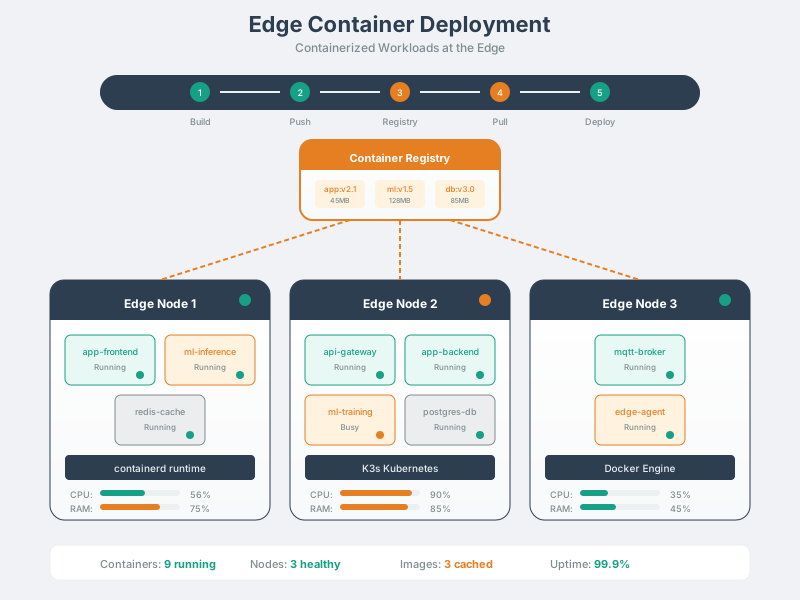
- Explain: Edge deployments add constraints that cloud clusters usually hide: power cycles, weak links, local storage, limited maintenance windows, and hardware that may be shared with gateways, brokers, or local analytics.
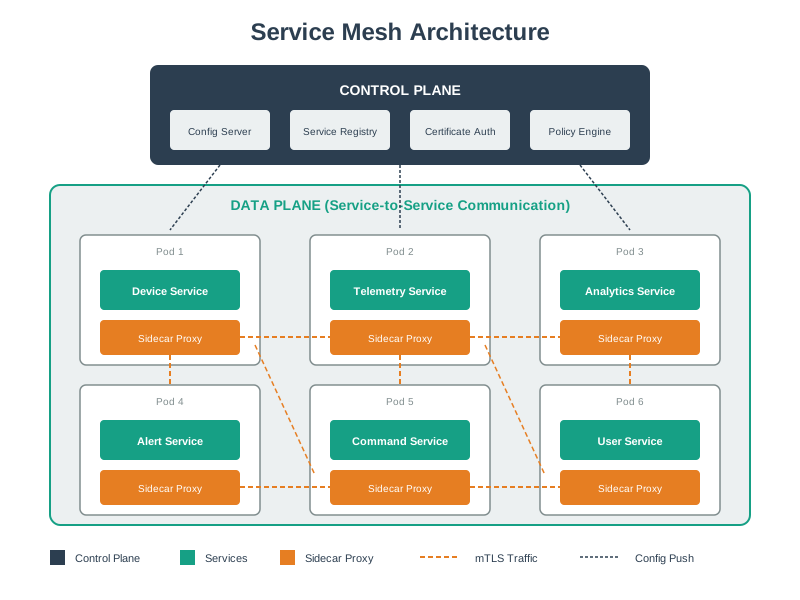
- Explain: It makes the extra control plane and per-workload proxy path visible, allowing the security and resource costs to be weighed against consistent identity, policy, and telemetry.
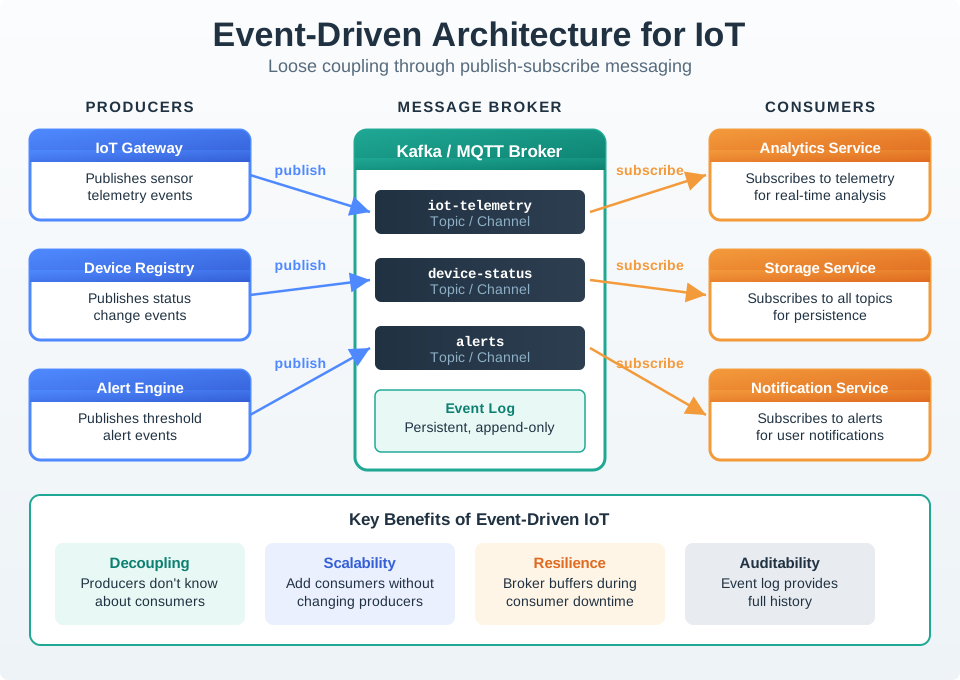
- Explain: Producers do not wait for every analytics, storage, or notification service; consumers progress at their own rate, while broker depth and lag expose pressure.
- Explain: This example keeps the manifest compact so the important contract is visible.
Major section
Kubernetes Workload Pattern
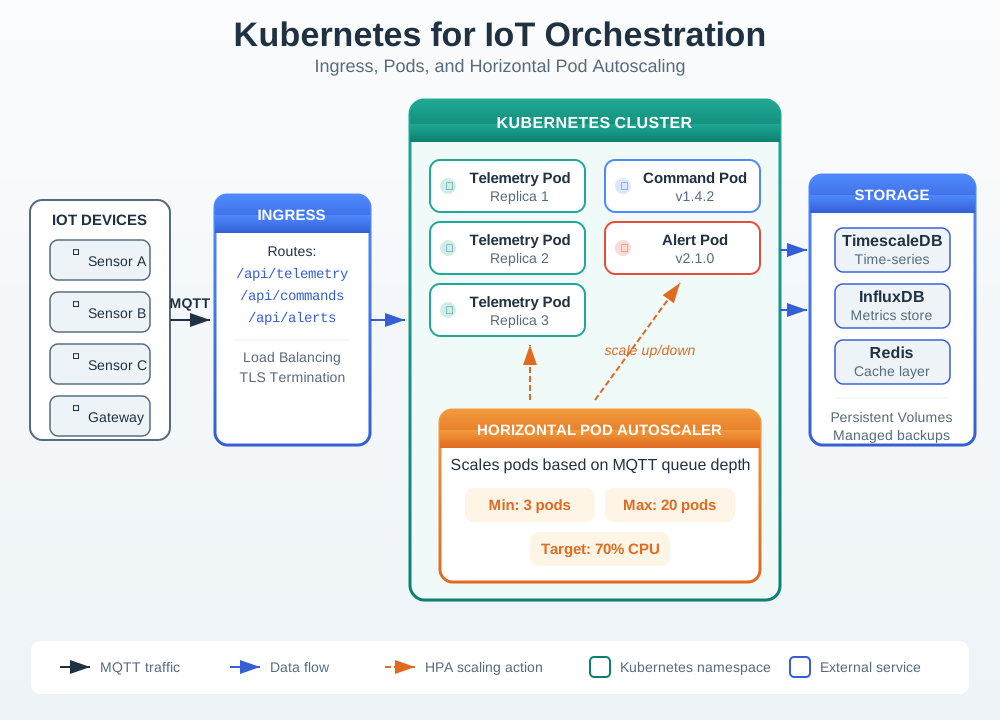
Kubernetes commonly represents a stateless IoT service as a Deployment, a Service, and optional autoscaling policy.
- This connects the YAML to the running operations narrative: routing, health, resources, and scaling need explicit objects and observable evidence.
- This example keeps the manifest compact so the important contract is visible.
Major section
Edge Orchestration Choices
Edge deployments add constraints that cloud clusters usually hide: power cycles, weak links, local storage, limited maintenance windows, and hardware that may be shared with gateways, brokers, or local analytics.
- Distribution is centrally coordinated, but execution and recovery must continue locally when the link fails.
Major section
Service Mesh for IoT
It makes the extra control plane and per-workload proxy path visible, allowing the security and resource costs to be weighed against consistent identity, policy, and telemetry.
- The mesh can authenticate and observe that hop, but the applications still own domain authorization and payload meaning.
- Sidecars and mesh control planes consume resources and add operational complexity.
Major section
Service Mesh for IoT (continued)
This ordered reading connects mesh adoption to the chapter's recurring requirement for explicit operational boundaries.
- Mesh mTLS helps service-to-service identity and encryption.
- Operators must also rotate mesh credentials and observe policy failures.
- This distinction connects the mesh decision to the running narrative by keeping infrastructure guarantees separate from domain and device security claims.
Major section
Event-Driven Workloads
Orchestration should respect that difference.
- The point is to see why producers and consumers can change independently while the broker carries routing, buffering, and lag evidence between them.
- Producers do not wait for every analytics, storage, or notification service; consumers progress at their own rate, while broker depth and lag expose pressure.
- Kubernetes does not replace the broker.
Major section
Summary
Containers make IoT services portable, but orchestration makes them operable.
- A good workload contract includes image, configuration, secrets, probes, resources, scaling, and rollout rules.
- Kubernetes is a strong fit for connected cloud and data-center services; edge deployments need an autonomy and supportability check.
- Service mesh can centralize mTLS and traffic policy, but it is not free infrastructure.
Deck summary
Key takeaways
Kubernetes commonly represents a stateless IoT service as a Deployment, a Service, and optional autoscaling policy.
- Edge deployments add constraints that cloud clusters usually hide: power cycles, weak links, local storage, limited maintenance windows, and hardware that may be shared with gateways, brokers, or local analytics.
- It makes the extra control plane and per-workload proxy path visible, allowing the security and resource costs to be weighed against consistent identity, policy, and telemetry.
- This ordered reading connects mesh adoption to the chapter's recurring requirement for explicit operational boundaries.
- Orchestration should respect that difference.
Retrieval practice
Recall check 1 of 6

Blueprint Bina says: answer from memory, then check your reasoning.
Q1A telemetry ingestion Deployment uses HPA on CPU. During a device reconnect storm, new pods are created, but traffic is sent to them before their broker subscriptions and cache warmup finish. What is the best first fix?
Show answer
Answer: B Readiness protects clients from pods that are alive but not ready for production traffic.
Retrieval practice
Recall check 2 of 6

Blueprint Bina says: answer from memory, then check your reasoning.
Q2A retailer wants analytics containers to keep running in hundreds of stores even when the WAN link drops for several hours. The cloud team still wants centralized rollout control when the stores reconnect. Which requirement should drive the orchestration choice?
Show answer
Answer: A Edge orchestration should be chosen around autonomy, reconciliation, update control, and local observability.
Retrieval practice
Recall check 3 of 6

Blueprint Bina says: answer from memory, then check your reasoning.
Q3An IoT backend has many internal services owned by different teams. The security requirement is consistent mutual TLS and service identity for east-west traffic. Why might a service mesh be appropriate?
Show answer
Answer: B Service mesh is a tradeoff: consistent identity, encryption, routing, and telemetry in exchange for more infrastructure and resource overhead.
Retrieval practice
Recall check 4 of 6

Blueprint Bina says: answer from memory, then check your reasoning.
Q4Complete the Kubernetes manifest so the telemetry service has stable service discovery, resource intent, and correct readiness behavior:
Show answer
Answer: A The selector connects the Deployment to its pods, resource requests communicate scheduling intent, and readinessProbe prevents traffic from reaching the pod before it can serve.
Retrieval practice
Recall check 5 of 6

Blueprint Bina says: answer from memory, then check your reasoning.
Q5Which set of Kubernetes features most directly supports a stateless IoT ingestion service that must roll out safely and remain discoverable while pods are replaced?
Show answer
Answer: A Production orchestration combines workload management, discovery, readiness, capacity declaration, and observability.
Retrieval practice
Recall check 6 of 6

Blueprint Bina says: answer from memory, then check your reasoning.
Q6A team wants to put a service mesh on a small edge gateway only to get encryption between two local services. What should they do before adopting the mesh?
Show answer
Answer: B Mesh adoption should be justified by requirements and tested under realistic resource and failure conditions.
Print reference
Answers 1 of 2
Answer key.
- B · Readiness protects clients from pods that are alive but not ready for production traffic.
- A · Edge orchestration should be chosen around autonomy, reconciliation, update control, and local observability.
- B · Service mesh is a tradeoff: consistent identity, encryption, routing, and telemetry in exchange for more infrastructure and resource overhead.
- A · The selector connects the Deployment to its pods, resource requests communicate scheduling intent, and readinessProbe prevents traffic from reaching the pod before it can serve.
Print reference
Answers 2 of 2
Answer key.
- A · Production orchestration combines workload management, discovery, readiness, capacity declaration, and observability.
- B · Mesh adoption should be justified by requirements and tested under realistic resource and failure conditions.