Cellular IoT · Study deck

Sigfox Technology Overview

Sigfox starts with a very small message and a managed network boundary.

Radio Remi is your guide for this deck.

sigfox
Radio Remi, the module guide, in a scene from this chapter.
iotclass.org

After studying this chapter

Learning objectives

You will be able to:

  • Explain: This route keeps the chapter's claim honest: device transmission is only the first record in a managed path whose receipt, decode, callback, and freshness need separate proof.
  • Explain: For contrast, Figure: NB-IoT spectrum can be stand-alone shows that a cellular narrowband option introduces a spectrum-placement decision absent from the Sigfox endpoint model.
  • Explain: The map connects early technology choice to accountability: service model, downlink need, infrastructure control, site evidence, and exit options are part of the decision alongside radio coverage.
  • Explain: The physical layer is only one part of a Sigfox decision.
iotclass.org

Major section

Overview: Treat Sigfox as a Managed Path
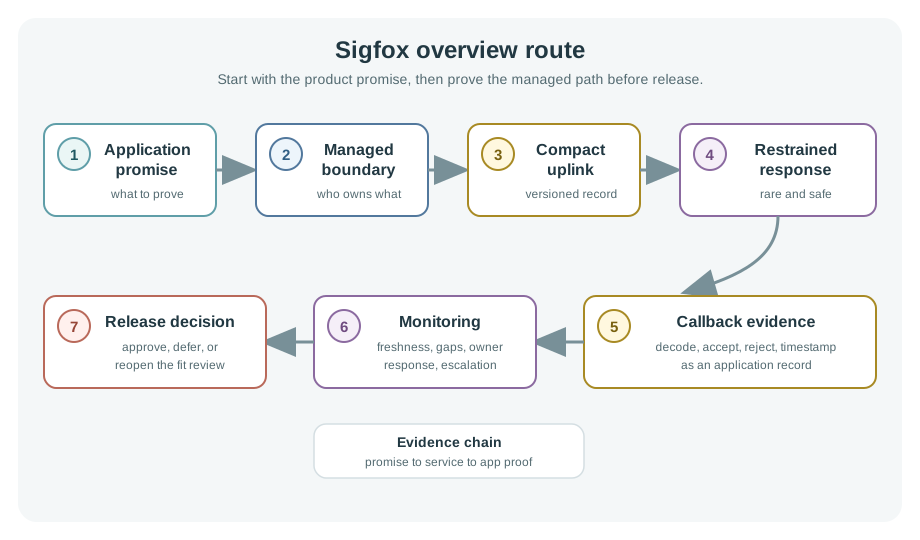
This route keeps the chapter's claim honest: device transmission is only the first record in a managed path whose receipt, decode, callback, and freshness need separate proof.

  • The overview point is that Sigfox is a managed path: each stage has to be proven with its own evidence before the next one is trusted.
Sigfox overview route map connecting application promise, managed boundary, compact uplink, restrained response, callback evidence, monitoring, and release decision.
iotclass.org

Major section

Managed-Service Boundary

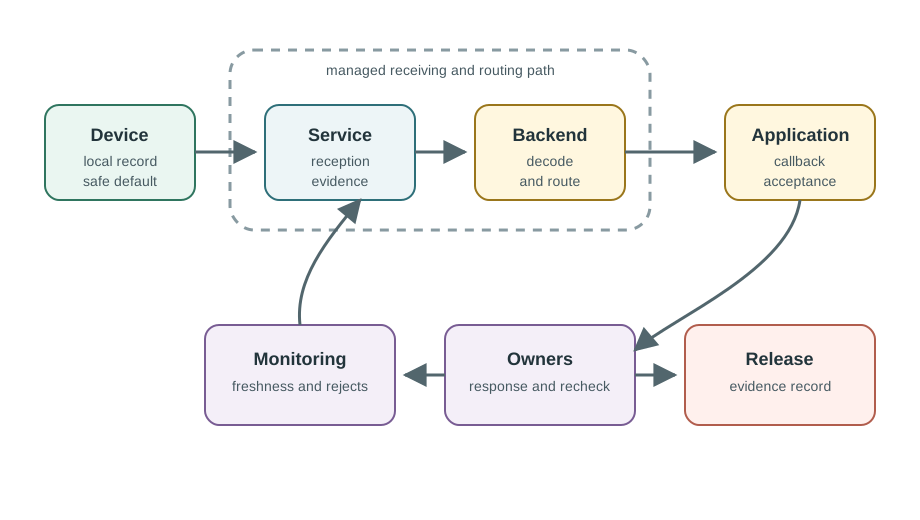
Each transition needs its own observable evidence; a message visible in a service portal does not prove decoding, callback acceptance, freshness monitoring, or owner response.

  • The device creates compact records and keeps safe defaults when no response arrives.
  • The managed path should produce usable records from representative sites and installation conditions.
Sigfox managed-service boundary showing device estate, shared receiving service, backend decode and route, application callback, monitoring, owners, and release record.
iotclass.org

Major section

Compact Uplinks and Restrained Responses
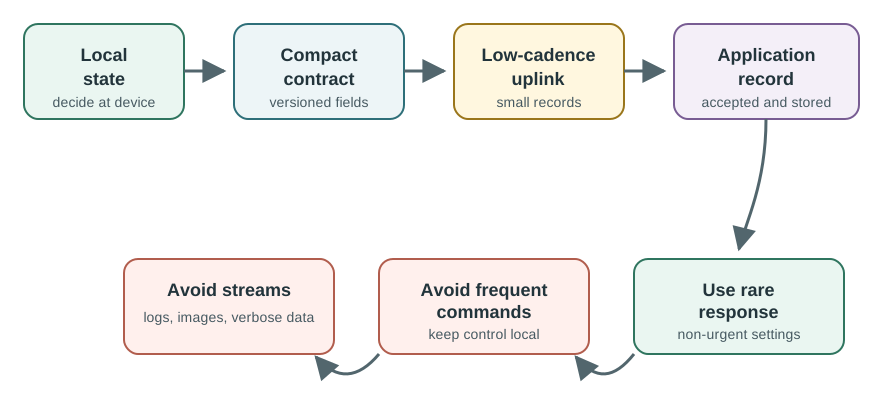
Sigfox-style design favors compact records created at low cadence.

  • The payload should carry product meaning, not raw logs or values that need hidden context.
  • This path explains the fit lists below.
  • Periodic summaries and locally decided alerts align with it; streams, verbose diagnostics, firmware delivery, or cloud-dependent safety actions do not.
Sigfox compact-message fit map showing local state, compact payload contract, low-cadence uplink, rare response path, local fallback, and application record.
iotclass.org

Major section

Physical Layer, Backend, and Product Layers

The physical layer is only one part of a Sigfox decision.

  • Useful for compact low-cadence records, but not a reason to skip service evidence.
  • Fields, units, missing markers, version, and acceptance tests should be documented.
  • The application record must be accepted, stored, monitored, and owned.
  • Approval should list evidence, limits, owner response, and recheck triggers.

Why it matters

Ultra-narrowband operation is relevant because it supports a compact, low-power radio path, but release readiness also depends on payload meaning, backend routing, callback behavior, monitoring, and ownership.

iotclass.org

Major section

Technology Selection View

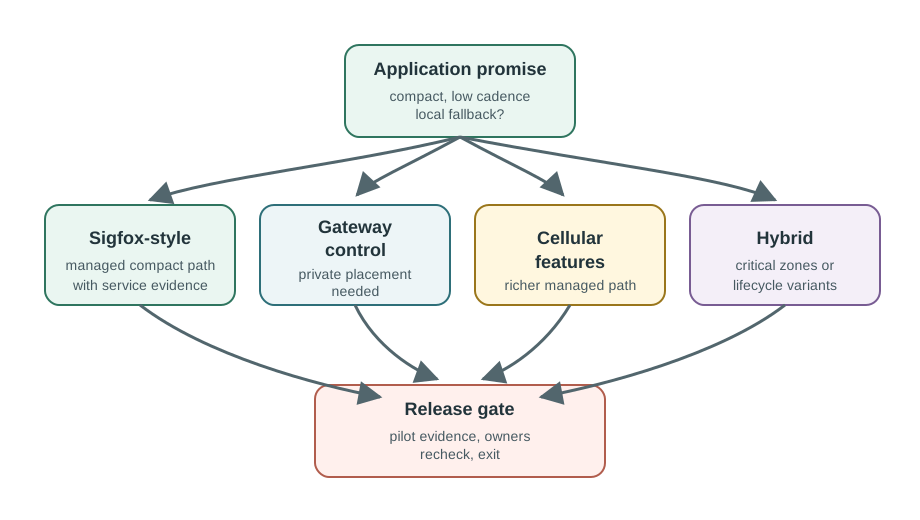
If the product needs local gateway control or cellular mobility and reachability features, follow those branches rather than forcing the Sigfox-style path.

  • The map connects early technology choice to accountability: service model, downlink need, infrastructure control, site evidence, and exit options are part of the decision alongside radio coverage.
Sigfox technology-selection decision map showing compact records, managed-service fit, gateway-control need, cellular feature need, pilot evidence, and release gate.
iotclass.org

Major section

Technology Selection View (continued)

Best when the application needs small, low-cadence records and accepts managed-service dependency.

  • Best when the team needs private gateway placement, network-control options, and flexible class behavior.
  • Best when the application needs cellular integration, richer managed features, or different mobility assumptions.
  • Best when critical zones, lifecycle plans, or product variants need more than one communication path.
iotclass.org

Major section

Release Evidence for the Overview Decision
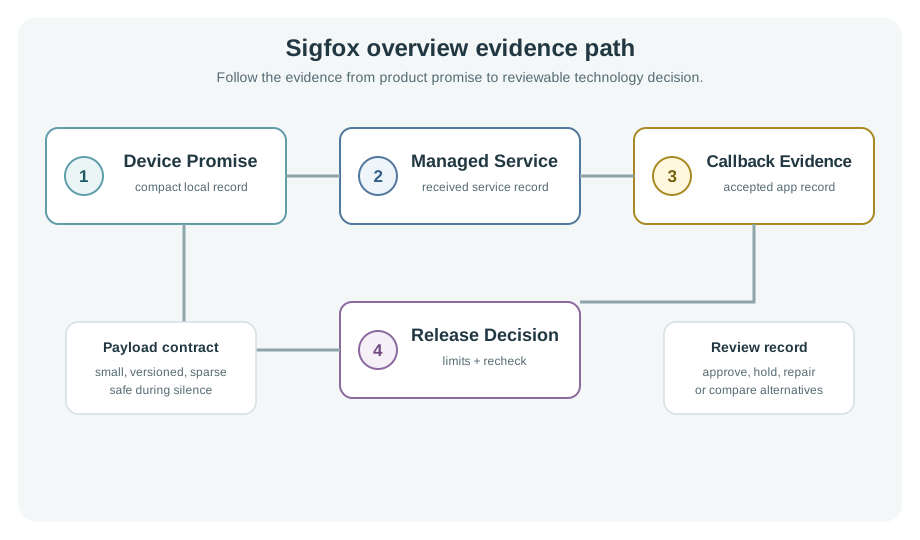
Reopen review for payload, callback, enclosure, mounting, service evidence, owner, or exit-plan changes.

  • At each boundary, ask what record proves forward progress and who can respond when it fails.
Sigfox overview evidence path showing device promise, managed service, callback evidence, and release decision checkpoints.
iotclass.org

Major section

Label the Overview Path

For contrast, Figure: NB-IoT spectrum can be stand-alone shows that a cellular narrowband option introduces a spectrum-placement decision absent from the Sigfox endpoint model.

  • Unlike the: Long reach envelope above, these modes expose spectrum and LTE-coexistence obligations; the comparison prevents “LPWAN” from collapsing distinct operator, capacity, and lifecycle boundaries.

Why it matters

Unlike the : Long reach envelope above, these modes expose spectrum and LTE-coexistence obligations; the comparison prevents “LPWAN” from collapsing distinct operator, capacity, and lifecycle boundaries.

Sigfox range, data, and energy envelopes separate suitable sparse telemetry from unsuitable continuous control and bulk data.
iotclass.org

Deck summary

Key takeaways

This route keeps the chapter's claim honest: device transmission is only the first record in a managed path whose receipt, decode, callback, and freshness need separate proof.

  • Each transition needs its own observable evidence; a message visible in a service portal does not prove decoding, callback acceptance, freshness monitoring, or owner response.
  • Sigfox-style design favors compact records created at low cadence.
  • The physical layer is only one part of a Sigfox decision.
  • If the product needs local gateway control or cellular mobility and reachability features, follow those branches rather than forcing the Sigfox-style path.
iotclass.org

Retrieval practice

Recall check 1 of 6

Radio Remi says: answer from memory, then check your reasoning.

Q1A product team receives successful Sigfox uplinks during a pilot, but the application sometimes shows stale status. Which release record should be reviewed first?

AOnly the antenna drawing, because any received uplink proves the full application workflow.
BOnly the cloud command schedule, because Sigfox designs should depend on frequent downlink control.
CService reception, decoder output, callback response, app freshness, owner action, and exit conditions.
DNo record needs review because the operator service received at least one message.
Show answer

Answer: C Successful uplinks are only part of the Sigfox path; stale application state points to downstream evidence and ownership.

iotclass.org

Retrieval practice

Recall check 2 of 6

Radio Remi says: answer from memory, then check your reasoning.

Q2A team wants to choose Sigfox because it avoids building gateway infrastructure. What must the overview review add before approval?

AApproval based only on the promise of low infrastructure work
BA plan to use frequent cloud commands for every device decision
CA raw text payload so the application can interpret messages later
DReception, callback, monitoring, owners, downlink limits, and an exit plan
Show answer

Answer: D Sigfox overview review connects infrastructure convenience with evidence, ownership, monitoring, and fit limits.

iotclass.org

Retrieval practice

Recall check 3 of 6

Radio Remi says: answer from memory, then check your reasoning.

Q3A pilot shows service dashboard records, but no callback acceptance logs and no freshness monitor. What is the best finding?

AThe managed-service boundary is only partly proven
BThe design is fully proven because the service saw a record
CFreshness monitoring is unnecessary for low-cadence systems
DCallback logs only matter for high-throughput systems
Show answer

Answer: A The managed-service boundary must be proven from reception through application acceptance.

iotclass.org

Retrieval practice

Recall check 4 of 6

Radio Remi says: answer from memory, then check your reasoning.

Q4Which application is the strongest Sigfox-style fit?

AA remote meter that sends compact daily state records and keeps local safety behavior
BA camera sensor that uploads images whenever motion is detected
CA controller that needs frequent cloud commands to keep equipment safe
DA logger that sends verbose raw diagnostics after every measurement
Show answer

Answer: A Sigfox-style fit depends on compact records, low cadence, local fallback, and restrained response needs.

iotclass.org

Retrieval practice

Recall check 5 of 6

Radio Remi says: answer from memory, then check your reasoning.

Q5A product needs private gateway placement in weak service areas and frequent local command testing during commissioning. What should the technology-selection review say?

AConsider a gateway-controlled LPWAN path or hybrid design
BChoose Sigfox to reduce gateway maintenance work
CIgnore commissioning behavior because it happens before release
DUse frequent downlink commands as the normal control path
Show answer

Answer: A Technology selection should compare the product promise with the control model and evidence needed.

iotclass.org

Retrieval practice

Recall check 6 of 6

Radio Remi says: answer from memory, then check your reasoning.

Q6Place each Sigfox concept where it lives so you can trace a constrained device promise through the managed callback path to an honest release decision.

ADevice promise
BCallback reject
COwner gap
DRelease note
Show answer

Answer: A Follow device promise, managed path, and release fit so you can distinguish radio reception from application acceptance and product readiness.

iotclass.org

Print reference

Answers 1 of 2

Answer key.

  1. C · Successful uplinks are only part of the Sigfox path; stale application state points to downstream evidence and ownership.
  2. D · Sigfox overview review connects infrastructure convenience with evidence, ownership, monitoring, and fit limits.
  3. A · The managed-service boundary must be proven from reception through application acceptance.
  4. A · Sigfox-style fit depends on compact records, low cadence, local fallback, and restrained response needs.
  5. A · Technology selection should compare the product promise with the control model and evidence needed.
iotclass.org

Print reference

Answers 2 of 2

Answer key.

  1. A · Follow device promise, managed path, and release fit so you can distinguish radio reception from application acceptance and product readiness.
iotclass.org