Sensors & Measurement · Study deck
Low-Power Sensors: Energy Budgets
A battery sensor can meet its average current target and still die during radio bursts.
Physics Phoebe is your guide for this deck.
After studying this chapter
Learning objectives
You will be able to:
- Design multi-sensor data aggregation systems with structured JSON payloads
- Calculate power budgets for battery-powered sensor nodes using energy-per-cycle analysis
- Implement deep sleep modes that reduce current consumption to microamp levels
- Justify transmission buffering as the dominant power optimization by quantifying its 3x+ battery life improvement over alternative strategies
Major section
Start With the Measurement Story
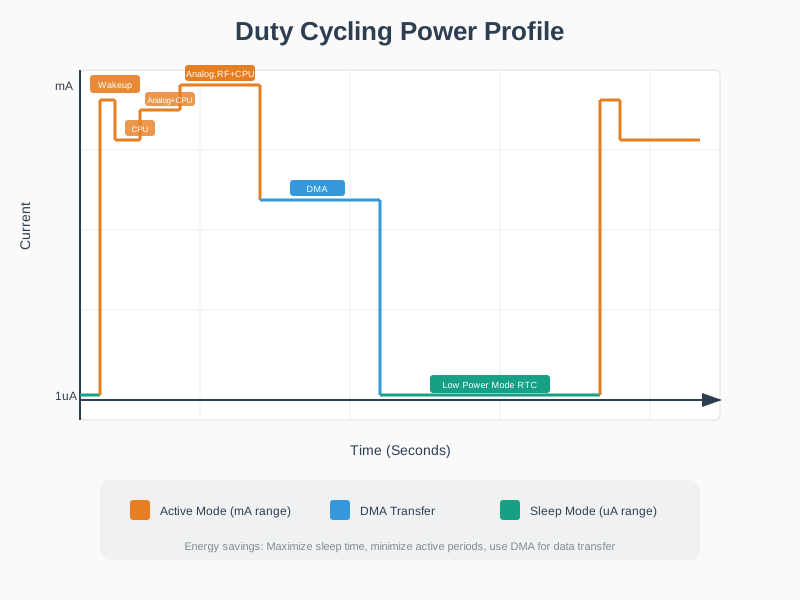
A duty cycle is the share of time a device spends in an active state.
- The design must still complete the important action and report low power honestly.
- A bench estimate cannot promise field life.
- Cell age, cold, leakage, self-discharge, and user behavior vary.
Major section
Introduction
Sleep still contributes to the total even when its current is much lower than the active current.
- Battery-powered IoT sensor nodes face a fundamental challenge: they must collect and transmit data reliably while consuming minimal power.
- A well-designed power management strategy can extend battery life from weeks to years.
Major section
Multi-Sensor Data Aggregation
A node with several sensors needs a payload that preserves the meaning of their combined readings.
- JSON provides a readable structure for those values, but each transmitted byte still costs work on the radio path.
- The design question includes how many values are sent and how often the node communicates.
- One combined transmission can replace separate transfers while keeping the sensor readings organized for the receiver.
- Combining multiple sensors into a single IoT node requires structured data handling.
Major section
Deep-Sleep Pattern
A deep-sleep design must account for the active work that happens between its long quiet intervals.
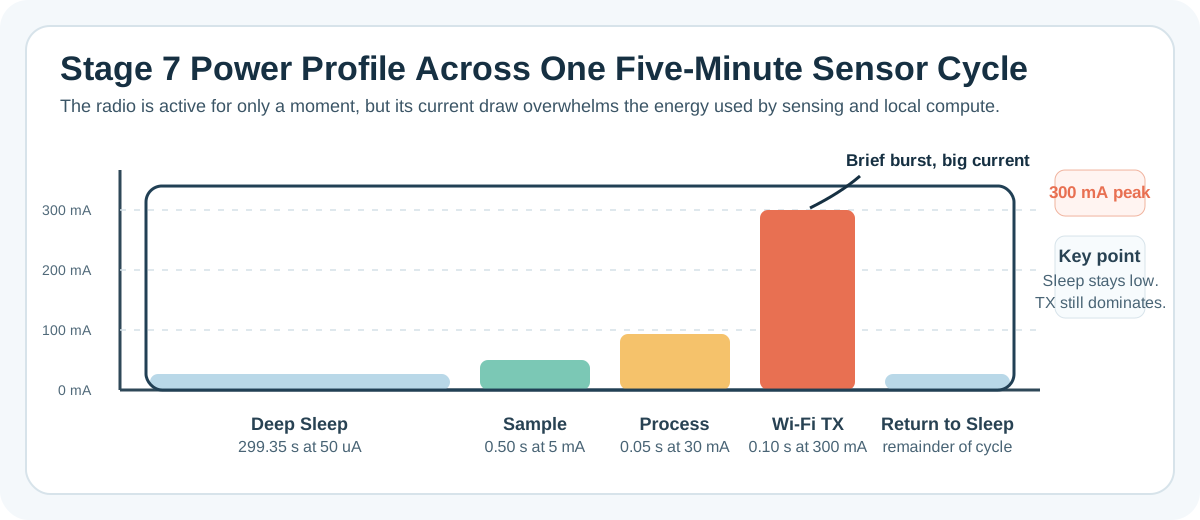
- Sensor reads and radio transmission consume current for their own durations within the cycle.
- A shorter expensive radio burst can therefore matter more than a small reduction in an already low sleep current.
Deck summary
Key takeaways
A duty cycle is the share of time a device spends in an active state.
- Sleep still contributes to the total even when its current is much lower than the active current.
- A node with several sensors needs a payload that preserves the meaning of their combined readings.
- A deep-sleep design must account for the active work that happens between its long quiet intervals.
Retrieval practice
Recall check 1 of 2

Physics Phoebe says: answer from memory, then check your reasoning.
Q1A remote weather node groups readings into fewer Wi-Fi bursts. What cost is that strategy intended to reduce?
Show answer
Answer: A The chapter connects buffering to fewer communication bursts in the energy ledger.
Retrieval practice
Recall check 2 of 2

Physics Phoebe says: answer from memory, then check your reasoning.
Q2A node spends most of its time asleep but has expensive radio bursts. How should its average current be assessed?
Show answer
Answer: D The timing view shows why a short high-current burst can dominate the budget.
Print reference
Answers
Answer key.
- A · The chapter connects buffering to fewer communication bursts in the energy ledger.
- D · The timing view shows why a short high-current burst can dominate the budget.