Cloud, SDN & Production Architectures · Study deck

SDN Production Readiness

Picture a factory network where safety messages and camera uploads share the same switches.

Cloud Clara is your guide for this deck.

prodframework
Cloud Clara, the module guide, in a scene from this chapter.
iotclass.org

After studying this chapter

Learning objectives

You will be able to:

  • Check SDN production readiness through release gates instead of product assertions.
  • Define the operating model for controller changes, switch proof records, and service ownership.
  • Trace a flow policy from intent through test, staged rollout, observation, rollback, and cleanup.
  • Identify resilience, security, and observability proof needed before production acceptance.
iotclass.org

Major section

Start With the Change You Must Operate
This opening does not choose a controller or prove every switch feature.

  • The team must turn that wish into a change that can be checked, reversed, and owned.
  • Stage the change on a small slice.
  • Under the Hood examines rule life, state agreement, failover, access limits, observation, and clean retirement.
iotclass.org

Major section

Start With the Change You Must Operate (continued)
A central control service can plan and observe changes, but its loss must not erase the last safe forwarding state or open a forbidden route.

  • Production SDN starts when a forwarding change becomes part of a live service.
  • From that point, intent, installed rules, counters, receiver behavior, rollback, and cleanup all have to stay aligned.
  • If the record names the owner, release gate, observation, exception, rollback, and retirement check, programmable forwarding can be managed instead of merely installed.
iotclass.org

Major section

Minimum Viable Understanding · Framework Pillars

Production SDN is a controlled way to change forwarding behavior.

  • The central question is not "Which controller is fastest?" The safer question is "Can this team operate programmable forwarding with clear owners, proof, and rollback?".
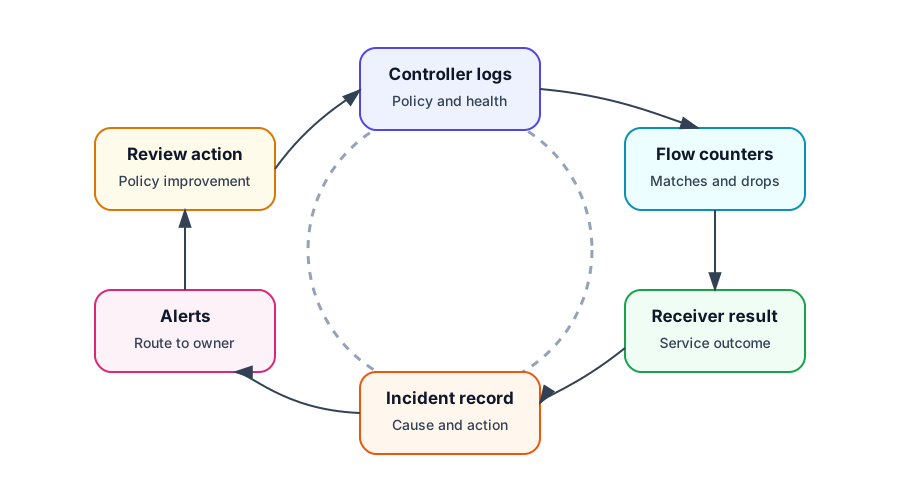
  • Operate with records: counters, logs, receiver results, alerts, incident records, and cleanup records.
SDN production framework check route
iotclass.org

Major section

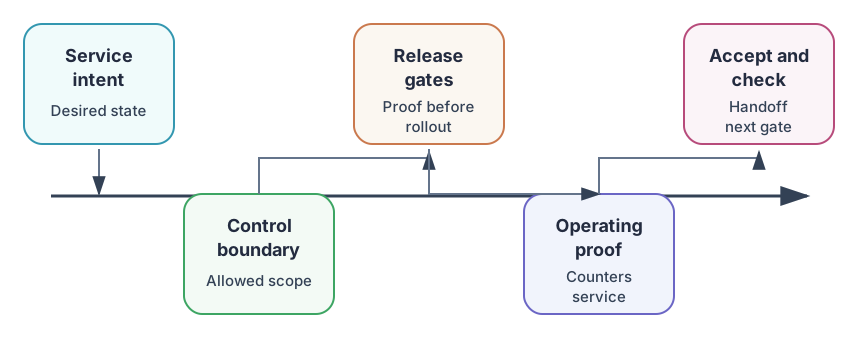
Release Gates

SDN changes should move through explicit gates.

  • A gate is useful only when it has proof and an owner.
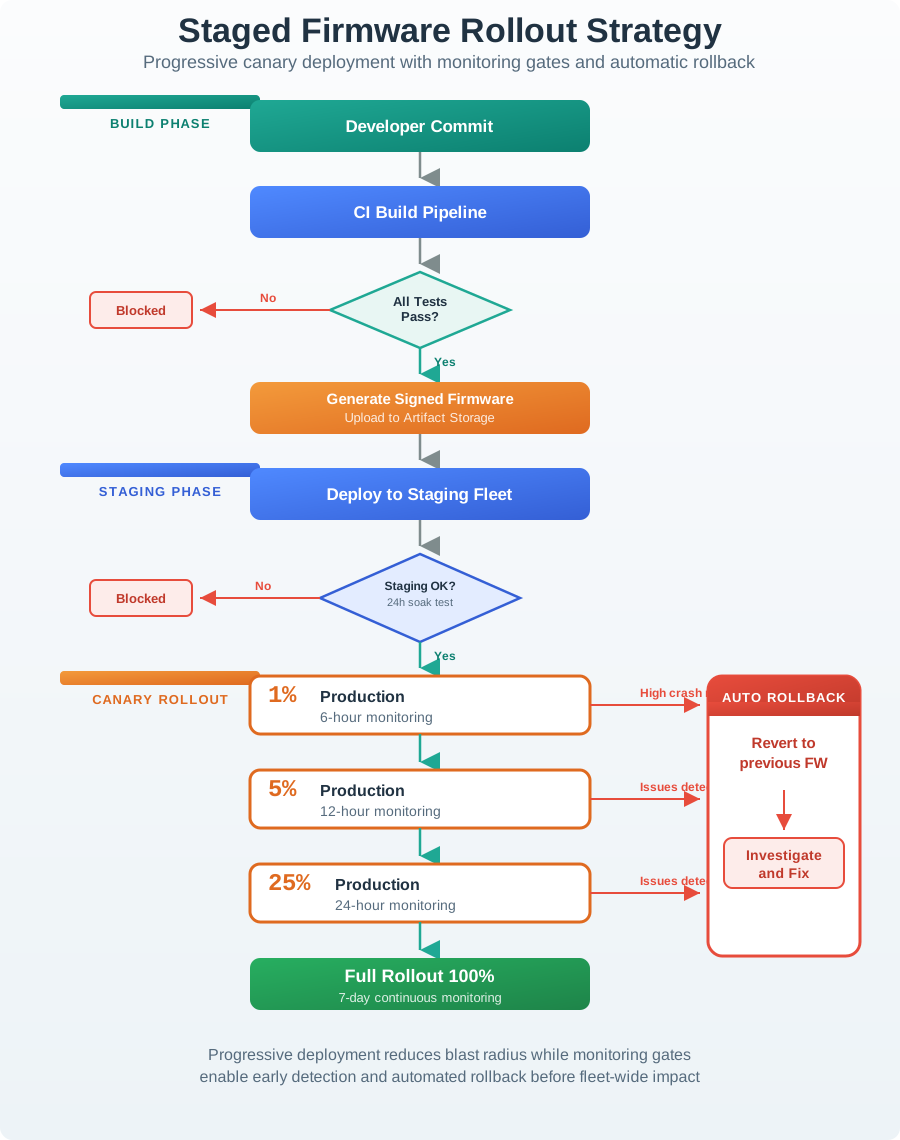
  • This path preserves the chapter’s release gates argument: Production readiness is a staged rollout: each canary stage must pass monitoring gates before expanding, with automatic rollback on failure.
Production readiness is a staged rollout: each canary stage must pass monitoring gates before expanding, with automatic rollback on failure.
iotclass.org

Major section

Controller Operating Model · Flow-Policy Lifecycle

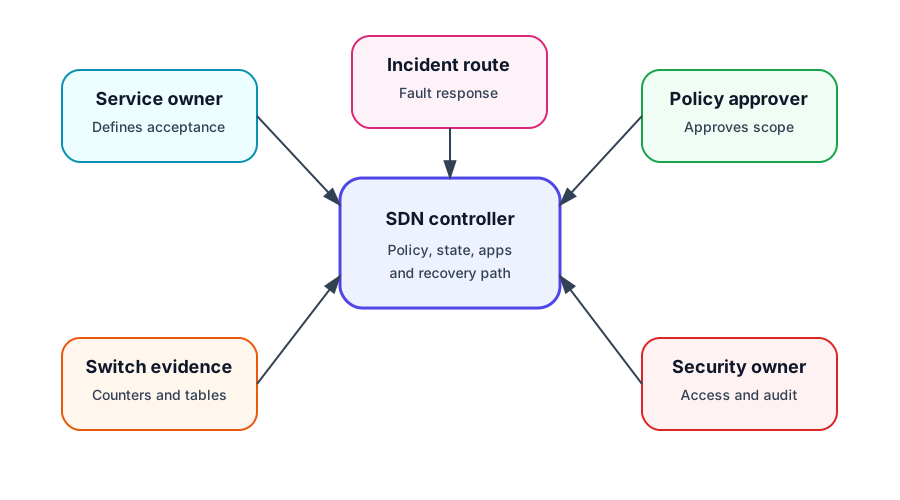
The controller is production infrastructure.

  • This supports controller operating model.
  • The framework should also define what the switches do when the controller is unavailable.
  • Existing installed rules may continue forwarding, but table-miss behavior, new flows, stale rules, and exception handling must be tested locally rather than assumed.
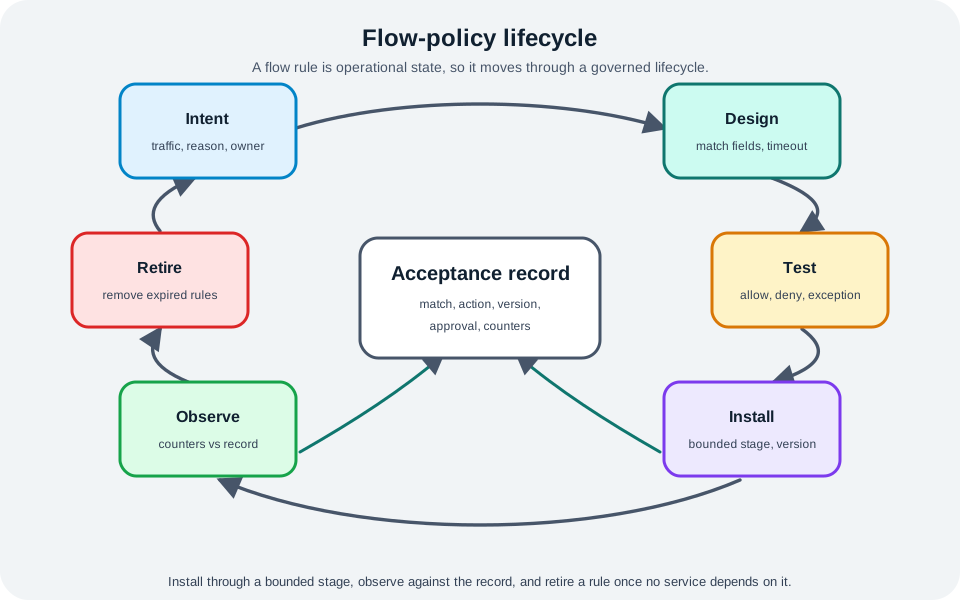
  • A flow rule is operational state.

Key terms

SDN controller
SDN controller is read alongside Approves scope.

Why it matters

The three labels prevent a one-box flow-policy lifecycle reading.

SDN controller operating model
iotclass.org

Major section

Proactive, Reactive, and Hybrid Control
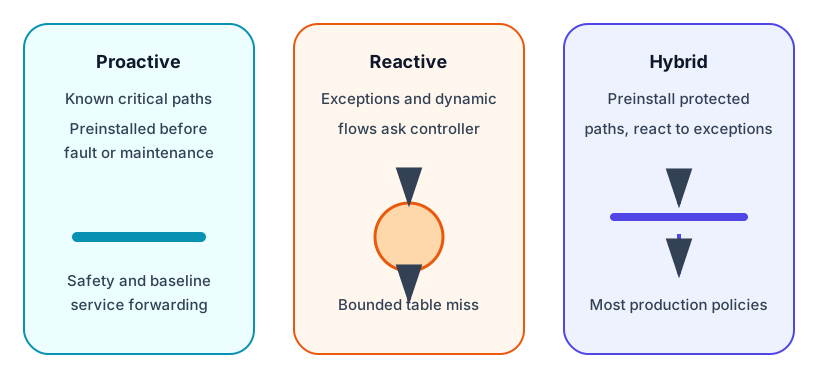
The framework should name where each belongs.

  • The next proactive, reactive, and hybrid control step needs Proactive as a visual checkpoint.
  • The right mix depends on local risk.
  • A safety alarm path, a building telemetry path, and a diagnostic path may need different placement and timeout behavior.
SDN proactive reactive and hybrid control placement
iotclass.org

Major section

Resilience Checks · Production Practice Drill Addendum
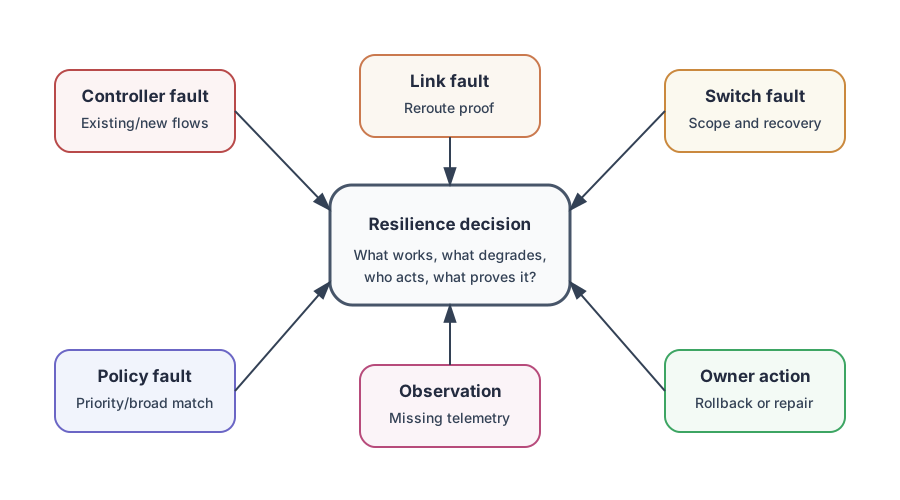
Resilience is not a single uptime assertion.

  • Policy fault: bad priority, broad match, stale exception, and tested rollback.
  • Production best practices become useful when they are rehearsed as drills, not only listed as policies.
SDN production resilience checks
iotclass.org

Major section

Security Boundary · Observability Proof
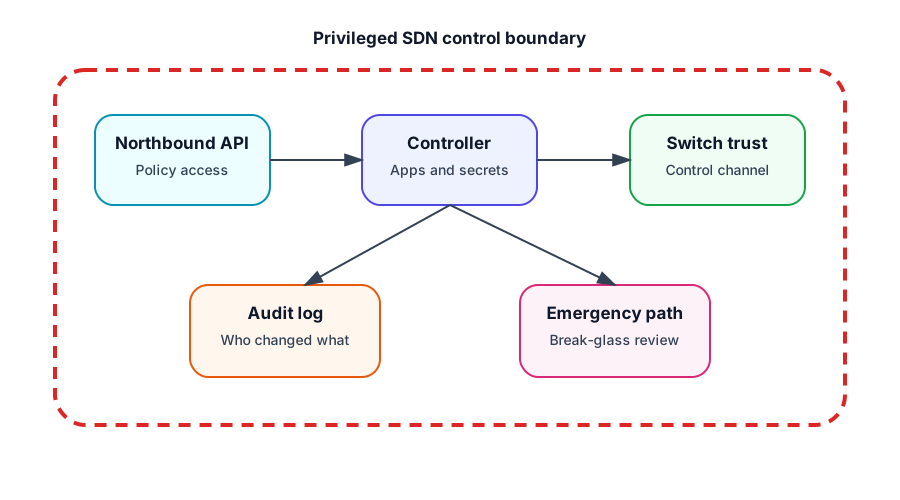
The production framework must protect both control-plane access and policy-change workflows.

  • The three labels prevent a one-box security boundary reading.
  • The security boundary should be visible in the same operations record as the network behavior.
  • Production acceptance requires proof that operators can see the SDN system working and failing.
  • Flow counters alone are not enough.

Key terms

Switch trust
Switch trust is: SDN production security boundary.

Why it matters

Otherwise, teams may prove forwarding while leaving policy authority unchecked.

SDN production security boundary
iotclass.org

Major section

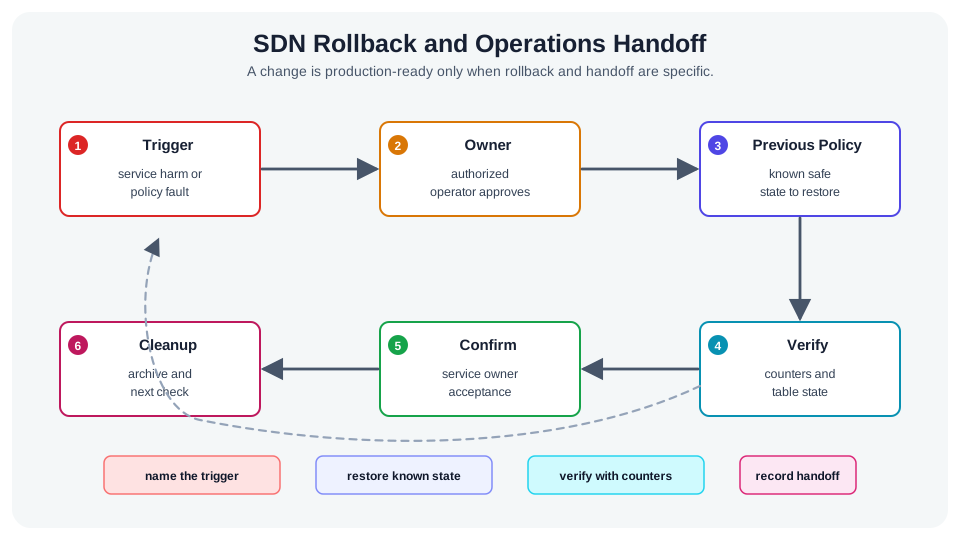
Capacity and Rule Budget · Rollback and Operations Handoff
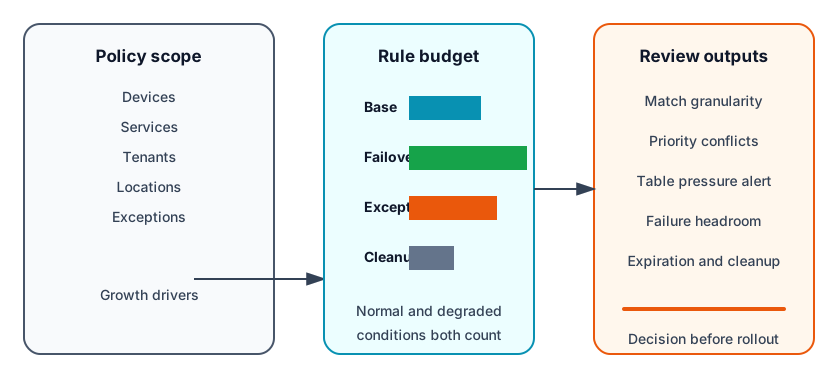
SDN capacity checks should focus on table pressure, policy scope, and failure headroom instead of a generic "maximum flows" assertion.

  • The budget should include failure conditions.
  • A policy that fits only during normal operation may fail when backup paths, temporary exceptions, or diagnostics are active.
SDN capacity and rule budget checks
iotclass.org

Major section

Walkthrough: IoT Building SDN Readiness · Production Proof Loop
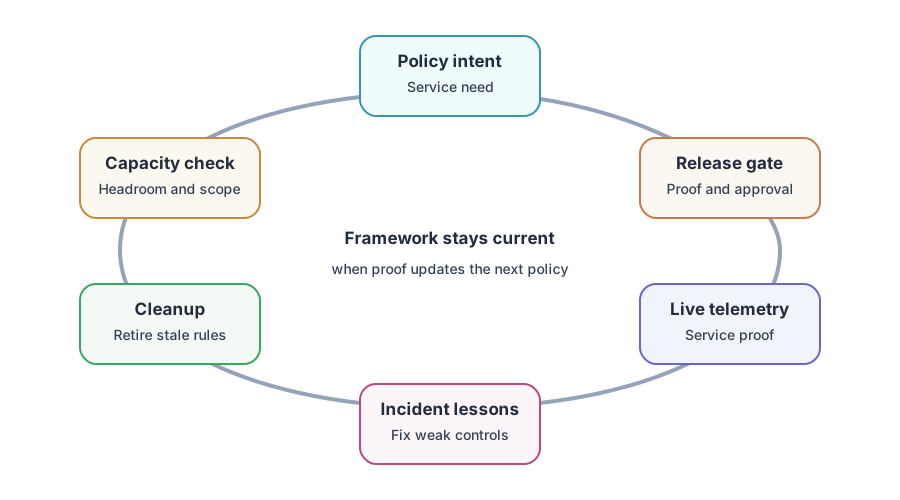
A facilities team wants to use SDN to separate building automation, safety alarms, video diagnostics, and guest convenience traffic on shared infrastructure.

  • Intent: safety alarms must keep priority and isolation; building automation needs predictable telemetry; video diagnostics can degrade first.
  • Staged rollout: one building and one operations window are used before campus expansion.
SDN production framework proof loop
iotclass.org

Major section

Common Pitfalls · Production Acceptance Contract

The same contract should state what is out of scope.

  • Approving the platform instead of the change: a reliable controller does not prove that a specific policy is safe.
  • Skipping negative tests: allowed traffic is only half the check; denied, malformed, unknown, and stale traffic must be checked.
  • A useful acceptance contract is specific enough to test.

Key terms

Production readiness
Production readiness is therefore less about trust in an SDN product and more about repeatable evidence.
iotclass.org

Major section

Track Drift After Release · Reconcile Intent and State

After release, the framework should watch for drift between intended policy, installed switch state, service behavior, and ownership.

  • A policy can pass launch gates and still become risky when traffic classes, gateways, firmware, controller apps, or operational teams change.
  • The point is not to prefer one tool.
  • Practitioners should also preserve negative evidence.

Key terms

Reconciliation
Reconciliation is the under-the-hood production task.
Controller recovery
Controller recovery is another source of drift.

Why it matters

Negative tests prevent later reviewers from treating broad wildcard matches as harmless just because the primary service still works.

iotclass.org

Major section

Summary · Key Takeaway

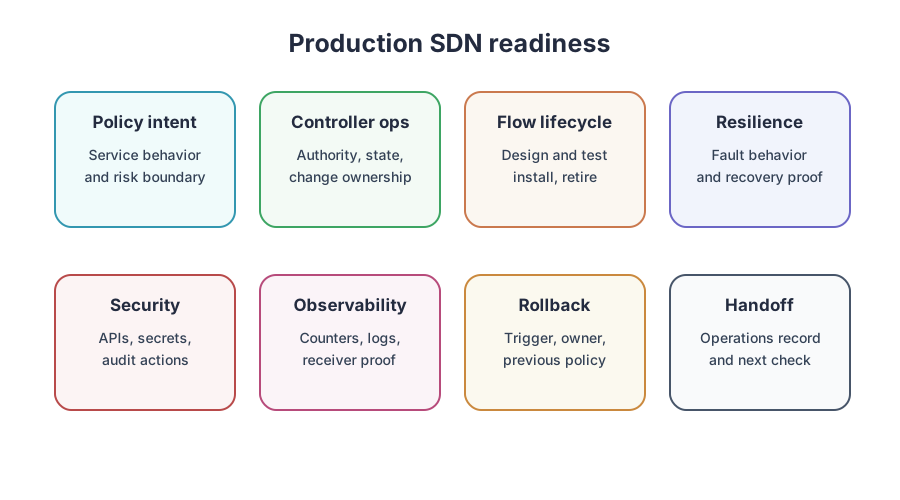
An SDN production framework is the system of gates, proof, and ownership that makes programmable forwarding safe to operate.

  • It connects service intent to controller authority, flow-rule lifecycle, resilience tests, security boundaries, observability, rollback, and handoff.
  • The result is not a one-time deployment checklist; it is a repeatable operating loop that keeps SDN policy aligned with the IoT service it supports.
  • A production SDN framework should make governance, telemetry, change control, resilience, and incident response part of the architecture.
iotclass.org

Deck summary

Key takeaways

This opening does not choose a controller or prove every switch feature.

  • A central control service can plan and observe changes, but its loss must not erase the last safe forwarding state or open a forbidden route.
  • Production SDN is a controlled way to change forwarding behavior.
  • SDN changes should move through explicit gates.
  • The controller is production infrastructure.
iotclass.org

Retrieval practice

Recall check 1 of 3

Cloud Clara says: answer from memory, then check your reasoning.

Q1A team changed a gateway service policy, but the SDN controller still shows an older approved intent and one switch table still forwards matching packets through the old path. What should production readiness check first?

ACompare intent, versions, rules, counters, receivers, exceptions, and rollback.
BAccept the old rule because it was approved during the previous release.
CDelete every rule on the switch immediately so the table starts clean.
DCheck only the controller dashboard because switch counters and receiver behavior are implementation details.
Show answer

Answer: A SDN production readiness requires service intent, controller policy, installed switch rules, counters, receiver behavior, exceptions, and cleanup or rollback to stay aligned after a policy change.

iotclass.org

Retrieval practice

Recall check 2 of 3

Cloud Clara says: answer from memory, then check your reasoning.

Q2A team has installed a clustered SDN controller and wants to approve a new IoT service-slicing policy for production. What proof should matter most before approval?

AA controller cluster exists, so the policy can be approved without additional checks.
BThe policy passed syntax validation, so it is safe to deploy broadly.
CRecord intent, scope, lab proof, rollout, observability, rollback, and handoff.
DThe policy uses broad wildcard rules, so fewer rules automatically means the design is safer.
Show answer

Answer: C A production framework approves SDN changes only after service intent, scope, proof, staged rollout, observability, rollback, and ownership are traceable.

iotclass.org

Retrieval practice

Recall check 3 of 3

Cloud Clara says: answer from memory, then check your reasoning.

Q3A production SDN policy still forwards correctly, but the service owner changed the gateway group and several temporary exceptions remain installed after a maintenance window. What should the framework require?

ACompare intent, rules, counters, receiver proof, owners, and cleanup.
BLeave the exceptions in place because forwarding is currently working.
CTrust the controller model without checking switch tables or receiver proof.
DWait for an incident before refreshing the owner and rollback records.
Show answer

Answer: A A production SDN framework must reconcile approved intent, controller state, installed switch rules, counters, receiver behavior, owner records, and cleanup state whenever service ownership or policy scope changes.

iotclass.org

Print reference

Answers

Answer key.

  1. A · SDN production readiness requires service intent, controller policy, installed switch rules, counters, receiver behavior, exceptions, and cleanup or rollback to stay aligned after a policy change.
  2. C · A production framework approves SDN changes only after service intent, scope, proof, staged rollout, observability, rollback, and ownership are traceable.
  3. A · A production SDN framework must reconcile approved intent, controller state, installed switch rules, counters, receiver behavior, owner records, and cleanup state whenever service ownership or policy scope changes.
iotclass.org