Cloud, SDN & Production Architectures · Study deck
SDN Anomaly Detection: Signals and Response Logic
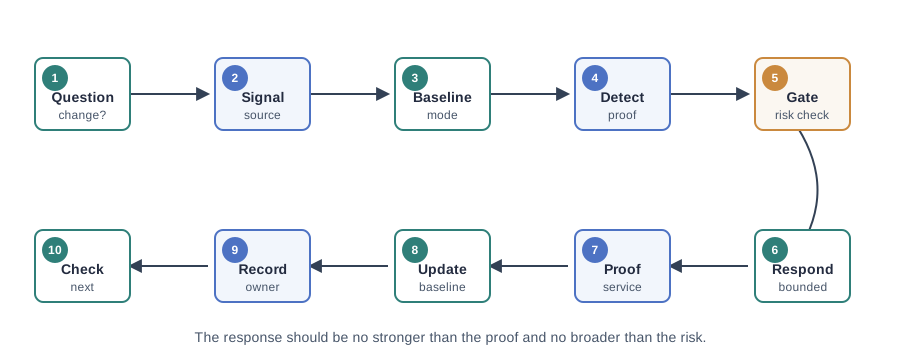
A burst of gateway scans may be a fault, an attack, or normal service work.
Cloud Clara is your guide for this deck.

After studying this chapter
Learning objectives
You will be able to:
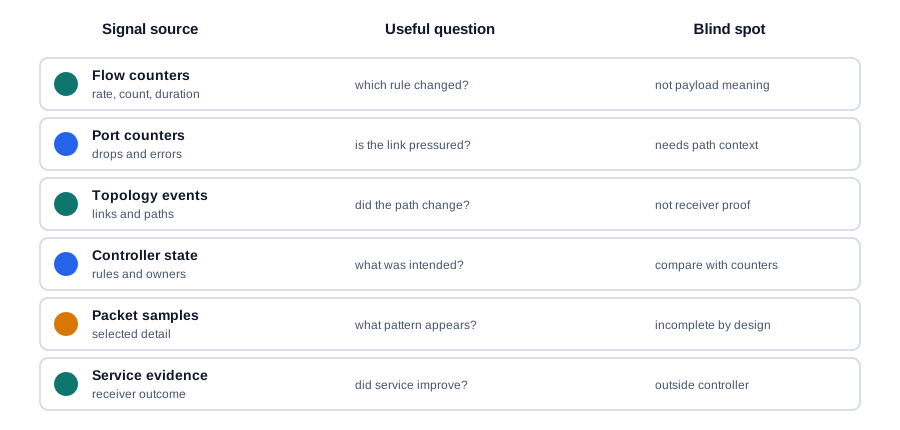
- Explain: Between them, the signal sources relationship becomes visible: Signal sources for anomaly detection: flow counters, port counters, topology events, controller state, packet samples, and service proof mapped to questions and limits.
- Explain: That observation connects this visual to the chapter's running narrative: use it to justify the next design decision and to record what evidence would confirm it in operation.
- Explain: An anomaly is not simply "more traffic than usual." It is a meaningful mismatch between observed behavior and expected behavior for a device, service, path, or policy state.
Major section
Start With the Alert Question
A gateway is a device or service that joins a local network to wider paths.
- Its records may suggest a scan, but the same shape can come from a planned update or a broken setup.
- A high score is not proof of cause or safe containment.
- This opening does not choose one detector or automatic response.
Major section
Minimum Viable Understanding
An anomaly is not simply "more traffic than usual." It is a meaningful mismatch between observed behavior and expected behavior for a device, service, path, or policy state.
- Detection and response should stay separate until the proof is strong enough and the rollback path is clear.
Major section
Signal Sources
Each source has a useful question and a blind spot.
- Three concrete diagram labels organize: Signal source, did the path change?, and outside controller.
- Between them, the signal sources relationship becomes visible: Signal sources for anomaly detection: flow counters, port counters, topology events, controller state, packet samples, and service proof mapped to questions and limits.
Major section
Detection Methods
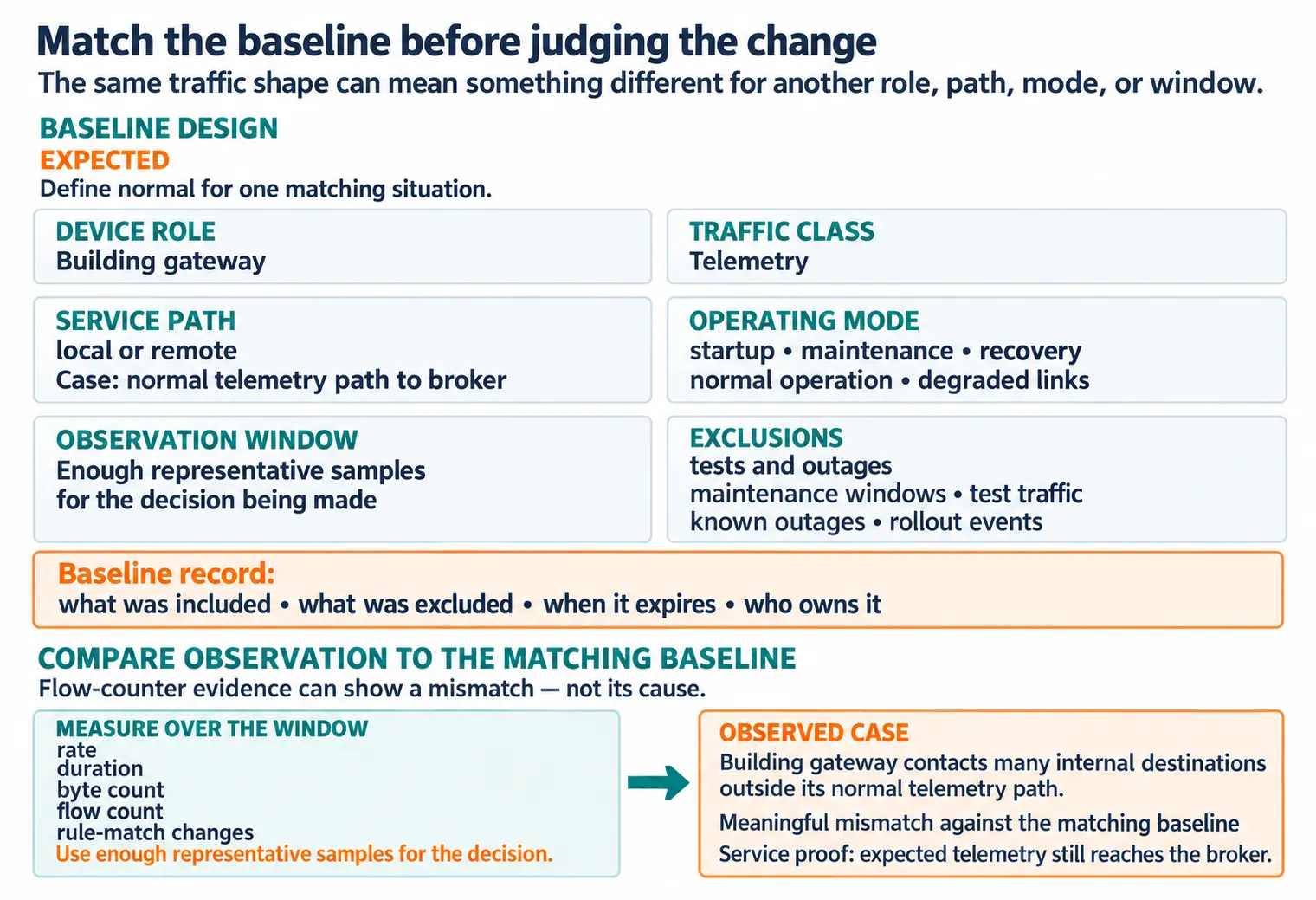
That observation connects this visual to the chapter's running narrative: use it to justify the next design decision and to record what evidence would confirm it in operation.
- The detection record should include the method, the source data, the baseline used, the confidence reason, and the response it is allowed to trigger.
Deck summary
Key takeaways
A gateway is a device or service that joins a local network to wider paths.
- An anomaly is not simply "more traffic than usual." It is a meaningful mismatch between observed behavior and expected behavior for a device, service, path, or policy state.
- Each source has a useful question and a blind spot.
- That observation connects this visual to the chapter's running narrative: use it to justify the next design decision and to record what evidence would confirm it in operation.
Retrieval practice
Recall check

Cloud Clara says: answer from memory, then check your reasoning.
Q1A building gateway suddenly contacts many internal destinations outside its normal telemetry path, but expected telemetry still reaches the broker. Which first check keeps the SDN response decision traceable?
Show answer
Answer: A A traceable SDN anomaly response connects the gateway role, unusual destination signal, corroborating controller and topology evidence, matching baseline, receiver proof, service-risk gate, bounded response, rollback owner, expiry, and review condition before containment becomes a system dependency.
Print reference
Answers
Answer key.
- A · A traceable SDN anomaly response connects the gateway role, unusual destination signal, corroborating controller and topology evidence, matching baseline, receiver proof, service-risk gate, bounded response, rollback owner, expiry, and review condition before containment becomes a system dependency.